
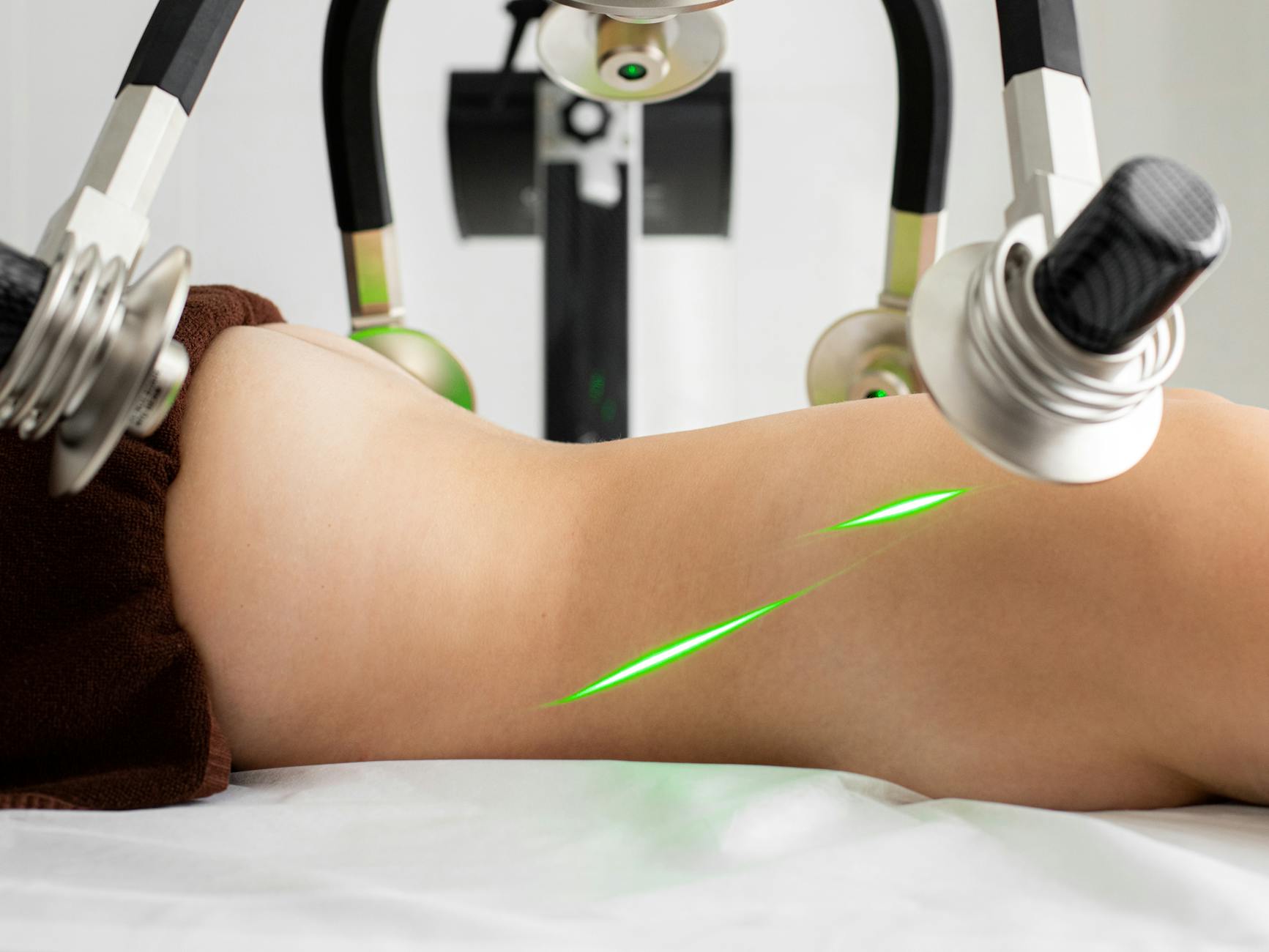
Pulsed dye laser (PDL) is one of the most effective tools dermatologists use to reduce post-procedure redness and erythema. The laser targets hemoglobin in blood vessels using wavelengths of 585-595 nanometers, essentially shrinking dilated vessels and reducing inflammation without damaging surrounding skin tissue. If you’ve just undergone an aggressive acne treatment like chemical peels, microneedling, or laser resurfacing and are left with persistent redness, PDL can significantly accelerate healing—some patients see a 50-80% reduction in visible erythema after just 2-3 sessions.
This article covers how PDL works at the biological level, realistic timelines for improvement, when it’s appropriate versus when it’s overkill, comparisons with other redness treatments, limitations you should know about, what to expect during the procedure, and long-term results. Post-procedure redness is frustrating because it can linger for weeks or even months, depending on the intensity of the initial treatment and your skin’s healing response. While topical products and time alone can help, PDL offers a more direct approach by directly addressing the vascular component of redness rather than just managing inflammation superficially. However, PDL isn’t a one-size-fits-all solution—its effectiveness depends on your skin type, the depth and type of redness you’re dealing with, and how soon after your procedure you start treatment.
Table of Contents
- How Pulsed Dye Laser Reduces Post-Procedure Redness
- Timeline and What to Realistically Expect During Recovery
- PDL for Different Types of Post-Procedure Redness
- Comparing PDL with Other Options for Post-Procedure Redness
- Important Limitations and When PDL Doesn’t Work Well
- What Actually Happens During and After PDL Sessions
- Long-Term Results and the Question of Maintenance
- Conclusion
How Pulsed Dye Laser Reduces Post-Procedure Redness
The pulsed dye laser works by emitting light at a wavelength specifically absorbed by oxyhemoglobin in red blood cells. When this light is absorbed, it generates heat that coagulates (seals off) small blood vessels responsible for the visible redness. Crucially, this happens without creating significant thermal damage to surrounding skin cells, which is why PDL has been a gold standard for vascular lesions since the 1980s. The laser’s pulse duration—typically 0.45 milliseconds—is short enough to confine heat damage to the target vessels, a principle called selective photothermolysis. For post-procedure redness specifically, this mechanism is particularly valuable because most redness after dermatological procedures is vascular in nature.
After microneedling, chemical peels, or resurfacing treatments, blood vessels dilate in response to injury and inflammation. Some of these vessels remain persistently dilated for weeks. PDL essentially tells your body “these dilated vessels are unnecessary” and helps your skin return to baseline. The result is typically a gradual flattening and lightening of red areas—not overnight, but noticeably within a few sessions. One common example is a patient who undergoes aggressive glycolic acid peeling and is left with pronounced erythema; two PDL sessions spaced 4-6 weeks apart can reduce that redness by 60-70%, whereas waiting it out naturally might take 3-4 months.

Timeline and What to Realistically Expect During Recovery
PDL results are not immediate, though some mild reduction in redness often becomes visible within 24-48 hours. This is partly because the laser immediately reduces the most superficial vasculature, but the full effect requires your immune system to break down the coagulated vessels and reabsorb them—a process that takes 2-4 weeks per session. Most dermatologists recommend spacing PDL sessions 4-6 weeks apart to allow full healing and assessment between treatments. For significant post-procedure redness, a typical treatment plan involves 2-4 PDL sessions, though mild cases may resolve with just one.
However, there’s an important caveat: if you start PDL too soon after your original procedure—say, within 3-5 days of aggressive microneedling—you risk irritating already-inflamed skin and potentially creating unwanted side effects like excessive swelling or temporary hypopigmentation. Most dermatologists recommend waiting at least one week, and ideally 2-3 weeks, after the initial procedure before beginning PDL. Additionally, the laser works best on redness that has a strong vascular component. If your post-procedure redness is primarily caused by ongoing inflammation, persistent edema, or textural changes rather than dilated vessels, PDL may provide only modest improvement—this is a limitation worth discussing with your provider beforehand.
PDL for Different Types of Post-Procedure Redness
Not all post-procedure redness is identical, and PDL’s effectiveness varies depending on what caused the erythema. After fractional laser resurfacing or CO2 laser treatments, the skin undergoes controlled thermal injury, and redness can persist for weeks or months. PDL is highly effective here because the dilated vessels are the primary driver of visible redness. Similarly, post-microneedling erythema—which occurs because microneedling intentionally triggers inflammation and neovascularization—responds very well to PDL. Patients often report 40-70% improvement in redness after one or two sessions.
Chemical peels, especially deeper peels like TCA (trichloroacetic acid), leave the skin red and raw initially. PDL can help here too, though the timing matters. Immediately after a deep chemical peel, the skin is extremely reactive, and PDL should be delayed longer—typically 4-6 weeks—compared to other procedures. Post-acne scar treatments using laser devices (like fractional CO2 or Nd:YAG for subcision) frequently leave surrounding skin quite red; PDL can reduce this associated erythema efficiently. However, if you’ve had a simple superficial treatment like a light glycolic peel or a single pass of a fractional device, the natural erythema resolves so quickly that PDL may be unnecessary—you might wait 2-3 weeks first to see if the redness settles on its own before investing in laser sessions.

Comparing PDL with Other Options for Post-Procedure Redness
Other treatment options exist for post-procedure redness, and choosing between them depends on factors like the type of redness, your timeline, cost, and skin type. Topical treatments like niacinamide, centella asiatica, and azelaic acid can reduce inflammation and support healing over weeks to months—they’re non-invasive and inexpensive but work slowly. For faster results, many dermatologists combine these with PDL. Intense Pulsed Light (IPL) is sometimes presented as an alternative to PDL; it has a broader wavelength range and can address redness, but it’s less precise and carries slightly higher risks of pigmentation changes, especially on darker skin types.
PDL is generally considered superior specifically for post-procedure erythema because of its narrower wavelength band and proven safety record. For truly persistent post-procedure redness that doesn’t respond to PDL, some dermatologists move to Nd:YAG laser or radiofrequency devices, which work deeper in the dermis and can address redness that’s driven by deeper vascular structures. Topical treatments like tacrolimus (an immunosuppressant) can reduce redness by controlling inflammation and are especially useful if PDL isn’t appropriate for your skin tone or if you’re dealing with a combination of erythema and textural damage. The tradeoff with PDL versus waiting and using topical support alone is cost and time-to-result: PDL costs $300-800 per session but typically delivers results in 8-12 weeks total; topical-only approaches might cost $50-200 but take 3-6 months. For patients with significant business or social commitments and a budget for treatment, PDL usually wins.
Important Limitations and When PDL Doesn’t Work Well
PDL is not universal in its effectiveness, and several patient factors determine whether it’s worth pursuing. The laser targets hemoglobin, so it works best on erythema—true red discoloration driven by blood vessels. If your “post-procedure redness” is actually brown or purple discoloration (post-inflammatory hyperpigmentation or hemosiderin staining), PDL will not help and might make pigmentation worse, especially on darker skin. Similarly, if your post-procedure redness has a significant inflammatory component but few dilated vessels, PDL provides only marginal benefit. Patients with very dark skin (Fitzpatrick V-VI) face increased risks with standard PDL—the laser can cause hypopigmentation or paradoxical hyperpigmentation—and require either longer wavelength devices (like 595nm rather than 585nm) or avoidance altogether in favor of other modalities.
Another critical limitation: PDL doesn’t improve textural roughness or scarring, only vascular redness. If your post-procedure appearance is compromised equally by redness and texture, PDL alone is incomplete treatment. Additionally, some redness is simply part of the skin’s normal healing process and will resolve naturally within 6-8 weeks regardless of intervention. Treating very mild erythema with PDL is often unnecessary and represents cost without meaningful benefit. Finally, PDL can cause purpura (bruising) as a side effect—the laser intentionally damages small vessels, and those vessels leak, creating purple/dark marks that last 7-10 days. For some patients (those with important events), this temporary worsening is unacceptable, making the timing and extent of PDL treatment a practical consideration.
What Actually Happens During and After PDL Sessions
During a PDL session, your dermatologist applies a cold gel to the treatment area, then uses a handheld laser device to deliver pulses of yellow light across the affected skin. The sensation is often described as a rubber band snapping—uncomfortable but brief and generally tolerable without anesthesia, though some practitioners apply topical numbing cream beforehand. Sessions typically last 15-45 minutes depending on the area size. Immediately after, you’ll see redness and possibly some swelling; over the next 24 hours, purple/dark marks (purpura) often develop where the laser hit dilated vessels, representing intentional vessel coagulation.
The purpura usually fades over 7-14 days, though mild pigmentation changes can persist a few weeks longer. During this healing window, the coagulated vessels are broken down by your body and gradually reabsorbed. You can return to work and regular activities immediately, but most dermatologists recommend avoiding intense heat (saunas, hot baths), direct sun, and strenuous exercise for 24-48 hours. Hydrating toners and gentle moisturizers support healing; avoid actives like retinoids or acids for 48 hours. Most importantly, strict sun protection (SPF 50+) is non-negotiable for 4 weeks after treatment, as post-procedure skin is photosensitive and UV exposure can trigger hyperpigmentation and undo PDL benefits.
Long-Term Results and the Question of Maintenance
Most patients see durable improvement in post-procedure redness with 2-3 PDL sessions—improvement that lasts 1-3 years or indefinitely, depending on their skin type and the original severity of their condition. However, redness occasionally returns, especially in patients with reactive, rosacea-prone, or very fair skin. In these cases, a single “maintenance” PDL session every 1-2 years can preserve the benefit.
The advantage of PDL as a long-term solution is that it’s not cumulative damage to the skin like some treatments; it’s selective removal of problem vessels, and new vessels don’t necessarily regrow. Looking forward, newer versions of PDL devices include cooling systems that reduce purpura and side effects, making treatment more accessible and predictable. Combining PDL with other modalities—like using it on vascular redness while addressing textural or pigmentation issues separately with chemical peels or other lasers—is increasingly common and often yields superior overall results compared to monotherapy. For most patients dealing with post-procedure redness, PDL remains one of the highest-impact, fastest-working options available, provided realistic expectations are set about timeline, cost, and the specific type of redness being treated.
Conclusion
Pulsed dye laser is one of the most effective and proven treatments for reducing post-procedure redness by targeting the dilated blood vessels responsible for visible erythema. Results typically emerge over 2-4 weeks per session, with most patients needing 2-3 sessions spaced 4-6 weeks apart to achieve meaningful improvement. The procedure is safe, well-tolerated, and has a strong evidence base across multiple types of post-procedure redness—from laser and chemical peel recovery to post-microneedling erythema.
If you’re considering PDL for post-procedure redness, the next step is to schedule a consultation with a dermatologist who can assess your specific type of redness, skin tone, and overall healing status, then recommend the appropriate timeline and number of sessions. Be clear about your expectations—PDL excels at reducing vascular erythema but doesn’t address texture, scars, or pigmentation issues. For many patients, PDL combined with diligent sun protection and supportive topical care delivers visible, lasting improvement that accelerates the return to normal-looking skin.