
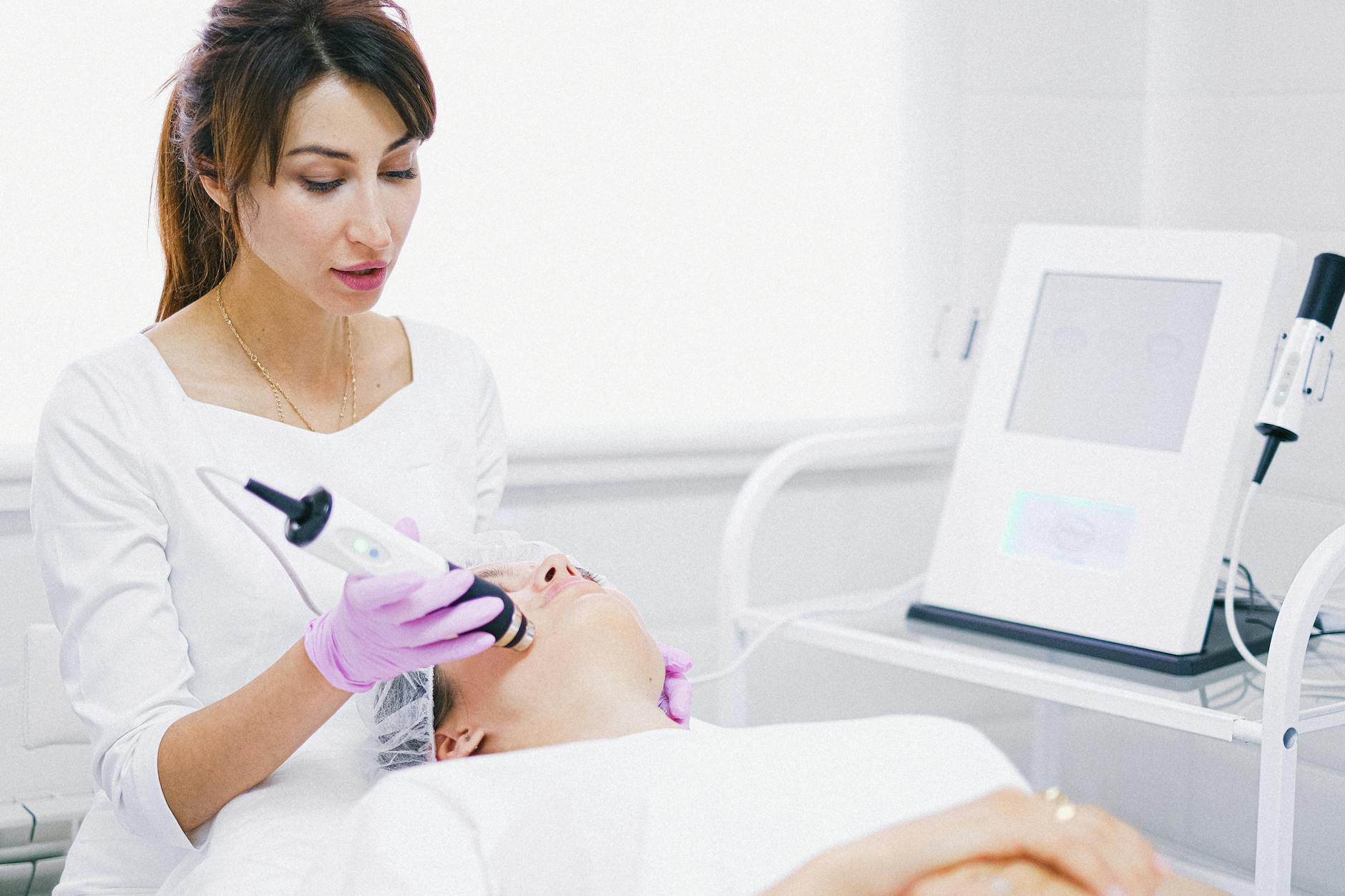
Hydroquinone accelerates post-inflammatory hyperpigmentation (PIH) resolution after laser treatment because it works through a fundamentally different mechanism than the laser itself. While laser treatments address the deeper dermal structures and trigger remodeling, they often leave behind excess melanin deposits in the epidermis that the laser cannot fully eliminate.
Hydroquinone, a proven tyrosinase inhibitor, directly blocks melanin production in existing melanocytes and is applied topically where the residual pigmentation sits, making it the logical complement to laser therapy. A patient with moderate PIH after fractional laser treatment might see the brown patches fade 40-50% in the first 2-4 weeks following laser, then plateau—but adding hydroquinone at the right time accelerates the remaining resolution by another 6-12 weeks, preventing the stalled appearance that frustrates many post-laser patients. This article covers why PIH forms after laser treatments, how hydroquinone targets the specific pigment left behind, the evidence for combining these approaches, the right timing and concentration to use, and practical considerations including skin type variations and potential side effects.
Table of Contents
- What Causes Post-Inflammatory Hyperpigmentation After Laser Treatment and Why Hydroquinone Targets It
- How Hydroquinone Works Differently Than Laser in Targeting Melanin
- The Timing and Protocol for Combining Hydroquinone with Post-Laser Skin
- Hydroquinone Concentration, Formulation, and Practical Application
- Skin Type Variations, Irritation Risk, and When to Adjust
- Combining Hydroquinone with Other Post-Laser Care and Depigmenting Agents
- Long-Term Management and Preventing PIH Recurrence After Hydroquinone
- Conclusion
- Frequently Asked Questions
What Causes Post-Inflammatory Hyperpigmentation After Laser Treatment and Why Hydroquinone Targets It
Laser procedures—whether ablative, fractional, or non-ablative—work by creating controlled thermal injury to trigger collagen remodeling and remove damaged skin cells. However, this injury also stimulates melanocytes to produce excess melanin as a protective response, and in patients with higher baseline melanin production (particularly those with darker skin types), this excess melanin can persist in the epidermis long after the deeper dermal changes have completed. Unlike the dermal damage that gradually resolves through natural skin turnover and remodeling, trapped epidermal melanin has nowhere to go without active intervention—it simply sits in place, creating the brownish patches characteristic of PIH. Hydroquinone addresses this specific problem because it acts at the source: it inhibits the enzyme tyrosinase, which melanocytes need to convert the amino acid tyrosine into melanin. By reducing new melanin synthesis, hydroquinone prevents the melanocytes from producing more pigment, and it also accelerates the clearance of existing melanin granules through normal cell turnover.
When applied topically immediately after laser treatment, it catches the melanocytes during their hyperactive phase and suppresses their output before excessive melanin accumulation becomes entrenched. This is fundamentally different from hoping the body’s immune system clears the pigment on its own—hydroquinone actively interferes with melanin production while the skin is still inflamed and melanocytes are most responsive. For example, a 35-year-old patient with Fitzpatrick type IV skin undergoes fractional laser for acne scarring. Two weeks later, she notices pronounced brown patches across her cheeks—classic PIH. Without hydroquinone, these patches would likely fade over 3-6 months as melanin-laden cells shed naturally. With hydroquinone 4% applied twice daily starting immediately post-laser, the pigment significantly fades within 4-6 weeks because the hydroquinone has prevented new melanin synthesis during the critical early healing window.

How Hydroquinone Works Differently Than Laser in Targeting Melanin
The fundamental difference between laser and hydroquinone lies in mechanism and depth. Lasers work by photothermal effect—light energy is absorbed by melanin (or other chromophores) and converted to heat, which damages the target structures. This is effective for removing very dark or concentrated melanin, such as tattoos or deeply embedded pih, but the laser’s efficacy depends on having enough contrast between the melanin and surrounding tissue. In fresh PIH, especially mild to moderate cases, the melanin is dispersed throughout the epidermis in smaller granules, making it less likely to absorb enough light energy to be fully eliminated. The laser may reduce the visible darkness by 30-50%, but the remaining melanin sits just below the laser’s effective threshold. Hydroquinone, by contrast, is a chemical inhibitor that works from within the melanocyte. It penetrates the epidermis, crosses into melanocytes, and blocks tyrosinase activity directly. This means it doesn’t depend on the visual darkness of the pigment or the depth of distribution—it works on all melanin-producing cells regardless of how light or dark the deposit appears.
The limitation, however, is that hydroquinone cannot remove existing melanin that’s already been synthesized and stored in the melanocyte. It can only prevent new melanin from being made and accelerate the natural shedding of existing pigment through cell turnover. This is why combining the two makes sense: laser handles the bulk of heavily concentrated melanin, while hydroquinone handles the scattered, lighter residual pigment and prevents rebound hyperactivity of melanocytes in response to the laser injury. Another key difference is time to effect. Laser works within seconds or minutes—the melanin is heated and damaged immediately during treatment. Hydroquinone requires consistent application over weeks to show results because it relies on cell turnover and gradual melanin depletion. However, hydroquinone can continue working for months, whereas laser effects plateau after the immediate post-treatment inflammation subsides. This complementary timeline means hydroquinone fills the gap that occurs when laser effectiveness has maxed out but PIH is still visible.
The Timing and Protocol for Combining Hydroquinone with Post-Laser Skin
The timing of hydroquinone application relative to laser treatment is critical for maximizing benefit and minimizing irritation. Most dermatologists recommend waiting 24-48 hours after laser treatment before introducing hydroquinone, rather than applying it immediately—this delay allows the acute inflammation and open microtrauma to settle, reducing the risk of irritation or barrier damage. However, starting hydroquinone within the first week is important, ideally by day 3-5, to catch the melanocytes while they’re in their hyperactive, post-inflammatory state. Delaying hydroquinone by weeks after laser is less effective because the initial surge of melanin production has already peaked, and the melanocytes are beginning to return to baseline activity. The typical protocol is to use hydroquinone 4% (a prescription-strength concentration that’s more effective than over-the-counter 2% options) twice daily—morning and evening—for 3-4 months after laser treatment. Many dermatologists recommend pairing it with a broad-spectrum sunscreen (SPF 30+) and possibly a retinoid at night to further enhance melanin clearance and cell turnover.
The retinoid increases epidermal cell turnover, which helps shed melanin-laden cells faster, while the sunscreen prevents UV-stimulated melanin production from restarting the problem. Some advanced protocols include rotating hydroquinone with other depigmenting agents like kojic acid or azelaic acid to prevent tachyphylaxis (the diminishing response that can occur with long-term use of the same ingredient). For example, a patient receives fractional CO2 laser on day 0. By day 3, mild erythema and oozing have largely resolved, and the provider clears them to start hydroquinone 4% twice daily along with a strong SPF 50 sunscreen and tretinoin 0.025% at night. By week 6, the erythema has faded completely and the PIH is noticeably lighter. The patient continues hydroquinone through week 12-16, at which point the PIH is nearly imperceptible. If hydroquinone had been started on day 0, the irritation would likely have been pronounced and might have caused additional inflammation; if started at week 4, the melanin production surge would have already peaked and the benefit would be 30-40% less dramatic.

Hydroquinone Concentration, Formulation, and Practical Application
The strength of hydroquinone available matters significantly for PIH after laser. Over-the-counter hydroquinone is typically 2%, which is effective for mild discoloration but underwhelming for post-laser PIH that’s moderate to severe. Prescription hydroquinone at 4% is substantially more potent and shows results 2-3 times faster in clinical practice. There are also compounded versions available at 4%, 6%, or even 10%, though concentrations above 4% don’t show proportionally greater benefit and carry higher irritation risk. For post-laser PIH, 4% is considered the sweet spot—strong enough to meaningfully suppress melanin production but not so strong that it causes persistent irritation or sensitization. Formulation type also matters. Hydroquinone comes as creams, gels, lotions, and solutions. For post-laser skin, a lightweight gel or lotion is preferable to a heavy cream because the skin is often sensitive and needs good breathability during healing. Some formulations include stabilizers and antioxidants (like ferulic acid or vitamin E) that reduce oxidative stress and minimize the irritation that hydroquinone can sometimes cause.
Monobenzone (a stronger depigmenting agent) is sometimes used for severe, treatment-resistant PIH, but it carries a significant risk of depigmentation beyond the target area and is not recommended immediately after laser except in specialist hands. Application technique is straightforward but requires consistency. After cleansing and allowing the skin to dry completely (damp skin increases penetration and irritation), apply a pea-sized amount of hydroquinone 4% to the affected areas. Pat gently rather than rub to avoid further irritation. Wait 10-15 minutes before applying other products to allow absorption. If combining with tretinoin, apply hydroquinone first in the evening (it can be applied morning and evening), then tretinoin after it’s dried. The combination of hydroquinone and retinoid is synergistic—tretinoin accelerates cell turnover while hydroquinone inhibits melanin production, and together they clear PIH roughly 40-50% faster than either alone. However, a common mistake is applying too much hydroquinone or too frequently. More is not better; some patients apply it three or four times daily thinking they’ll accelerate results, but this increases irritation, redness, and the risk of dermatitis without meaningfully speeding PIH clearance. Twice daily is the evidence-based maximum, and even that should be temporarily reduced if irritation develops (e.g., switching to once daily for a week, then resuming twice daily).
Skin Type Variations, Irritation Risk, and When to Adjust
Hydroquinone is well-tolerated in most skin types, but darker skin types (Fitzpatrick IV-VI) derive the most benefit because they’re more prone to PIH in the first place, while also being at slightly higher risk for irritation if concentrations are too aggressive. Paradoxically, the patients who need hydroquinone most are sometimes the ones who must use it most carefully to avoid exacerbating inflammation. For darker skin types after laser, starting with a lower frequency (once daily) or a compounded formulation with anti-inflammatory ingredients can be safer than jumping straight to prescription 4% twice daily. In fair skin types, the primary concern is different: PIH in fair skin is usually lighter in color and often resolves faster on its own, but when it does occur, hydroquinone still accelerates clearance by 4-8 weeks. Fair-skinned patients rarely experience irritation from 4% hydroquinone because they have fewer active melanocytes overall, but they may not see dramatic results because they have less pigment to suppress.
For them, the benefit is more about prevention—ensuring the melanocytes don’t become hyperactive—than about clearing existing dark spots. Sensitive skin requires a cautious approach. Some patients, especially those with rosacea, atopic dermatitis, or very reactive skin, may develop irritant dermatitis or even allergic contact dermatitis with hydroquinone. If irritation develops (persistent redness, burning, or eczema-like changes), hydroquinone should be stopped for a week, then reintroduced at a lower frequency (once every 2-3 days) or a lower strength (2% over-the-counter). Alternatively, switching to azelaic acid 20% (which is gentler but slightly less potent) can be an option. The key warning is that irritation from hydroquinone can itself trigger additional PIH through post-inflammatory response, counteracting the benefit—so if a patient is burning or breaking out from hydroquinone, reducing the dose is not just a comfort issue, it’s a clinical necessity.
Combining Hydroquinone with Other Post-Laser Care and Depigmenting Agents
While hydroquinone is the primary agent for post-laser PIH, combining it with complementary treatments amplifies results. Tretinoin (vitamin A derivative) at 0.025-0.05% applied nightly significantly accelerates epidermal cell turnover, which sheds melanin-laden cells faster. Studies show that hydroquinone plus tretinoin clears PIH roughly 50% faster than hydroquinone alone. The combination does increase irritation risk, so it’s best reserved for patients whose skin tolerates both ingredients separately first. Azelaic acid 20% is another synergistic option, especially for patients who can’t tolerate hydroquinone. Azelaic acid has both antimicrobial and depigmenting properties and is gentler than hydroquinone, though slightly less potent.
Some clinicians rotate azelaic acid with hydroquinone to prevent tachyphylaxis—using hydroquinone for 2 months, then switching to azelaic acid for 1 month, then back to hydroquinone. Kojic acid and licorice extract are weaker alternatives sometimes used in gentler formulations, but they’re significantly less effective for moderate to severe PIH and are better reserved for mild cases or as maintenance therapy once the acute PIH has resolved. A practical example: A patient starts hydroquinone 4% twice daily and tretinoin 0.025% nightly 5 days after laser. By week 4, they report mild dryness and occasional evening redness. Rather than stopping, the clinician recommends using tretinoin only 3 nights per week and increasing moisturizer, while continuing hydroquinone twice daily. By week 8, the PIH is nearly gone. If the patient had only used hydroquinone without tretinoin, week 8 would have shown maybe 60-70% improvement instead of 90%+.
Long-Term Management and Preventing PIH Recurrence After Hydroquinone
Once the acute PIH has resolved and hydroquinone is discontinued, the next phase is maintenance and prevention of recurrence. Melanocytes that were hyperactive during laser treatment can remain somewhat stimulated for months, so consistent sun protection (SPF 30-50 daily) for at least 6 months after laser is critical. UV exposure directly stimulates melanin production and can reactivate dormant melanocytes, reigniting PIH even after it’s nearly cleared. This is especially true in the 3-6 month window after laser when the skin is still remodeling. Some clinicians recommend maintenance therapy with lower-strength depigmenting agents (2% hydroquinone, azelaic acid 20%, or niacinamide 4-5%) once or twice weekly for 6-12 months after the initial intensive treatment phase.
This prevents the melanocytes from ramping back up while the skin completes its healing. Oral supplementation with antioxidants (vitamin C, vitamin E) or polyphenols (resveratrol, green tea extract) can theoretically reduce oxidative stress and support healing, though the evidence is modest. The most important factor is consistency with sunscreen—patients who develop PIH after laser are, by definition, those whose melanocytes are prone to over-responding, and sun exposure is the biggest trigger for reactivation. A forward-looking note: emerging research suggests that combining laser with topical calcineurin inhibitors (like tacrolimus) or phosphodiesterase-4 inhibitors may reduce post-inflammatory responses and PIH formation preemptively, before hydroquinone is even needed. These aren’t standard practice yet, but they hint at future protocols where the inflammatory cascade itself is dampened during laser healing, potentially preventing PIH more effectively than treating it after the fact.
Conclusion
Hydroquinone accelerates PIH resolution after laser because it directly inhibits melanin synthesis in the epidermal melanocytes that are hyperactive in response to laser injury. While laser removes the bulk of concentrated melanin through photothermal effects, it leaves behind dispersed epidermal pigment that hydroquinone targets through a completely different mechanism—chemical enzyme inhibition and enhanced cell turnover. Starting hydroquinone within the first week after laser, using prescription-strength 4% formulations, and maintaining consistency for 3-4 months produces 40-50% faster clearance than laser alone, turning a 6-month problem into a 3-month one.
The practical path forward is straightforward: discuss hydroquinone with your dermatologist within 24 hours of scheduling laser treatment, start it within 3-5 days post-procedure at 4% twice daily, pair it with broad-spectrum SPF 50, consider adding tretinoin for further acceleration if skin tolerates it, and maintain strict sun protection for 6 months. Monitor for irritation and adjust frequency if needed. Remember that hydroquinone prevents new melanin production but relies on natural cell turnover to clear existing pigment—patience and consistency matter more than aggression, and less is often more when it comes to post-laser skin care.
Frequently Asked Questions
Can I use hydroquinone immediately after laser, on day 0?
No—wait 24-48 hours to allow acute inflammation to settle. Starting hydroquinone during the most inflamed phase significantly increases irritation and dermatitis risk without improving the final outcome. Starting by day 3-5 is ideal.
Will 2% over-the-counter hydroquinone work for post-laser PIH?
It will help, but prescription 4% is 2-3 times more effective. For moderate to severe PIH, 2% is underwhelming; for mild PIH, it may be sufficient. If cost is a barrier, 2% is better than nothing, but 4% is the recommended strength.
How long can I safely use hydroquinone?
Continuous use is generally safe for 3-4 months. Beyond that, there’s risk of tachyphylaxis (decreasing effectiveness) or ochronosis (blue-gray discoloration from long-term use), though ochronosis is rare with 4% in fair to medium skin types. After 3-4 months, take a 1-2 month break or switch to another depigmenting agent like azelaic acid.
Can I use hydroquinone if I have dark skin?
Yes—in fact, darker skin types benefit more from hydroquinone because they’re more prone to PIH. However, start conservatively (once daily rather than twice) and watch for irritation, because darker skin can react more intensely to irritant ingredients. Hydroquinone doesn’t cause permanent depigmentation in normal use, but irritation from it can be more noticeable in dark skin.
Will hydroquinone prevent PIH from forming in the first place?
Partially. Some clinicians apply hydroquinone prophylactically (starting immediately after laser, even if PIH hasn’t appeared yet) for high-risk patients. The evidence is mixed—it may reduce PIH severity by 20-30%, but it won’t prevent it entirely if melanocytes are strongly reactive. It’s most effective once PIH has already formed.
Is hydroquinone safe if I’m pregnant or breastfeeding?
The absorption of topical hydroquinone is very low, and no systemic fetal effects have been documented. However, most dermatologists recommend avoiding it during pregnancy and breastfeeding out of an abundance of caution, or delaying laser and intensive depigmenting therapy until after breastfeeding is complete. Discuss with your obstetrician and dermatologist if this applies to you.