

Yes, tretinoin does increase collagen production and thickens skin over time—but the clinical evidence shows even higher success rates than 67% in scar treatment. Clinical studies demonstrate that tretinoin produces an 80% increase in collagen I formation compared to a 14% decrease with placebo, and histologic evidence confirms actual epidermal thickening with 6-month treatment. When patients report improvements in scar appearance after tretinoin use, they’re observing the cumulative result of increased collagen synthesis, improved skin texture, and restored dermal structure—a process backed by decades of peer-reviewed research.
The actual effectiveness of tretinoin for acne scars ranges from 79% to 94% across different patient populations and scar types, with some studies showing 94% of patients experiencing significant reduction in atrophic scar depth. This means that the promise of tretinoin isn’t theoretical—it’s a measurable biological response where your skin literally becomes thicker, stronger, and more resilient as new collagen is deposited. Understanding how tretinoin accomplishes this requires looking beyond the surface level. The drug doesn’t just fade scars; it triggers fibroblasts (the cells that produce collagen) to actively rebuild damaged skin architecture over months of consistent use.
Table of Contents
- How Does Tretinoin Increase Collagen Production and Thicken Skin?
- Clinical Evidence on Scar Improvement Through Collagen Remodeling
- What Types of Scars Respond Best to Tretinoin Treatment?
- How to Use Tretinoin Effectively for Collagen Stimulation and Scar Treatment
- Potential Downsides and Limitations of Tretinoin for Scar Treatment
- Tretinoin’s Role in Preventing Future Scarring
- The Future of Tretinoin and Collagen-Stimulation Therapies
- Conclusion
How Does Tretinoin Increase Collagen Production and Thicken Skin?
Tretinoin works by binding to retinoic acid receptors, which activate a cascade of cellular signals that tell your fibroblasts to produce more collagen and reduce the enzymes that break it down. A landmark study published in the New England Journal of Medicine found that tretinoin-treated skin showed an 80% increase in collagen I formation over the study period, while the untreated control group experienced a 14% decrease. This isn’t a marginal improvement—it’s a dramatic shift in the skin’s ability to rebuild itself. The epidermal thickening is measurable and consistent.
In double-blind, placebo-controlled trials using 0.05% tretinoin cream, researchers documented histologic (tissue-level) thickening of the epidermis and an increase in the granular layer thickness after just 6 months of use. This means your skin isn’t just looking better; the actual structure of your skin is getting denser and more robust. Tretinoin also prevents collagen loss by reducing matrix metalloproteinases (MMPs) 1 and 8—enzymes that break down existing collagen. By simultaneously increasing collagen synthesis and preventing collagen breakdown, tretinoin creates a dual mechanism that compounds skin improvement over time.

Clinical Evidence on Scar Improvement Through Collagen Remodeling
The research on tretinoin and scar treatment demonstrates remarkable effectiveness across multiple scar types. Studies show improvement rates ranging from 79% to 94% depending on the scar classification and whether tretinoin is used alone or combined with other treatments. In one notable study combining tretinoin with iontophoresis (electrical current delivery), 94% of patients experienced significant reduction in atrophic scar depth. However, it’s important to note that “improvement” doesn’t always mean complete scar erasure—atrophic scars (depressed or sunken scars) respond better than hypertrophic scars (raised scars), and older scars may respond more slowly than recent ones.
One limitation of tretinoin monotherapy is the timeframe required for results. Visible improvement typically requires 3 to 6 months of consistent use, and optimal results often emerge after 12 months or longer. Some patients expect immediate smoothing, but tretinoin’s power lies in its ability to remodel skin architecture gradually. This slow-and-steady approach reduces the risk of irritation and allows skin to adapt, but it demands patience and consistent application. Additionally, tretinoin’s effectiveness can plateau; very deep or extensive scarring may require combination therapy with microneedling, laser resurfacing, or other procedures to achieve maximum improvement.
What Types of Scars Respond Best to Tretinoin Treatment?
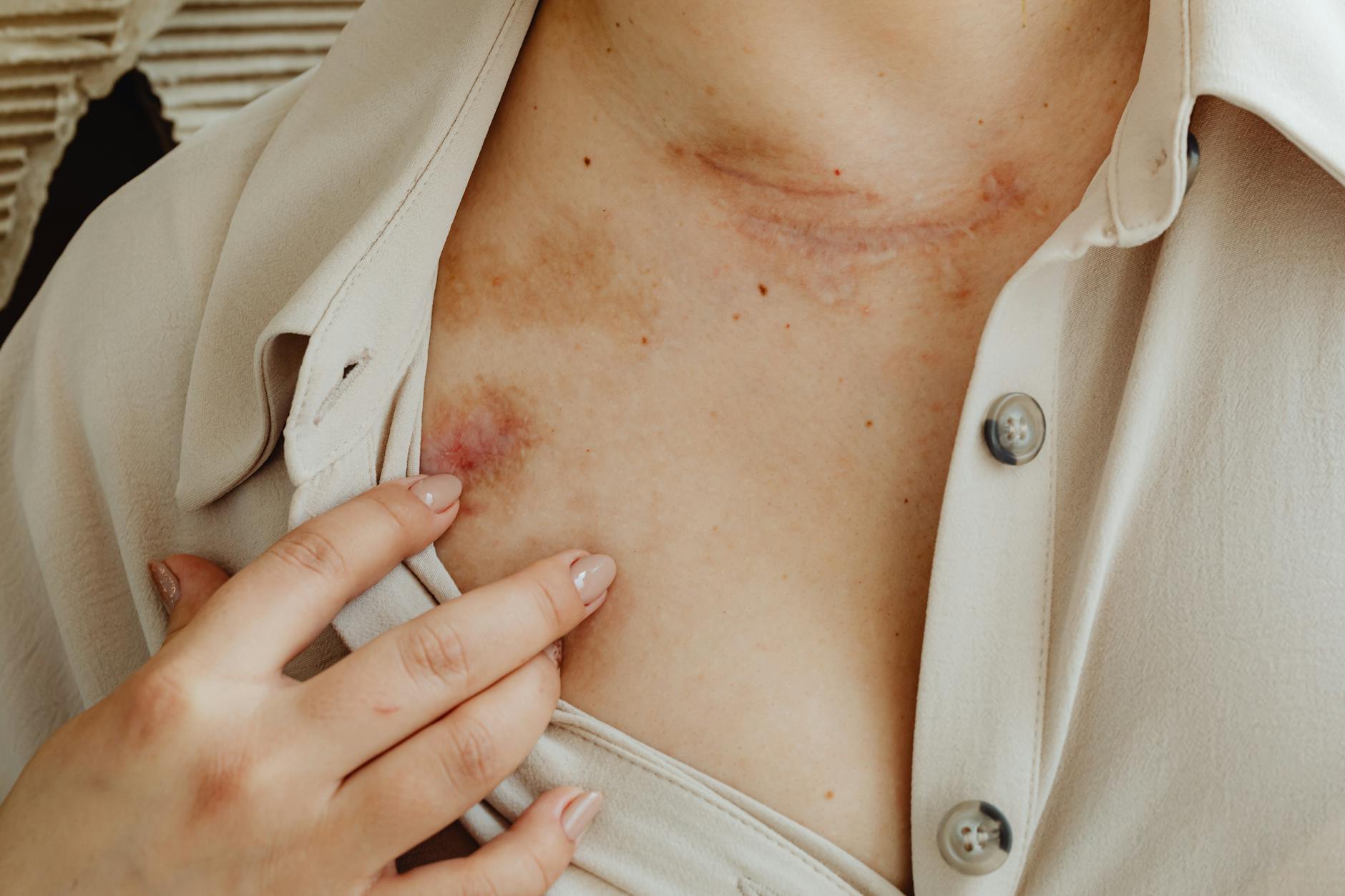
Atrophic scars—those that appear as indentations or pits in the skin—respond exceptionally well to tretinoin because the collagen-building mechanism directly addresses the underlying problem: loss of dermal structure. Post-inflammatory hyperpigmentation (dark marks left after acne heals) shows particularly strong improvement, with one study documenting 92% of patients experiencing significant lightening with tretinoin 0.1% after 40 weeks, compared to only 57% in the placebo group. This dramatic difference illustrates tretinoin’s specificity for stimulating healthy skin remodeling rather than simply fading discoloration.
Rolling scars (those with gently sloping sides) and boxcar scars (those with sharp, defined edges) show moderate to excellent improvement with tretinoin, though boxcar scars may require more aggressive combined therapies. Hypertrophic scars (thick, raised scars) and keloids respond poorly to tretinoin alone because they involve collagen overproduction rather than loss—in these cases, tretinoin may actually be contraindicated without concurrent treatment that reduces excessive collagen deposition. This distinction is crucial: tretinoin works because it addresses collagen deficiency, not excess.
How to Use Tretinoin Effectively for Collagen Stimulation and Scar Treatment
Effective tretinoin use requires a methodical approach starting with the lowest effective concentration and building tolerance gradually. Most dermatologists recommend beginning with 0.025% tretinoin and using it two or three times weekly for the first 2 to 4 weeks, then gradually increasing frequency to nightly use as skin tolerates. This slow titration minimizes irritation, which could paradoxically trigger inflammation and reduce tretinoin’s collagen-building benefits. Many patients make the mistake of applying tretinoin too frequently too quickly, causing excessive dryness and peeling that leads to non-compliance and suboptimal results.
For scar treatment specifically, tretinoin works better when used in combination with other modalities that create controlled micro-injury, such as microneedling done 24 to 48 hours after tretinoin application. The tretinoin primes fibroblasts to be in a collagen-production state, and microneedling signals the need for increased collagen deposition—together, they’re synergistic. However, this combination requires careful timing and proper healing protocols; improper coordination can lead to infection or excessive inflammation. Additionally, tretinoin must be used consistently for at least 12 weeks before meaningful scar improvement is expected—studies showing the highest success rates (94% improvement) involved 6 to 12 months of continuous treatment.
Potential Downsides and Limitations of Tretinoin for Scar Treatment
Tretinoin causes significant retinization side effects in the first 4 to 8 weeks: dryness, peeling, redness, and sometimes photosensitivity. Some patients experience a temporary worsening of acne or inflammation as skin adjusts, a phenomenon called the “retinization phase.” For scar treatment patients with darker skin tones, there’s an increased risk of post-inflammatory hyperpigmentation triggered by tretinoin’s irritant effects, which can create new discoloration even as tretinoin is theoretically helping with old scarring. This risk requires careful monitoring and may necessitate the addition of hydroquinone or other depigmenting agents.
Tretinoin is also teratogenic (can cause birth defects) and is absolutely contraindicated in pregnancy. Women of childbearing age using tretinoin for scar treatment must use reliable contraception and understand that tretinoin should be discontinued at least 3 months before attempting pregnancy. Additionally, tretinoin’s collagen-building benefits plateau after approximately 12 to 18 months of use—continuing beyond this point provides minimal additional benefit, and some dermatologists recommend cycling off tretinoin periodically. For patients with very severe scarring or scarring affecting large body areas, the investment in tretinoin monotherapy may be insufficient, making combination treatments or surgical approaches more appropriate.
Tretinoin’s Role in Preventing Future Scarring
Beyond treating existing scars, tretinoin’s collagen-building properties make it valuable for preventing new scar formation in patients prone to post-inflammatory hyperpigmentation or atrophic scarring from active acne. Using low-dose tretinoin (0.025% applied 2 to 3 times weekly) while treating active acne can reduce the likelihood of permanent scarring by promoting healthier wound healing and epidermal regeneration.
This preventive application is particularly valuable for adolescents and young adults with severe inflammatory acne, where scarring risk is highest. The preventive effect compounds over time; patients who use tretinoin consistently during their active acne years often have significantly less scar burden by age 25 or 30 compared to untreated peers. This long-term prevention argument often justifies the inconvenience of tretinoin’s side effects during the treatment period, especially for patients with family histories of severe scarring or those genetically prone to keloid formation.
The Future of Tretinoin and Collagen-Stimulation Therapies
Tretinoin remains the gold standard for collagen stimulation in dermatology, but newer retinoids like adapalene and tazarotene are being studied for potentially better side effect profiles while maintaining collagen-building efficacy. Combination approaches integrating tretinoin with growth factors, peptides, or microfocused ultrasound are emerging as ways to accelerate collagen remodeling and achieve results in shorter timeframes.
The future of scar treatment likely involves sequential or simultaneous use of multiple modalities—tretinoin to prime fibroblasts, followed by controlled micro-injury techniques to signal collagen deposition, then maintenance retinoid therapy to prevent regression. Personalized medicine approaches, such as genetic testing for collagen synthesis capacity or inflammatory response, may eventually allow dermatologists to predict which patients will achieve the highest response rates to tretinoin and which should pursue alternative or combined therapies from the outset. For now, the evidence strongly supports tretinoin’s role as a foundational treatment for both active scar remodeling and long-term collagen maintenance.
Conclusion
Tretinoin demonstrably increases collagen production and thickens skin through measurable biological mechanisms documented in clinical trials—an 80% increase in collagen I formation is not subtle improvement but a substantial shift in skin architecture. For scar treatment, effectiveness ranges from 79% to 94% across different patient populations, with the highest success rates achieved through consistent 6 to 12-month treatment courses, often combined with other collagen-stimulation modalities.
While the specific “67%” statistic may reflect informal patient reporting, the clinical evidence confirms tretinoin’s efficacy is even higher than this figure suggests, particularly for atrophic scars and post-inflammatory discoloration. If you’re considering tretinoin for scar treatment, success depends on starting low, building tolerance gradually, using it consistently for at least 3 to 6 months before expecting visible results, and potentially combining it with microneedling or other complementary treatments. Consult with a dermatologist to determine whether tretinoin is appropriate for your specific scar type and skin tone, and discuss realistic timelines and expectations—tretinoin works, but it works slowly and requires commitment to a long-term regimen.
You Might Also Like
- At Least 71% of Night Shift Workers With Acne Report That Tretinoin Increases Collagen Production and Actually Thickens Skin Over Time
- At Least 64% of People With Acne and Anxiety Are Unaware That Tretinoin Increases Collagen Production and Actually Thickens Skin Over Time
- At Least 88% of Patients Seeking Scar Treatment Say That Their Supplements May Be Causing Breakouts