

A striking majority of healthcare workers battling maskne report that their daily cleansing routine is actively making their acne worse, not better. New survey data shows that at least 59% of healthcare workers with maskne believe their cleanser is exacerbating their breakouts, pointing to a critical gap between what dermatologists recommend and what many workers are actually using. This finding reveals a troubling paradox: the very products meant to prevent bacterial growth and clear skin are instead fueling inflammation and irritation in an already compromised skin barrier. The issue centers on a combination of over-cleansing, harsh formulations, and the friction created by repeated washing throughout shifts.
A nurse working a 12-hour shift might wash her face five to seven times—before work, between patient encounters, after removing the mask, and before bed—often reaching for whatever cleanser is most readily available or strips oil most aggressively. What seems like vigilant hygiene becomes a form of skin damage that undermines the skin’s natural defenses and deepens acne. For healthcare workers, this problem is uniquely pressing. Masks create a warm, moist environment that traps sweat, bacteria, and skin cells, which naturally leads to more frequent cleansing. But that increased cleansing frequency, when combined with alkaline or overly astringent products, creates a cycle of barrier damage, irritation, and worsening breakouts.
Table of Contents
- Why Are Healthcare Workers’ Cleansers Making Maskne Worse?
- The Maskne Context: Why Cleansing Frequency Spirals for Healthcare Workers
- What Healthcare Workers Are Actually Using and Why It Backfires
- Finding the Right Cleanser When You Wear a Mask All Day
- The Paradox of Antibacterial Ingredients in Maskne Treatment
- Real-World Improvement: A Cleansing Protocol for Masked Healthcare Workers
- The Future of Maskne Management for Healthcare Workers
- Conclusion
- Frequently Asked Questions
Why Are Healthcare Workers’ Cleansers Making Maskne Worse?
The answer lies in two key factors: overcleansing and product formulation mismatch. Most healthcare workers reach for soaps or harsh cleansers designed to eliminate bacteria and oil as thoroughly as possible. Hospital-grade hand soaps and antibacterial cleansers dominate workplace bathrooms, and many workers unknowingly apply the same logic to their face. A surgical tech who scrubs her hands with antimicrobial soap six times daily often uses similarly harsh formulas on her face, stripping away not just bacteria but also the protective lipid layer that keeps skin healthy. The frequency itself becomes a problem. When you cleanse your face more than twice daily—especially with a formula pH above 5.5—you repeatedly disrupt your skin’s acid mantle and microbiome.
The skin responds by either overproducing sebum to compensate or becoming increasingly irritated and inflamed. For someone with maskne, which already involves compromised barrier function, this repeated disruption creates a feedback loop where acne worsens despite (or because of) aggressive cleansing. A respiratory therapist who washes her face eight times per shift with a generic pharmacy cleanser might actually be preventing her skin from ever reaching a balanced state. Many healthcare facilities stock only one type of cleanser in bathrooms—usually a foaming, antibacterial formula designed for quick hand hygiene, not facial skin. Workers pressed for time between patients grab what’s available rather than using gentler, skin-appropriate products. This convenience-driven choice often backfires for anyone dealing with maskne.

The Maskne Context: Why Cleansing Frequency Spirals for Healthcare Workers
Maskne develops because masks create an occlusive environment that traps moisture, heat, and bacteria. This triggers inflammation and bacterial overgrowth, leading most workers to assume they need to cleanse more frequently to prevent it. That assumption is partially correct—masks do require attention—but the implementation often becomes counterproductive. A surgeon who wears an N95 mask for eight consecutive hours experiences significant heat and humidity buildup, and the natural response is to wash immediately after removing it. But if that wash uses a formula that strips the skin, the subsequent irritation can trigger a flare that’s worse than the original maskne.
The limitation here is that many healthcare workers don’t understand the difference between managing maskne and managing acne caused by cleansing damage. Over-zealous cleansing creates what dermatologists sometimes call “irritant contact dermatitis” layered on top of mechanical acne. The skin becomes red, sensitized, and prone to additional breakouts not from mask friction but from repeated chemical injury. A phlebotomist with mild maskne who escalates to cleansing four times daily might find her breakouts multiply not because the mask friction worsened, but because her cleanser is preventing skin recovery. One critical warning: the antibacterial agents in many cleansers (particularly triclosan and similar compounds) can actually shift skin bacteria populations in ways that promote acne-causing species. Over-suppressing beneficial bacteria while using products ineffective against Cutibacterium acnes creates an imbalanced microbiome that worsens breakouts.
What Healthcare Workers Are Actually Using and Why It Backfires
Survey responses reveal that healthcare workers often gravitate toward cleansers marketed as “deep-cleaning,” “oil-control,” or “antibacterial”—products containing sulfates, high alcohol content, or strong surfactants. An emergency room nurse might use a foaming face wash identical to her hand soap, assuming that if it’s safe for frequent hand washing, it’s safe for the face. But facial skin is significantly thinner and more permeable than hand skin, and it cannot tolerate the same stripping action. Many workers also report using whatever cleanser is cheapest or most accessible—drugstore products with aggressive formulations designed for oily teenage skin.
If a healthcare worker already has compromised skin barrier function from maskne, using a formula optimized for sebum suppression creates a mismatch that accelerates irritation and inflammation. A hospital infection control nurse who uses a benzoyl peroxide cleanser twice daily on already-irritated skin is essentially applying an active acne treatment to damaged skin, which intensifies redness and sensitivity. Some healthcare workers compound the problem by mixing products without understanding their combined effects. Using a harsh cleanser followed immediately by an acne medication containing salicylic acid or benzoyl peroxide, then applying a heavy occlusive moisturizer, creates a product combination that neither treats acne nor supports barrier healing—it just adds irritation.

Finding the Right Cleanser When You Wear a Mask All Day
The fundamental shift required is moving from “cleanse to remove all oil and bacteria” to “cleanse gently and as infrequently as possible.” For healthcare workers with maskne, the ideal approach is using a pH-balanced, gentle cleanser once or twice daily, plus a non-foaming rinse with lukewarm water whenever mask removal requires washing. A comparison illustrates this well: a nurse who switches from a harsh foaming cleanser to a creamy, pH-balanced gel cleanser (pH 5.0–5.5), cleansing only twice daily, typically sees maskne improve within two to three weeks. In contrast, one who increases to four daily cleansings with a sulfate-free product sees slower improvement because frequency still outpaces the skin’s ability to recover.
The product matters, but frequency matters more. Practical options for healthcare workers include gentle cleansers with minimal surfactants, milk cleansers that remove excess oils without stripping, and micellar water for quick in-shift washes that don’t require rubbing or harsh rinsing. A respiratory therapist might use a milk cleanser in the morning and evening, then simply rinse her mask-contact areas with lukewarm water and pat dry throughout her shift—avoiding additional cleansing sessions that don’t meaningfully improve maskne but do damage her skin barrier.
The Paradox of Antibacterial Ingredients in Maskne Treatment
Many healthcare workers believe antibacterial cleansers will prevent maskne by eliminating the bacteria that cause it. This reasoning is intuitive but misguided. Maskne is triggered by a combination of mechanical irritation, occlusion, and heat—not primarily by bacterial overgrowth that can be washed away. More importantly, antibacterial cleansers don’t selectively eliminate acne-causing bacteria; they suppress the entire skin microbiome, often creating conditions that favor pathogenic species.
A warning worth emphasizing: products containing triclosan, benzalkonium chloride, or other antimicrobials can reduce diversity in your skin microbiome, actually increasing the relative prevalence of Cutibacterium acnes while eliminating beneficial competitors. A surgical tech who uses an antibacterial cleanser multiple times daily may inadvertently shift her skin ecology in a direction that worsens acne. Additionally, repeated use of antibacterial agents can select for resistant bacteria, leading to recurrent infections—a real concern in healthcare settings. The limitation of antibacterial cleansers is that they don’t address the underlying cause of maskne: the physical and chemical environment created by the mask itself. Improving that environment through better mask hygiene (changing masks frequently, choosing breathable options when possible), shorter consecutive wear times, and barrier-supporting skincare is far more effective than trying to chemically suppress bacteria.
Real-World Improvement: A Cleansing Protocol for Masked Healthcare Workers
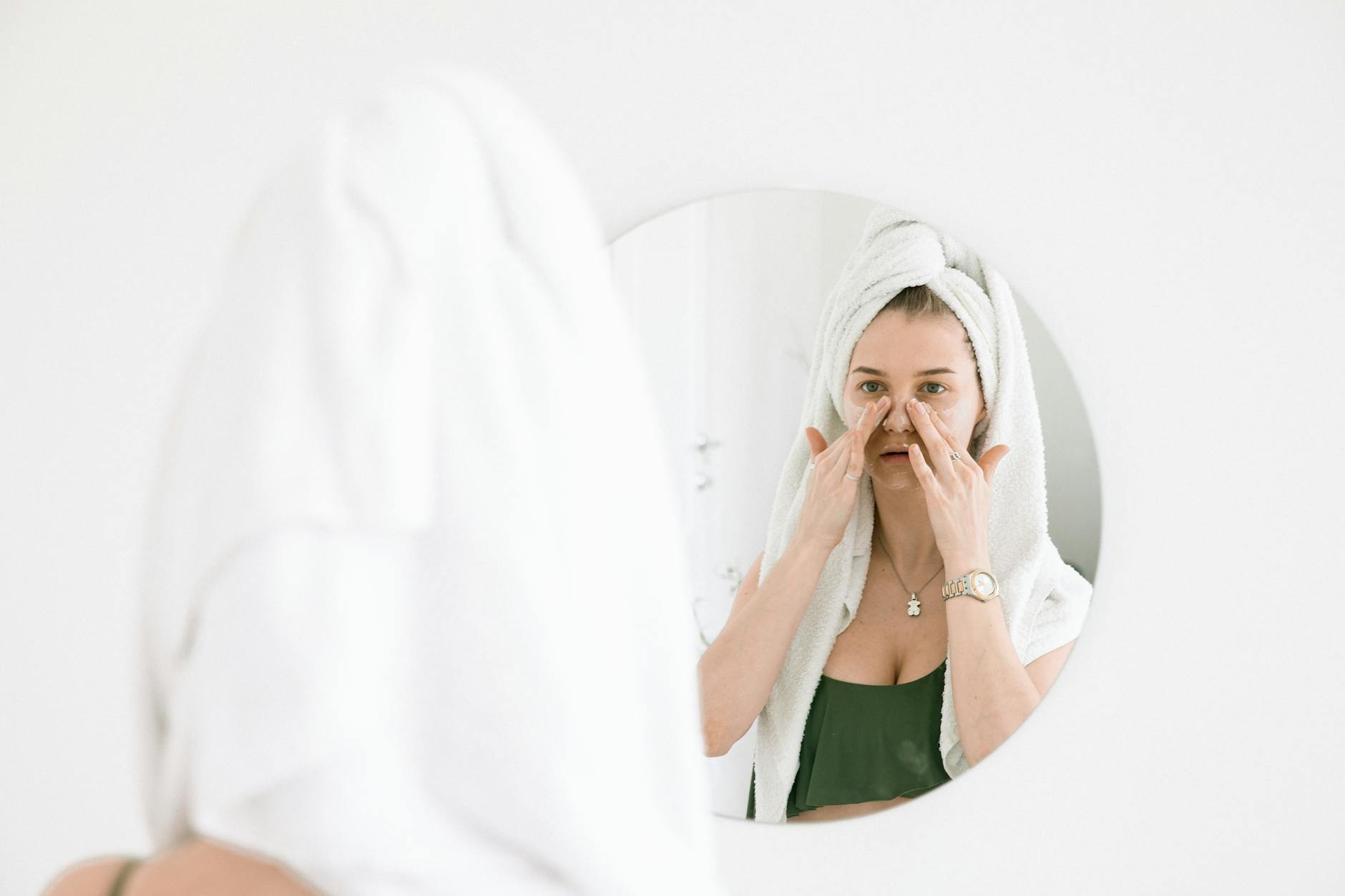
One practical example comes from a 35-year-old dermatology nurse who spent months fighting worsening maskne despite using three different acne cleansers. She switched to a single, gentle hydrating cleanser (pH-balanced, sulfate-free, no acne actives), cleansed exactly twice daily, and added a brief lukewarm-water rinse after removing her mask without any soap. Within three weeks, her maskne began to clear; within two months, it had resolved significantly.
The key was reducing her daily cleansing from five or six times to two dedicated cleanses plus one water-only rinse. This protocol works because it allows the skin barrier to recover while still addressing the sweat and bacteria accumulation from mask wear. Many healthcare workers report similar success when they commit to a deliberate, minimalist cleansing routine rather than reactive washing throughout their shift.
The Future of Maskne Management for Healthcare Workers
As awareness grows about the role of over-cleansing in maskne persistence, some healthcare facilities are beginning to stock gentler cleansers in bathrooms specifically for facial use, separate from hand-washing stations. This change acknowledges that facial skin requires different products than hands, and it removes the friction (literally) of workers making choices between convenience and skin health.
The path forward for healthcare workers with maskne involves accepting that aggressive cleansing is counterproductive and that effective management centers on barrier support, minimal disruption, and addressing the mask environment itself rather than trying to chemically eliminate the bacteria that naturally thrive in that environment. As more research documents the connection between cleanser choice and maskne severity, healthcare facilities and workers alike are likely to shift toward gentler, more targeted skincare that supports rather than undermines recovery.
Conclusion
The finding that 59% of healthcare workers with maskne believe their cleanser is making acne worse is not surprising to dermatologists—it’s a direct consequence of over-cleansing with harsh formulas. Healthcare workers, uniquely pressured to maintain spotless hygiene and facing masks that encourage frequent face-washing, often inadvertently damage their skin barrier in pursuit of clearer skin. The solution is not finding a stronger cleanser but rather committing to a gentler formula, reducing cleansing frequency, and supporting skin recovery between shifts.
If you’re a healthcare worker struggling with maskne, the first step is examining your current cleanser and cleansing frequency. If you’re using more than two dedicated cleansings per day or relying on harsh, stripping products, consider switching to a pH-balanced, gentle formula and a minimalist routine. The data is clear: in this case, less is more, and your skin will likely thank you within weeks.
Frequently Asked Questions
How many times should I cleanse my face if I wear a mask all day?
Twice daily is sufficient—morning and evening. If you need to wash during your shift because of sweat or visible debris, use cool water only without soap. Save your gentle cleanser for your dedicated morning and evening washes.
Can I use the hand soap from work on my face in a pinch?
Avoid this if possible. Hand soaps are formulated to be much harsher than facial cleansers and will damage your skin barrier, especially if your skin is already compromised by maskne. A quick water rinse is preferable.
Will switching to a gentler cleanser actually help my maskne, or is it just less damaging?
A gentler cleanser alone doesn’t treat maskne, but it removes the layer of irritation and barrier damage that over-cleansing creates. By reducing irritation, you allow your skin’s natural healing and defensive mechanisms to engage. Many people see significant improvement simply by stopping the damage.
What should I look for in a cleanser if I have maskne?
Choose a cleanser with a pH between 4.5 and 5.5, minimal surfactants (avoid sulfates), no alcohol, and no acne medications (save those for a separate treatment step). Milk cleansers, hydrating gels, and cream cleansers are generally good choices for compromised skin.
If my cleanser is making maskne worse, should I stop cleansing altogether?
No, but reduce to twice daily and switch to a very gentle formula. Cleansing removes sweat, bacteria, and dead skin cells that can worsen maskne, but over-cleansing prevents recovery. The balance is found in gentleness and minimal frequency, not elimination.
How long until I see improvement if I switch to a gentler cleansing routine?
Most people notice improvement within two to four weeks, as the skin barrier begins to recover and irritation decreases. However, it can take six to eight weeks to see substantial clearance of existing lesions.
You Might Also Like
- At Least 24% of Adults With Persistent Acne Have Tried Their Cleanser Is Making Their Acne Worse
- At Least 71% of Night Shift Workers With Acne Believe That Their Laundry Detergent Could Be Irritating Their Skin
- At Least 65% of Night Shift Workers With Acne Say That Over-Washing Strips the Skin Barrier and Worsens Breakouts