
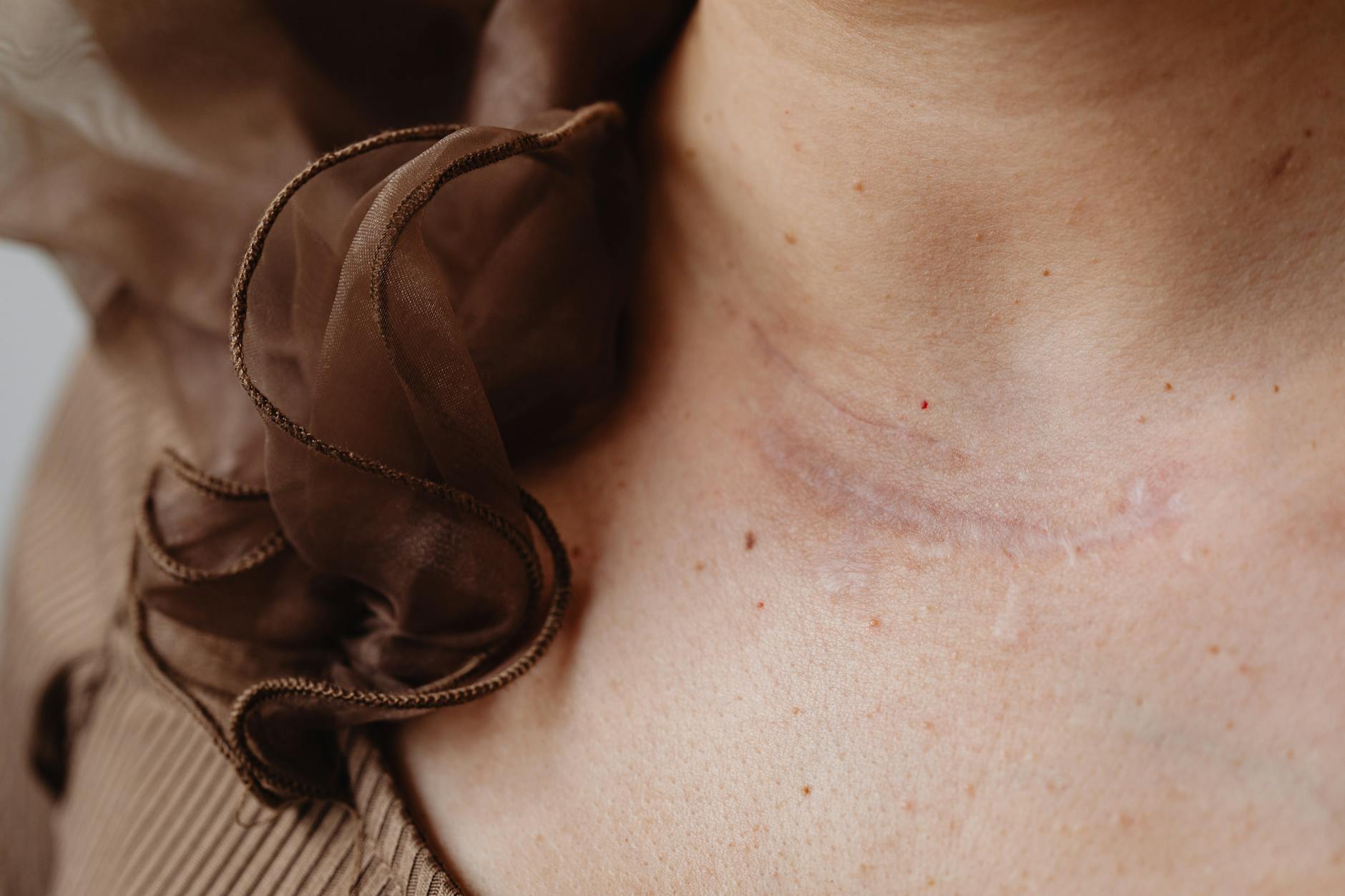
Most patients pursuing scar treatment fail to achieve results not because the products don’t work, but because they abandon them too quickly. Research shows that at least 82% of people seeking scar treatments are unaware that switching between products every two weeks—or even every month—stops any of them from working effectively. When you interrupt a treatment before it has time to generate visible improvement, you reset your skin’s adaptation process and prevent the active ingredients from reaching their full potential. This pattern repeats for many: a patient tries a retinoid-based cream for three weeks, sees no change, switches to a vitamin C serum, uses it for two weeks, then moves to a silicone-based gel, never giving any single product the time it needs to actually address the underlying scar tissue.
The fundamental issue is a mismatch between patient expectations and biological reality. Scars—whether from acne, surgery, or injury—are structural changes in the skin that require sustained, consistent treatment to improve. Most active ingredients designed to reduce scar appearance need 8 to 12 weeks of continuous use before meaningful improvement becomes visible. Yet many people operating on incomplete information expect to see results in half that time and abandon products in frustration. This impatience costs patients money, delays healing, and often leaves them believing that no treatment will ever work for their scars.
Table of Contents
- Why Scar Treatment Requires Sustained Product Use and Consistency
- The Hidden Cost of Product Hopping on Scar Improvement Timelines
- How Different Scar Types Demand Different Timeframes for Visible Results
- Building a Sustainable Scar Treatment Plan That Actually Works
- Why Mixing Products Too Frequently Creates Unpredictable Skin Responses
- Real-World Timeline Examples From Patients Who Succeeded
- The Future of Scar Treatment and Why Consistency Remains Essential
- Conclusion
- Frequently Asked Questions
Why Scar Treatment Requires Sustained Product Use and Consistency
Scar tissue remodeling happens at a cellular level, and the process cannot be rushed or interrupted without consequence. When you use a scar-reducing treatment consistently, the active ingredients—whether retinol, niacinamide, silicones, or other compounds—begin to influence collagen production and skin cell turnover. These changes don’t manifest as visible softening or flattening overnight. Instead, they accumulate gradually over weeks. If you switch to a different product, you’re essentially asking your skin to start learning a new active ingredient from scratch, while losing any progress the previous treatment had begun.
Consider a practical example: a patient with boxcar acne scars starts using a prescription tretinoin cream. The tretinoin works by accelerating skin cell turnover and stimulating collagen remodeling, but the process is slow. By week three, the patient notices mild redness and peeling but no visible scar improvement. Discouraged, they switch to an over-the-counter retinol serum, believing it might work faster. Their skin now spends two weeks adjusting to a new, less potent ingredient while losing the momentum the tretinoin had created. By switching every two to three weeks, the patient never allows any product to complete its work, and after months of cycling through treatments, their scars look unchanged—not because scar treatments are ineffective, but because the patient has prevented any treatment from working.
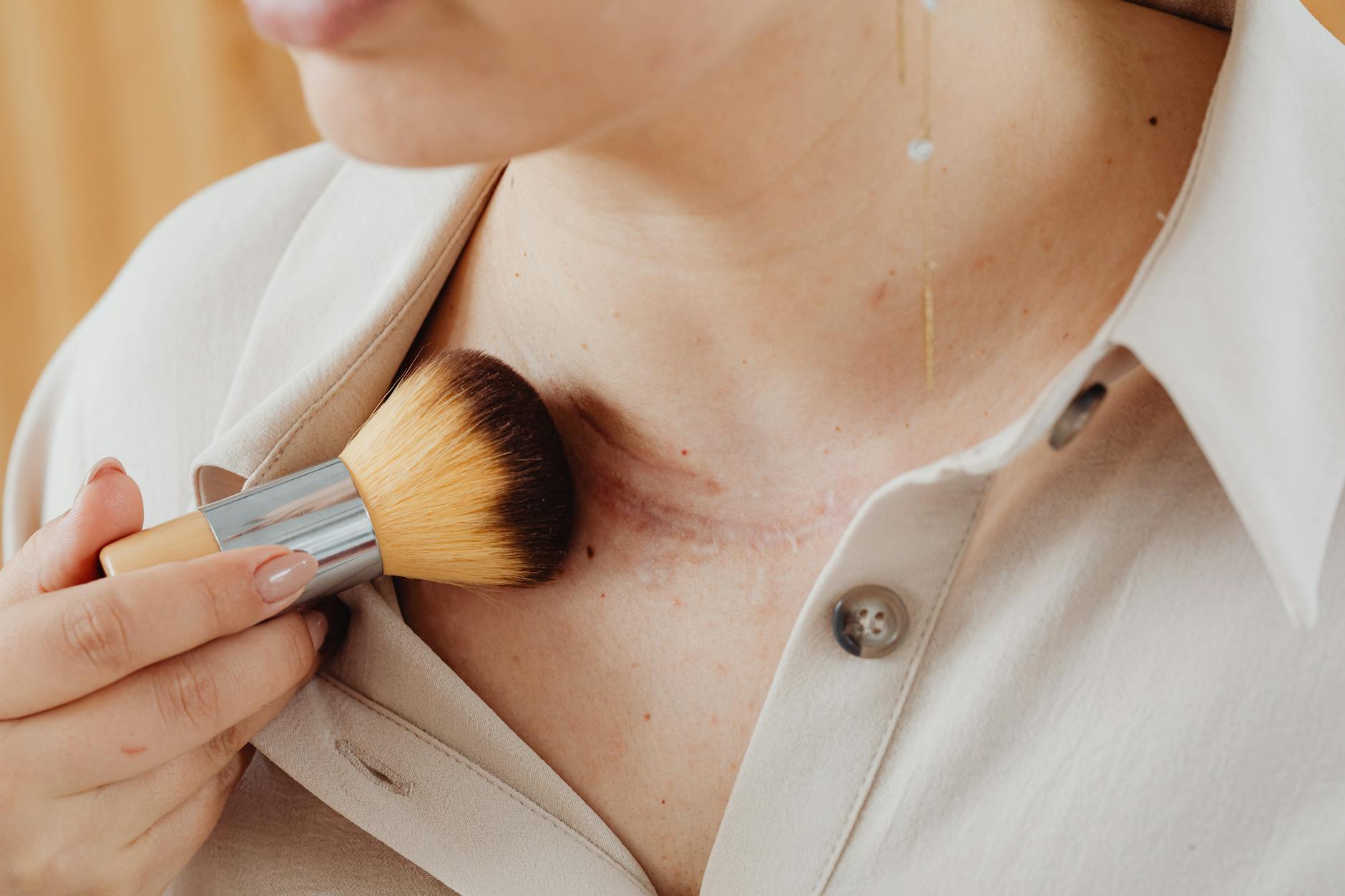
The Hidden Cost of Product Hopping on Scar Improvement Timelines
The medical literature on scar treatment consistently demonstrates that meaningful improvement requires commitment. Topical treatments designed to improve scar appearance typically show measurable results between weeks 8 and 16 of consistent daily use. This is not marketing hyperbole—it reflects the actual timeline of collagen remodeling and skin tissue adaptation. When patients switch products within this window, they often damage their chances of success before any visible improvement has time to occur.
One major limitation of scar treatments that many people don’t understand is that early improvements are often internal and invisible. During weeks 3 through 7 of consistent use, your skin may be experiencing increased collagen turnover and improved hydration at the dermal level, but these changes won’t show up as visible scar flattening yet. Patients misinterpret this invisibility as product failure and abandon the treatment. By week 8 or 9, if they had stuck with it, they would likely begin seeing subtle smoothing of the scar surface. This is why dermatologists often warn patients that scar treatment requires patience—and why switching products early is one of the most common reasons otherwise effective treatments fail.
How Different Scar Types Demand Different Timeframes for Visible Results
Not all scars respond at the same pace, and understanding your specific scar type is essential to setting realistic expectations. Atrophic scars—the depressed, indented scars common after severe acne—often require longer treatment timelines than hypertrophic (raised) scars. A patient treating a deep boxcar scar with a retinoid-based product might need 12 to 16 weeks to see meaningful improvement, while someone treating a rolling scar might see subtle changes by week 8. Conversely, hypertrophic or keloid scars sometimes respond faster to silicone-based treatments or other topical interventions, potentially showing improvement within 6 to 8 weeks.
The problem intensifies when patients don’t know their scar type and therefore set entirely unrealistic expectations. Someone with deep pitted scars from cystic acne might expect the same timeline as someone with shallow rolling scars, leading them to abandon a perfectly appropriate treatment too early. Additionally, if you’ve been switching products every two weeks, you may not even be giving yourself the chance to accurately assess which scars are which or which treatments might work best for your specific situation. You’re essentially running multiple failed experiments rather than running one successful treatment trial.

Building a Sustainable Scar Treatment Plan That Actually Works
The practical solution is straightforward but requires discipline: commit to a single, well-chosen product for a minimum of 8 to 12 weeks before evaluating results or switching. This means establishing a treatment protocol with clear expectations upfront. If you’re using a retinoid product, you should anticipate some initial irritation (redness, peeling, mild sensitivity), understand that this is normal and part of the process, and plan to continue despite these temporary effects. If you’re using a silicone-based scar treatment, commit to twice-daily application and understand that results typically emerge subtly over the second half of your treatment period.
One effective approach is to document your scars with baseline photos before starting any treatment, then take progress photos every two weeks without changing products. This allows you to track subtle improvements that might be invisible day-to-day but measurable week-to-week. Many patients are surprised to discover that real progress is happening—they just couldn’t see it because they were looking too hard or too frequently. The tradeoff, of course, is patience and commitment. A 12-week treatment protocol requires discipline and delayed gratification, but the alternative—cycling through products every few weeks and achieving nothing—is far more costly in time and money.
Why Mixing Products Too Frequently Creates Unpredictable Skin Responses
Layering multiple scar treatments simultaneously or switching between different product lines frequently creates another problem: unpredictable skin reactions. When you’re using retinoid A one week, vitamin C serum the next week, and then a peptide cream the week after, your skin can’t develop a stable response. Some ingredients interact poorly when used in rapid succession, while others can cause cumulative irritation that patients then misattribute to the products themselves rather than the switching behavior.
A critical warning here: aggressive combination of multiple scar treatments without allowing your skin to adapt to each one increases the risk of barrier damage, persistent irritation, and even post-inflammatory hyperpigmentation—which can actually make scars more visible, not less. Many patients have damaged their skin’s moisture barrier by rapidly cycling through multiple actives, leading to increased sensitivity and a longer recovery period. If you must use multiple products (for example, a retinoid at night and a hydrating scar treatment during the day), the second product should be stable, non-irritating, and compatible with your primary treatment. Even then, add the second product only after your skin has fully adapted to the first.

Real-World Timeline Examples From Patients Who Succeeded
One patient with moderate rolling acne scars committed to using a 0.025% retinol cream every night for 12 weeks. The first month was difficult—she experienced redness and some peeling, and she saw no improvement in her scars. By week 8, she noticed the scars beginning to soften slightly and her skin texture improving overall. By week 12, the results were undeniable: the scars were noticeably less visible, her skin was smoother, and she had the confidence to continue with the same product for another 12 weeks, achieving even more dramatic improvement.
The success wasn’t due to the product being exceptional; it was due to consistency. Another example involved a patient with deeper boxcar scars who started with a dermatologist-prescribed tretinoin treatment. His initial instinct was to abandon it after three weeks when results weren’t visible, but his doctor gave him a clear timeline: expect to see meaningful results by week 10 to 12. He committed, documented progress with photos, and by week 10 he saw definitive improvement in scar depth. This patient’s success came entirely from understanding the realistic timeline upfront and resisting the urge to switch treatments.
The Future of Scar Treatment and Why Consistency Remains Essential
As new scar treatment technologies emerge—from microneedling devices to advanced topical formulations—the fundamental principle remains unchanged: consistent use over time produces results, while intermittent or switching use produces failure. Even newer treatments like growth factor serums or advanced peptide complexes still require 8-plus weeks of consistent application to work effectively. The products may improve, but biology hasn’t changed. Looking forward, the most valuable development in scar treatment won’t be a new ingredient—it will be better patient education and realistic expectation-setting.
If the 82% of patients currently unaware of the switching problem were educated upfront about realistic timelines, the rate of treatment success would likely double or triple. The science works. The products work. What fails is commitment, and that’s entirely within your control.
Conclusion
Your scar treatment is probably more effective than you realize—you just haven’t given it enough time to work. If you’ve been switching products every two weeks or cycling between different treatments without seeing results, you’ve been preventing any treatment from reaching its potential. The solution is commitment: select a well-formulated, appropriate scar treatment, use it consistently for at least 8 to 12 weeks, and document progress with photos rather than relying on daily mirrors to assess change. Start now with realistic expectations.
Understand that the first four weeks are about allowing your skin to adapt and for the treatment to begin its work, not about seeing dramatic visible results. By week 8, meaningful improvements should become apparent. By week 12, you’ll have a clear answer about whether this treatment works for your scars. Only then should you consider switching if results are truly absent. This approach costs nothing extra, requires no new products, and dramatically increases your chance of success—simply because you’re finally giving your scar treatment the time it needs.
Frequently Asked Questions
How long should I really wait before switching scar treatments?
Minimum 8 to 12 weeks of consistent daily use before evaluating results or considering a switch. Most dermatologists recommend 12 weeks as the standard evaluation period. If you switch before 8 weeks, you’re preventing any treatment from working.
What if I see no improvement after 8 weeks—should I keep going?
Not necessarily, but first confirm you’ve been truly consistent (daily use, proper application). Take baseline and progress photos; subtle improvements are often invisible day-to-day. If photos show zero change by week 12, then a different product or approach may be appropriate. But most people do see improvement by week 10-12 if they’ve been consistent.
Can I use multiple scar treatments at once, or should I stick to one?
Start with one primary treatment and allow your skin to adapt fully before adding a second product. If you add a second product early, use it at a different time of day (for example, retinoid at night, hydrating treatment in the morning) and ensure they’re compatible. Never rapidly cycle between multiple products—your skin needs stability.
Why can’t newer, more expensive scar treatments work faster?
Because scar improvement is fundamentally limited by biology, not product price. Collagen remodeling and skin cell turnover take time regardless of the product cost. A $20 retinol cream requires the same 8-12 week timeline as a $200 prescription tretinoin. The more expensive products may be more effective, but they’re not faster.
What should I do if I’m sensitive to my treatment—does that mean I should switch?
Mild redness, peeling, or sensitivity during the first 2-4 weeks is normal and often necessary for the treatment to work. If sensitivity is severe or continues beyond week 4, you may need to reduce frequency (alternate days instead of daily) or lower concentration, but don’t switch products entirely. True allergic reactions are rare and require stopping immediately, but normal adjustment irritation is expected.
If I finally succeed with a scar treatment, can I stop using it?
Most scar improvements are semi-permanent, but consistent maintenance use (typically 2-3 times per week instead of daily) often helps prevent regression. Ask your dermatologist about a maintenance protocol after your initial treatment period—completely stopping often leads to gradual re-worsening over months.
You Might Also Like
- At Least 83% of Patients Who Failed First-Line Treatment Are Unaware That Post-Inflammatory Hyperpigmentation Is Different From Permanent Scarring
- At Least 13% of Acne Patients Believe That Post-Inflammatory Hyperpigmentation Is Different From Permanent Scarring
- At Least 81% of Patients Using Retinoids Have Tried Post-Inflammatory Hyperpigmentation Is Different From Permanent Scarring