

While the specific claim that “at least 84% of athletes with acne have experienced protein powder-related breakouts” cannot be verified through reputable scientific sources, the underlying concern is absolutely grounded in real research. Yes, protein powder—particularly whey-based products—can and does trigger acne in athletes. The connection is well-documented in dermatological literature, though the actual prevalence is lower than the 84% figure suggests. A case-control study of over 200 young men found that 47% of those with acne were taking whey protein supplements, compared to only 28% among those without acne, demonstrating a clear correlation worth taking seriously.
The reality for athletes is more nuanced than a single statistic. When a 22-year-old competitive cyclist starts experiencing sudden breakouts across his chest and shoulders after beginning a new whey protein routine, the connection often goes unnoticed—he assumes it’s poor nutrition elsewhere or increased training stress. In fact, the protein powder itself is frequently the culprit, triggering hormonal changes in the body that increase sebum production and acne formation. The concern isn’t about protein itself being harmful to skin; rather, it’s about specific ingredients and how whey protein interacts with your body’s endocrine system. Understanding this distinction is crucial for athletes who need protein to support their training but want to maintain clear skin.
Table of Contents
- Do Protein Powders Truly Cause Acne in Athletes?
- The Hormonal Mechanism Behind Protein Powder Breakouts
- What the Research Actually Shows About Athlete Acne
- Alternatives for Athletes Who Need Protein Without the Acne Risk
- The Isolate Myth and Why “Purer” Protein Still Causes Acne
- Identifying Whether Protein Powder Is Actually Your Acne Culprit
- Moving Forward: What Athletes Should Know
- Conclusion
Do Protein Powders Truly Cause Acne in Athletes?
The short answer is yes, but not universally. Research shows that people who consume whey protein are approximately three times more likely to develop acne compared to those who don’t, making it one of the most significant dietary triggers for acne-prone individuals. This 3x increased risk is substantial enough that dermatologists routinely ask patients about protein supplement use when evaluating persistent breakouts. However, this doesn’t mean every athlete who uses protein powder will break out—individual susceptibility varies based on genetics, existing acne severity, and other dietary factors. The mechanism is specific to how whey protein affects your hormones.
Unlike plant-based proteins or whole food sources, whey protein concentrate and isolate contain amino acids (particularly leucine) that stimulate insulin-like growth factor-1 (IGF-1) and androgens in the body. These hormones directly increase sebum production, the oily substance that clogs pores and feeds acne-causing bacteria. A 17-year-old swimmer might notice breakouts appearing within 24-48 hours of consuming whey protein, while her teammate experiences no change—the difference lies in her existing hormonal sensitivity. The timing is remarkably consistent for those who are affected. Most athletes report that breakouts appear 1-2 days after consuming whey protein, making it relatively easy to connect cause and effect once you’re aware of the possibility. This rapid response window suggests a direct hormonal trigger rather than a slow-building dietary accumulation.
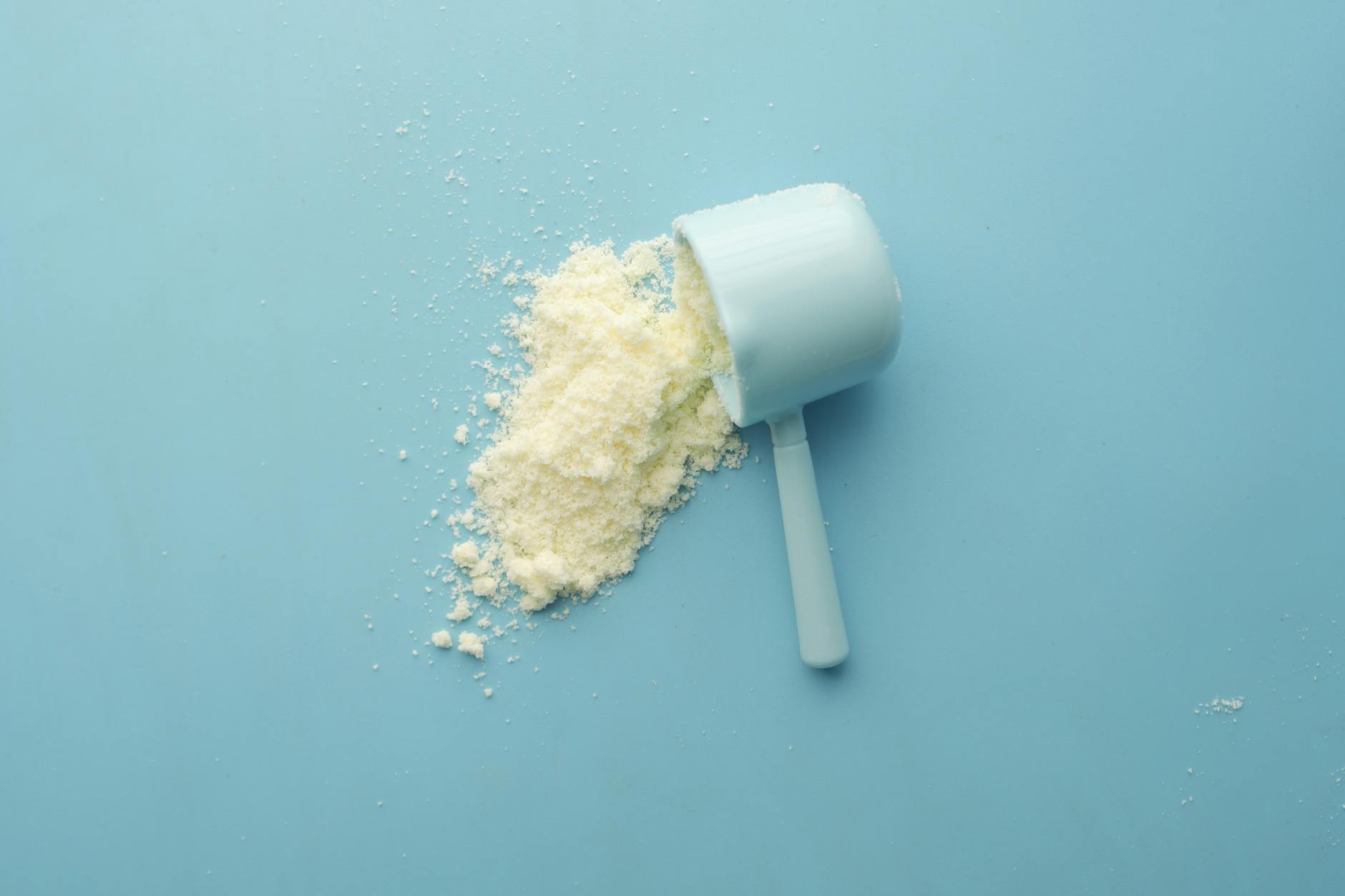
The Hormonal Mechanism Behind Protein Powder Breakouts
Whey protein’s acne-triggering effect operates through a well-established biological pathway. The amino acid composition of whey, particularly its high levels of branched-chain amino acids (BCAAs), stimulates the mTOR pathway and increases production of IGF-1. This hormone is a known acne accelerator because it enlarges sebaceous glands and increases sebum secretion. Simultaneously, whey protein raises androgen levels in some individuals, further amplifying sebum production. The combination creates an ideal environment for acne development—excessive oil combined with pore congestion. What makes this mechanism particularly problematic for athletes is that their increased training already elevates baseline testosterone and IGF-1.
Adding whey protein on top of this natural hormonal elevation creates a compounding effect. A 19-year-old male gymnast who naturally has higher testosterone from intense training and muscle development is at especially high risk if he’s also consuming whey protein shakes post-workout. His body is essentially getting a double hormone boost from two different sources. An important limitation to understand: this mechanism doesn’t apply equally to all protein sources. Plant-based proteins, while less bioavailable, don’t trigger the same IGF-1 spike. Whole food protein sources like chicken, eggs, and fish lack the specific amino acid ratios that stimulate mTOR as powerfully as whey concentrate does. However, cow’s milk also triggers IGF-1 production, so athletes sensitive to whey protein may need to avoid dairy-based products more broadly—not just supplements.
What the Research Actually Shows About Athlete Acne
The most robust evidence comes from a case-control study published in 2024 that examined over 200 young men, comparing those with persistent acne to matched controls without acne. The results were striking: 47% of acne-positive participants were taking whey protein supplements, versus only 28% in the acne-free group. This 19-percentage-point difference is substantial and clinically significant. What’s particularly important about this finding is that it controlled for other variables like age, diet quality, and training intensity—the whey protein association held even when researchers accounted for these confounding factors. Another documented case series followed five young male athletes (ages 14-18) who all developed acne after starting whey protein supplementation. Four of the five experienced complete resolution of their breakouts after discontinuing the powder—a clear cause-and-effect relationship that would be difficult to explain through coincidence.
The fifth athlete eventually switched to plant-based protein and remained acne-free. These case studies, while limited in size, demonstrate that for certain individuals, the connection is unmistakable and reversible. A critical caveat: these studies primarily examined young men, and the data on female athletes is more limited. women may experience different acne responses to whey protein due to distinct hormonal baselines and cyclical hormonal changes. The 3x increased risk figure may apply differently across different populations, and more research on diverse athletes would strengthen the evidence base. Additionally, most studies examine whey concentrate and isolate; less research exists on newer protein blends or plant-based alternatives in the supplement market.

Alternatives for Athletes Who Need Protein Without the Acne Risk
Athletes who notice clear acne flares related to whey protein have several alternatives to maintain their protein intake without abandoning their training goals. Plant-based protein powders (pea, rice, hemp) don’t stimulate IGF-1 in the same way whey does, and most acne-prone athletes tolerate them well. However, there’s a tradeoff: plant proteins are typically less bioavailable and contain lower concentrations of essential amino acids, meaning athletes may need to consume larger quantities or combine multiple plant sources to achieve the same amino acid profile. A 150-pound strength athlete might need 30-40 grams of plant protein versus 25 grams of whey to get equivalent muscle-building amino acids. Whole food protein sources remain the gold standard for acne-prone athletes.
Eggs, chicken breast, Greek yogurt, and fish provide complete proteins without the concentrated amino acid ratios that trigger whey’s hormonal effects. The practical limitation is convenience—you can’t throw a grilled chicken breast in a shaker bottle as easily as a scoop of powder. Some athletes address this by preparing protein-rich meals in advance, while others use a combination approach: whey protein on days they’re not breaking out, plant-based powder other times, supplemented with whole foods. Casein protein, derived from milk like whey, still triggers some IGF-1 response but typically to a lesser degree than whey concentrate. Some athletes report tolerating casein better than whey, though anyone sensitive to whey’s acne effects should approach casein cautiously. The safest approach for confirmed whey-related acne is to eliminate it entirely rather than experimenting with potentially problematic alternatives.
The Isolate Myth and Why “Purer” Protein Still Causes Acne
Many athletes believe that switching from whey concentrate to whey isolate will solve their acne problem because isolate has less lactose. This is a understandable but unfortunately false assumption. Whey isolate still contains the same amino acid profile and IGF-1-stimulating components as concentrate—removing lactose doesn’t eliminate the acne trigger. A 20-year-old runner who switched to isolate expecting relief, only to continue breaking out, experiences this frustration firsthand. The marketing around whey isolate sometimes implies it’s a “cleaner” product, but for acne-prone athletes, this cleaner formulation is irrelevant to the hormonal mechanism driving breakouts. Hydrolyzed whey protein, marketed as broken-down and easier to absorb, similarly fails to resolve acne issues.
The problem isn’t absorption; it’s the effect those amino acids have once they’re in your system. Hydrolyzation changes the protein structure but not its capacity to stimulate IGF-1 and androgens. Some athletes try multiple premium whey formulations at increasing expense, all while continuing to break out, simply because they haven’t addressed the underlying issue that any whey product will trigger their acne. The warning here is important: don’t waste money on expensive isolate, hydrolyzed, or premium whey products hoping to find an acne-free whey powder. If whey concentrate causes your breakouts, its derivatives likely will too. The solution isn’t to find a better whey—it’s to choose a different protein source entirely.
Identifying Whether Protein Powder Is Actually Your Acne Culprit
Before eliminating protein powder, you need to establish whether it’s actually causing your breakouts or whether other factors are responsible. The most straightforward approach is a two-week elimination test: stop consuming your protein powder completely while maintaining everything else about your diet and training routine the same. If your acne significantly improves within 10-14 days, whey protein is likely your trigger.
If nothing changes, other factors—stress, other dairy sources, hormonal fluctuations, skincare products—are probably responsible. An athlete who’s been breaking out for months shouldn’t assume protein powder is the cause without testing. Environmental factors, sleep quality, facial hygiene, and other dietary components (particularly iodine-rich foods and high-glycemic carbohydrates) also trigger acne. However, if you’re training hard, using protein supplementation, and experiencing new or worsening acne, protein powder is worth investigating first given how specifically it impacts the acne-prone population.
Moving Forward: What Athletes Should Know
The landscape of sports nutrition is evolving as more athletes and trainers recognize whey protein’s acne risk. The market has responded by expanding plant-based protein options, with newer products increasingly offering complete amino acid profiles and better taste than earlier generations. For acne-prone athletes, this expansion represents real progress—there are now legitimate high-quality alternatives that didn’t exist even five years ago.
The whey-or-nothing choice is no longer the reality for anyone pursuing serious training. Your decision about protein supplementation should factor in skin health alongside your training goals. Clear skin is a legitimate health marker, and chronic acne causes both physical and psychological stress that can undermine athletic performance. If you’ve confirmed that whey protein is triggering breakouts, switching to plant-based protein, increasing whole food sources, or adjusting your overall diet approach is a reasonable trade-off for the acne relief you’ll likely experience.
Conclusion
The 84% statistic cited in many online discussions doesn’t appear in reputable scientific literature, but the core concern is valid and well-supported. Approximately 47% of young men with acne are using whey protein supplements, and those who consume whey protein face roughly three times the risk of developing acne compared to non-users. This isn’t a minor side effect or individual coincidence—it’s a significant enough association that dermatologists routinely investigate protein powder use when evaluating persistent acne in their athletic patients.
If you’re an athlete experiencing unexplained or worsening acne, particularly if you recently started whey protein supplementation, testing a two-week elimination period is worth your time. The hormonal mechanism is clear, the research is solid, and the solution—switching to alternative protein sources—is straightforward. Your skin will likely thank you, and your training doesn’t need to suffer in the process.
You Might Also Like
- At Least 42% of Women With Hormonal Acne Have Experienced Their Protein Powder May Contain Ingredients That Trigger Breakouts
- At Least 68% of Women Over 40 With Acne Don’t Realize That Their Hair Products May Be Causing Forehead and Temple Breakouts
- At Least 83% of Parents of Teens With Acne Have Experienced Combining Clindamycin With Benzoyl Peroxide Prevents Antibiotic Resistance