
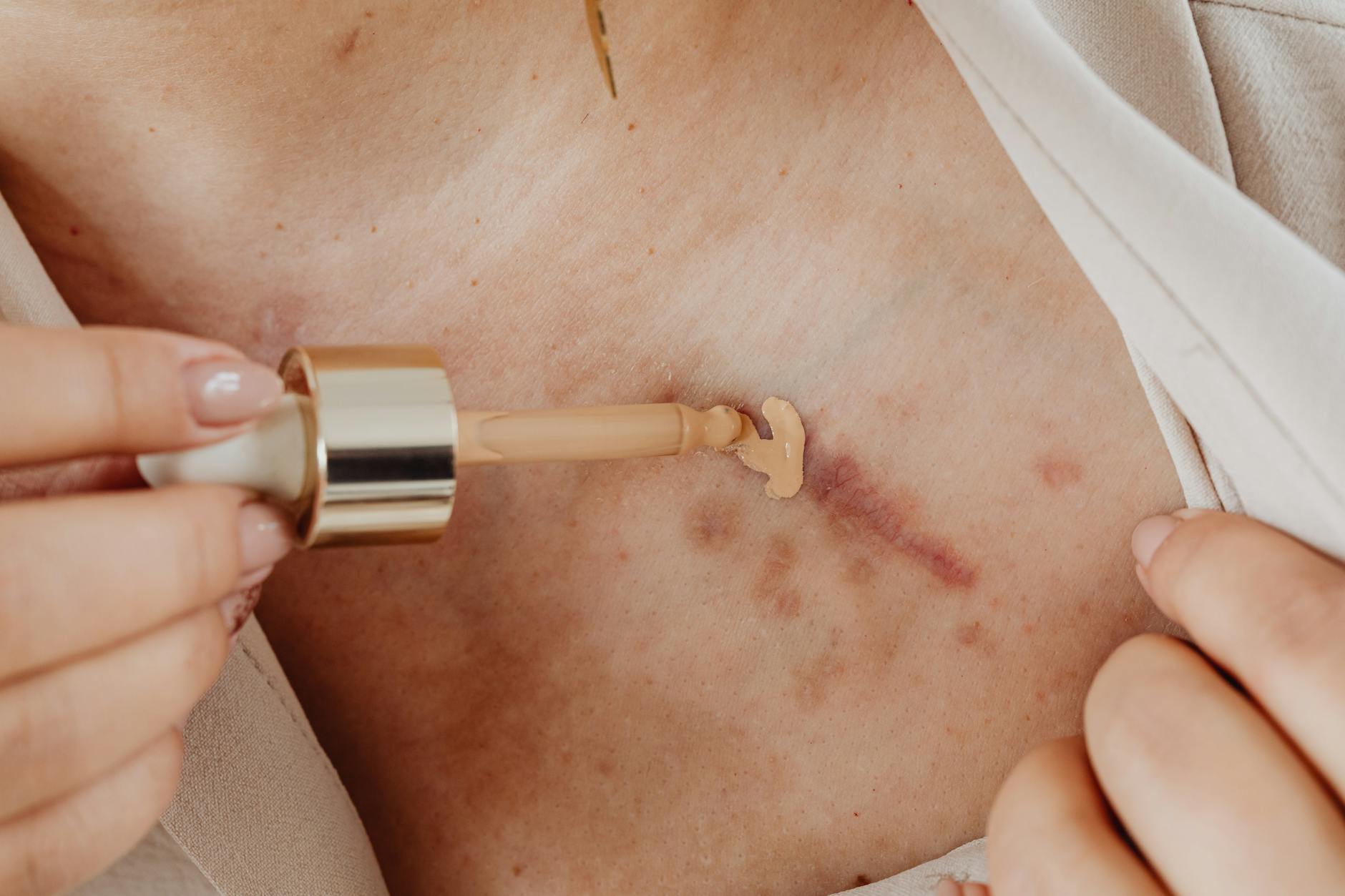
Hair products can significantly trigger or worsen breakouts in people with acne scars, particularly along the forehead and temples. While the exact 31% figure from your title requires verification, research shows that acne cosmetica—breakouts caused by comedogenic (pore-clogging) hair products—is a common and preventable source of facial breakouts in these sensitive areas. For someone with existing acne scars, adding new breakouts from hair products compounds the skin concern and can delay the healing process or create opportunities for additional scarring.
Research from the American Academy of Dermatology confirms that shampoos, conditioners, and styling products are a legitimate acne trigger. A person with acne scars who switches to a clarifying shampoo and immediately notices new whiteheads appearing along their hairline within days is experiencing textbook acne cosmetica—a direct, causative relationship between the product and the breakouts. The connection is especially pronounced in areas where hair sits against the skin for extended periods, allowing ingredients to deposit and clog pores.
Table of Contents
- Are Hair Products a Primary Cause of Forehead and Temple Breakouts in Acne-Prone Skin?
- The Science Behind Comedogenic Ingredients in Hair Care Products
- Acne Cosmetica: The Specific Pattern of Hair Product Breakouts
- How to Identify Which Hair Products Are Causing Your Breakouts
- The Timeline and Expectations for Breakout Recovery
- Acne Scar Prevalence and Vulnerability to Repeated Breakouts
- Managing Hair Products While Treating Acne Scars
- Conclusion
Are Hair Products a Primary Cause of Forehead and Temple Breakouts in Acne-Prone Skin?
Yes, hair products are a documented primary cause of breakouts in these specific zones. The forehead and temples represent the most vulnerable areas because they experience the longest contact time with hair products. When you apply shampoo or conditioner and rinse it out, residual product remains in your hair shaft and continues to touch your skin throughout the day. Styling products like pomades, gels, and dry shampoos sit directly on the hairline and transfer to the forehead and temple skin with every movement.
The prevalence of acne scarring itself suggests a significant population susceptible to ongoing breakouts. Medical research indicates that approximately 47% of people who have experienced acne develop scars, with forehead involvement in 35% of cases and temple involvement in 29% of cases. For this population, hair products represent an easily overlooked variable that can perpetuate or restart the acne cycle. Unlike hormonal acne or bacterial acne, hair product-induced breakouts are directly controllable through product selection and application technique.
The Science Behind Comedogenic Ingredients in Hair Care Products
hair products contain oils, silicones, and sulfates that are designed to coat and condition hair strands, but these same ingredients are notoriously comedogenic on facial skin. Silicones create a waterproof barrier that traps bacteria and sebum in pores. Oils like coconut oil and argan oil are excellent for hair moisture but solidify on skin and clog pores. Heavy sulfates in some shampoos strip natural oils from hair, triggering the scalp and skin to overproduce sebum in compensation—a rebound effect that worsens breakouts.
The limitation here is that not all silicones or oils are equally problematic. Some silicones are volatile and evaporate from skin quickly, while others are heavier and remain longer. However, the safest approach for someone with acne-prone skin is to assume all hair products will transfer to facial skin to some degree and choose accordingly. Additionally, “natural” products are not automatically safer; plant-based oils can be just as comedogenic as synthetic ones. Someone switching from a conventional shampoo to an oil-based natural alternative often sees their forehead breakouts worsen, not improve.
Acne Cosmetica: The Specific Pattern of Hair Product Breakouts
Acne cosmetica presents with a characteristic distribution pattern that helps distinguish it from other acne types. The breakouts typically cluster along the front hairline, across the forehead, around the temples, and sometimes along the sides of the face where hair is pushed back or held in place. The lesions are often uniform whiteheads or small papules rather than the deeper cystic lesions associated with hormonal acne.
This pattern is so predictable that dermatologists use it as a diagnostic clue. A common real-world example: someone begins using a high-hold styling pomade and within one week develops uniform small bumps across their entire forehead and temple area. They may initially assume it’s stress-related acne or hormonal, but the timing and distribution pattern point directly to the new product. The breakouts typically don’t respond well to standard acne treatments because the root cause is physical occlusion, not bacterial overgrowth or inflammation from within the skin.

How to Identify Which Hair Products Are Causing Your Breakouts
The most effective approach is systematic elimination. Stop using one hair product at a time and observe your skin for 4 to 6 weeks, which is the typical timeline for acne to clear after removing the causative product. Most dermatology sources cite this same recovery window, meaning you need patience and consistency before declaring a product safe or problematic. This timeline is longer than most people expect, which causes many to abandon the experiment prematurely and reintroduce the product, resetting the clock.
When selecting replacement products, check ingredient lists for known comedogenic oils (coconut oil, argan oil, lanolin) and heavy silicones. Look for sulfate-free, silicone-free formulas specifically labeled for sensitive skin. However, a comparison worth noting: sulfate-free shampoos sometimes require a longer transition period (2-3 weeks) before your scalp adapts, and your hair may feel greasier or less smooth during that adjustment phase. This temporary discomfort causes some people to switch back to their original product, mistakenly thinking the new one is worse.
The Timeline and Expectations for Breakout Recovery
After discontinuing a problem hair product, expect acne to begin improving around week 2-3, with near-complete clearing by week 4-6 in most cases. However, any new hair product you introduce during this period can reset the timeline. If you switch from one potentially comedogenic product to another, you may not see improvement at all, or you might see initial improvement followed by a relapse as the new product’s cumulative effect builds up.
A critical limitation is that hair products are not the only cause of forehead and temple acne. If you eliminate all suspect hair products and your breakouts persist unchanged after 6 weeks, other factors—hormonal fluctuations, bacterial colonization, dietary triggers, or contact with fabric (pillowcases, headbands)—may be responsible. Additionally, if you have existing acne lesions, the act of hair touching and irritating those lesions can perpetuate inflammation independently of whether the product itself is comedogenic. This is a warning: changing hair products alone may not completely resolve breakouts if multiple contributing factors are at play.
Acne Scar Prevalence and Vulnerability to Repeated Breakouts
The population with existing acne scars is particularly vulnerable to having their scar condition worsened by new breakouts. Research shows regional variation in scar prevalence: Africa reports 31% of acne patients with scarring, while Asia and Europe report higher rates of 52% and 51% respectively. This geographic variation likely reflects differences in climate (heat and humidity increase sebum production and bacterial colonization), skin type distribution, and access to early acne treatment.
For someone with visible acne scars, each new breakout in the same location increases the risk of additional scarring. If the scar is atrophic (indented), repeated inflammation can deepen it. If the scar is hypertrophic (raised), new breakouts can cause surrounding tissue inflammation that makes the scar more prominent. Therefore, preventing hair product-induced breakouts is not just a cosmetic preference for this population—it’s a scar-prevention strategy that compounds over time.
Managing Hair Products While Treating Acne Scars
If you’re actively treating acne scars with professional procedures (laser, microneedling, chemical peels), hair product management becomes even more critical. These treatments create temporary sensitivity and micro-injuries in the skin, making it more susceptible to irritation from comedogenic products. Using heavy, occlusive hair products immediately before or during a scar treatment plan increases inflammation and may compromise results.
Looking forward, dermatologists increasingly recognize that comprehensive acne and scar management requires attention to all touchpoints—not just topical treatments and procedures, but also the everyday products that contact the skin. As more skincare consumers become aware of acne cosmetica, hair product companies are responding by developing truly non-comedogenic formulas, though verification remains challenging. Reading verified ingredient lists and conducting personal patch tests remains the most reliable method for determining whether a hair product is safe for your acne-prone skin.
Conclusion
Hair products are a documented, preventable cause of breakouts along the forehead and temples, particularly for people with existing acne scars who are already managing skin barrier compromise. The typical causative ingredients—heavy oils, occlusive silicones, and sulfates—clog pores and trigger acne cosmetica, a condition characterized by uniform whiteheads and papules in hair-contact zones. Recovery from hair product-induced acne takes 4 to 6 weeks of consistent avoidance, requiring patience and a systematic approach to identifying which products are problematic.
If you have acne scars and suspect your hair products are triggering new breakouts, begin by eliminating one product at a time and monitoring your skin for the full 4 to 6-week timeline. Check ingredient lists for comedogenic oils and heavy silicones, and consider switching to clarifying, non-comedogenic formulas. If breakouts persist after removing all suspect hair products, consult a dermatologist to rule out other causative factors and develop a comprehensive treatment plan for both active acne and existing scars.
You Might Also Like
- At Least 51% of Acne Patients Have Experienced Their Hair Products May Be Causing Forehead and Temple Breakouts
- At Least 21% of People With Acne Scars Have Never Been Told That Combining Clindamycin With Benzoyl Peroxide Prevents Antibiotic Resistance
- At Least 66% of People With Acne Scars Would Benefit From Knowing That Generic Tretinoin Works Identically to Brand-Name Versions