
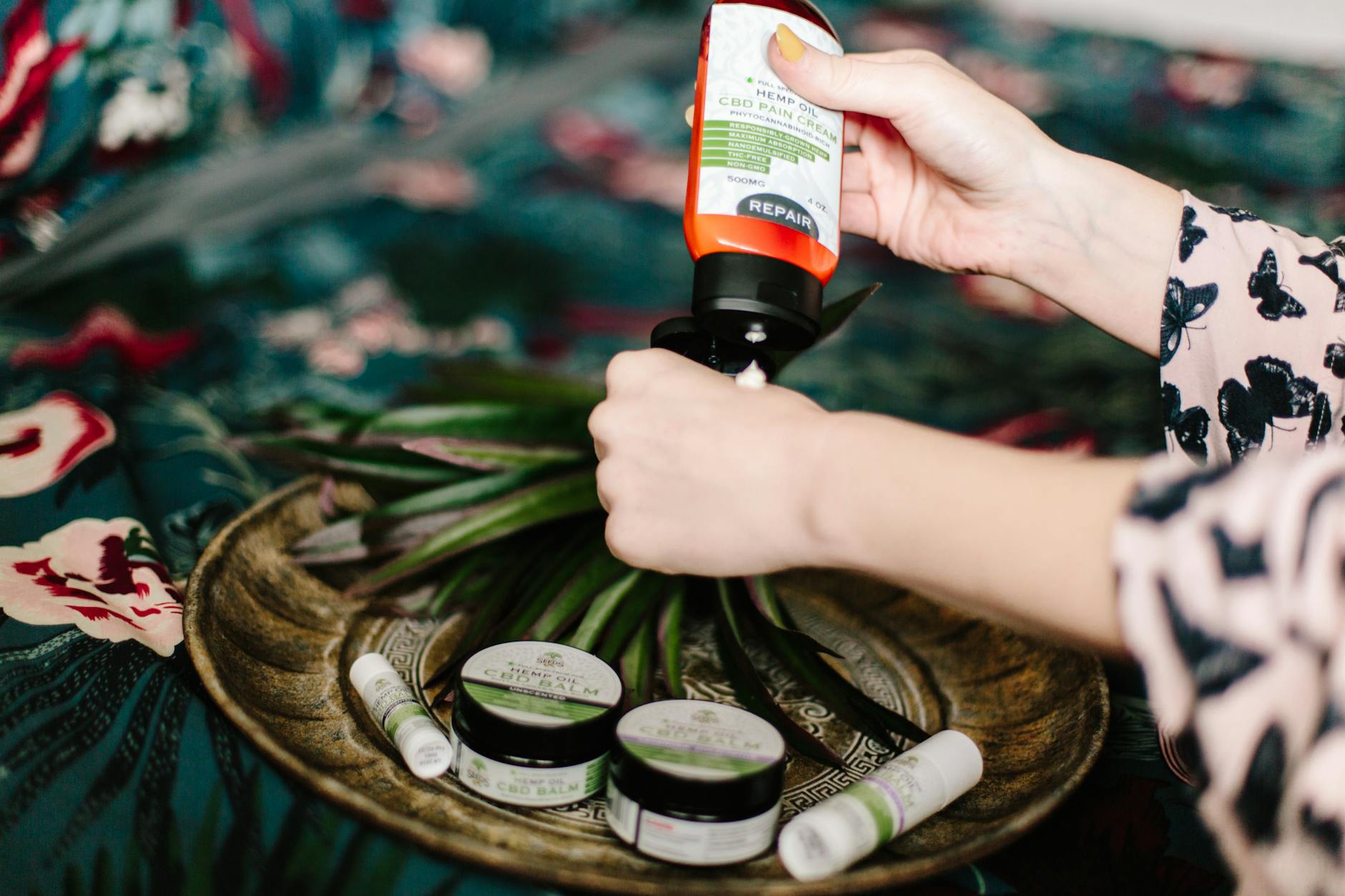
New topical cannabinoid creams are showing measurable promise in clinical trials for reducing sebum production through CB2 receptor activation, offering a fresh approach to acne management. Recent studies have demonstrated that cannabinoids can significantly decrease both sebum output and skin inflammation when applied topically, without the systemic effects associated with oral medications. A 2025 clinical trial found that a 3% cannabis seed extract cream applied twice daily reduced sebum production and erythema (redness) substantially compared to a control cream over 12 weeks, with no notable adverse effects reported.
The mechanism behind this effect is specific and well-documented: CB2 receptors are predominantly expressed in the basal, non-differentiated sebocytes—the cells that produce sebum—where they regulate lipid production and cell death through CB2-MAPK signaling pathways. This targeted action at the source of sebum production represents a departure from conventional acne treatments that primarily work through antibacterial or anti-inflammatory mechanisms. For acne sufferers tired of drying retinoids or concerned about antibiotic resistance, this biochemical angle offers genuine scientific intrigue.
Table of Contents
- How Does CB2 Receptor Activation Work Against Sebum Overproduction?
- Clinical Evidence Backing Cannabinoid Efficacy Against Acne
- The Dual Anti-Inflammatory Pathway Through CB2 and TRPV1 Activation
- How Cannabinoid Creams Compare to Conventional Acne Treatments
- Research Gaps and Limitations in Current Cannabinoid Acne Studies
- Emerging Formulations and Real-World Application Scenarios
- The Future of Cannabinoid-Based Acne Treatments
- Conclusion
How Does CB2 Receptor Activation Work Against Sebum Overproduction?
The endocannabinoid system exists throughout human skin, but CB2 receptors have particular relevance to sebaceous gland function. When activated, these receptors trigger signaling cascades—specifically the MAPK pathway—that simultaneously suppress lipid synthesis and promote controlled cell death in sebocytes. This dual action is what makes CB2 activation potentially superior to treatments that simply kill bacteria; it addresses one of acne‘s root causes by reducing the substrate that bacteria feed on.
A landmark 2025 study published in January examined Revodiol Calming Cream (RCC), a formulation containing 3% pure CBD combined with Annona cherimola fruit extract. The trial enrolled 20 adults and 22 children with mild-to-moderate atopic-prone skin and found that daily application over 56 days improved both sebum production and skin barrier function. The inclusion of children in the trial is noteworthy because it suggests these formulations may be safe for younger users, who often struggle with the irritation caused by benzoyl peroxide or adapalene. However, the study was conducted on atopic-prone skin rather than purely acne-prone skin, so direct comparison to traditional acne treatments requires caution.
Clinical Evidence Backing Cannabinoid Efficacy Against Acne
The research supporting topical cannabinoids now includes both short-term and longer-duration trials. The 12-week cannabis seed extract study remains one of the most rigorous published to date: participants applying a 3% extract cream twice daily saw statistically significant reductions in sebum output and erythema, with no side effects beyond what the control group experienced. This is particularly important because it establishes a real therapeutic window—not just anecdotal improvement, but measurable biochemical changes in skin function.
A more recent Phase 2 clinical trial, designated BTX1503, is testing a 5% CBD topical formulation specifically for acne vulgaris. Early data from this ongoing trial shows that four weeks of treatment produces reductions in inflammatory lesion counts comparable to FDA-approved topical therapies like topical tretinoin or adapalene. The significance here is straightforward: if cannabinoid creams work as well as established treatments, patients gain access to a potentially less irritating alternative. The limitation, of course, is that cannabinoid creams are not yet FDA-approved, and the long-term safety profile—especially for sustained use beyond 12 weeks—remains incompletely characterized.
The Dual Anti-Inflammatory Pathway Through CB2 and TRPV1 Activation
Beyond sebum reduction, cannabinoids address the inflammatory cascade that makes acne painful and visible. Cutibacterium acnes (formerly Propionibacterium acnes), the primary bacterium in acne lesions, triggers inflammation partly through extracellular vesicles that activate immune cells. Research from 2023 demonstrated that CBD inhibits this C.
acnes-induced inflammation by simultaneously activating CB2 receptors and TRPV1 channels, which together inactivate two critical inflammatory signaling pathways: MAPK and NF-κB. This dual mechanism is elegant but also reveals a potential limitation: because it relies on activating two distinct receptor pathways, the concentration of CBD required to achieve full effect may be higher than necessary for single-pathway interventions. The 3% to 5% concentrations found in current trials are considerably higher than what appears in many over-the-counter CBD skincare products, which often contain less than 1% CBD and likely do not produce meaningful therapeutic effects on acne. A consumer shopping for CBD creams today faces a significant challenge: most products on the market have not undergone the clinical testing that established the 3-5% range as effective.

How Cannabinoid Creams Compare to Conventional Acne Treatments
Topical cannabinoids occupy an interesting position relative to established acne therapies. Unlike benzoyl peroxide, which kills bacteria indiscriminately and can bleach fabrics, cannabinoids selectively modulate sebum production and inflammation without direct antimicrobial action—meaning resistance is theoretically unlikely. Unlike retinoids (tretinoin, adapalene), which frequently cause redness, peeling, and photosensitivity during the adjustment period, early data suggests cannabinoid creams are tolerated immediately with minimal irritation. One study found no notable side effects even in children and atopic-prone individuals over eight weeks of daily use.
The tradeoff is that cannabinoid creams appear to work best on hormonal and inflammatory acne (driven by sebum overproduction and C. acnes proliferation) rather than non-inflammatory acne or severe cystic breakouts. For someone with predominantly comedonal acne—blackheads and whiteheads with minimal inflammation—a retinoid would likely remain the more effective first-line choice. Additionally, cost and availability remain barriers: clinical-grade formulations with verified 3-5% cannabinoid content are not yet widely available to consumers, while prescription retinoids have generic versions costing a few dollars per month.
Research Gaps and Limitations in Current Cannabinoid Acne Studies
While the published evidence is promising, several important gaps remain. Most clinical trials to date have evaluated cannabinoid creams over 8-12 weeks; data on safety and efficacy beyond three months is sparse. It is unknown whether skin builds tolerance to CB2-mediated sebum suppression with extended use, or whether the effect plateaus and remains stable. For a chronic condition like acne, which often requires years of treatment, this gap is meaningful.
Additionally, the formulation question is unresolved. The studies showing efficacy used specific vehicles and concentrations—3% cannabis seed extract, 3% pure CBD with Annona cherimola, or 5% CBD in the BTX1503 trial. It is unclear whether lower concentrations work equally well, whether the cannabinoid source (full-spectrum cannabis extract versus isolated CBD) matters, or whether the inclusion of complementary ingredients like Annona cherimola is necessary for the observed benefits. The skincare market will inevitably attempt lower-cost versions with lower concentrations, but these may lack therapeutic effect. Consumers and dermatologists will need to distinguish between clinical evidence and marketing claims.

Emerging Formulations and Real-World Application Scenarios
Revodiol Calming Cream (RCC), the formulation tested in the 2025 January trial, offers one glimpse of how cannabinoid acne treatments might reach consumers. By combining CBD with Annona cherimola extract—a botanical with documented anti-inflammatory properties—the formulation attempted to optimize efficacy and tolerability in a single product.
The inclusion of the fruit extract also suggests that cannabinoid efficacy might be enhanced or stabilized through synergistic ingredients, though this was not explicitly tested. The BTX1503 trial, using a 5% CBD formulation, represents the more direct approach: high-concentration cannabinoid with minimal additional ingredients. As these formulations move toward commercialization, the practical question becomes: will cannabinoid acne creams be positioned as prescription medications (potentially FDA-approved, requiring prescriber approval), over-the-counter topicals (available without prescription), or dietary supplements (requiring minimal evidence for marketing)? The regulatory pathway will largely determine their accessibility and whether clinical evidence requirements are maintained.
The Future of Cannabinoid-Based Acne Treatments
The convergence of cannabinoid research and acne biology suggests that topical cannabinoids will eventually occupy a defined niche in dermatological treatment—likely as a first- or second-line option for hormonal acne, seborrhea, and inflammatory acne vulgaris. The ongoing Phase 2 BTX1503 trial and the accumulating safety data from patient use will clarify whether these products can match or exceed the efficacy of retinoids and benzoyl peroxide while maintaining superior tolerability.
One forward-looking question is whether cannabinoid creams might be combined with other modalities—for instance, used alongside low-dose isotretinoin (Accutane) for severe acne, or incorporated into skincare routines that also include gentle chemical exfoliants. The mechanism is complementary to many existing treatments: while retinoids increase cell turnover and benzoyl peroxide kills bacteria, CB2 activation reduces sebum at the source. Researchers are beginning to explore these combinations in pre-clinical settings, though clinical combination trials are not yet published.
Conclusion
Topical cannabinoid creams represent a scientifically grounded new direction for acne treatment, with clinical trials demonstrating that CB2 receptor activation can reduce sebum production and inflammation safely over 8-12 week periods. The evidence—from the 12-week cannabis seed extract study, the 2025 Revodiol trial, and the ongoing BTX1503 Phase 2 trial—establishes that concentrations of 3-5% cannabinoid can produce meaningful reductions in sebum output and inflammatory lesion counts. These effects appear to rival conventional topical therapies like retinoids and benzoyl peroxide while potentially offering faster tolerability and lower irritation.
However, the path from clinical evidence to consumer availability remains uncertain. Long-term safety data beyond 12 weeks is incomplete, formulation details that optimize efficacy are not fully established, and regulatory status in most jurisdictions is unclear. For now, acne sufferers interested in cannabinoid creams should seek products that reference the clinical studies cited here, verify concentration (3-5% cannabinoid content), and consult a dermatologist about whether the mechanism aligns with their specific acne phenotype. The science is compelling, but patience and skepticism toward marketing claims remain warranted.
You Might Also Like
- New Topical mRNA Treatment in Clinical Trials…Delivers Genetic Instructions to Reduce Sebum at the Cellular Level
- New Topical Antiandrogen Cream in Clinical Trials…Blocks Hormones at the Skin Level Without Systemic Side Effects
- New Microbiome Transplant Cream in Clinical Trials…Replaces Harmful Skin Bacteria With Beneficial Strains