
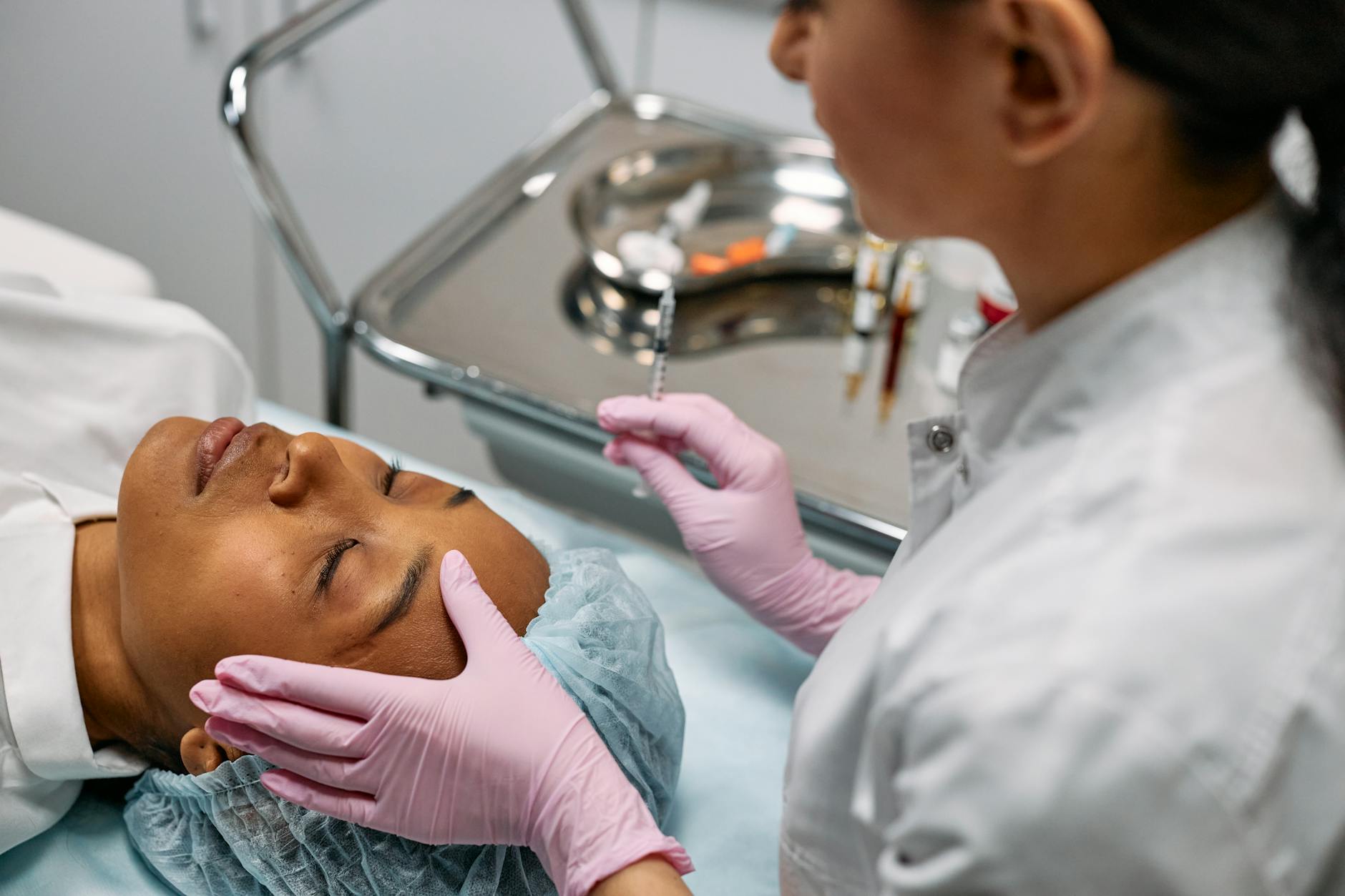
Yes, medspa microneedling typically costs around $800 per session in many metropolitan areas, while dermatologist-administered RF (radiofrequency) microneedling generally runs $1,200 or more per session. The significant price difference reflects not just provider credentials but also fundamental differences in technology and treatment depth. Standard medspa microneedling uses mechanical needle penetration, while RF microneedling combines needles with radiofrequency energy to stimulate collagen production at deeper skin layers. For someone considering acne scars, textured skin, or other more complex skin concerns, the dermatologist option often delivers noticeably better and more lasting results—though at a higher per-session cost.
The real question isn’t just about price but about what you’re paying for. A patient spending $800 at a medspa with an esthetician might see improvement in surface-level skin texture and general radiance over a series of treatments. That same patient investing in three to four sessions of RF microneedling at a dermatologist’s office could see dramatic improvements in deep scarring and skin laxity that mechanical needling alone cannot address. Understanding this cost-to-benefit ratio is essential before committing to either treatment path.
Table of Contents
- What’s Driving the Cost Difference Between Medspa and Dermatologist Microneedling?
- RF Microneedling vs. Standard Microneedling—Why Effectiveness Differs So Dramatically
- Provider Credentials Matter More Than Many People Realize
- Total Treatment Series Investment—Understanding the Real Cost Commitment
- Common Limitations and Realistic Expectations About Results
- When to Choose Medspa Microneedling and When You Actually Need a Dermatologist
- Long-Term Value and Treatment Frequency—Beyond the First Series
- Conclusion
What’s Driving the Cost Difference Between Medspa and Dermatologist Microneedling?
The price gap between $800 medspa sessions and $1,200 dermatologist sessions breaks down into several distinct factors. First, there’s the provider credential level: estheticians at med spas typically charge $200-$400 per session, nurses charge $300-$600, and board-certified dermatologists command $500-$1,000 or higher. A dermatologist brings specialized medical training in skin physiology, infection control, and management of complications—knowledge that estheticians, despite their licensing, simply do not possess. The $400 difference in your example reflects this gap in expertise and liability. The second major driver is technology. Standard medspa microneedling devices like SkinPen (which run $300-$500 per session) use mechanical needles to create controlled micro-injuries.
RF microneedling devices such as Morpheus8 or Secret add radiofrequency energy delivery, allowing deeper and more controlled collagen induction without requiring as many needle passes. This technology costs significantly more to acquire and maintain, which facilities pass to patients. A dermatologist’s office investing $100,000+ in RF equipment naturally needs to charge more per treatment to recoup that investment while maintaining business viability. Geographic location amplifies these costs considerably. In California, standard medspa microneedling averages $350-$500 per session simply due to higher operating costs, staff salaries, and client expectations in major metropolitan areas. A dermatologist’s practice in the same region could easily charge $1,200-$1,500 for RF treatment. If you’re comparing prices between a rural medspa and a Beverly Hills dermatology practice, the gap might be even wider.

RF Microneedling vs. Standard Microneedling—Why Effectiveness Differs So Dramatically
Understanding the effectiveness gap requires knowing what each technology actually does beneath the skin’s surface. Standard microneedling creates controlled micro-injuries at a specific depth (typically 0.5-2.5mm depending on the device and setting). This triggers the body’s natural healing response, producing new collagen and elastin. It’s effective for mild texture issues, general skin glow, and minor surface scarring. RealSelf data from over 300 patient experiences shows medspa microneedling delivers real results, with patients reporting visible improvement in skin tone and minor pitting scars. RF microneedling operates differently. The radiofrequency energy heats deeper dermal layers while needles create channels for that energy to penetrate.
This dual mechanism stimulates collagen remodeling at depths that mechanical needling cannot reliably reach—typically 3-4mm or deeper. For severe acne scarring, boxcar scars, or rolling scars, this depth penetration makes a critical difference. A dermatologist can also adjust radiofrequency intensity based on skin type, scar depth, and individual healing capacity—customization that requires medical training to execute safely. The limitation of standard medspa microneedling becomes apparent with complex cases. If you have deep, pitted acne scars or significant skin laxity, four sessions of $800 medspa treatments might deliver modest improvement at $3,200 total investment. Four sessions of $1,200 RF microneedling at $4,800 could produce transformation-level results. This is why dermatologists recommend RF for complex issues: the technology and expertise justify the higher cost when your concern requires more than surface-level treatment. However, this advantage disappears if you only need general skin refreshment—in that case, the medspa option delivers good value.
Provider Credentials Matter More Than Many People Realize
The esthetician versus nurse versus dermatologist distinction goes beyond simple licensing levels. An esthetician receives training in skin care products, basic facial treatments, and mechanical microneedling operation—typically 600-1,200 hours of education depending on the state. They excel at identifying skin type, recommending supportive products, and executing standard treatments on uncomplicated cases. However, they are not trained to diagnose skin conditions, prescribe medications, or manage treatment complications. If your skin reacts poorly to microneedling or develops an infection, an esthetician must refer you to a physician. Registered nurses occupy a middle ground with more medical training than estheticians but typically less specialized dermatology knowledge. Some nurses pursue additional certification in aesthetic treatments, bringing better understanding of anatomy and physiology.
They can recognize when something goes wrong and often have protocols for managing minor complications. Nurses charging $300-$600 represent reasonable value for patients with straightforward skin concerns who want more medical oversight than an esthetician provides. Dermatologists bring board-certified expertise in skin disease, physiology, and medical management. They can assess whether microneedling is appropriate for your specific condition, adjust treatment parameters based on your skin’s response, and manage any complications that arise. For someone with severe acne scarring, rosacea-prone skin, or a history of keloid formation, this expertise isn’t luxury—it’s necessary. The higher cost reflects not just credential inflation but genuine medical value. A dermatologist might also recommend combining microneedling with prescription treatments like tretinoin or hydroquinone to maximize results in ways an esthetician cannot legally suggest.

Total Treatment Series Investment—Understanding the Real Cost Commitment
Most patients require three to four microneedling sessions spaced approximately one month apart to see optimal results. This means your $800-per-session medspa cost translates to $2,400-$3,200 for a complete series. The $1,200 dermatologist sessions would total $3,600-$4,800 for the same four-treatment approach. At first glance, the medspa option seems significantly cheaper. However, many patients pursuing medspa treatments find they need additional sessions beyond the initial series—sometimes five or six total—to match the results a dermatologist achieves in four sessions with RF technology. Add-on treatments further complicate the cost picture. Platelet-rich plasma (PRP) augmentation, which enhances collagen stimulation by combining your own concentrated growth factors with microneedling, adds $200-$400 per session.
A $2,400 medspa series becomes $3,200-$4,000 when PRP is included. Some dermatologists include PRP as part of their RF protocol, while others charge separately. A patient comparing apples-to-apples might actually spend similar amounts on medspa-plus-PRP versus dermatologist RF, but the results could differ substantially due to the technology difference. The real-world implication: don’t compare prices per session in isolation. Ask dermatology and medspa facilities how many sessions they typically recommend for your specific concern and what the full series costs. A medspa honest about needing five sessions at $800 each ($4,000) should be compared directly to a dermatologist’s four-session RF recommendation at $1,200 each ($4,800). The $800 price difference might feel significant until you realize you’re getting demonstrably better results per dollar spent at the dermatology practice.
Common Limitations and Realistic Expectations About Results
Standard medspa microneedling has genuine limitations that more expensive treatments don’t share. The needle depth limitations mean treating very deep scars requires accepting that results will be partial. A boxcar acne scar that extends 2-3mm below the skin’s surface might improve 40-50% with mechanical microneedling but 70-80% with RF technology. This isn’t a dermatologist-versus-esthetician credential issue; it’s a physics issue. The needle simply cannot reliably create the controlled injury depth necessary for severe scarring without dangerous overtreatment risk. Downtime and recovery also differ. Standard microneedling causes visible redness and sometimes mild bleeding for 24-48 hours.
Most patients can return to normal activities within a few days if they avoid sun exposure and use gentle skincare. RF microneedling creates more significant trauma to deeper layers, resulting in more pronounced redness, potential swelling, and a longer healing period—sometimes up to a week. If you’re considering an important event or can’t manage recovery time, medspa microneedling’s shorter downtime becomes a real advantage despite lesser results. Some patients prefer trading less dramatic results for less noticeable recovery. Another limitation specific to medspa settings: aftercare consistency. An esthetician might recommend specific products or protocols, but they cannot prescribe tretinoin, hydroquinone, or other prescription-strength skin medications that optimize collagen remodeling post-treatment. Dermatologists can prescribe these supportive treatments, meaning your $1,200 sessions often include an optimized recovery regimen that multiplies treatment effectiveness. A patient paying $800 and then buying over-the-counter moisturizer might not extract full value from their investment, while one under dermatology care benefits from targeted prescription support.

When to Choose Medspa Microneedling and When You Actually Need a Dermatologist
Medspa microneedling delivers genuine value for specific concerns. If you’re treating general dullness, loss of radiance, or very mild textural irregularity—essentially healthy skin that’s simply not at its best—medspa treatment is appropriate and cost-effective. Someone with normal skin who wants preventive collagen stimulation can justify $800 sessions at a quality medspa without needing dermatology expertise. The esthetician’s skill in identifying your skin type and recommending complementary products actually adds value in this scenario. Mild acne scars and minor pitting also fall into the medspa-appropriate category. If you have a few shallow scars and generally clear skin, three sessions of medspa microneedling could produce satisfying improvement.
The $2,400 investment represents reasonable value for visible improvement in a low-complexity case. The esthetician’s credentials are sufficient because the treatment isn’t complicated—the technology and basic operator skill suffice. However, dermatologist-level care becomes important—almost necessary—in several scenarios. Severe or extensive acne scarring, especially boxcar or ice-pick scars, requires RF technology’s deeper penetration. Rolling scars that create skin laxity and depression benefit from RF’s skin-tightening properties that mechanical microneedling cannot provide. If you have any history of keloid formation or abnormal scarring, dermatology expertise is essential because complications could create worse scarring than your original concern. Rosacea-prone or extremely sensitive skin also warrants dermatology management since an esthetician might not recognize warning signs of an adverse reaction in time to prevent problems.
Long-Term Value and Treatment Frequency—Beyond the First Series
One critical but often overlooked factor in cost comparison is maintenance and treatment frequency. Collagen produced by microneedling continues to remodel for three to six months after treatment, but the body doesn’t permanently maintain enhanced collagen from a series of treatments. Most dermatologists recommend maintenance treatments one to two times yearly after the initial series. If you’ve invested in a dermatologist’s RF microneedling and achieved excellent scar improvement, you might need just one maintenance session annually at $1,200 to maintain results. Medspa patients often find they need more frequent touch-up sessions—sometimes twice yearly or even quarterly—to maintain the level of improvement they initially achieved. This means that while each medspa session costs less, the annual maintenance cost could actually exceed the dermatologist option over a two- to three-year period.
A patient spending $800 per session might end up investing $1,600 annually in medspa maintenance, while a dermatologist patient invests $1,200 annually. Over three years, the cost difference narrows considerably while the dermatologist patient maintains better results. The forward-looking consideration is that RF microneedling technology continues advancing. Newer devices like Morpheus8 deliver energy more efficiently, meaning some dermatologists can achieve results with fewer treatments. As this technology becomes more widely available and competitive, prices may gradually decline, making the dermatology option even more accessible. Currently, if you’re choosing between treatments based on cost alone and you have moderate-to-severe scarring, recognizing that the higher dermatology price provides better per-treatment value (even if it costs more upfront) influences the decision. If you have mild concerns, medspa microneedling’s lower entry cost makes sense.
Conclusion
The $800 medspa versus $1,200 dermatologist price difference reflects real differences in technology, provider expertise, and achievable results. Medspa microneedling at $800 per session represents legitimate value for mild skin texture concerns, general radiance improvement, and mild scarring in uncomplicated cases. The esthetician’s training is sufficient for these straightforward applications, and the lower cost makes treatment accessible to more people. A complete series of four medspa sessions at $3,200 can deliver visible improvement in these scenarios. However, for complex concerns like severe acne scarring, the $1,200 dermatologist RF microneedling often represents better value despite higher upfront cost.
RF technology penetrates deeper, dermatologists can customize treatment intensity safely, and prescription aftercare amplifies results. When you calculate the true cost including maintenance over multiple years and compare results quality, the dermatology option frequently justifies its price premium. The key is matching treatment intensity to your specific skin concern rather than defaulting to the cheaper option. If your scarring is mild, medspa treatment serves you well. If your scarring is severe, investing in dermatology expertise and RF technology produces results that justify the additional expense—and often costs less in total investment over time when maintenance needs are considered.