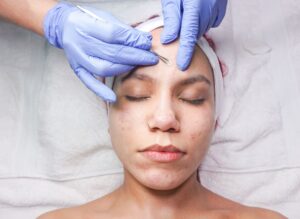
Yes, maskne is real, and for teachers who spent 2020-2021 and beyond wearing surgical masks or cloth masks eight hours a day, five days a week, the acne that developed often persisted long after mask mandates ended. This wasn’t just a cosmetic inconvenience—it was a dermatological issue caused by the perfect storm of heat, moisture, friction, and occlusion that masks create against facial skin. A high school English teacher in Ohio developed severe cystic acne across her chin and cheeks within three months of mask-wearing requirements beginning.
Even after she stopped wearing a mask daily in 2022, the breakouts continued to appear for another 18 months, requiring prescription-strength treatments and professional dermatology care to finally resolve. The condition, technically called acne mechanica or maskne, affected healthcare workers, teachers, retail employees, and anyone required to wear masks for extended periods. Unlike traditional acne caused primarily by bacteria and sebum, maskne develops from the physical trauma to skin—repeated friction, trapped sweat and sebum, increased bacterial growth in the warm, moist environment, and occlusion that prevents normal skin barrier function. The lag between stopping mask-wearing and skin clearing reveals an important reality: prolonged mask wear can damage skin severely enough that recovery takes months, even when the triggering factor is removed.
Table of Contents
- How Did Prolonged Mask-Wearing Actually Damage This Teacher’s Skin?
- Why Did the Acne Continue Long After Masks Were No Longer Required?
- What Did Recovery Actually Look Like for This Teacher?
- What Treatment Options Work Best for Maskne-Related Scarring and Lingering Acne?
- What’s the Risk of Maskne Returning or Causing Permanent Damage?
- Are There Preventive Steps for People Who Still Need to Mask Regularly?
- What Does the Long-Term Outlook Look Like for Maskne Survivors?
- Conclusion
How Did Prolonged Mask-Wearing Actually Damage This Teacher’s Skin?
During the pandemic, teachers became an inadvertent case study in what happens when skin is occluded and subjected to friction for eight hours daily. The mask creates a greenhouse effect—warm breath, sweat, saliva, and sebum get trapped against the skin while the mask’s edges constantly rub against cheeks, chin, and the bridge of the nose. For the Ohio teacher, this created the ideal breeding ground for bacteria, particularly Staphylococcus aureus and Cutibacterium acnes, which thrive in warm, moist environments. Within weeks, she developed small papules and pustules. Within months, the condition progressed to deeper, more painful cystic acne that left scarring even as it was being treated. The damage wasn’t just bacterial. The constant friction from mask edges caused irritant contact dermatitis, breaking down the skin barrier and making it more vulnerable to infection and inflammatory responses.
Many teachers who wore the same mask multiple days without washing, or who wore masks that fit poorly and shifted throughout the day, experienced worse outcomes. The maceration (softening) of skin from prolonged moisture exposure made the skin more fragile and reactive. Additionally, as the skin tried to compensate for the damaged barrier, sebaceous glands often produced more oil, perpetuating the cycle. The psychological component added another layer. Teachers felt trapped—they had to wear the masks for their jobs, but they could see their skin deteriorating. This stress and anxiety can actually worsen acne through elevated cortisol levels, creating a feedback loop where mask-wearing stress made breakouts worse, which increased stress. The Ohio teacher reported feeling self-conscious even when speaking with colleagues before school started and masks went on.

Why Did the Acne Continue Long After Masks Were No Longer Required?
This is where maskne revealed its most frustrating aspect: the skin damage didn’t reverse immediately once the mask came off. Post-inflammatory hyperpigmentation (dark marks left after active acne heals) is common and can persist for months or years, depending on skin tone. Deeper post-inflammatory erythema (red marks) can last even longer. In the case of the teacher we’re discussing, the cystic acne had caused enough inflammation that even as active breakouts stopped, her skin remained reactive and prone to new lesions for an additional 18 months. Several factors contributed to the prolonged recovery. First, the barrier damage from months of occlusion and friction doesn’t heal overnight—it requires consistent, targeted skincare to restore.
Second, many people who experienced maskne developed hyper-reactivity to their skin, becoming anxious about product use or skin care routines, which sometimes led to overdrying or over-treating their skin, further delaying healing. Third, if the person didn’t receive professional treatment (like prescription retinoids, oral antibiotics, or in severe cases, isotretinoin), the underlying inflammation could persist. Fourth, some scarring from the deepest cystic lesions may be permanent, requiring procedures like laser treatment or microneedling to address. The limitation here is important: time alone won’t necessarily heal severe maskne. Many people assumed their skin would clear up on its own once masks came off, and they delayed seeing a dermatologist. The teacher didn’t consult a dermatologist until six months after masks became optional, by which point she had significant post-inflammatory scarring and was dealing with depression about her skin’s appearance.
What Did Recovery Actually Look Like for This Teacher?
When the Ohio teacher finally saw a dermatologist in late 2022, her skin showed active comedones, post-inflammatory hyperpigmentation, depressed scarring, and ongoing reactive acne triggered by stress and certain products. The dermatologist prescribed a combination approach: a gentle cleanser, a benzoyl peroxide wash at low concentration (2.5%), a nightly retinoid (tretinoin), and short courses of oral doxycycline when breakouts flared. Additionally, the dermatologist recommended she avoid touching her face, use a lightweight, fragrance-free moisturizer, and apply broad-spectrum SPF 30 daily—critical because tretinoin increases sun sensitivity. The first two months showed modest improvement: fewer new active lesions, though the post-inflammatory marks remained dark and visible. By month four, the hyperpigmentation began to fade, and the skin texture improved as the tretinoin promoted cell turnover. However, between months 4 and 12, progress plateaued.
The deeper scarring wouldn’t improve with topical treatments alone, so the dermatologist recommended microneedling. After three sessions of microneedling spaced six weeks apart, the depressed scars became less noticeable. By month 18, the teacher’s skin had largely cleared—active acne was gone, most hyperpigmentation had faded, and scarring was minimal, though some subtle texture remained. The broader lesson: severe maskne often requires professional treatment and patience. The teacher spent approximately $3,000 on dermatology visits and treatments over 18 months, which isn’t accessible to everyone. She also experienced setbacks—a flare-up at month 9 when she discontinued tretinoin too early without consulting her dermatologist, thinking her skin was healed.

What Treatment Options Work Best for Maskne-Related Scarring and Lingering Acne?
For people still dealing with maskne effects, the treatment ladder typically starts with topical options and escalates based on response. Benzoyl peroxide (2.5% to 5%) addresses bacteria and helps prevent new lesions. Retinoids (retinol, adapalene, or prescription tretinoin) promote cell turnover and collagen remodeling, which helps both active acne and early scarring. Azelaic acid can address post-inflammatory hyperpigmentation, particularly in people with deeper skin tones, and also has anti-inflammatory and antibacterial properties. Niacinamide helps regulate sebum production and strengthen the skin barrier. For moderate to severe maskne that doesn’t respond to topicals within 8 to 12 weeks, oral medications become relevant. Doxycycline or other tetracycline antibiotics reduce bacterial load and have anti-inflammatory effects beyond their antibiotic properties.
In severe cases, hormonal treatments (like oral contraceptives for people who menstruate) or isotretinoin (for severe, scarring acne) may be necessary. The trade-off is that oral medications require monitoring—doxycycline requires taking it with a full glass of water and not lying down for 30 minutes to avoid esophageal irritation, and isotretinoin requires monthly check-ins and pregnancy prevention measures due to serious birth defect risks. For scarring specifically, in-office procedures offer faster results than topicals alone. Microneedling, laser resurfacing, and chemical peels all stimulate collagen remodeling. Microneedling is generally safe across skin tones, though laser treatments require careful selection to avoid post-inflammatory hyperpigmentation in darker skin. The Ohio teacher’s experience with microneedling was typical—visible improvement after 3 sessions but also temporary redness and peeling between treatments. The cost barrier here is real: a series of microneedling can cost $1,500 to $3,000, and insurance rarely covers it for acne scarring.
What’s the Risk of Maskne Returning or Causing Permanent Damage?
The concerning reality is that maskne can recur if someone resumes regular mask-wearing for occupational or health reasons. Healthcare workers who dealt with maskne during the pandemic and continued masking for infection control face ongoing risk. Additionally, improper mask care—wearing the same mask for days without washing, using masks made of non-breathable materials, or wearing masks that fit poorly and cause significant friction—increases risk. Someone who experienced severe maskne may also develop increased reactivity to their skin, meaning future friction, heat, or moisture exposure triggers breakouts more easily than it would in someone who never had maskne. The scarring question matters long-term. Depressed scars (ice pick, boxcar, or rolling scars) from severe cystic acne don’t disappear completely without treatment, though they may become less noticeable with time and proper collagen remodeling.
Hypertrophic scars (raised) are less common with acne but more common with maskne in some cases due to the friction component. For people with deeper skin tones, post-inflammatory hyperpigmentation can persist for years if left untreated, even after active acne has cleared. The warning here is straightforward: waiting to treat severe maskne increases the likelihood that you’ll be left with permanent scarring or pigmentation changes. Another limitation: some people blame maskne for ongoing acne that actually has different causes. Once a person’s skin has experienced severe acne and developed reactivity, it may continue to break out from other triggers—hormonal changes, dietary factors, stress, or product sensitivity—long after the mask-related component has resolved. Proper diagnosis is important to avoid chasing the wrong treatment.

Are There Preventive Steps for People Who Still Need to Mask Regularly?
For healthcare workers, high school teachers, or anyone still masking regularly, prevention during mask-wearing is critical. The foundation is mask hygiene: use a fresh mask daily, wash cloth masks after each use in warm water with detergent, and allow them to air-dry completely. Fit matters—a mask that’s too tight or shifts constantly causes more friction. Some people find that alternating mask styles (surgical mask one day, KN95 the next) reduces friction in any one area. A few dermatologists recommend applying a thin layer of petroleum jelly to high-friction areas (chin, cheeks) before masking to reduce irritation, though this must be done carefully to avoid increasing occlusion in a way that promotes bacterial growth. During mask-wearing hours, a lightweight, breathable moisturizer under the mask can help.
Water-based moisturizers with niacinamide or centella asiatica (cica) support barrier function without adding occlusion. After removing the mask, gently cleanse the face—harsh scrubbing immediately after mask removal causes additional irritation. A gentle cleanser followed by a light moisturizer and SPF is the baseline. Some people benefit from using a low-strength benzoyl peroxide wash (2.5%) once daily, but this must be balanced with moisturizing to avoid over-drying. For those with a history of maskne, proactive management during necessary mask-wearing is worth the effort. This might mean consulting a dermatologist before situations require heavy mask use again, rather than waiting until breakouts appear.
What Does the Long-Term Outlook Look Like for Maskne Survivors?
As mask mandates have become optional in most settings, the prevalence of new maskne cases has dropped significantly. However, people who developed severe maskne during the pandemic are still navigating recovery and dealing with lasting effects. The psychological impact lingers for some—the teacher in this story reported that even a year after her skin cleared, she felt anxious buying skincare products and avoided photos without makeup. Support communities and honest conversations about maskne have helped some people process the experience.
The silver lining is that maskne brought increased dermatological attention to occupational skin damage. More research is now available on preventing and treating mask-related acne, and dermatologists are better equipped to manage it. Additionally, the experience highlighted the importance of barrier function and skin health to a broader audience. Many of the treatments and prevention strategies that emerged from maskne research—like the importance of mask hygiene, gentle cleansing, and barrier support—are now standard recommendations, even for people dealing with acne from other causes. For people still managing post-maskne scarring or hyperpigmentation, the range of effective in-office treatments continues to expand, offering better outcomes than were available even five years ago.
Conclusion
Maskne was a real, damaging skin condition for millions of people, and recovery often took far longer than the mask-wearing period itself. The teacher who wore a mask eight hours a day and spent 18 months recovering illustrates an important reality: occlusion-based skin damage, severe enough to cause cystic acne and scarring, requires professional treatment and time to heal. Active breakouts typically respond to topical treatments within weeks to months, but post-inflammatory hyperpigmentation and scarring require either extended patience or in-office procedures to resolve within a reasonable timeframe.
If you’re still dealing with maskne effects, consulting a dermatologist is worth prioritizing—waiting for skin to heal on its own often leads to permanent scarring that becomes harder to treat the longer it’s left. For those who must continue masking, preventive measures like mask hygiene, breathable materials, and proactive skincare can significantly reduce the risk of recurrence. The maskne era has passed for most people, but the lessons about barrier function, occlusion-related damage, and the importance of early professional treatment remain relevant.