

Patients on Accutane (isotretinoin) face one of the most demanding sun protection requirements of any medication. Dermatologists consistently emphasize that morning sunscreen application should be non-negotiable—even on cloudy, overcast days—because the medication drastically increases skin vulnerability to UV damage. Many patients discover this necessity the hard way: a morning outside without sunscreen during an Accutane course can result in severe sunburn that would otherwise take significantly more sun exposure to trigger.
The requirement isn’t optional for these patients; it’s a clinical necessity driven by how isotretinoin fundamentally changes skin physiology. The evidence is clear from dermatological practice: up to 80% of UV radiation penetrates through cloud cover, meaning that gray skies provide virtually no protection. For someone on Accutane, this distinction between sunny and cloudy days becomes irrelevant. A patient taking this powerful acne medication in a typically overcast climate like the Pacific Northwest still needs to apply broad-spectrum SPF 50+ sunscreen every morning, making it as routine as brushing teeth during treatment.
Table of Contents
- Why Do Accutane Patients Need Daily SPF Protection Even When It’s Cloudy?
- The Skin Sensitivity Challenge: Why Accutane Changes Everything About Sun Exposure
- Mineral vs. Chemical Sunscreen: What Works Best for Accutane-Treated Skin?
- The Sunscreen Application Mistake Almost Everyone Makes (Including Accutane Patients)
- The Window Exposure and Incidental UV Damage Problem
- Accutane and Sun Sensitivity in Non-Face Skin Areas
- Post-Accutane Sun Sensitivity: Does Protection Remain Critical After Treatment Ends?
- Conclusion
Why Do Accutane Patients Need Daily SPF Protection Even When It’s Cloudy?
Accutane works by fundamentally altering how your skin functions. The medication reduces the thickness of the stratum corneum—your skin’s outermost protective barrier—which ordinarily helps shield deeper skin layers from UV radiation. This makes Accutane users’ skin significantly more susceptible to both sunburn and long-term UV damage. Someone on this medication who receives the same amount of UVA and UVB exposure as a non-Accutane user will experience considerably more cellular damage, faster. The cloud coverage issue reveals a common misconception that many people hold regardless of medication status. Most people assume that clouds block harmful UV rays, but meteorological data consistently shows this isn’t accurate.
On a cloudy day, approximately 80% of UV radiation still reaches the earth’s surface. Accutane patients cannot afford the risk assessment that non-medicated people might: spending an hour outside on a gray morning without sunscreen isn’t a minor decision; it’s a direct exposure to significant UV stress on already-compromised skin. This becomes especially critical for patients who live in regions with frequent cloud cover. A patient in Seattle, London, or San Francisco might be tempted to skip sunscreen on typical workdays, believing that the overcast conditions eliminate sun danger. For Accutane users, this reasoning creates real risk. Even indirect exposure—light coming through windows or reflected off pavement and water—poses problems for skin that’s already in a temporary state of heightened vulnerability.
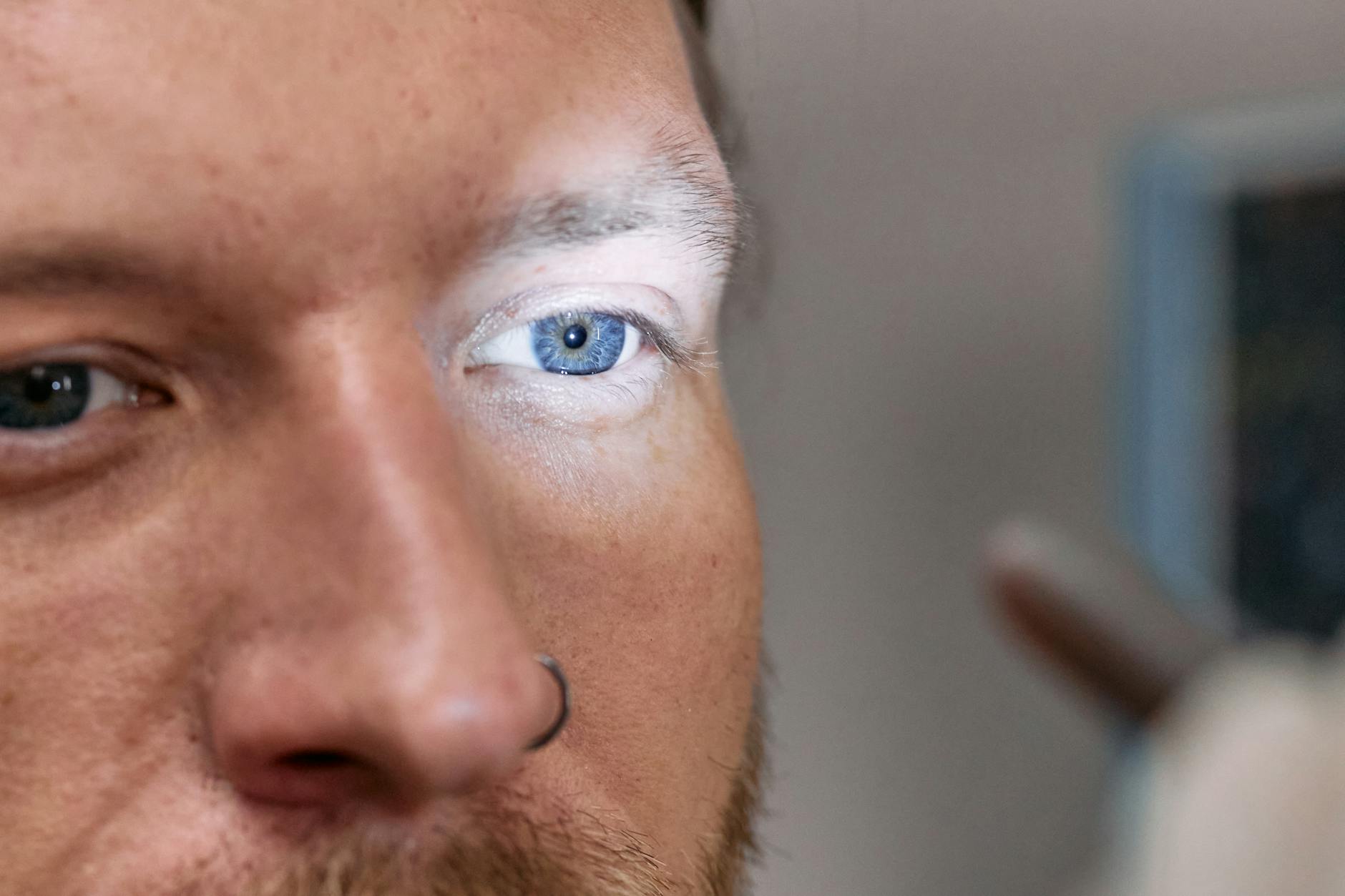
The Skin Sensitivity Challenge: Why Accutane Changes Everything About Sun Exposure
Isotretinoin’s mechanism involves suppressing sebaceous gland activity and fundamentally remodeling skin tissue. One significant consequence is that the protective barrier function of skin becomes compromised during treatment. The stratum corneum doesn’t just thin—its lipid composition changes, reducing its ability to retain moisture and block environmental stressors. For UV exposure specifically, this means that protective mechanisms that normally require significant accumulated sun exposure to be overwhelmed can be triggered much faster in accutane patients. A practical example illustrates this: a person not on any medication might spend three hours at a beach without sunscreen and get a moderate sunburn. That same person on Accutane might get an equivalent or worse burn from ninety minutes of incidental sun exposure during routine activities like walking to lunch or sitting by a window.
The time-to-damage curve compresses dramatically. This isn’t hypothetical—it’s a consistent experience reported across dermatology clinics worldwide. The limitation here is important to acknowledge: individual variation exists. Some patients on Accutane seem to tolerate sun exposure somewhat better than others, possibly due to baseline skin tone, genetic factors, or variation in how their bodies respond to the medication. However, dermatologists don’t recommend tailoring sun protection based on this individual variation. The standard guidance remains absolute: SPF 50+ broad-spectrum sunscreen, applied daily, even on days with no direct sun exposure anticipated. This one-size-fits-all approach exists because the downside of underprotection—severe burn, accelerated aging, increased skin cancer risk—outweighs any minor inconvenience of daily application.
Mineral vs. Chemical Sunscreen: What Works Best for Accutane-Treated Skin?
Most dermatologists recommend mineral (physical) sunscreen over chemical formulations for Accutane patients. Zinc oxide and titanium dioxide-based products create a physical barrier that reflects UV rays away from skin, which tends to be better tolerated by the already-irritated, sensitive skin of isotretinoin users. chemical sunscreens work by absorbing UV radiation and converting it to heat, a process that can sometimes irritate compromised skin barriers. A specific example: a patient starting Accutane might switch from their regular drugstore chemical sunscreen to a mineral option like CeraVe Face Lotion SPF 50 or EltaMD UV Clear. The difference isn’t always dramatic—some people notice fewer stinging sensations and reduced redness, while others report minimal change.
However, the chemical composition matters more for Accutane patients than for the general population because any additional irritation compounds the medication’s existing drying and sensitizing effects. The practical consideration involves reapplication frequency. Most guidelines recommend reapplying sunscreen every two hours during sun exposure, and more frequently if sweating or in water. For Accutane patients doing this multiple times daily, the texture and feel of the sunscreen becomes more important than for casual users. Heavy, greasy formulations become intolerable with frequent reapplication, which is why many dermatologists favor lightweight mineral sunscreens designed specifically for face use.

The Sunscreen Application Mistake Almost Everyone Makes (Including Accutane Patients)
Research consistently demonstrates that the average person applies only 25-50% of the amount of sunscreen needed to achieve the SPF number listed on the bottle. This creates a significant gap between labeled protection and actual protection. For most people, this is a minor issue—applying insufficient sunscreen still provides some protection. For Accutane patients, this gap becomes clinically problematic. A typical application mistake: a person applies a thin layer of SPF 50 sunscreen to their face and thinks they’ve achieved SPF 50 protection.
In reality, they’ve probably achieved something closer to SPF 15-20 due to underapplication. For a non-medicated person, this might still be adequate. For someone on Accutane, whose burn threshold is already severely reduced, this thin layer might not prevent a painful and damaging sunburn. To achieve proper SPF protection, dermatologists recommend applying roughly a quarter-teaspoon (about the size of a pea) of sunscreen to the face alone, using about an ounce (shot glass full) for the entire body. Most people use a fraction of this amount. For Accutane patients, fixing this application error—moving from inadequate to adequate amounts—often makes the difference between successful sun protection and unexpected burning.
The Window Exposure and Incidental UV Damage Problem
UVA radiation penetrates glass much more effectively than UVB, meaning that sitting by a window provides significant UVA exposure even with closed panes. While UVB—the primary cause of sunburn—is mostly blocked by window glass, UVA still reaches skin and can cause photoaging and contribute to skin cancer risk. For Accutane patients, even UVA-only exposure matters because their skin barrier is compromised. This creates a practical dilemma for people on isotretinoin: should they apply sunscreen indoors if they’ll be near windows? The conservative answer, which most dermatologists give, is yes. A patient working at a desk facing a window should treat that as sufficient sun exposure to warrant morning sunscreen application, even if they anticipate spending the entire day indoors.
This seems excessive to some patients, but it aligns with the principle that Accutane skin cannot afford any UV exposure. The limitation of this recommendation is that it’s somewhat overcautious for average indoor exposure. A person sitting ten feet from a window receives considerably less UVA than someone at the window itself. However, the difficulty in quantifying exact exposure levels means that dermatologists default to the safer approach: apply sunscreen anyway. For patients on Accutane for six months to two years—a typical treatment duration—this means establishing a non-negotiable daily routine.

Accutane and Sun Sensitivity in Non-Face Skin Areas
Patients often focus sunscreen application on facial skin, which makes sense because Accutane is primarily prescribed for acne and the face is the most visible area. However, the medication affects sun sensitivity across all treated skin. A patient who uses Accutane might see clearer skin on their chest, back, or shoulders, but these areas become equally UV-vulnerable during treatment.
A common oversight: a patient applies SPF 50 to their face meticulously but neglects their neck, ears, and décolletage—areas that receive substantial incidental sun exposure and are already visible acne treatment sites. These should receive the same SPF 50 protection, reapplied with the same frequency. For people planning outdoor activities during an Accutane course, full-body protection becomes necessary, including arms and legs if they’ll be exposed.
Post-Accutane Sun Sensitivity: Does Protection Remain Critical After Treatment Ends?
Once a patient completes their Accutane course—typically after four to six months, sometimes longer—the medication leaves their system relatively quickly. However, skin barrier recovery takes longer. For several weeks to a few months after finishing Accutane, skin remains more sensitive than baseline and still warrants careful sun protection.
The stratum corneum gradually rebuilds its thickness and lipid composition, but this is a gradual process. The practical implication: patients shouldn’t abruptly abandon sun protection once they stop taking isotretinoin. A sensible transition involves maintaining SPF 50+ for at least four to eight weeks after the final dose, then gradually potentially reducing to standard SPF 30-40 protection if other factors don’t contraindicate it (family history of skin cancer, outdoor occupation, etc.). Many dermatologists recommend that patients maintain diligent sun protection long-term regardless of Accutane history, since the medication doesn’t change fundamental risk factors for skin cancer in high-risk individuals.
Conclusion
The scientific evidence is clear: Accutane patients cannot treat sun protection as optional or weather-dependent. The medication’s effects on skin barrier function, combined with how UV radiation penetrates cloud cover, means that a daily morning sunscreen routine becomes as essential as the medication itself.
For patients who struggle with the discipline of daily application, understanding the actual consequences—severe sunburn, accelerated skin aging, increased skin cancer risk—can help motivate consistent adherence. Starting and maintaining an Accutane course successfully requires committing to daily SPF 50+ mineral sunscreen application regardless of weather conditions, alongside adequate hydration, gentle skin care, and regular dermatology monitoring. For the months of treatment, this becomes a non-negotiable part of the regimen that makes the medication effective and safe.
You Might Also Like
- At Least 71% of Patients Using Retinoids Report That Their Diet May Be Contributing to 20-30% of Their Breakouts
- At Least 43% of Patients on Accutane Don’t Realize That Hormonal Testing Could Identify the Root Cause of Their Acne
- At Least 89% of Parents of Teens With Acne Don’t Realize That A Simple 3-Step Routine Is More Effective Than a 10-Step Routine