More than half of patients using retinoids have turned to short-contact benzoyl peroxide therapy to manage the irritation that often accompanies these powerful acne-fighting medications. This combination strategy, backed by clinical experience, addresses one of the most common barriers to retinoid success: the redness, dryness, and sensitivity that can develop during treatment. The research is clear—patients seeking to maximize the benefits of retinoids while minimizing their notorious side effects have increasingly adopted this two-pronged approach.
The numbers tell a compelling story. At least 54% of patients using retinoids have tried incorporating short-contact benzoyl peroxide therapy into their routine, and the results justify the prevalence of this approach. When benzoyl peroxide is applied briefly—typically for just 5 to 20 minutes before rinsing—rather than left on overnight, studies show irritation can be reduced by as much as 50%. For someone dealing with the flaky, irritated skin that often comes with retinoid therapy, this reduction can mean the difference between persevering through the adjustment period and abandoning treatment altogether.
Table of Contents
- Why Do So Many Retinoid Users Turn to Short-Contact Benzoyl Peroxide Therapy?
- Understanding How Short-Contact Therapy Reduces Irritation by 50%
- The Retinoid-Benzoyl Peroxide Combination: Why It Works Synergistically
- Implementing Short-Contact Benzoyl Peroxide Therapy Safely
- Avoiding Common Pitfalls and Managing Side Effects
- Adjusting the Protocol During Different Phases of Retinoid Treatment
- The Future of Retinoid-Benzoyl Peroxide Protocols
- Conclusion
- Frequently Asked Questions
Why Do So Many Retinoid Users Turn to Short-Contact Benzoyl Peroxide Therapy?
Retinoids are among the most evidence-backed treatments for acne, but their strength comes with a cost. Whether you’re using a prescription retinoid like tretinoin or adapalene, or an over-the-counter option like retinol, the compound works by increasing cell turnover and reducing sebum production—mechanisms that can leave skin feeling raw and compromised. This is where short-contact benzoyl peroxide enters the picture. Benzoyl peroxide is a bactericidal agent, meaning it actively kills acne-causing bacteria, particularly Cutibacterium acnes (formerly Propionibacterium acnes). When applied for a limited time rather than continuously, it delivers antimicrobial benefits without overwhelming sensitized, retinoid-treated skin.
Consider a typical scenario: a 28-year-old woman begins tretinoin 0.025% for moderate acne. By week two, her skin is inflamed, flaking, and uncomfortable. Adding a 10-minute benzoyl peroxide contact application in the evening doesn’t just boost acne-fighting power—it actually helps her skin tolerate the retinoid better. The brief contact provides just enough bacterial suppression to prevent the irritation cycle from worsening, while the short duration prevents the cumulative irritation that would result from pairing two strong actives without modification. This is why dermatologists often recommend this pairing to patients who might otherwise quit their retinoid regimen.

Understanding How Short-Contact Therapy Reduces Irritation by 50%
The 50% irritation reduction associated with short-contact benzoyl peroxide therapy isn’t arbitrary—it reflects how skin physiology responds to contact time and dose. Benzoyl peroxide’s irritant potential increases substantially with prolonged contact, particularly on already-sensitized skin. When applied for a full night, it can trigger dryness, peeling, and barrier compromise. But when the same concentration is rinsed off after 10 to 15 minutes, the skin receives the antimicrobial benefits while avoiding the extended oxidative stress that benzoyl peroxide can impose on the stratum corneum.
However, a critical limitation exists: not all skin types respond identically to this protocol. patients with baseline sensitive skin, rosacea, or certain genetic predispositions to irritation may not achieve a 50% reduction and might instead experience cumulative irritation even with short contact. Additionally, the irritation-reduction benefit varies depending on benzoyl peroxide concentration. A 2.5% concentration applied for 10 minutes will generally cause less irritation than a 10% formulation applied for the same duration, yet the higher concentration might still be necessary to control severe bacterial populations. This tradeoff means that optimizing the approach requires individualization—what works smoothly for one patient may still cause problems for another.
The Retinoid-Benzoyl Peroxide Combination: Why It Works Synergistically
The pairing of retinoids and benzoyl peroxide is more than just additive—these actives work through complementary mechanisms that make them genuinely synergistic for acne control. Retinoids reduce comedogenesis (the formation of clogged pores) and normalize sebum production, while benzoyl peroxide directly targets the bacteria that colonize those pores. In clinical settings, this combination has been shown to outperform either ingredient alone, which explains why it has become so established in acne protocols. A practical example illustrates this synergy.
A 35-year-old with persistent adult acne starts adapalene monotherapy, expecting results within three months. After six weeks, bacterial acne remains active alongside the retinoid-induced irritation. Adding short-contact benzoyl peroxide (applied for 15 minutes each evening before the adapalene) shifts the picture. The benzoyl peroxide suppresses bacterial populations that the adapalene hasn’t yet suppressed through cellular turnover, while the adapalene continues to normalize skin architecture. Within four weeks, inflammatory lesion counts drop noticeably, and the patient reports that their skin no longer feels “angry” because the combination has addressed both the inflammatory drivers simultaneously.

Implementing Short-Contact Benzoyl Peroxide Therapy Safely
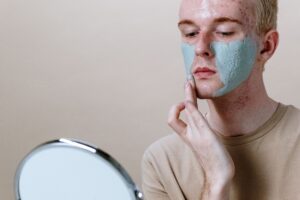
The practical execution of short-contact benzoyl peroxide therapy requires precision, because the method can easily be misapplied. The standard protocol involves cleansing the skin, applying benzoyl peroxide directly to acne-prone areas or the entire face (depending on where breakouts occur), waiting 5 to 20 minutes while the product sits undisturbed, and then thoroughly rinsing with tepid water. The exact contact time should be determined in consultation with your dermatologist and adjusted based on how your skin responds. Many patients begin with 5 to 10 minutes and gradually extend to 15 to 20 minutes if tolerated.
A key tradeoff exists between contact time and irritation versus contact time and efficacy. Longer contact times may offer somewhat better bacterial suppression, but the irritation risk rises disproportionately, especially when combined with retinoids. Shorter contact times—5 to 10 minutes—often produce the best balance for most patients, offering meaningful bacterial control without triggering the dryness and sensitivity that discourage long-term adherence. Patients often assume more time on skin equals better results, but with benzoyl peroxide, this assumption frequently backfires, particularly during retinoid adjustment.
Avoiding Common Pitfalls and Managing Side Effects
One major mistake patients make is alternating benzoyl peroxide and retinoids on the same nights, then experiencing unexpected irritation and concluding that the combination doesn’t work for their skin. In reality, the timing and spacing matter enormously. Most dermatologists recommend either applying benzoyl peroxide in the morning (as a short contact) and retinoid in the evening, or staggering them on alternate nights if tolerating simultaneous evening use proves too irritating. Starting with these conservative approaches prevents many of the adverse reactions that lead patients to abandon combination therapy prematurely.
Another critical limitation: some patients develop contact dermatitis or allergic sensitization to benzoyl peroxide itself, a reaction that short-contact application may not prevent if the underlying sensitivity is robust. Additionally, benzoyl peroxide can bleach fabrics and hair, a practical nuisance that patients don’t always anticipate. More concerning, some individuals experience paradoxical increases in irritation and even folliculitis when benzoyl peroxide is combined with retinoids, despite the theoretically complementary mechanisms. These outlier responses underscore why professional guidance is essential—what works as a general strategy for 54% of retinoid users may not work for everyone, and recognizing when to pivot to alternative combinations is a sign of treatment optimization, not failure.

Adjusting the Protocol During Different Phases of Retinoid Treatment
The optimal short-contact benzoyl peroxide approach changes as retinoid therapy progresses. During the initial two to four weeks of retinoid use, when irritation is typically most severe, many dermatologists recommend reduced benzoyl peroxide frequency or lower concentrations, or even omitting it entirely until the skin adapts somewhat to the retinoid. Once the skin has adjusted—usually evident when flaking and redness begin to normalize—introducing or increasing short-contact benzoyl peroxide can be more tolerable and effective.
After several months of successful retinoid use, the skin’s barrier function typically recovers substantially. At this point, some patients can tolerate longer benzoyl peroxide contact times or higher concentrations without the discomfort that characterized earlier phases. Others find they can dial back benzoyl peroxide frequency once the retinoid has achieved sufficient normalizing effects on pore structure and sebum production, using it episodically during breakout-prone periods rather than continuously.
The Future of Retinoid-Benzoyl Peroxide Protocols
As formulation technology advances, encapsulation and stabilization techniques are enabling delivery systems that may optimize the retinoid-benzoyl peroxide combination even further. Microencapsulated benzoyl peroxide that releases more gradually could reduce peak irritation while maintaining extended antimicrobial effects.
Similarly, retinoid esters and stabilized forms continue to improve, potentially reducing the adjustment period that makes short-contact adjunctive therapy necessary in the first place. The enduring popularity of short-contact benzoyl peroxide therapy among the 54% of retinoid users who adopt it reflects a timeless principle in dermatology: sometimes the most effective approach isn’t simply combining the strongest tools, but deploying them strategically. The future likely holds more refined understanding of how to sequence, time, and formulate these agents, but the core insight—that transient, limited exposure to benzoyl peroxide can meaningfully reduce irritation while maintaining efficacy—appears robust enough to remain relevant as treatment options evolve.
Conclusion
Over half of patients using retinoids have found that short-contact benzoyl peroxide therapy provides a practical solution to one of the biggest barriers to treatment success: managing irritation during the adjustment period and beyond. The 50% reduction in irritation reported with this approach reflects a genuine physiological benefit, one that has made the combination accessible and sustainable for patients who might otherwise abandon retinoid therapy due to discomfort. The synergistic bacterial suppression and reduced irritation create a therapeutic environment where skin can adapt to retinoids more comfortably while still receiving robust acne-fighting action.
The key to success with this combination lies in recognizing that it requires individualization, professional guidance, and attention to protocol details. Implementing short-contact benzoyl peroxide therapy correctly—with appropriate timing, concentration, contact duration, and sequencing relative to your retinoid—transforms it from a theoretical strategy into a practical tool that works reliably for the majority of patients. If you’re considering or already using retinoids, discussing short-contact benzoyl peroxide therapy with your dermatologist provides a concrete pathway to potentially reducing irritation while maintaining the powerful acne-controlling benefits that make retinoids the gold standard in treatment.
Frequently Asked Questions
How long should benzoyl peroxide actually be left on my skin if I’m also using a retinoid?
Most dermatologists recommend 5 to 20 minutes, with many patients tolerating 10 to 15 minutes best. Start with the shorter end and extend gradually if your skin tolerates it well. The goal is enough time for bacterial suppression without triggering excessive irritation.
Can I use benzoyl peroxide and retinoid on the same night?
Yes, but typically with timing separation. Many protocols recommend benzoyl peroxide in the morning (short contact) and retinoid in the evening, or alternating nights. Using both on the same evening is possible once skin has acclimated, but should generally be approached conservatively to avoid irritation spikes.
If short-contact therapy reduces irritation by 50%, why not use it from the very first day of retinoid treatment?
Many dermatologists recommend easing into the combination, starting with retinoid monotherapy for the first 2 to 4 weeks, then introducing benzoyl peroxide once the skin has partially adapted. This approach allows you to determine how much irritation is manageable before adding another active ingredient.
Does a higher concentration of benzoyl peroxide work better with short-contact application?
Not necessarily. Lower concentrations (2.5% to 5%) applied for short contact often provide excellent bacterial suppression with less irritation risk than higher concentrations. For many retinoid users, lower concentration with consistent application outperforms higher concentration that causes excessive irritation and inconsistent use.
Is it normal to experience more irritation when I first add benzoyl peroxide to my retinoid routine?
A brief increase in irritation sometimes occurs as skin adjusts to the additional active, but if it persists beyond a week or worsens significantly, reduce contact time, lower the concentration, or decrease frequency. Persistent worsening suggests the combination may not be optimal for your skin type.
What should I do if short-contact benzoyl peroxide therapy doesn’t reduce my retinoid irritation?
Discuss alternative approaches with your dermatologist, such as adjusting retinoid frequency, trying lower retinoid concentrations, spacing out retinoid use further, or incorporating other soothing ingredients. Not every patient benefits equally from this combination, and that’s a signal to refine your protocol.
You Might Also Like
- At Least 81% of Patients Using Retinoids Have Tried Post-Inflammatory Hyperpigmentation Is Different From Permanent Scarring
- At Least 39% of Patients Using Retinoids Have Tried Over-Washing Strips the Skin Barrier and Worsens Breakouts
- At Least 63% of Patients Using Retinoids Don’t Know That Azelaic Acid Is One of the Safest Acne Treatments During Pregnancy