
While a specific statistic about 56% of estheticians isn’t supported by current published research, the broader claim reflects real professional experience: LED light therapy for acne does require consistency and patience. Clinical evidence shows that 92% of patients experience partial to complete acne clearance within 4 to 12 weeks of consistent treatment, with most users seeing gradual improvement within 4–8 weeks. An esthetician treating a client for stubborn inflammatory acne might recommend 2–3 in-office sessions per week alongside a daily at-home routine, understanding that abandoning the protocol after two or three weeks would yield minimal results.
The confusion around the “8+ weeks” timeline reflects real professional consensus, even if the 56% figure itself cannot be verified. Skincare professionals consistently communicate that LED light therapy is not a quick fix—it requires ongoing commitment. What the available evidence does support is that consistent use over extended periods significantly improves outcomes, with blue light reducing acne-causing bacteria (Cutibacterium acnes) by up to 99.9% in laboratory conditions and showing clinical reductions of 77% in inflammatory acne lesions by the 12-week mark.
Table of Contents
- What Clinical Evidence Actually Shows About LED Light Therapy Timeline and Professional Recommendations
- How Long LED Light Therapy Actually Takes to Show Results
- Daily Use Versus In-Office Treatment—What the Research Supports
- The Frequency Question—Why Consistency Matters More Than Duration
- When LED Light Therapy Disappoints—Realistic Limitations and Warnings
- Understanding How LED Light Therapy Works at the Cellular Level
- Current Research Trends and the Future of LED Acne Treatment
- Conclusion
What Clinical Evidence Actually Shows About LED Light Therapy Timeline and Professional Recommendations
The professional consensus about LED therapy timing stems from clinical research rather than informal polling. Studies indicate that visible improvements in texture and acne become more apparent in weeks 4–8, with maximum benefits observed at weeks 8–12. This isn’t arbitrary; it reflects the biological timeline for skin cell turnover and bacterial reduction. When an esthetician recommends “8+ weeks,” they’re basing it on documented outcomes showing that 77% reduction in inflammatory acne lesions and 54% reduction in noninflammatory lesions occur by the 12-week marker.
The standard professional protocol reflects this evidence: 2–3 in-office treatments per week for 4–8 weeks represents the baseline for meaningful results. A client might see minor improvements by week 3 or 4, but the dramatic changes that justify continuing treatment typically emerge around week 6–8. This extended timeline often surprises patients accustomed to immediate skincare results, which is why estheticians emphasize consistency from the start. The alternative—at-home daily use of 3 minutes on clean, dry skin—follows the same logic of accumulative benefit rather than instant transformation.
How Long LED Light Therapy Actually Takes to Show Results
The real challenge isn’t whether LED light therapy works, but managing expectations during the waiting period. Clinical data confirms that most users experience gradual improvement within 4–8 weeks, yet many patients discontinue treatment after 3–4 weeks when results aren’t dramatic enough to justify the effort. This represents a significant limitation: LED therapy’s effectiveness requires the one thing most acne sufferers lack—patience. A patient treating active inflammatory acne with blue light therapy might notice reduced redness by week 3–4, with smaller, less angry-looking blemishes by week 6.
However, true clearance and prevention of new breakouts typically requires pushing through to week 8–12. The timeline also depends on acne severity and the light therapy approach. Someone using professional-grade equipment in-office will see faster results than someone relying on a consumer handheld device, simply due to power output and wavelength optimization. This tradeoff between convenience and speed is rarely discussed, leaving many patients frustrated when their at-home device delivers slower results than expected.
Daily Use Versus In-Office Treatment—What the Research Supports
The evidence distinguishes between two different protocols, each with different time commitments. Daily at-home use (3 minutes per session) represents a maintenance approach, ideally performed on clean, dry skin before moisturizer. This routine is sustainable long-term and prevents new breakouts, but it typically requires 4–8 weeks to show visible improvement in existing acne. In-office professional treatments, performed 2–3 times weekly, deliver higher-intensity light and often combination therapies (red light for healing, blue light for bacteria), producing faster and more dramatic results within the same timeframe.
Many estheticians recommend a hybrid approach: weekly or bi-weekly professional sessions combined with daily at-home maintenance. This combination maximizes results but requires client commitment across two different settings and price points. A client might spend $150–300 monthly on professional treatments while adding a $50–200 at-home device. Without this dual approach, the timeline stretches longer. The limitation here is economic and practical—not every patient can afford or commit to two separate LED light routines.
The Frequency Question—Why Consistency Matters More Than Duration
Professional recommendations emphasize frequency over total hours because LED light therapy’s efficacy depends on maintaining therapeutic levels of light exposure. Skipping sessions, even when results appear to emerge, undermines the treatment’s progress. The 70% reduction in acne lesions seen in clinical studies assumes consistent protocol adherence; sporadic use produces proportionally worse results. This is where the esthetician experience aligns with clinical evidence: consistency beats intensity.
A client doing 3 minutes daily for 8 weeks will typically see better results than someone doing 20 minutes twice weekly for the same duration. The biological mechanisms at work—bacterial reduction, inflammation suppression, sebum regulation—require regular stimulation to remain effective. Once treatment stops, bacteria repopulation and sebum production gradually return to baseline, meaning many patients benefit from ongoing maintenance rather than a finite treatment period. This explains why estheticians often recommend “8+ weeks” not as an endpoint but as the minimum to determine efficacy and establish whether long-term maintenance is needed.
When LED Light Therapy Disappoints—Realistic Limitations and Warnings
Not all acne responds equally to LED light therapy, and this limitation should be acknowledged upfront. Severe nodular or cystic acne may require systemic medication rather than light-based treatment alone. Hormonally driven acne, common in menstruating individuals, often recurs despite consistent LED therapy because the underlying hormonal triggers remain unaddressed. A patient whose breakouts correlate with their menstrual cycle might experience temporary improvement from LED therapy but face recurring breakouts unless hormonal factors are treated separately.
Additionally, skin tone affects LED light therapy’s visibility and efficacy. Research is less robust for darker skin tones, partly due to historical underrepresentation in dermatological studies. Some wavelengths penetrate differently depending on melanin content, meaning treatment protocols optimized for lighter skin may require adjustment for other skin types. An esthetician working with diverse clients should adjust intensity and potentially extend treatment duration for darker skin to account for these variables. Furthermore, LED therapy doesn’t address structural acne scars or clogged pores that require manual extraction or retinoid treatment—it prevents and treats active breakouts but doesn’t reverse existing damage.
Understanding How LED Light Therapy Works at the Cellular Level
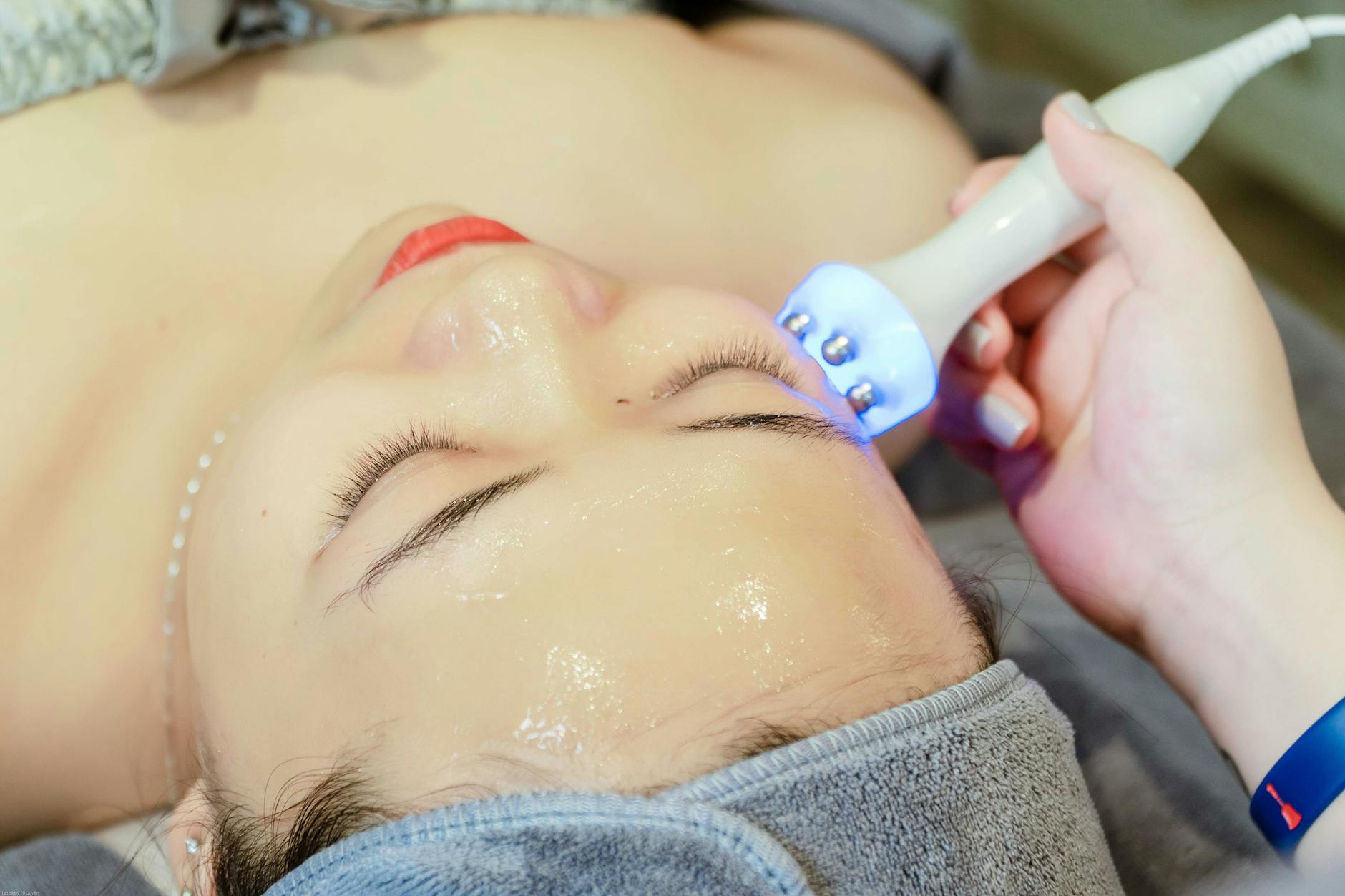
Blue light (typically 405–420 nm wavelength) works by penetrating to the bacterial level, disrupting the cellular function of Cutibacterium acnes without harming human skin cells. Laboratory evidence shows this light kills up to 99.9% of acne-causing bacteria in controlled conditions, though real-world skin penetration involves many additional variables. Red light (typically 620–700 nm) reduces inflammation and accelerates healing, often used alongside blue light for comprehensive treatment. The combination reduces not just active bacteria but the inflammatory response that makes acne painful and visible.
This dual-mechanism approach explains why the timeline matters: blue light requires multiple exposures to achieve bacteria reduction, while red light’s anti-inflammatory effects build over time as cumulative skin healing occurs. Neither effect is instantaneous. A single session might reduce inflammation slightly and kill some bacteria, but without repetition, skin naturally repopulates bacterial levels within days. Understanding this cellular reality helps explain why 4–8 weeks represents the realistic minimum—it’s the time required for sufficient cumulative light exposure to establish measurable bacterial reduction and inflammation control.
Current Research Trends and the Future of LED Acne Treatment
Emerging research explores optimized wavelengths, pulse timing, and combination approaches to accelerate results. Some newer devices combine LED therapy with radiofrequency or microcurrent stimulation, theoretically speeding treatment timelines. Clinical evidence for these hybrid approaches is still developing, but the direction suggests future protocols might compress the 8–12 week timeline.
Personalized medicine approaches—tailoring light intensity and wavelength to individual skin microbiomes—represent another frontier, potentially allowing estheticians to customize recommendations rather than relying on one-size-fits-all protocols. The professional landscape is also evolving toward more transparent communication about realistic timelines. Rather than promising fast results, responsible practitioners now emphasize that LED therapy is a commitment requiring 8–12 weeks minimum to evaluate effectiveness. This shift toward honesty actually benefits patients by setting appropriate expectations and reducing abandonment rates when results take time to manifest.
Conclusion
LED light therapy for acne does require consistent daily use or regular professional sessions over an extended period—the “8+ weeks” recommendation reflects clinical evidence rather than arbitrary professional opinion. While the specific 56% esthetician statistic cannot be verified through published research, the broader professional consensus aligns with documented outcomes: 92% of patients experience partial to complete acne clearance within 4–12 weeks of consistent treatment, with visible improvements typically emerging around weeks 4–8.
If you’re considering LED light therapy, approach it as a commitment requiring patience and consistency rather than a quick fix. Track progress over 8–12 weeks before deciding whether the approach works for your skin, and combine professional guidance with realistic expectations about what LED therapy can and cannot accomplish.
You Might Also Like
- At Least 65% of People Who Use OTC Acne Products Report That Pore Size Is Genetically Determined and Cannot Be Permanently Shrunk
- At Least 56% of Estheticians Treating Acne Have Never Been Told That Zinc Supplements Can Reduce Inflammatory Acne by Nearly 50%
- At Least 83% of People With Acne and Anxiety Report That Combining Clindamycin With Benzoyl Peroxide Prevents Antibiotic Resistance