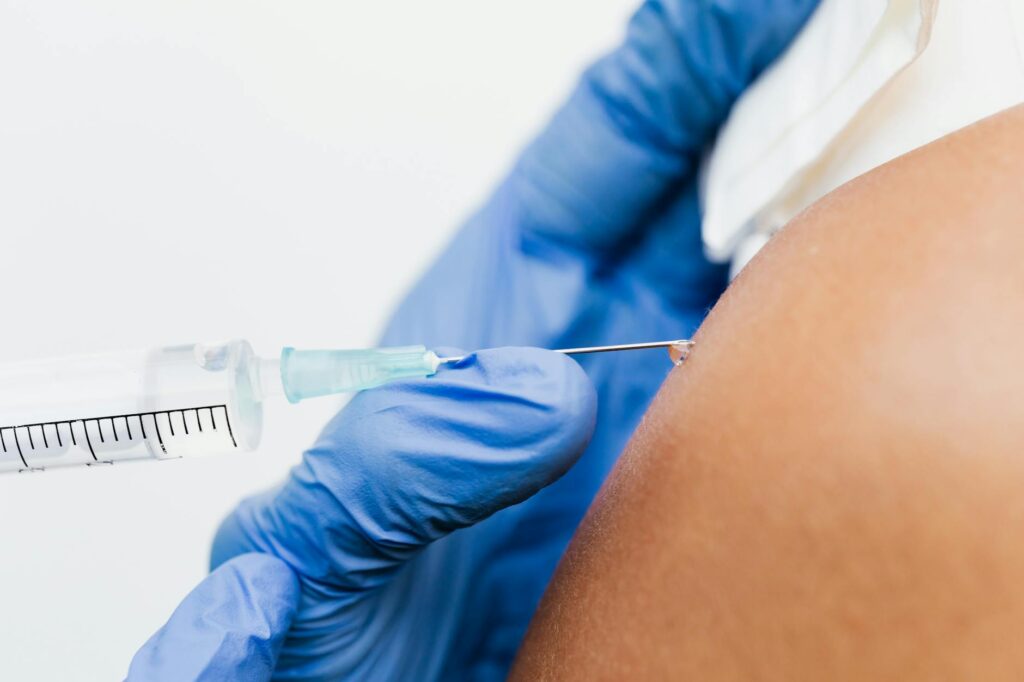
Bleomycin injections directly break down the excessive collagen that makes keloid acne scars so thick and raised, causing them to flatten and fade over weeks to months. This chemotherapy drug, delivered through intralesional injection directly into the scar tissue, disrupts the cross-linking of collagen fibers and triggers controlled breakdown of the overproduced tissue that resistant keloids build up. Unlike milder treatments like silicone gels or pressure garments that only soften scar appearance, bleomycin actively remodels the scar architecture itself, making it particularly effective when standard dermatological approaches have failed.
This article explores how bleomycin works mechanistically, what results you can realistically expect, the treatment schedule and potential side effects, and how it compares to other options for keloids that haven’t responded to previous interventions. Keloid acne scars present a distinct challenge because they represent pathological scar formation—the body’s overactive healing response that produces scar tissue extending beyond the original wound boundaries. Someone with keloid-prone skin might develop a small acne lesion that, instead of healing flat, develops into a thick, raised, expanding nodule that continues growing for months or years. Standard acne scar treatments like laser resurfacing or chemical peels often fail because they don’t address the underlying collagen overproduction; bleomycin injections do.
Table of Contents
- How Does Bleomycin Injection Therapy Target Resistant Keloid Acne Scars?
- What Should You Expect in Terms of Clinical Results and Treatment Timeline?
- What Are the Potential Side Effects and Safety Considerations of Intralesional Bleomycin?
- How Does Bleomycin Compare to Other Resistant Keloid Treatment Options?
- What Happens if Bleomycin Treatment Doesn’t Produce Expected Results?
- Preparing for Bleomycin Injection Treatment and Realistic Outcome Planning
- The Future of Keloid Treatment and Bleomycin’s Evolving Role
- Conclusion
- Frequently Asked Questions
How Does Bleomycin Injection Therapy Target Resistant Keloid Acne Scars?
Bleomycin’s mechanism in scar tissue differs from its use in cancer treatment. When injected intralesionally (directly into the scar), bleomycin damages the DNA of actively proliferating fibroblasts—the cells responsible for collagen synthesis—without the systemic toxicity of intravenous chemotherapy. The drug intercalates into the fibroblasts’ DNA, forcing apoptosis (programmed cell death) of these overactive cells while simultaneously triggering the release of cytokines that promote controlled remodeling of existing collagen. The result is a scar that flattens as the excess collagen is broken down and reabsorbed, typically progressing over 4 to 12 weeks post-injection. Keloid acne scars are resistant because the fibroblasts in keloid tissue have fundamentally different genetic programming—they continue proliferating and producing collagen long after normal wound healing should have stopped.
A person might have a keloid from acne on their shoulder that started as a simple pimple but has grown to the size of a small coin over years, unresponsive to silicone treatments or topical steroids. Bleomycin disrupts this aberrant cellular behavior by forcing fibroblast apoptosis, directly addressing the pathology rather than just managing symptoms. The concentration and total dose matter significantly. Dermatologists typically use 1 to 2 mg/mL of bleomycin, diluted in normal saline, injected at 0.1 to 0.2 mL per linear centimeter of scar tissue, with repeat treatments spaced 3 to 4 weeks apart. Underdosing leaves the scar largely unchanged; overdosing increases the risk of depression (the scar becoming indented or atrophic), which can be cosmetically worse than the original keloid.
What Should You Expect in Terms of Clinical Results and Treatment Timeline?
Most people see noticeable flattening of keloid acne scars within 4 to 8 weeks of the first injection, with progressive improvement over 3 to 6 months as the scar continues to remodel. A keloid that was raised 5 to 8 millimeters above the skin surface might flatten to 2 to 3 millimeters, and the texture typically softens considerably. However, complete resolution is not guaranteed—complete disappearance occurs in only about 50 to 70% of cases, depending on the scar’s size, depth, duration, and the patient’s keloid-prone skin genetics. The timeline also depends on how established the keloid is. A keloid acne scar that’s been present for only 6 months may respond faster and more completely than one that’s been present for 5 years, because older scars develop more mature, cross-linked collagen that’s harder to remodel.
Multiple injections are almost always required; a single injection rarely produces complete improvement. Treatment typically involves 3 to 6 sessions spaced 3 to 4 weeks apart, though some dermatologists use a single larger injection followed by observation for response before deciding on additional treatments. One important caveat: if you have a history of significant keloid formation across multiple body sites, bleomycin may be less effective than in non-keloid-prone patients. Some people’s genetic predisposition to keloid formation is so strong that even with bleomycin, the scar remains somewhat thickened or recurrence occurs months after treatment. This is particularly true if the treated keloid is on the chest, shoulders, or other high-tension areas where keloid recurrence rates exceed 40%.
What Are the Potential Side Effects and Safety Considerations of Intralesional Bleomycin?
While intralesional bleomycin delivers much lower systemic doses than intravenous bleomycin used in cancer therapy, localized side effects are common. Temporary erythema (redness) and swelling occur in almost everyone for the first 24 to 48 hours after injection. Bruising is frequent, particularly if the injection hits small blood vessels within the scar tissue. These resolve within 1 to 2 weeks without intervention. More concerning is post-inflammatory hyperpigmentation, which can affect 10 to 30% of treated patients, particularly those with darker skin tones; the treated area may darken considerably for weeks to months before gradually fading. A significant risk unique to bleomycin is the potential for scar depression or atrophy if injected too deeply or at too high a concentration.
Instead of a raised keloid, you develop a sunken or dimpled appearance in that exact spot. Someone treated for a raised keloid on their chest might end up with a noticeable depression that’s cosmetically problematic in a different way. This occurs in roughly 5 to 15% of treated patients and can be difficult to correct; filling agents or dermal grafting may be needed. Systemic absorption of bleomycin through intralesional injection is considered minimal, but rare cases of systemic effects have been reported, particularly in patients with compromised renal function. Pulmonary toxicity (bleomycin lung), the most serious systemic complication, is exceedingly rare with intralesional use but remains a theoretical concern. Patients on medications affecting kidney or lung function, or those with pre-existing pulmonary disease, should be evaluated carefully before bleomycin injection.
How Does Bleomycin Compare to Other Resistant Keloid Treatment Options?
For keloid acne scars unresponsive to standard treatments, bleomycin ranks alongside intralesional corticosteroid injections, intralesional 5-fluorouracil (5-FU), and surgical excision with post-operative radiation as the most effective options. Intralesional corticosteroids (triamcinolone) are gentler and require no special safety monitoring, but they’re less effective for large, established keloids and often require monthly injections for many months. 5-FU injection also shows efficacy similar to bleomycin, though results are more variable and multiple injections are almost always necessary. Surgical excision with or without post-operative radiation is more aggressive: the keloid is surgically removed, and radiation therapy is applied to the wound site to prevent recurrence. This can be highly effective but leaves a surgical scar, carries infection risk, and requires anesthesia and recovery time.
For someone with a large keloid acne scar that’s been present for years and hasn’t responded to injections, surgery might be appropriate, but bleomycin offers a non-surgical alternative that requires only needle injections in an office setting. The practical comparison often comes down to risk tolerance and scar characteristics. Bleomycin is more effective than corticosteroids alone for large, resistant keloids, but it carries more side effects. 5-FU is similarly effective with a potentially better safety profile, though efficacy reports are mixed. Someone with a small, early-stage keloid acne scar might reasonably try intralesional corticosteroids first and advance to bleomycin only if that fails; someone with a large, long-standing keloid probably benefits from starting with bleomycin to maximize the chance of meaningful improvement.
What Happens if Bleomycin Treatment Doesn’t Produce Expected Results?
Despite proper technique and dosing, some keloid acne scars show minimal response to bleomycin—perhaps only 20 to 30% flattening after 6 injections. This is particularly common in patients with extreme keloid tendency, scars on high-tension body areas like the chest, or scars present for more than a decade. In these cases, dermatologists may escalate to combination therapy: bleomycin plus intralesional corticosteroid injection at the same visit, or bleomycin followed 2 weeks later by radiation therapy (often a single dose of 1200 to 1500 cGy). The distinction between “treatment failure” and “incomplete response” matters. A keloid that flattens from 8 mm to 3 mm is an incomplete response but a meaningful clinical improvement; it’s softer, less noticeable, and less likely to expand further.
A scar that shows no change or worsens (develops depression or hyperpigmentation) represents true failure. If after 4 to 6 injections over 4 to 6 months you see no improvement or complications, continuing bleomycin is unlikely to help—pivot to alternative approaches. One preventative strategy that improves outcomes: some dermatologists apply pressure garments or use compression wrapping in the weeks after bleomycin injection, theoretically to prevent fibroblast proliferation during the healing response. Evidence for this is mixed, but it likely doesn’t hurt. Similarly, avoiding trauma to the treated area, sun exposure, and smoking for several weeks after injection may optimize conditions for scar remodeling.

Preparing for Bleomycin Injection Treatment and Realistic Outcome Planning
Before starting bleomycin treatment, you should have bloodwork including creatinine or estimated GFR (kidney function) and possibly baseline pulmonary function testing if you have any respiratory history, since bleomycin can rarely affect lung tissue even with intralesional injection. Your dermatologist should photograph the keloid from standardized angles before treatment begins, so you can objectively compare progress over months. Set realistic expectations: you’re aiming for 50 to 70% improvement, not complete erasure.
A keloid acne scar that’s been present for 3 years will likely improve more than one present for 10 years. Inform your dermatologist of your complete medical history, especially any allergies, autoimmune conditions, or concurrent medications. Certain drug interactions aren’t clinically significant with intralesional bleomycin, but cumulative effects with other medications affecting collagen metabolism or immune function should be considered. Cost is another practical factor: intralesional bleomycin typically costs $150 to $400 per injection, and you’ll likely need 3 to 6 injections, making total treatment cost $450 to $2,400 out-of-pocket depending on your insurance coverage.
The Future of Keloid Treatment and Bleomycin’s Evolving Role
Bleomycin remains the gold standard for intralesional treatment of resistant keloids and will likely continue to be used for years, but emerging therapies are shifting the landscape. Agents targeting TGF-beta signaling, which is aberrantly upregulated in keloid fibroblasts, show promise in early clinical trials and may eventually replace bleomycin for some patients. Combination approaches—bleomycin plus botulinum toxin injection (to reduce muscle tension and motion at the scar site), or bleomycin plus engineered biologics—are being investigated in research settings.
The reality is that resistant keloid acne scars remain one of the most challenging problems in dermatology, and no single treatment works for everyone. Bleomycin’s effectiveness makes it a cornerstone of treatment for now, but personalized medicine approaches that account for individual genetic keloid tendency, scar maturity, and location will likely define the future. If you have a keloid acne scar unresponsive to standard treatments, bleomycin injection is one of the most evidence-backed options available today.
Conclusion
Bleomycin intralesional injections directly attack resistant keloid acne scars by killing overactive fibroblasts and triggering collagen remodeling, resulting in flattening and softening of scars that have failed to improve with other treatments. Most people see noticeable improvement within 4 to 8 weeks and continued progress over 3 to 6 months, though multiple injections are typically required and complete resolution isn’t guaranteed. The treatment does carry potential side effects—temporary redness and bruising, post-inflammatory hyperpigmentation, and the risk of scar depression if dosed incorrectly—making careful patient selection and experienced provider technique essential.
If you have a keloid acne scar that hasn’t responded to topical treatments, silicone products, corticosteroid injections, or other conservative approaches, consulting a dermatologist experienced in bleomycin injection is the logical next step. Bring photographs documenting the scar over time, be clear about your history of keloid formation elsewhere on your body, and discuss realistic outcome expectations. Bleomycin isn’t a cure-all, but for many people with resistant keloid acne scars, it offers meaningful improvement that was previously unattainable.
Frequently Asked Questions
How long does bleomycin take to work on keloid acne scars?
Most people notice visible flattening within 4 to 8 weeks of the first injection, with ongoing improvement over 3 to 6 months. Full results from a complete treatment course (usually 3 to 6 injections) may take 6 to 12 months to fully manifest.
Can bleomycin cause permanent scarring or damage?
Bleomycin can cause scar depression (atrophy) if injected too deeply or at too high a concentration, which occurs in roughly 5 to 15% of treated patients. This is a localized effect, not a systemic scar; correcting it may require filling agents or other interventions.
Is bleomycin injection safe for people with darker skin tones?
Bleomycin injection is safe but carries a higher risk of post-inflammatory hyperpigmentation (10 to 30% of treated patients, with darker skin tones at higher risk). This darkening typically fades over weeks to months but can be cosmetically concerning during that period.
Will a keloid acne scar come back after bleomycin treatment?
Keloid recurrence after successful bleomycin treatment is possible, particularly in patients with strong genetic keloid tendency or scars on high-tension body areas. Recurrence rates vary but can exceed 20 to 40% in susceptible individuals.
How much does bleomycin injection treatment cost?
A single bleomycin injection typically costs $150 to $400, and most treatment courses require 3 to 6 injections spaced 3 to 4 weeks apart, bringing total treatment cost to $450 to $2,400 depending on provider and insurance coverage.
What’s the difference between bleomycin and corticosteroid injections for keloids?
Intralesional corticosteroids are gentler and easier to obtain, but less effective for large, established keloids. Bleomycin is more effective but carries higher risk of side effects and requires more safety monitoring. Corticosteroids often require monthly injections for many months, while bleomycin is injected every 3 to 4 weeks for a defined course.