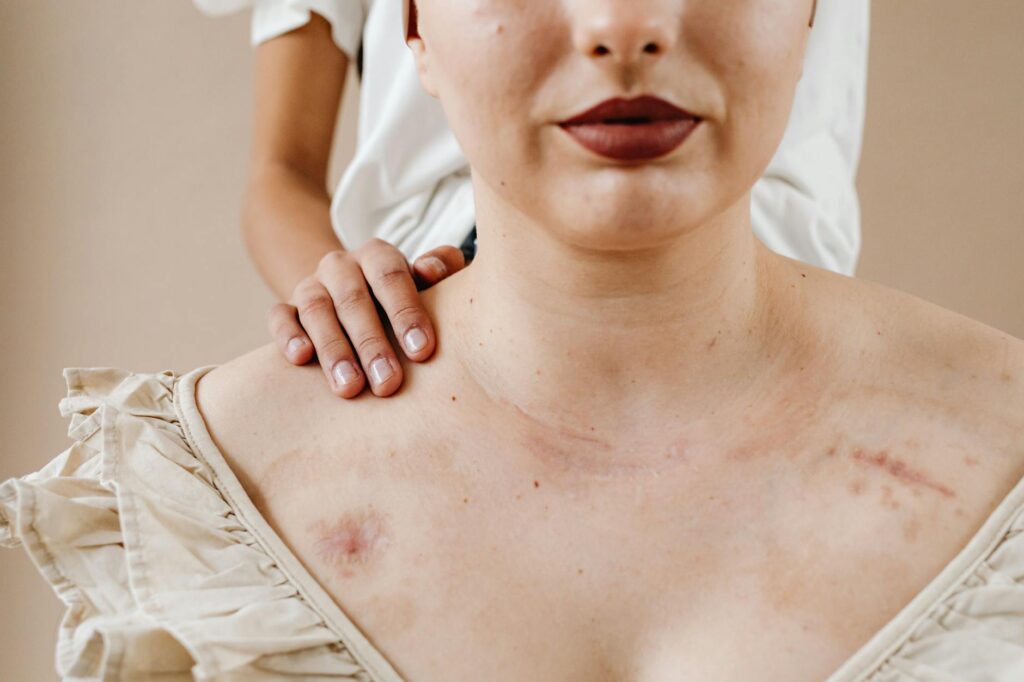
Scar volume loss continues to improve years after treatment because the healing process doesn’t stop when your dermatologist finishes the final session. The body’s natural response to scar-inducing trauma involves a biological rebuilding process called neocollagenesis—the creation of new collagen—which is fundamentally a gradual phenomenon. This means even after your last microneedling appointment or subcision procedure, your skin is still actively laying down fresh collagen and remodeling existing tissue, working to fill in depressed areas and improve scar appearance for approximately 12 to 18 months.
One of the most striking examples of this delayed improvement comes from a long-term acoustic subcision study that followed patients for 89 weeks: while patients reported 70% satisfaction with “good improvement” at the 12-week mark, by week 89 (nearly two years), that satisfaction climbed to 90%, even as the dramatic visible changes slowed. This article explores why this continues to happen, which treatments trigger the most sustained improvement, and what timeline you should realistically expect when investing in scar treatment. The key insight is that scar treatment is not about instant perfection—it’s about initiating a biological cascade that unfolds over time. Understanding the mechanics of continued improvement can help manage expectations and reinforce why consistency, patience, and sometimes combination therapies matter far more than seeking a single “magic” treatment.
Table of Contents
- The Collagen Remodeling Process and How Long-Term Improvement Happens
- Understanding the Timeline for Scar Maturation and Realistic Expectations
- Acoustic Subcision and the Evidence for Long-Term Improvement
- Combination Therapies vs. Single Treatments—Why Layering Approaches Delivers Better Long-Term Results
- Why Older Scars Plateau While Recent Scars Keep Improving
- The Role of Aftercare in Supporting Continued Collagen Remodeling
- The Future of Scar Treatment—Emerging Technologies and Cell-Based Approaches
- Conclusion
The Collagen Remodeling Process and How Long-Term Improvement Happens
The reason scars improve for months or even years after treatment comes down to how your body rebuilds damaged skin. When a scar forms, fibrous tissue fills the wound, but this tissue is disorganized and often sits lower than surrounding skin, creating the depressed appearance we recognize as atrophic acne scarring. Treatments like subcision, microneedling, and radiofrequency work by deliberately triggering controlled trauma to the dermis—the deeper skin layer—which awakens the body’s healing response. This response includes a process called neocollagenesis, in which specialized cells called fibroblasts manufacture new, organized collagen.
The critical distinction is that this collagen production doesn’t happen all at once; it’s a gradual biological process that continues for weeks and months after the procedure itself. Radiofrequency microneedling, for example, stimulates not just neocollagenesis but also neoelastogenesis (new elastic fiber formation) and ground substance deposition. Research shows that skin texture and scar appearance continue to improve for approximately 12 months after a single radiofrequency microneedling session, with the most noticeable changes occurring in the first 2–3 months but meaningful improvements persisting well beyond that window. This explains why a dermatologist might recommend waiting 4 to 6 weeks between sessions—the skin is still in an active remodeling phase, and premature retreatment can interrupt the natural healing cascade rather than enhance it.
Understanding the Timeline for Scar Maturation and Realistic Expectations
Scar maturation is a separate but complementary process to the improvements triggered by active treatment. The human body requires 12 to 18 months for the collagen remodeling phase that occurs after any skin injury—whether that injury comes from acne breakouts, surgical procedures, or intentional therapeutic trauma. During this period, the newly formed collagen gradually becomes stronger and better organized; at around 9 to 12 months post-injury, scar tissue reaches approximately 70 to 80 percent of the tensile strength of uninjured skin. This timeline applies both to the original acne scars you’re trying to treat and to the controlled micro-injuries created by your treatment itself.
However, treatment timing significantly affects how well your skin responds. Younger scars—those less than 2 years old—respond far better to treatment than older, mature scars that are more than 6 years old. This is because older scars have finished remodeling and the collagen has become densely packed and less responsive to stimulation. If you have scars from acne that occurred years ago, you can still achieve meaningful improvement, but the gains may be more modest and require more aggressive or repeated interventions. Conversely, someone treating fresher scars from recent breakouts can expect more dramatic responses to the same treatments, which is why dermatologists often recommend addressing noticeable scars sooner rather than waiting for them to “fully mature.”.
Acoustic Subcision and the Evidence for Long-Term Improvement
One of the most compelling demonstrations of how scar improvement unfolds over years comes from the acoustic subcision research. Subcision works by severing the fibrous tethers that pull depressed scars downward, thereby releasing the scar from beneath and stimulating the body’s natural trauma response, which triggers dermal trauma-induced neocollagenesis. In the long-term acoustic subcision study, a single treatment achieved mean scar height and volume reduction of greater than 55%, along with a mean improvement in overall scar appearance of 33.7% at 89 weeks. What stands out is how patient satisfaction evolved: 70% of patients reported “good improvement” at 12 weeks, but by 89 weeks, that figure had climbed to 90%.
This improvement curve tells an important story—the initial visible changes happen relatively quickly as the scar releases and swelling subsides, but the continued imperceptible improvement in collagen quality and scar filling happens gradually over the remaining months. One practical limitation is that not everyone achieves this level of improvement; results vary based on scar type, skin color, and individual healing capacity. Darker-skinned individuals, for example, may experience more post-treatment inflammation, which can complicate the healing timeline and outcomes. Additionally, acoustic subcision works best on certain scar morphologies; rolling scars typically show better responses than boxcar or ice-pick scars, which may require combination approaches.
Combination Therapies vs. Single Treatments—Why Layering Approaches Delivers Better Long-Term Results
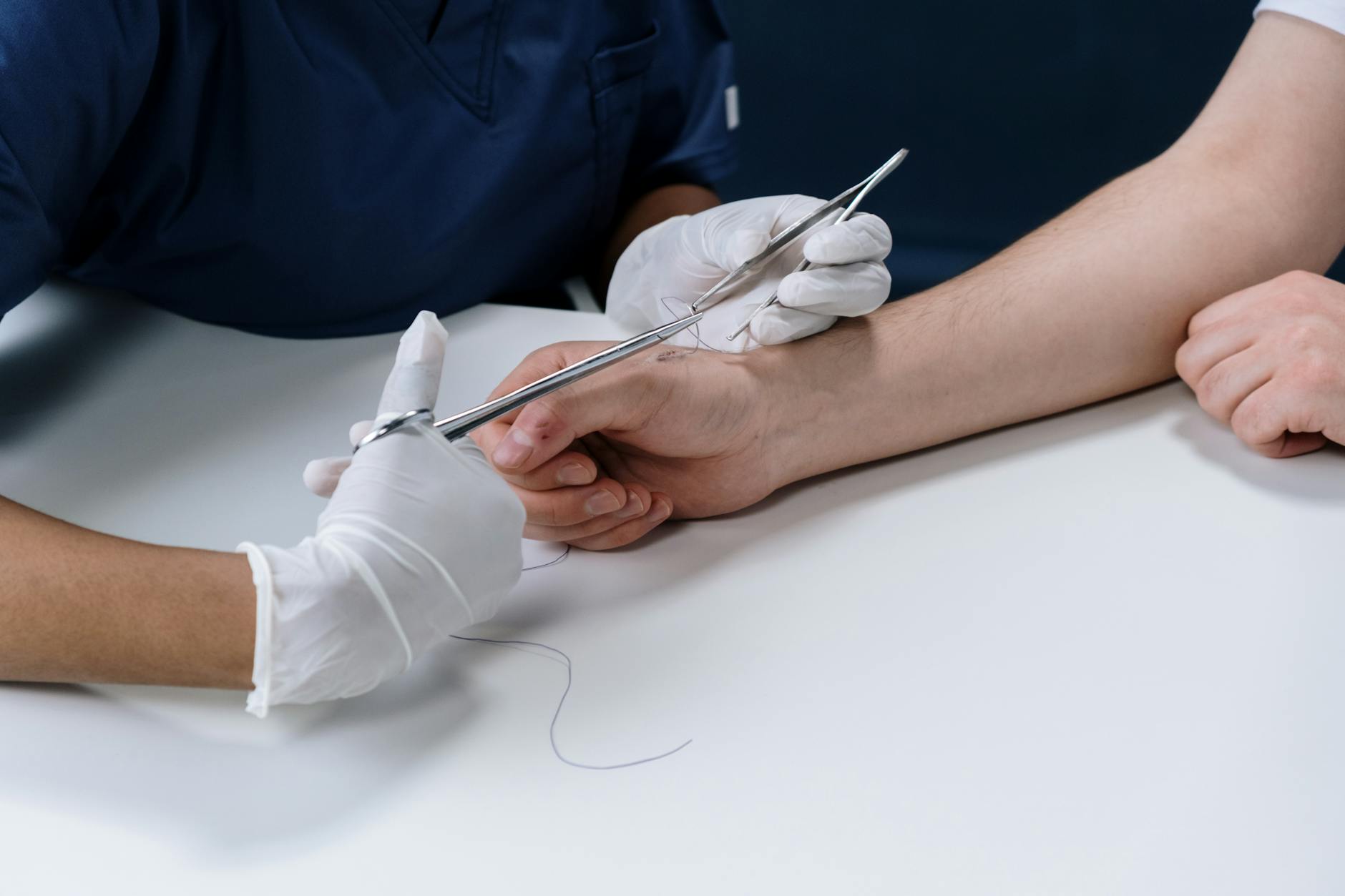
The research on scar treatment efficacy reveals a crucial finding: combining therapies consistently outperforms single-modality treatment. Studies comparing combined therapy approaches showed mean scar volume reduction of 46.55% and area reduction of 44.60%, compared to just 13.31% volume reduction and 11.28% area reduction for subcision used in isolation. This more than threefold improvement when combining approaches underscores why many dermatologists now recommend multi-step protocols rather than relying on any single procedure.
Common effective combinations include microneedling paired with platelet-rich plasma (PRP), which achieves 40–70% improvement in scar appearance, and radiofrequency microneedling applied in series, typically 3 sessions at 4-week intervals, which demonstrates 50–70% improvement. The advantage of spacing treatments 4 weeks apart is that it respects the collagen remodeling timeline while giving dermatologists the opportunity to reassess and adjust intensity based on how the skin responds. A practical tradeoff is cost and time commitment—combination protocols require more office visits, higher expense, and extended treatment timelines compared to a single aggressive intervention. However, the superior long-term results and lower risk of complications typically justify this investment for patients seeking meaningful improvement.
Why Older Scars Plateau While Recent Scars Keep Improving
A critical limitation of long-term scar improvement is that not all scars respond equally. Once a scar reaches full maturation—typically 2 to 3 years after the initial injury—the window for dramatic improvement starts to narrow. Older scars have undergone complete collagen remodeling and the tissue has become increasingly fibrotic and less amenable to being remodeled by external treatments.
This doesn’t mean treatment is useless on older scars, but it does mean expectations should be calibrated accordingly. Recent scars, by contrast, are caught while the tissue is still in an active remodeling phase, which is why treating acne scars sooner rather than later can yield better results with fewer sessions. If you have scars that are more than 6 years old, you should still consider treatment—meaningful improvement is achievable—but understand that you may need more sessions, more aggressive parameters, or additional combination modalities to achieve results comparable to someone treating fresher scars. This is why some dermatologists recommend retreatment intervals: spacing sessions allows the body to complete its remodeling at each stage before introducing new stimulus, avoiding the fatigue response that can occur with overly frequent treatments.

The Role of Aftercare in Supporting Continued Collagen Remodeling
While the dermatologist’s procedure initiates the collagen remodeling process, what you do in the weeks and months afterward significantly influences how effectively that process unfolds. Proper sun protection is non-negotiable—UV exposure can trigger inflammatory responses and interfere with the ordered deposition of new collagen. Using broad-spectrum SPF 30 or higher during and after your treatment series, especially on the treated areas, preserves the gains you’re working to achieve.
Similarly, avoiding irritating products, excessive heat (hot showers, saunas), and strenuous exercise for the first 24–48 hours post-treatment gives the skin’s inflammatory phase a chance to resolve without additional stress. Some evidence supports using targeted skincare ingredients like retinoids, niacinamide, or peptide products during the remodeling phase to support collagen synthesis, though this should be discussed with your dermatologist to avoid over-irritation. Hydration, both topical and systemic, also matters—well-hydrated skin can mount a more robust healing response. Notably, while patience during the remodeling phase is important, there’s no such thing as “too much” waiting; if you skip aftercare or neglect sun protection, you don’t accelerate improvement—you simply fail to optimize the body’s natural healing capacity.
The Future of Scar Treatment—Emerging Technologies and Cell-Based Approaches
The landscape of scar treatment is evolving, with newer modalities showing promise for sustained long-term improvement. Cell-based therapies, particularly autologous stromal vascular fraction (SVF) treatments, have emerged as a frontier in scar care. SVF is derived from the patient’s own fat and contains regenerative cells that, when injected into scarred tissue, stimulate collagen remodeling and tissue repair.
Recent 2025 research indicates that SVF therapies deliver superior clinical and patient-reported outcomes for atrophic acne scars compared to standard treatments, with sustained long-term efficacy extending beyond typical treatment timelines. The advantage is that these therapies harness the patient’s own healing capacity rather than relying solely on thermal or mechanical trauma to trigger improvement. As dermatology moves forward, the trend is clearly toward combining modalities—pairing traditional treatments with emerging technologies to achieve more complete and longer-lasting scar revision. While these newer approaches are not yet standard care and may carry higher costs, they represent a paradigm shift toward understanding scars as a biological problem requiring sustained biological intervention rather than a structural problem requiring one-time mechanical correction.
Conclusion
Scar volume loss continues to improve years after treatment because scar healing is fundamentally a biological process unfolding over 12 to 18 months, not a single event that concludes when you leave the dermatology office. The mechanisms at work—neocollagenesis triggered by treatment, organized collagen maturation, and tissue remodeling—all require time to fully manifest. The evidence is compelling: patients in acoustic subcision studies went from 70% satisfaction at 12 weeks to 90% by week 89, and combination therapies achieve three times better volume reduction than single treatments, demonstrating that patience and comprehensive protocols pay dividends.
The takeaway for anyone considering scar treatment is to set realistic timelines, understand that visible improvements often precede imperceptible refinement, and recognize that combining therapies during the months when your skin is most receptive to change produces the best long-term outcomes. Work with a dermatologist to design a treatment plan that respects your scar’s characteristics, your skin type, and the collagen remodeling timeline. If your scars are recent, act sooner; if they’re older, don’t assume you’re out of luck, but do plan for a more extended and possibly more intensive approach. The body’s capacity to heal itself, when given the right stimulus and time, remains one of the most underestimated forces in dermatology.