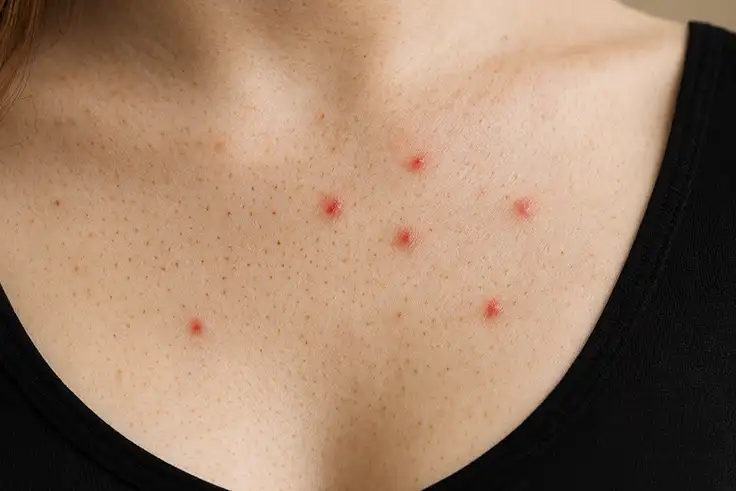
Dark spots often appear on the skin after inflammation because the body ramps up melanin production as part of its healing process. Melanin is the natural pigment that colors our skin, and when something irritates or injures it, special cells called melanocytes get triggered to make extra amounts[1][3][4][5].
The whole thing starts with inflammation. This can come from everyday issues like acne pimples popping up, bug bites, cuts, scrapes, or rashes from conditions such as eczema or psoriasis[1][3][4][5]. Even harsh skincare products, rough scrubbing, or bad extractions can set it off[1][3][4]. Your immune system jumps in to fix the problem, sending out inflammatory signals. These signals tell the melanocytes to work overtime, dumping more melanin into the area to protect it[1][3][5][7].
Once the original problem heals, that extra pigment stays behind as flat dark patches. These spots can look pink, red, brown, or black, depending on your natural skin tone[4]. They are not scars, which are textured dents or ridges from actual skin damage. Instead, they are just color changes that sit on the surface[3].
Certain skin types see these spots more often and they stick around longer. People with darker tones, like Fitzpatrick types III to VI, have more active melanocytes that react strongly to any irritation[1][4][5]. Oily skin, especially in the T-zone of the face, is prone too because oil and hormones fuel breakouts that lead to inflammation[1]. Sensitive skin reacts quickly to things like fragranced cleansers or sun exposure, making spots form fast[1].
Sun plays a big role in making them worse. UV rays not only cause new inflammation but also darken any existing pigment, turning small marks into stubborn ones[1][4]. Hormones from periods, stress, pregnancy, or birth control can add to the mix by sparking acne or other flare-ups[1][2].
Over time, many spots fade on their own as the skin sheds old cells, but this can take months or years, especially in darker skin[3][4][5]. Picking at pimples or using aggressive treatments raises the risk because it creates more trauma[5].
Sources
https://worldofasaya.com/blogs/skin-types/3-skin-types-most-prone-to-post-inflammatory-pih
https://www.kavimd.com/how-to-get-rid-of-brown-spots-on-your-skin-top-treatments
https://www.serenityrejuvenationcenter.com/services/post-inflammatory-hyperpigmentation-pih-treatment-in-seattle/
https://www.shumailas.com/conditions/post-inflammatory-hyperpigmentation-pih/
https://www.lmaclinic.com/lma/blog/co2-laser-for-post-inflammatory-hyperpigmentation
https://www.atlantaskinandaesthetics.com/hyperpigmentation/
https://www.atlantacenterfordermatology.com/hyperpigmentation/
https://www.rejuvacenters.com/conditions-treated/hyperpigmentation/