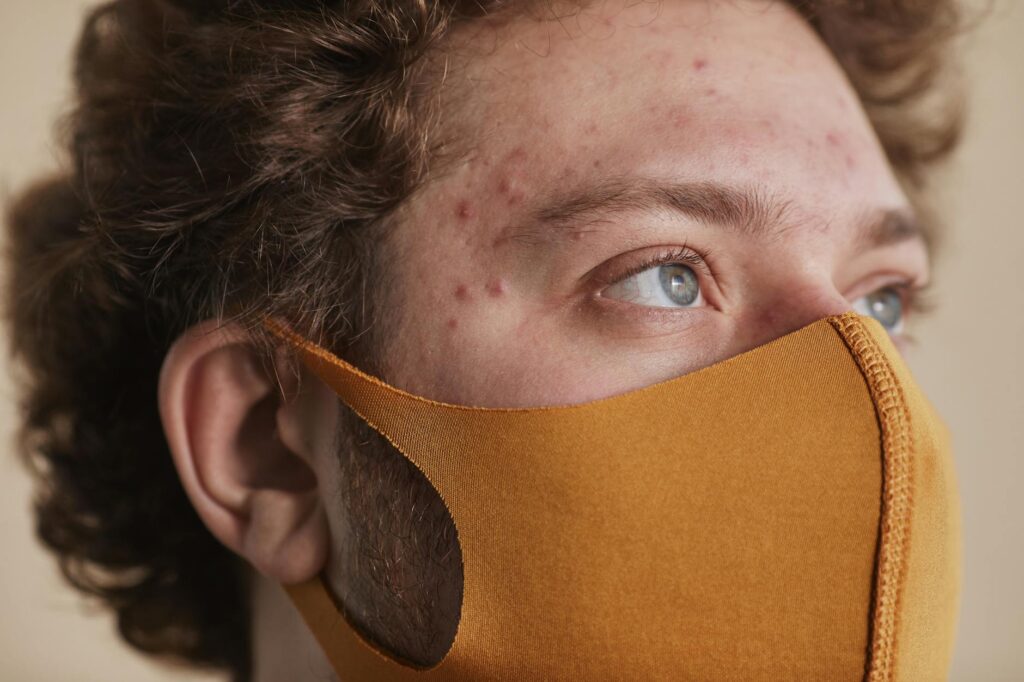
Skin laxity directly impacts how visible your acne scars appear because less elastic skin cannot properly support the underlying tissue structure, making depressions and indentations more pronounced. When your skin loses elasticity—whether from aging, sun damage, or the inflammatory process of acne itself—the collagen and elastin fibers that normally keep skin taut and resilient weaken. This means that atrophic scars (the depressed, pitted type that account for the majority of acne scarring) appear deeper and more noticeable against loose, sagging skin than they would on firm, youthful skin with good turgor.
A person with naturally tight, elastic skin might have the same scars as someone with lax skin, but the first person’s scars will appear significantly less severe simply because the surrounding tissue maintains better structure. This article explores why this relationship exists, how it develops, and what it means for your treatment options. The connection between skin laxity and scar appearance is especially important because many people focus solely on treating the scars themselves without addressing the laxity that makes them visible in the first place. If you have both issues present—which is common, since the same factors (sun exposure, aging, inflammatory acne) cause both—treating only one while ignoring the other will yield disappointing results.
Table of Contents
- How Loss of Skin Elasticity Makes Acne Scars More Visible
- The Collagen Breakdown Cycle: How Scarring and Laxity Feed Into Each Other
- How Skin Elasticity Changes Over Time and Impacts Scar Perception
- Treatment Approaches When Both Laxity and Scars Are Present
- The Challenge of Deep Atrophic Scars Combined with Severe Laxity
- How Sun Damage Compounds Both Laxity and Scar Visibility
- Managing Expectations: Modern Skin Tightening and Scar Treatment Options
- Conclusion
How Loss of Skin Elasticity Makes Acne Scars More Visible
Skin elasticity depends on a healthy network of collagen and elastin fibers that allow skin to stretch and snap back to its original position. Acne scars, particularly atrophic scars, are actually areas where collagen was destroyed during the inflammatory healing process, leaving a structural deficit beneath the skin’s surface. When surrounding skin has good elasticity, it can partially compensate for this deficit—the elastic tissue pulls against the scar edges and provides structural support, making the depression less noticeable. When surrounding skin is lax and loose, there’s no tension to mask the scar; the depression appears to fall away more dramatically, and the scar becomes a visible indent rather than something subtle. Consider a concrete example: imagine a small ice-pick scar on someone’s cheek.
On a 25-year-old with firm, elastic skin, that scar might be barely noticeable—light reflects off the slightly raised skin around it, and the overall skin tone is even. On a 50-year-old with the identical scar but with significant skin laxity and loss of collagen, the same scar appears much more dramatic because the skin has sagged, lost its ability to support itself, and the depression now reads as a distinct, visible divot. The scar didn’t change; the surrounding tissue’s loss of elasticity made it appear far worse. This is why older individuals often report that acne scars seem to become more prominent over time—it’s not the scars getting worse, but rather the skin’s elasticity degrading around them. Sun damage accelerates this process significantly, which is why someone with chronic sun exposure might notice their scars suddenly look worse even though nothing medically changed.
The Collagen Breakdown Cycle: How Scarring and Laxity Feed Into Each Other
The problem becomes compounded because the same inflammatory process that creates acne scars also damages the collagen and elastin that give skin its elasticity. Severe acne doesn’t just leave a depressed scar—the surrounding inflammation triggers collagen destruction throughout the affected area, weakening skin quality and elasticity across the entire site, not just at the scar itself. This means that someone with extensive acne scarring has often experienced extensive collagen damage in general, setting the stage for both severe scars and compromised skin elasticity in those same areas. However, it’s important to note that not everyone with acne develops significant laxity. Someone who had acne for just a few years in their teens, even if it left moderate scarring, might have maintained good overall skin elasticity if they avoided sun damage and took care of their skin afterward.
Conversely, someone with mild acne scars but two decades of sun exposure might develop pronounced laxity that makes their mild scars look severe. The severity of acne scarring and the presence of skin laxity don’t always correlate directly—they’re separate issues that can occur in various combinations. This distinction matters because it affects treatment. If you have significant laxity but relatively mild scarring, a skin tightening treatment might dramatically improve your appearance without needing aggressive scar revision. If you have severe scars but good skin elasticity, you might achieve excellent results from laser resurfacing or microneedling without addressing laxity. But if you have both—which is common in people over 40 with a history of severe acne—you’ll need a more comprehensive approach.
How Skin Elasticity Changes Over Time and Impacts Scar Perception
Skin elasticity naturally declines with age because collagen production decreases roughly 1% per year after age 30, and the collagen that does exist becomes cross-linked and rigid rather than supple. This baseline aging process means that acne scars from your teens will almost certainly look worse at 40 than they did at 25, even if nothing medical has changed. The loss of overall skin elasticity amplifies the relative depth and visibility of old scars. A real-world scenario: someone had moderate acne in high school with some residual atrophic scarring. At 20, with firm, youthful skin, the scars were noticeable but not severe.
By age 35, with normal aging and a few years of regular sun exposure, the same scars appear much more prominent—not because they’ve changed, but because the skin around them has lost elasticity and collagen density. The scar appears deeper because there’s less structural support around it. If that same person continues sun exposure without protection, by age 50 the scars can look genuinely severe despite being identical to the 20-year-old version. This trajectory explains why many people feel their acne scars “got worse” over time. It’s predictable and related entirely to the natural loss of skin elasticity with aging.

Treatment Approaches When Both Laxity and Scars Are Present
When someone has both significant acne scarring and skin laxity, the treatment strategy needs to address both issues simultaneously for optimal results. Traditional scar treatments like laser resurfacing or microneedling improve the scars themselves by stimulating collagen remodeling, but they don’t address the underlying loss of skin elasticity and laxity. Meanwhile, skin tightening treatments like radiofrequency, ultrasound therapy, or facelift procedures address the laxity and overall skin quality but don’t directly fill or revise the scars.
Some practitioners advocate for combining approaches: for example, using fractional CO2 laser resurfacing to address the scars while simultaneously using radiofrequency for skin tightening to improve elasticity and collagen production. This dual approach can be more effective than either treatment alone, but it carries higher cost and longer recovery time compared to addressing just one issue. The tradeoff is that you’re increasing intensity and expense, but potentially achieving results that neither treatment alone could reach. Another option is to prioritize the laxity first through skin tightening, then assess whether the scars still appear severe with improved skin structure—sometimes improving laxity alone creates a substantial improvement in scar appearance without additional scar-specific treatment.
The Challenge of Deep Atrophic Scars Combined with Severe Laxity
When someone has both deep, severe acne scars and significant skin laxity, results from standard treatments can be disappointing because the fundamental structural deficit is too large to fully correct. Deep atrophic scars represent substantial collagen loss—sometimes affecting dermis thickness by 50% or more. If the skin is also lax and loose, even aggressive resurfacing or tightening treatments may leave visible scarring because the collagen loss is simply too extensive to be fully rebuilt with current non-invasive technologies. A critical limitation: radiofrequency and similar energy-based treatments work by stimulating collagen production, but they can’t actually add collagen if there’s a substantial deficit.
They can improve skin quality, tighten skin, and make scars somewhat less visible, but they have a ceiling. In severe cases, the only meaningful improvement comes from more invasive treatments like surgical subcision (lifting tethered scar tissue from below), chemical peels, or even facelift procedures that physically tighten the skin and reposition tissue to minimize scar depth. However, these come with significant recovery time and higher risk. Someone with severe scars and severe laxity should have realistic expectations: modern treatments can provide substantial improvement, but may not achieve complete scar elimination.

How Sun Damage Compounds Both Laxity and Scar Visibility
Sun damage independently causes both loss of skin elasticity and can worsen the appearance of existing scars. UV exposure breaks down collagen and elastin through free radical damage and inflammatory pathways, directly contributing to laxity. Simultaneously, sun-damaged skin develops irregular pigmentation and texture changes that make scars stand out more dramatically—a scar on evenly-toned, well-preserved skin is less noticeable than a scar on sun-damaged skin with mottled pigmentation and poor overall quality.
A practical example: someone with acne scars who diligently avoids sun and uses retinoids and antioxidants may maintain relatively good skin quality and elasticity into their 40s, keeping scar appearance stable. Another person with identical acne scars who spent their 20s and 30s tanning or with poor sun protection will, by age 40, have noticeably worse-looking scars—not because the scars themselves changed, but because the surrounding skin deteriorated significantly. This is one of the few scar-related factors people can actually control to some degree.
Managing Expectations: Modern Skin Tightening and Scar Treatment Options
Current non-invasive and minimally invasive options for combined laxity and scarring include fractional laser therapy, microneedling radiofrequency, ultrasound therapy (like Ultherapy), and newer energy-based platforms. These can produce meaningful improvements—studies show 30-60% reduction in visible scarring when treating combined laxity and scars, depending on severity.
However, “improvement” is not the same as “elimination,” and the more severe the scarring or laxity, the more realistic the improvement. Looking forward, emerging treatments like stem cell therapies and regenerative approaches show promise for actually rebuilding collagen rather than just stimulating its production, but these remain largely experimental or inaccessible for most patients. For the present, the most reliable approach remains combining sun protection going forward (to prevent further laxity and scar worsening) with realistic treatment expectations based on severity, and choosing treatments that address both laxity and scars rather than trying to fix one without the other.
Conclusion
Skin laxity directly affects acne scar appearance because elastic, well-supported skin can mask scarring while loose, inelastic skin makes scars appear deeper and more dramatic. The same aging process, sun damage, and inflammatory factors that create acne scars also degrade skin elasticity, meaning many people with visible acne scarring also have some degree of skin laxity contributing to the problem. Understanding this relationship is crucial because treating only the scars without addressing underlying laxity, or vice versa, often yields suboptimal results.
If you have both acne scarring and visible skin laxity, the most effective approach combines treatments addressing both issues and includes sun protection going forward to prevent further deterioration. Consulting with a dermatologist who can assess your specific combination of concerns will help identify whether your treatment priority should be the scars, the laxity, or a combined approach. Managing expectations based on scar severity is important—modern treatments can substantially improve appearance, but severe cases may require invasive procedures to achieve dramatic results.