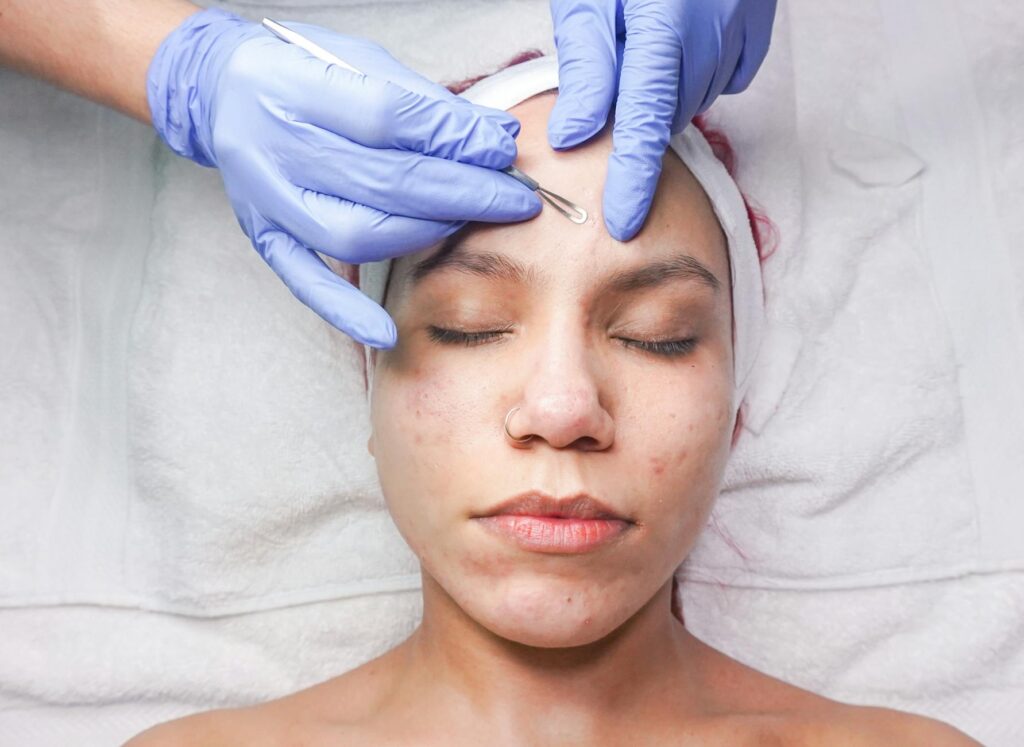
Acne clusters on the lower face””concentrated along the jawline, chin, and around the mouth””are primarily caused by hormonal fluctuations that stimulate oil glands in this specific region. The lower face contains a higher density of androgen receptors than other facial areas, making it particularly sensitive to hormonal shifts from menstrual cycles, stress, polycystic ovary syndrome (PCOS), or dietary influences. This explains why someone might have a clear forehead and cheeks while battling persistent breakouts below the cheekbones. Consider the common pattern: a woman in her late twenties who never had teenage acne suddenly develops deep, cystic pimples along her jawline that flare predictably before her period.
This scenario illustrates the hormonal nature of lower face acne perfectly. Unlike the bacterial-driven breakouts typical of adolescent acne, these clusters often resist standard benzoyl peroxide treatments because the root cause lies beneath the skin’s surface, in the endocrine system. This article explores the specific mechanisms behind lower face acne, from the role of androgens and cortisol to external factors like friction and skincare habits. Understanding whether your breakouts stem from internal hormones or external irritants determines the most effective treatment approach””and prevents wasted money on products that won’t address the actual problem.
Table of Contents
- Why Does Acne Concentrate on the Jawline and Chin?
- The Hormonal Connection: Androgens, Cortisol, and Menstrual Cycles
- External Factors That Trigger Lower Face Breakouts
- How Diet and Gut Health Influence Lower Face Acne
- Treatment Approaches: Topical Versus Systemic Options
- When Lower Face Acne Signals a Larger Health Issue
- The Role of Stress and Sleep in Breakout Patterns
- Building a Long-Term Strategy for Clearer Skin
- Conclusion
Why Does Acne Concentrate on the Jawline and Chin?
The lower face is essentially a hormonal map. Sebaceous glands in the chin and jawline area contain more androgen receptors than those on the forehead or nose, making them highly reactive to testosterone and its derivatives. When androgen levels rise””whether from menstrual cycle fluctuations, stress-induced cortisol spikes, or conditions like PCOS””these glands produce excess sebum. The thicker, stickier oil mixes with dead skin cells to clog pores, creating the perfect environment for acne-causing bacteria. This hormonal sensitivity explains why lower face acne often appears as deep, painful cysts rather than surface-level whiteheads.
The inflammation occurs deeper in the dermis, which is why these breakouts take longer to heal and frequently leave post-inflammatory hyperpigmentation or scarring. Men tend to experience this pattern around the beard area where testosterone stimulates both hair follicles and oil production simultaneously. Comparing lower face acne to forehead breakouts reveals distinct differences. Forehead acne typically responds quickly to topical treatments and often correlates with hair products, hats, or surface-level pore congestion. Jawline acne, by contrast, may barely respond to over-the-counter products because the driving force is systemic rather than topical. Someone could use the most effective acne wash available and still break out along their chin if hormonal imbalances go unaddressed.

The Hormonal Connection: Androgens, Cortisol, and Menstrual Cycles
Androgens””particularly testosterone and dihydrotestosterone (DHT)””directly increase sebum production in the skin. Women’s bodies produce androgens in smaller amounts than men, but even slight elevations can trigger acne in those with sensitive oil glands. This sensitivity varies genetically, which explains why two people with identical hormone levels might have dramatically different skin. The menstrual cycle creates a predictable acne pattern for many women. Progesterone rises after ovulation and has a mild androgenic effect, thickening sebum.
Simultaneously, estrogen””which typically suppresses sebum production””drops before menstruation. This hormonal shift creates a two-week window where lower face breakouts become more likely, peaking in the days before a period begins. However, if breakouts occur throughout the entire month rather than cyclically, the cause may extend beyond normal menstrual fluctuations. Persistent lower face acne warrants investigation into PCOS, which affects roughly 10% of women of reproductive age. PCOS involves elevated androgens that cause not only acne but also irregular periods, excess facial hair, and sometimes difficulty with fertility. Similarly, chronic stress keeps cortisol elevated, which in turn raises androgen levels””a pathway that explains why high-pressure life periods often correlate with stubborn chin breakouts.
External Factors That Trigger Lower Face Breakouts
Not all lower face acne stems from internal hormones. The chin and jawline experience more physical contact than other facial areas, creating opportunities for what dermatologists call acne mechanica””breakouts caused by friction, pressure, or occlusion. Resting your chin on your hand during long work sessions, sleeping face-down on a pillowcase, or wearing tight masks all create conditions where bacteria, oil, and dead skin cells become trapped against the skin. Phone use represents a surprisingly common culprit. Pressing a smartphone against your cheek and jaw transfers bacteria while also trapping heat and moisture.
Someone who spends hours on calls might notice breakouts specifically on whichever side of the face contacts the phone most frequently. Similarly, musical instruments like violins and wind instruments create prolonged pressure on the chin and jawline. Skincare and makeup products applied to the lower face can also contribute. Heavy foundations, comedogenic moisturizers, and even certain lip balms that spread onto surrounding skin may clog pores. The key distinction is pattern recognition: if breakouts appear where a particular product is applied or where friction occurs, the cause is likely external rather than hormonal. This matters for treatment because eliminating the external trigger resolves the problem, while hormonal acne persists regardless of product changes.

How Diet and Gut Health Influence Lower Face Acne
The connection between diet and acne has shifted from dismissed myth to documented science. High-glycemic foods””white bread, sugary snacks, processed cereals””cause rapid blood sugar spikes that trigger insulin release. Insulin, in turn, stimulates androgen production and increases insulin-like growth factor 1 (IGF-1), both of which amplify sebum production. Dairy products, particularly skim milk, have also shown associations with acne in multiple studies, possibly due to naturally occurring hormones in cow’s milk. Gut health adds another layer to this relationship. The gut microbiome influences systemic inflammation, and an imbalanced microbiome can contribute to skin conditions through what researchers call the gut-skin axis.
Probiotics and fiber-rich foods support beneficial gut bacteria, which may indirectly improve skin by reducing overall inflammation. However, dietary changes won’t help everyone equally. Someone with hormone-driven acne from PCOS may see minimal improvement from eliminating dairy, while another person’s breakouts might clear significantly. The difference lies in individual sensitivity. A practical approach involves eliminating suspected triggers for four to six weeks while tracking breakouts, then reintroducing foods one at a time to identify personal patterns. Quick-fix elimination diets without systematic reintroduction rarely provide lasting answers.
Treatment Approaches: Topical Versus Systemic Options
Treating lower face acne effectively requires matching the treatment to the cause. Topical retinoids””tretinoin, adapalene, tazarotene””work by increasing skin cell turnover and preventing the clogs that lead to breakouts. They remain foundational for most acne types but require three to four months of consistent use before showing full results. Benzoyl peroxide kills acne bacteria and helps with inflammatory lesions, though it can be drying and bleaches fabrics. For hormonally-driven lower face acne, topical treatments alone often fall short. This is where systemic treatments become relevant.
Spironolactone, originally a blood pressure medication, blocks androgen receptors and significantly reduces hormonal acne in many women””though it isn’t appropriate for men or pregnant women. Oral contraceptives containing estrogen and progestin can regulate hormonal fluctuations that trigger breakouts. The tradeoff between topical and systemic treatments involves side effects, cost, and commitment. Topical retinoids cause initial dryness and peeling that gradually diminishes; spironolactone requires regular blood pressure monitoring and potassium level checks. Oral contraceptives carry their own risk profile and work best for those who also want contraception. Dermatologists often recommend starting with topical treatments and escalating to systemic options only when topicals prove insufficient after adequate trial periods.

When Lower Face Acne Signals a Larger Health Issue
Acne that appears suddenly in adulthood, resists treatment, or accompanies other symptoms deserves medical evaluation. Women with lower face acne plus irregular periods, unexplained weight gain, or excessive body hair should be screened for PCOS through blood tests and possibly ultrasound. Elevated androgens can also signal adrenal gland disorders, though these are less common.
Men experiencing new-onset lower face acne alongside fatigue or mood changes might have thyroid dysfunction or other hormonal imbalances worth investigating. In rare cases, acne localized to the chin area can indicate perioral dermatitis””a different condition that looks like acne but worsens with typical acne treatments and requires distinct management. A warning: repeatedly treating persistent acne with over-the-counter products while ignoring potential underlying conditions delays effective treatment and may worsen scarring. Anyone whose lower face acne hasn’t improved after three months of consistent treatment should consult a dermatologist rather than continuing to cycle through drugstore products.
The Role of Stress and Sleep in Breakout Patterns
Chronic stress directly impacts skin through elevated cortisol, which increases oil production and impairs the skin’s healing capacity. The mechanism creates a frustrating cycle: stress causes breakouts, visible breakouts cause more stress, and the cycle perpetuates. Stress also often disrupts sleep, and sleep deprivation itself increases inflammatory markers and impairs skin barrier function.
Someone working seventy-hour weeks during a major project might notice their jawline breaking out more severely than usual despite no changes to skincare, diet, or menstrual patterns. The stress-sleep-acne connection explains this timing. While stress management advice can sound generic, the evidence genuinely supports that improving sleep and reducing cortisol through exercise, adequate rest, or other strategies contributes to clearer skin as a secondary benefit.
Building a Long-Term Strategy for Clearer Skin
Managing lower face acne requires patience and systematic elimination of contributing factors rather than expecting immediate results from any single product or intervention. Start by tracking breakout patterns against menstrual cycles, diet, stress levels, and product use for two to three months. This data reveals whether hormones, external factors, or combinations drive individual acne.
Treatment should then target the identified causes. Hormonal acne responds best to hormonal interventions””whether lifestyle-based approaches like stress management and dietary changes or medical treatments like spironolactone or certain birth control pills. Mechanica-related breakouts improve with habit changes and appropriate cleansing. Most people benefit from a consistent topical regimen including retinoids and gentle cleansing regardless of the underlying cause, since these fundamentals support skin health broadly while other interventions address root causes.
Conclusion
Lower face acne clusters result primarily from the high concentration of androgen-sensitive oil glands in the jawline and chin area. Hormonal fluctuations””from menstrual cycles, stress, PCOS, or other endocrine influences””drive most cases, though external factors like friction, phone use, and comedogenic products contribute in some individuals. The distinction matters because hormonal acne requires different treatment approaches than bacteria-driven or mechanica-related breakouts.
Effective management starts with identifying personal triggers through careful observation, then implementing targeted treatments that address the actual cause rather than just the symptoms. For stubborn or suddenly-appearing adult acne, professional evaluation can rule out underlying health conditions and provide access to prescription treatments that topical products cannot match. With the right approach matched to the right cause, lower face acne””while frustrating””responds to treatment in the majority of cases.