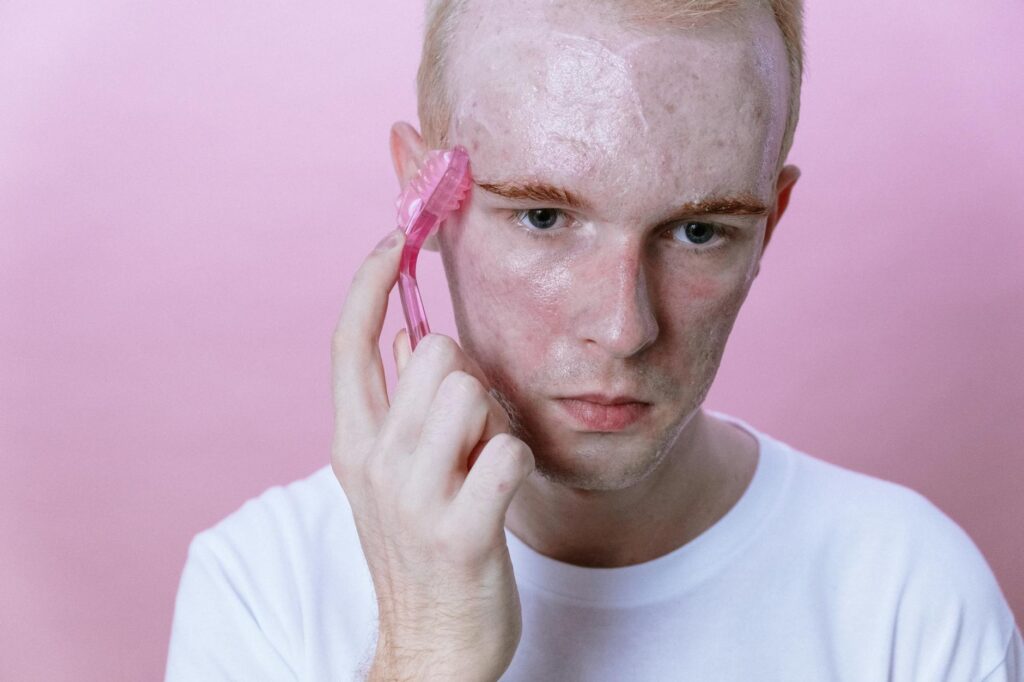
Teen acne rates are climbing, and excessive screen time is emerging as a significant contributing factor. Research shows that 41% of teenagers now spend over 8 hours daily on screens—averaging 8 hours and 39 minutes—and dermatologists are increasingly linking this behavior to higher acne prevalence. The connection isn’t as simple as screens directly causing breakouts; instead, extended device use triggers a cascade of physical and physiological changes that worsen acne: constant phone contact with skin, disrupted sleep patterns from blue light exposure, elevated stress hormones, and reduced outdoor time all converge to create an acne-prone environment. This article explores the relationship between screen time and teenage acne, examines the mechanisms behind the connection, and provides practical strategies teens can use to protect their skin while staying digitally engaged.
The numbers paint a concerning picture. Global acne prevalence has climbed to 20.5% overall, but jumps dramatically to 28.3% in adolescents and young adults ages 16-24—the age group most heavily reliant on smartphones and social media. The trend isn’t just an uptick; acne cases increased 39.2% globally between 1990 and 2021, jumping from 132.4 million to 184.3 million cases. Nearly 85% of Americans experience acne at some point in their lives, with approximately 50 million people affected annually. For teenagers navigating academic pressure and social comparison through screens, the timing couldn’t be worse.
Table of Contents
- How Excessive Screen Time Contributes to Teen Acne
- Sleep Disruption and Hormonal Chaos
- Stress, Vitamin D Deficiency, and Behavioral Shifts
- The Gender and Age Dimension
- Phone Hygiene and Contact-Based Breakouts
- Blue Light Filters and Practical Tech-Based Solutions
- Future Outlook and Generational Acne Trends
- Conclusion
- Frequently Asked Questions
How Excessive Screen Time Contributes to Teen Acne
The relationship between screens and acne operates through multiple simultaneous mechanisms rather than a single cause. The most direct culprit is acne mechanica—breakouts caused by physical contact, friction, and heat. dermatologists have documented patients showing acne clustered on the face side that contacts their phone most frequently, with lesions concentrating exactly where the device’s screen and case maintain prolonged contact with skin. This pressure-induced irritation damages the skin barrier, clogs pores with bacteria and dead cells, and inflames existing acne. For a typical teen holding a phone to their ear for hours or resting their cheek against their device while messaging, this mechanical stress is relentless. Teenagers spend even more time with devices than the general average.
Teen boys average 9 hours and 16 minutes daily on screens, while teen girls average 8 hours and 2 minutes. More than 50% of teens ages 12-17 report 4 or more hours of daily screen time according to CDC data collected between July 2021 and December 2023. That’s not casual use—it’s a significant portion of waking hours. For comparison, a teenager sleeping 8 hours has only 16 hours awake; if 9 are spent on screens, that leaves precious little time for skin care, outdoor activity, or other acne-protective behaviors. The blue light component adds another layer of complexity. Research from 2017 found that short-wavelength light emitted by phone and tablet screens can increase the growth of Staphylococcus aureus, a bacterium implicated in acne development. However, this effect appears strongest with direct, intense exposure rather than typical background screen use, so it’s a contributing factor rather than a primary driver for most teens.

Sleep Disruption and Hormonal Chaos
Perhaps the most underrated consequence of heavy screen time is its impact on sleep. Blue light from screens suppresses melatonin production and disrupts the body’s circadian rhythm, leaving teenagers waking later and sleeping less deeply. Poor sleep quality triggers a cascade of hormonal imbalances: elevated cortisol (stress hormone) and increased sebum production, both of which directly worsen acne. A tired teenager with disrupted hormones is far more acne-prone than one with stable sleep and stress levels. The sleep-acne connection isn’t theoretical. Teenagers already experience natural hormonal fluctuations from puberty, which is why adolescence is the peak acne years. Add sleep deprivation and circadian disruption on top of that, and hormonal chaos intensifies.
Cortisol spikes trigger the sebaceous glands to produce more oil; combined with stress-induced barrier dysfunction, this creates the perfect environment for acne to flourish. The irony is that many teens use screens right before bed—exactly when the stimulating effects of blue light have the greatest impact on sleep timing and quality. However, the relationship isn’t universal. Some teenagers with excellent skincare routines and strong genetics can tolerate significant screen time without acne worsening. Others experience severe breakouts after minimal screen use. Individual sensitivity to blue light, pre-existing acne severity, hormonal status, and genetic factors all influence how much screen time damages skin. A 16-year-old with a genetic predisposition to acne and irregular sleep will suffer more from heavy screen use than a 17-year-old with naturally clear skin and ironclad sleep habits.
Stress, Vitamin D Deficiency, and Behavioral Shifts
Extended indoor screen time creates multiple indirect pathways to acne. First, heavy device use correlates strongly with stress and anxiety—social media comparison, academic pressure from online learning, cyberbullying, and the constant notifications all elevate stress hormones that feed acne. Second, time spent indoors on screens is time not spent outdoors, reducing sun exposure and vitamin D synthesis. Vitamin D plays a crucial immune and anti-inflammatory role in skin health; deficiency exacerbates acne severity. Third, screen time often replaces other behaviors: instead of exercising, eating meals, and engaging in wind-down routines, teens are scrolling, which disrupts metabolism, impairs digestion, and prevents the nervous system from settling before sleep.
A real-world example: a 15-year-old girl spends 7 hours daily on social media and online schoolwork, stays up until midnight messaging friends, sleeps poorly, skips outdoor activity, and stress-eats snacks while scrolling. Her skin barrier weakens, her cortisol stays elevated, her gut microbiome (which influences skin) becomes inflamed from irregular eating, and her acne worsens. By contrast, a peer who uses screens for 4 hours daily, enforces phone-free time before bed, spends an hour outside daily, and maintains regular meal times has multiple protective factors working in her favor. The critical limitation here is that no single peer-reviewed study proves typical screen exposure alone *causes* acne. The connection involves physical contact, sleep disruption, stress, and lifestyle factors combined. Removing screens entirely won’t cure acne, but reducing problematic patterns can contribute meaningfully to clearer skin.

The Gender and Age Dimension
Acne prevalence shows a notable gender disparity, with young women experiencing 25% higher acne rates than young men. Multiple factors contribute: hormonal fluctuations during menstrual cycles, heavy use of pore-clogging makeup, and greater tendency toward anxiety-driven stress. Teen girls also average slightly less screen time than boys (8h 2m vs. 9h 16m daily), yet still experience worse acne—suggesting that for females, the acne-worsening factors from screen use may hit harder due to hormonal vulnerability. The developmental timing matters too. Peak acne ages are 16-24, precisely when screen dependence is highest.
A 14-year-old might develop moderate acne from puberty alone; add 8+ hours of daily screens, and it escalates to severe. This concentrated vulnerability window is why dermatologists are increasingly concerned about screen time’s role in acne epidemiology. By the time teenagers reach 20, some may have suffered years of scarring and psychological impact from acne that heavy screen use likely exacerbated. However, individual variation is enormous. Some 16-year-olds have clear skin despite heavy screen use and poor sleep; others struggle regardless of screen habits. Genetics still determines baseline acne tendency, and hormone levels vary widely. The takeaway is that screen time is one modifiable risk factor among many, not a universal acne trigger.
Phone Hygiene and Contact-Based Breakouts
The mechanical acne mechanica effect is entirely preventable through phone hygiene. Dermatologists have documented patients whose acne cleared when they simply started cleaning their phone screens daily and using speakerphone or earbuds to avoid face contact. The pathophysiology is straightforward: a phone screen harbors bacteria, dead skin cells, and oils; pressing that against the face deposits all of it directly into pores, especially on the cheek and chin where phones rest. A practical comparison: a teen using earbuds and speakerphone while messaging, with a clean phone, will experience far less phone-contact acne than one holding the device to their face.
Similarly, using a phone case that breathes (not vinyl or plastic that traps heat and sweat) reduces the heat-and-friction component of acne mechanica. These aren’t minor tweaks—for some teenagers, phone hygiene alone can reduce breakouts by 20-30% without any other intervention. A critical warning: improved phone hygiene doesn’t address the sleep disruption, stress, or vitamin D deficiency issues. Cleaning your phone won’t reduce blue light’s melatonin-suppressing effects or cortisol spikes from doom-scrolling. These factors require separate interventions like blue light filters, screen-time limits, or enforcing phone-free wind-down periods.
Blue Light Filters and Practical Tech-Based Solutions
If cutting screen time drastically isn’t realistic for academically busy teenagers, blue light filtering glasses or phone screen filters offer a partial mitigation strategy. These tools reduce short-wavelength light exposure, which may help preserve circadian rhythm stability and reduce bacterial stimulation from blue light. The evidence is mixed but promising—blue light filters alone won’t cure acne, but they can prevent sleep disruption that otherwise accelerates breakouts.
A concrete example: a 16-year-old required to use screens 6+ hours daily for online school started wearing blue light glasses two hours before bedtime and enabling night mode on devices. Within two weeks, sleep improved noticeably; within a month, acne improved moderately. The glasses didn’t eliminate screens, but they preserved enough sleep quality to allow her hormone levels to stabilize and acne to improve. For academically driven teens who can’t reduce screen time, this represents a realistic harm-reduction approach rather than an impossible restriction.
Future Outlook and Generational Acne Trends
As screen dependence increases globally, dermatologists expect acne prevalence to remain elevated across adolescent populations unless teen behavior shifts. The trajectory is clear: acne cases rose 39.2% over three decades, with screen time as a growing variable throughout that period. Unless teenagers and their families prioritize screen-time boundaries, outdoor activity, and sleep quality, acne prevalence in Gen Z and Gen Alpha will likely stay high.
The silver lining is awareness. Teenagers who understand the screen-acne connection can make informed choices: using speakerphone, cleaning devices, enforcing phone-free sleep hours, and balancing indoor screen use with outdoor activity. These aren’t onerous changes, and they address the mechanisms driving acne escalation. For dermatologists and parents, the message is clear: excessive screen time is now a legitimate acne risk factor worth addressing alongside diet, genetics, and skincare routine.
Conclusion
Teen acne rates have climbed substantially—reaching 28.3% in the peak acne demographic of ages 16-24—and excessive screen time is a significant contributing factor. The connection operates through multiple pathways: physical contact causing acne mechanica, sleep disruption from blue light, stress and anxiety, reduced outdoor time and vitamin D synthesis, and behavioral shifts that destabilize skin health. With 41% of teenagers spending over 8 hours daily on screens, the cumulative effect on skin is undeniable.
However, acne remains multifactorial; genetics, hormones, diet, and skincare still play major roles. The path forward isn’t abandonment of technology but smarter use: clean phones regularly, use speakerphone and earbuds to avoid facial contact, enforce phone-free wind-down periods before sleep, enable blue light filters, and prioritize outdoor activity and consistent sleep. Dermatologists can counsel teenagers on these practices, and families can support them. For acne-prone teens navigating the reality of screen-dependent modern life, these adjustments offer meaningful protection without requiring an unrealistic complete digital detox.
Frequently Asked Questions
Does blue light from screens directly cause acne?
Not directly in most cases. Blue light can increase growth of acne-linked bacteria in laboratory settings, but typical screen exposure doesn’t produce enough intensity to trigger clinical acne. The bigger impact comes from sleep disruption caused by blue light’s effect on melatonin, which elevates stress hormones and worsens existing acne.
If I use a blue light filter, will my acne improve?
Blue light filters help preserve sleep quality, which can reduce hormone-driven acne escalation. However, they don’t address physical contact with the phone or the stress and lifestyle factors linked to screen time. Think of it as one tool among several, not a standalone solution.
Is phone-contact acne reversible if I stop holding my phone to my face?
Yes, absolutely. Acne mechanica clears when physical irritation stops. Many dermatologists have documented patients whose cheek and chin acne resolved within weeks of using speakerphone or earbuds consistently. It’s one of the most reversible acne triggers.
Do teenagers with clear skin not need to worry about screen time and acne?
Genetics play a major role, so some teenagers can tolerate high screen time without worsening acne. However, heavy screen use still disrupts sleep and elevates stress hormones, which can accumulate effects over months or years. Protective practices are wise regardless.
Is acne worse in girls because of screens, or for other reasons?
Girls experience 25% higher acne prevalence than boys, but this is primarily due to hormonal fluctuations, not screens. However, girls may be more vulnerable to the stress and sleep-disruption effects of screens, amplifying acne severity beyond the baseline hormonal burden.
How many hours of screen time per day is safe for acne-prone teens?
There’s no magic number, since individual sensitivity varies widely. However, research suggests that more than 8 hours daily significantly elevates risk for acne worsening through multiple mechanisms. Aiming for 4-6 hours with intentional breaks, outdoor time, and sleep protection is more protective.