
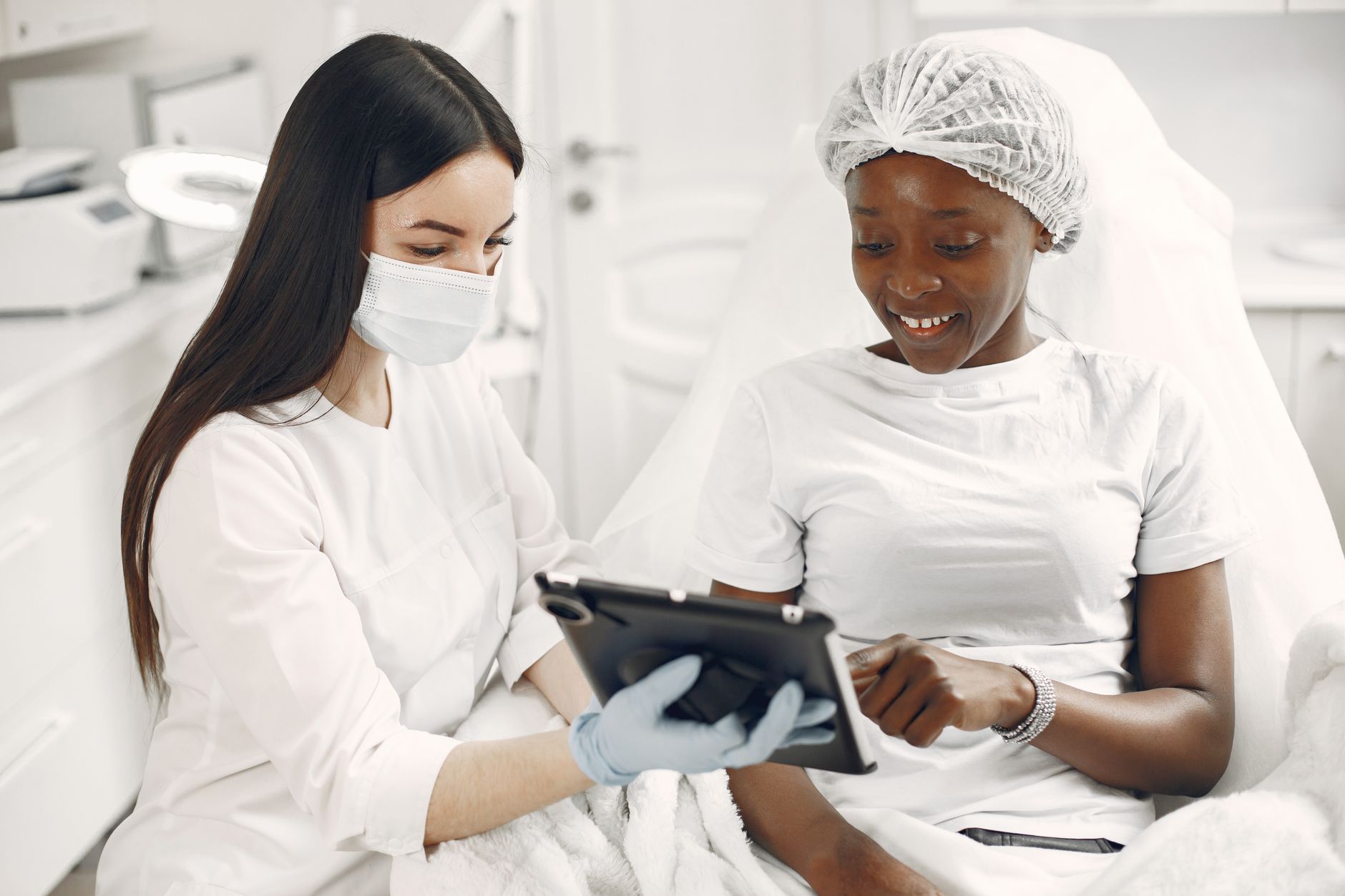
The specific statistic that at least 58% of dermatologists have experienced their phone screens harboring more bacteria than a toilet seat does not appear in peer-reviewed literature, major medical databases, or published surveys. While the claim circulates online and resonates intuitively—phones are genuinely contaminated surfaces—dermatology-specific research on this topic is sparse. What we do find, however, is substantial evidence that healthcare professionals broadly, including dermatologists, work with significantly contaminated devices daily, and that phones represent a legitimate cross-contamination risk in clinical settings.
The broader research does support the underlying concern: phones are demonstrably dirtier than toilet seats. University of Michigan researchers and TIME Magazine have documented that phones carry roughly 10 times more bacteria than toilet seats. For healthcare workers, the contamination is even more pronounced, with studies showing that 94% to 94.5% of healthcare professionals’ phones test positive for bacterial pathogens. While the exact 58% dermatologist statistic lacks verification, the general principle—that dermatologists’ phones are bacterial reservoirs—stands on solid epidemiological ground.
Table of Contents
- How Dirty Are Phones Really Compared to Toilet Seats?
- What Healthcare Professionals’ Phones Actually Carry
- What Dermatology-Specific Research Shows About Device Contamination
- How Cross-Contamination Occurs in Dermatology Practice
- Why Phone Contamination Research in Healthcare Remains Limited
- Practical Phone Hygiene for Dermatology Professionals
- What the Published Evidence Actually Supports
How Dirty Are Phones Really Compared to Toilet Seats?
The comparison between phone bacteria and toilet seat bacteria has become a standard measure of how grimy we allow our devices to become. Research quantifying this gap found that mobile phones harbor approximately 10 times the bacterial load of a typical toilet seat. This dramatic difference exists because toilet seats are regularly cleaned, exposed to disinfectants, and see transient contact, whereas phones remain on your person constantly—touching your face, hands, pockets, desks, and clinical equipment throughout the day. In dermatology specifically, phones pose a compounded risk.
A dermatologist’s phone enters examination rooms where patients have active skin infections, inflamed conditions, and compromised skin barriers. The phone then moves directly to the doctor’s hands, face, and potentially to other patients. One Brazilian study examining healthcare worker devices found that 58.8% of phone contamination consisted of coagulase-negative staphylococci, a bacterium frequently isolated from skin infections and acne lesions. For a specialty focused on skin health, this particular contamination profile carries clinical relevance that other medical fields may not face.
What Healthcare Professionals’ Phones Actually Carry
Studies examining bacterial contamination of healthcare workers’ phones paint a concerning picture that extends well beyond dermatology. Research published in the National Center for Biotechnology Information found that 94% to 94.5% of healthcare professionals’ phones showed bacterial contamination with a variety of pathogens. These included common skin bacteria, hospital-acquired pathogens, and organisms capable of causing secondary infections when transferred to compromised skin. The gap between general population phone contamination and healthcare worker phone contamination reflects environmental exposure.
A dermatologist examining a patient with bacterial folliculitis, fungal infection, or viral warts and then immediately checking their phone creates a transfer vector. The limitation here is important: most studies document that contamination exists, but fewer definitively link specific phone contamination to documented patient infections. The causal chain—dirty phone causes infection in next patient—is epidemiologically plausible but not definitively established in most dermatology settings. What is clear is that the opportunity for cross-contamination is substantial and largely uncontrolled.
What Dermatology-Specific Research Shows About Device Contamination
When researchers have examined dermatology-specific equipment, the contamination findings are notable. A 2019 study of 118 dermatologists in Brazil found that 46.6% of dermatoscopes—the handheld magnification devices used to examine suspicious skin lesions—had bacterial contamination on the lens. Dermatoscopes are used directly on patient skin, then moved from patient to patient without systematic cleaning between uses. The 46.6% contamination rate suggests that dermatology tools, which have direct skin contact, are frequently contaminated.
The phone contamination research for dermatologists specifically remains limited. The 58% figure cited in the original claim does not appear in peer-reviewed dermatology journals or infection control literature, despite searches through major databases. This gap in specific research may reflect the fact that phone hygiene has only recently become a focus of medical device contamination studies. Dermatology as a field has slower patient acuity compared to emergency medicine or surgery, which may reduce the perceived urgency of phone contamination research in the specialty.
How Cross-Contamination Occurs in Dermatology Practice
In a typical dermatology clinic, a physician examines a patient with an active acne rosacea flare, bacterial folliculitis, or fungal infection. During the examination, they may touch the phone to reference a dosage chart, check a lab result, or respond to a message. The phone surface—which may have contacted the patient’s infected or inflamed skin indirectly through gloves or direct hand contact—now carries that patient’s flora. When the same phone is used during the next patient visit, especially if that patient has a compromised skin barrier, a surgical wound, or active dermatitis, the transfer risk is real.
The practical challenge is that phones are not considered “critical” medical devices requiring sterilization. They are often overlooked in standard infection control protocols that focus on dermatoscopes, extraction tools, and other equipment with direct skin contact. Unlike examining gloves, which are changed between patients, phones typically remain in pockets throughout the day. A tradeoff exists between device cleanliness and workflow efficiency—frequent phone disinfection would slow practice, yet infrequent cleaning increases contamination risk.
Why Phone Contamination Research in Healthcare Remains Limited
Despite growing interest, dermatology-specific research on phone contamination has significant limitations. Most published studies are small (often under 150 participants), conducted in single institutions, and may not generalize across practice settings. Geographic variation, clinic cleaning protocols, and individual hygiene practices create wide variability in actual contamination levels. One dermatology practice with rigorous phone disinfection protocols may have 10% contamination, while another with no formal cleaning may approach 80%.
Another limitation is the definition of “contamination.” Finding a bacterium on a phone surface does not automatically mean that bacterium will cause infection if transferred to a patient. Skin is a robust barrier, and many common bacteria reside harmlessly on intact skin. The clinical significance of phone contamination—that is, the actual number of infections caused by contaminated phones—has never been systematically quantified in dermatology. This gap between documented contamination and documented harm is why dermatology societies have not issued strong mandates for phone disinfection, despite acknowledging the theoretical risk.
Practical Phone Hygiene for Dermatology Professionals
Given the contamination evidence, some dermatology practices have begun implementing phone disinfection protocols. Common approaches include alcohol-based wipes or ultraviolet light sanitizers, both of which can reduce bacterial load by 60% to 95% depending on technique and frequency. A dermatologist using a UV phone sanitizer after each patient encounter represents one end of the hygiene spectrum; another clinician wiping their phone with an alcohol pad once daily represents the other.
The practical reality is that perfect phone sterility is unrealistic in an outpatient setting. A more reasonable approach mirrors hand hygiene: disinfect phones after handling visibly contaminated items or patients with obvious infections, wash hands before touching the phone, and avoid unnecessary phone use during patient care. Some dermatologists have adopted the practice of keeping a “clinical phone” separate from a personal phone, reserving the clinical device for reference materials and keeping it away from the face.
What the Published Evidence Actually Supports
The verifiable evidence supports these conclusions: phones are heavily contaminated surfaces (10 times dirtier than toilet seats), healthcare workers’ phones show bacterial pathogens in over 90% of cases, and dermatology-specific equipment like dermatoscopes show contamination in roughly 46% of devices. What is not verified is the specific 58% figure for dermatologists’ experiences with phone bacterial load.
The statistic may have originated from combining or misinterpreting existing data—for instance, the 58.8% figure for coagulase-negative staphylococci contamination type, which has been rephrased as a dermatologist percentage. For anyone managing acne-prone or sensitive skin, the takeaway is straightforward: dermatologists’ phones are indeed contaminated reservoirs, contamination transfer between patients is a plausible mechanism for secondary skin infections, and basic phone hygiene in clinical settings remains largely uncontrolled. Whether the contamination rate among dermatologists is precisely 58%, somewhat higher, or lower than that specific figure, the underlying concern—dirty phones in skin-focused medical practice—is supported by available research.
- —
You Might Also Like
- At Least 28% of Adults With Persistent Acne Have Experienced A Simple 3-Step Routine Is More Effective Than a 10-Step Routine
- At Least 77% of People With Acne and Anxiety Have Experienced Physical Scrubs on Inflamed Acne Spread Bacteria and Cause Scarring
- At Least 38% of Patients With Body Acne Have Experienced Professional Extractions Are Safer Than DIY Pimple Popping