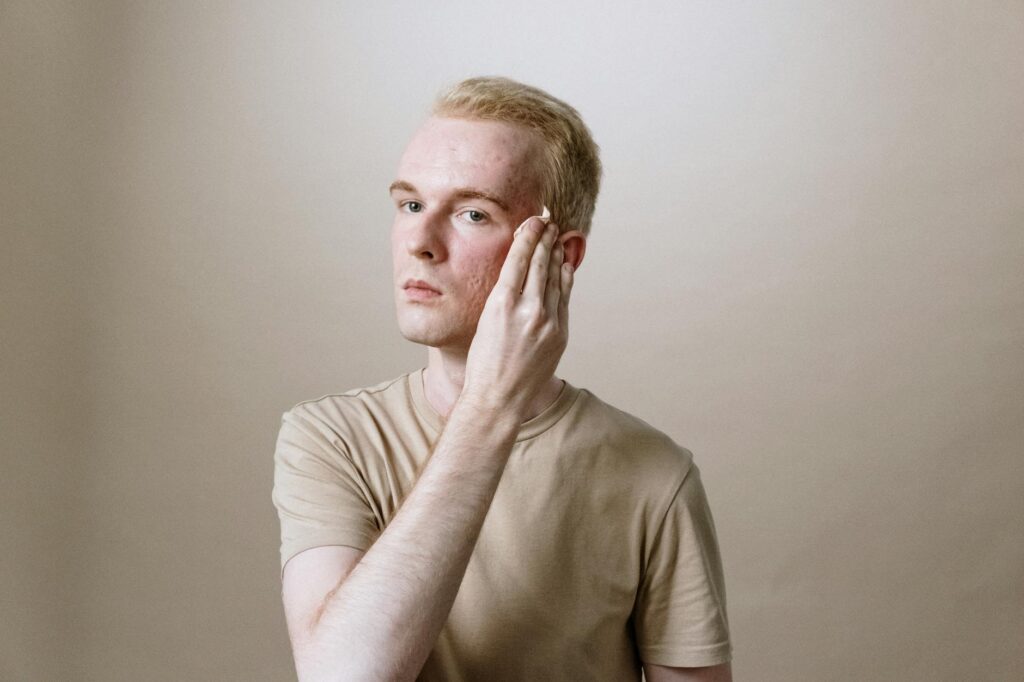
Acne after stopping anticonvulsants generally clears up on its own within a few weeks to a few months, though the timeline varies depending on how long you were on the medication and which drug you were taking. If you were prescribed valproic acid or phenytoin, both of which are well-documented acne triggers, your skin was likely dealing with elevated androgen levels throughout your treatment. Once the drug leaves your system, those hormonal shifts begin to normalize, and breakouts tend to fade without requiring aggressive intervention.
That said, not everyone experiences a clean resolution. Some people find that their skin stays stubbornly congested for months after discontinuation, particularly if the medication was taken for years or if there are underlying hormonal factors like polycystic ovary syndrome compounding the problem. A person who took valproic acid for three years for epilepsy management, for instance, might notice their jawline and chin acne persists well beyond the expected window, requiring topical retinoids or benzoyl peroxide to fully clear. This article covers which anticonvulsants are most likely to cause acne, the hormonal mechanisms behind the breakouts, what to realistically expect during the withdrawal period, and how to manage stubborn post-medication acne without compromising your neurological care.
Table of Contents
- Why Do Anticonvulsants Cause Acne in the First Place?
- Which Anticonvulsants Are the Worst Offenders for Skin Problems?
- What Happens to Your Skin After You Stop the Medication
- How to Manage Acne While Still on Anticonvulsants
- The Critical Warning About Stopping Anticonvulsants
- Ruling Out Other Causes Before Blaming the Medication
- What the Research Shows and Where the Gaps Remain
- Conclusion
- Frequently Asked Questions
Why Do Anticonvulsants Cause Acne in the First Place?
The connection between anticonvulsants and acne is primarily hormonal. Valproic acid, one of the most commonly prescribed anticonvulsants, increases serum androgen levels during treatment. Testosterone, luteinizing hormone, and follicle-stimulating hormone all rise while you are on the medication, and that surge in androgens directly stimulates sebum production. More sebum means clogged pores, bacterial overgrowth, and the inflammatory cascade that produces acne lesions. Phenytoin operates through a similar androgenic pathway, with the added wrinkle of affecting epidermal growth patterns that further contribute to skin problems.
What makes valproic acid particularly interesting from a dermatological standpoint is its paradoxical behavior. At therapeutic blood levels, it actually functions as a non-steroidal androgen receptor antagonist, meaning it blocks some androgen activity at the receptor level. Yet the net hormonal effect still tips toward acne development in a meaningful percentage of patients. Research shows that acne occurs in roughly 5.8 percent of adult epilepsy patients taking antiepileptic drugs, with 3.7 percent finding the cosmetic side effects severe enough to be intolerable. Compare that to levetiracetam, which showed significantly fewer cosmetic side effects at only 1.3 percent, and the difference between medications becomes clinically relevant for patients who are acne-prone.

Which Anticonvulsants Are the Worst Offenders for Skin Problems?
Valproic acid and phenytoin sit at the top of the list with the most robust evidence for causing cosmetic adverse effects, including acne. Pregabalin is another common offender that dermatologists and neurologists increasingly recognize as a contributor to skin issues. If you are taking any of these three and have developed acne that you never had before, or experienced a significant worsening of pre-existing breakouts, the medication is a strong suspect. Lamotrigine occupies a different space in this conversation.
While there are anecdotal reports of acneiform eruptions with lamotrigine, its primary skin concern is rash rather than acne. Rash affects approximately 10 percent of users, and the serious variant, Stevens-Johnson syndrome, occurs in 0.3 percent of adults and 0.8 percent of pediatric patients. So if you are on lamotrigine and developing skin issues, acne is less likely to be the culprit than a hypersensitivity reaction, which is a very different clinical problem requiring immediate medical attention. However, if you are transitioning off valproic acid and onto lamotrigine, which is a common medication switch, you might actually see your acne improve as a secondary benefit of the change.
What Happens to Your Skin After You Stop the Medication
Drug-induced acne typically resolves within a few weeks to months after discontinuing the offending anticonvulsant. For many people, the breakouts disappear without requiring any additional acne treatment once the medication is out of their system. The hormonal environment that was feeding the acne normalizes, sebum production drops back to baseline, and the skin gradually clears. The reality, though, is that “a few weeks to months” is a frustratingly vague timeline when you are staring at your face in the mirror every morning. Onset of drug-induced acne typically occurs within the first few months of starting the anticonvulsant, and severity ranges from mild comedonal acne to severe inflammatory cysts.
The more severe the acne became during treatment, the longer the resolution period tends to be. Someone who developed a few scattered whiteheads on valproic acid might clear up in three to four weeks. Someone with deep cystic lesions along the jawline and back may need two to four months, and standard acne treatments like topical retinoids, benzoyl peroxide, or short courses of antibiotics may be necessary to manage residual breakouts during that transition. A key point that often gets overlooked is that your skin may not return to its exact pre-medication state if other factors have changed during the years you were on the anticonvulsant. Age-related hormonal shifts, stress levels, dietary changes, and new skincare habits all play a role. Attributing every pimple to the discontinued medication is tempting but not always accurate.
How to Manage Acne While Still on Anticonvulsants
Not everyone has the option of stopping their anticonvulsant. Seizure control takes priority over skin clarity, full stop. If your medication cannot be discontinued, the recommended approach is to add acne-specific treatment while continuing the anticonvulsant. This means working with both your neurologist and a dermatologist simultaneously, which requires some coordination but is entirely manageable. The treatment options in this scenario are the standard acne toolkit, but with some important caveats.
Topical retinoids like adapalene or tretinoin can reduce comedone formation and are generally safe to use alongside anticonvulsants. Benzoyl peroxide addresses the bacterial component. For moderate to severe cases, oral antibiotics like doxycycline might be considered, though your prescribing doctors need to check for drug interactions. Spironolactone, which is sometimes used for hormonal acne in women, could theoretically counteract the androgen-elevating effects of valproic acid, but this combination requires careful monitoring. The tradeoff is straightforward: you get seizure control at the cost of adding another medication to your regimen, but the alternative of stopping your anticonvulsant without medical guidance carries risks that vastly outweigh cosmetic concerns.
The Critical Warning About Stopping Anticonvulsants
This needs to be stated plainly: you should never stop anticonvulsants without medical supervision. Abrupt withdrawal can trigger seizures, including status epilepticus, which is a medical emergency. No amount of acne frustration justifies the risk of an uncontrolled seizure. Any decision to discontinue or taper an anticonvulsant must be made in consultation with your neurologist, who will design a gradual reduction schedule that minimizes withdrawal risks.
The temptation to self-discontinue is real, especially for patients who were prescribed anticonvulsants for off-label uses like mood stabilization, migraine prevention, or neuropathic pain, where the perceived stakes feel lower than epilepsy management. But even in these cases, abrupt discontinuation can cause withdrawal symptoms, rebound symptoms of the original condition, and in some cases, provoked seizures in people who have never had epilepsy. If acne is significantly affecting your quality of life, bring it up with your prescribing physician. A medication switch, dose adjustment, or addition of acne treatment can usually be arranged without putting your neurological health at risk.

Ruling Out Other Causes Before Blaming the Medication
Before assuming your anticonvulsant is solely responsible for your acne, clinicians should rule out other causes of hyperandrogenism. Polycystic ovary syndrome is the most common overlapping condition, particularly in women of reproductive age who are taking valproic acid. PCOS independently causes elevated androgens and acne, and valproic acid has been associated with metabolic changes that may either unmask or worsen PCOS symptoms. Consider a scenario where a 28-year-old woman starts valproic acid for bipolar disorder and develops cystic acne along her jawline within four months.
Her dermatologist might attribute it entirely to the medication. But if she also has irregular periods, elevated DHEA-S levels, and insulin resistance, the acne may be driven by PCOS that was either subclinical before or worsened by the medication. Stopping the valproic acid might improve things but not fully resolve the breakouts, because the underlying hormonal disorder persists. Getting the right diagnosis matters for choosing the right treatment path.
What the Research Shows and Where the Gaps Remain
The existing evidence base on anticonvulsant-induced acne is well-established but has not been significantly updated in recent years. No major studies from 2025 or 2026 specifically address the trajectory of acne after anticonvulsant withdrawal, which leaves some practical questions without definitive answers.
How long does post-discontinuation acne last on average? Does the duration of treatment correlate with the duration of skin recovery? Are certain skin types more vulnerable to persistent breakouts? These are questions that dermatologists and neurologists answer based on clinical experience rather than controlled trial data. What we do know is that the hormonal mechanism is clear, the offending medications are well-identified, and the resolution pattern after discontinuation is generally favorable. As personalized medicine advances and hormonal profiling becomes more routine in epilepsy care, there is hope that physicians will be better equipped to predict which patients are likely to develop cosmetic side effects before they start treatment, potentially guiding medication selection in a way that accounts for both seizure control and skin health.
Conclusion
Acne caused by anticonvulsants like valproic acid, phenytoin, and pregabalin is a well-documented side effect driven by hormonal changes, particularly elevated androgen levels that increase sebum production. The good news is that this type of acne generally resolves within weeks to months after stopping the medication, often without requiring additional treatment. For breakouts that linger, standard acne therapies including topical retinoids and benzoyl peroxide are effective at clearing residual lesions.
The most important takeaway is that anticonvulsant discontinuation should always be medically supervised, regardless of how frustrated you are with your skin. Talk to your neurologist about your options, whether that means switching to a medication with fewer cosmetic side effects like levetiracetam, adding targeted acne treatment to your current regimen, or planning a careful taper if discontinuation is appropriate. Your skin will likely recover, but the process needs to happen safely.
Frequently Asked Questions
How long does acne last after stopping valproic acid?
Drug-induced acne typically resolves within a few weeks to a few months after discontinuation. The timeline depends on how long you were on the medication and the severity of the breakouts. Mild cases may clear in three to four weeks, while more severe acne can take several months and may require topical treatment to fully resolve.
Can I just stop my anticonvulsant if it is causing acne?
No. Abrupt discontinuation of anticonvulsants can trigger seizures, even in people who take them for non-epilepsy conditions like mood disorders or migraine prevention. Always work with your prescribing physician to explore alternatives, adjust dosing, or plan a safe taper.
Which anticonvulsant is least likely to cause acne?
Levetiracetam showed significantly fewer cosmetic side effects at only 1.3 percent in studies, compared to 5.8 percent across antiepileptic drugs more broadly. If acne is a significant concern, discuss this option with your neurologist.
Does lamotrigine cause acne?
There are anecdotal reports of acneiform eruptions with lamotrigine, but its primary skin concern is rash, which affects about 10 percent of users. Acne is not a well-documented side effect of lamotrigine compared to valproic acid or phenytoin.
Should I see a dermatologist or my neurologist about anticonvulsant acne?
Both. Your neurologist manages the medication decisions, including potential switches or dose adjustments. A dermatologist can provide targeted acne treatment, whether you continue the medication or are in the process of tapering off. They can also rule out other causes of acne like PCOS.
Will my skin go back to normal after stopping the medication?
In most cases, yes. Drug-induced acne usually disappears once the medication is stopped. However, if other factors have changed during your treatment period, such as age-related hormonal shifts or the development of an underlying condition like PCOS, your skin may not return to its exact pre-medication baseline.