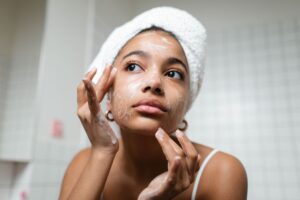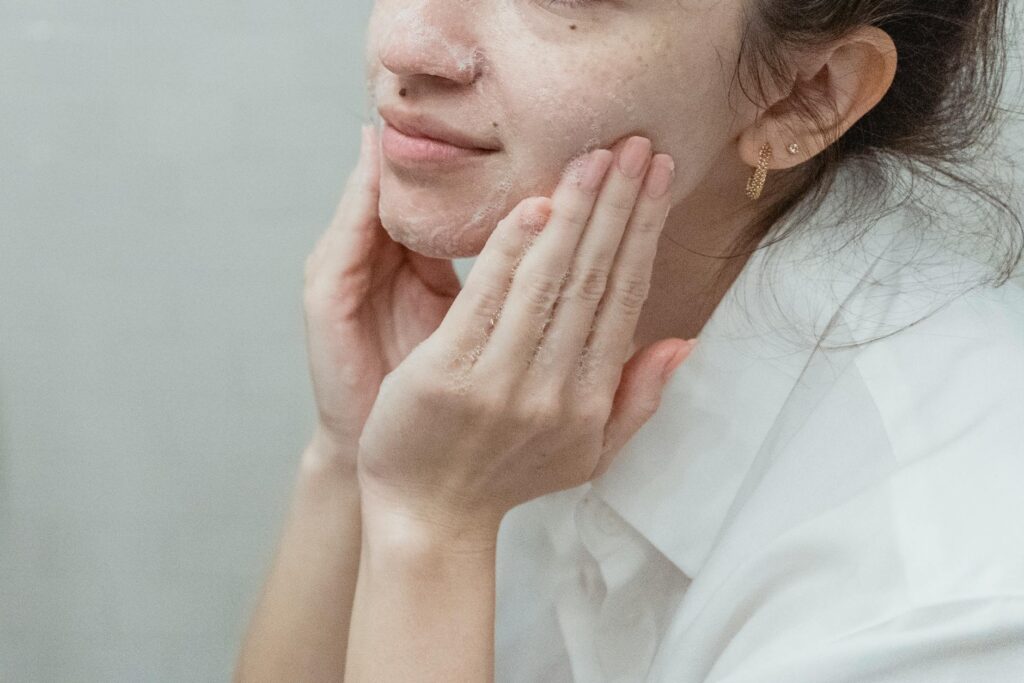
Double cleansing removes two layers of buildup that trap bacteria and clog pores: first, an oil-based cleanser dissolves sebum and makeup, then a water-based cleanser eliminates the remaining impurities and the first cleanser itself. For acne-prone skin, this two-step approach is effective because acne bacteria and dead skin cells accumulate in oil-clogged pores—a single wash often leaves enough residue behind to trigger inflammation the next day. If you’re someone who wears sunscreen daily (which you should), or if your skin produces excess sebum, one cleanse isn’t removing what’s actually sitting on your skin. This article explains how double cleansing specifically benefits acne-prone skin, which products work best, and how to avoid over-cleansing, which can trigger irritation and paradoxically worsen breakouts.
Double cleansing originated in Korean skincare routines and has become standard practice among dermatologists for patients with congestion-prone or acne-prone skin. The first cleanse (oil cleanser) breaks down the lipophilic (oil-loving) barrier that protects acne-causing bacteria and sebum—something a water-based cleanser alone cannot penetrate. The second cleanse removes water-soluble impurities like sweat, dead skin, and any remaining oil residue. Without this two-step process, people with oily or acne-prone skin often experience a cycle where pores stay partially clogged despite daily washing, leading to persistent breakouts.
Table of Contents
- How Does Double Cleansing Prevent Acne Better Than Single Cleansing?
- Why Oil Cleansers Work on Oily, Acne-Prone Skin (And Why That Seems Counterintuitive)
- What’s Really Happening When You Don’t Remove Makeup and Sunscreen Completely
- The Right Way to Double Cleanse Without Over-Cleansing Your Acne-Prone Skin
- When Double Cleansing Backfires: Identifying Sensitivity and Irritant Reactions
- Choosing Products: Oil Cleansers, Second Cleansers, and Ingredient Considerations
- The Long-Term Outcome: What Happens When Acne-Prone Skin Gets Properly Cleansed
- Conclusion
- Frequently Asked Questions
How Does Double Cleansing Prevent Acne Better Than Single Cleansing?
Acne develops when sebum, dead skin cells, and bacteria accumulate inside the pore. A water-based cleanser (the most common type people use alone) removes water-soluble grime like sweat and makeup, but it cannot dissolve the oil already in the pore. Oil and water don’t mix—so if you apply a water-based cleanser to sebum-filled skin, you’re essentially trying to clean with something incompatible with the primary problem. An oil cleanser works differently: it dissolves sebum without stripping the skin’s natural oil barrier, allowing the impaction inside the pore to loosen. Once the first step breaks down that lipophilic layer, the second water-based cleanser can penetrate and remove what remains.
A practical example: imagine your pores are like a drain filled with grease (sebum). Using only hot water (a water-based cleanser) will run over the top but won’t dissolve the grease inside. You need a degreaser first (the oil cleanser) to break down that barrier, then water to flush it away. For someone with acne-prone skin using only one cleanser, this means bacteria and dead skin cells continue to accumulate in uncleared pores, creating an ideal environment for Cutibacterium acnes (formerly Propionibacterium acnes) to proliferate. Studies have shown that thorough cleansing reduces bacterial load on the skin, and double cleansing achieves that removal more effectively than single-step cleansing alone.

Why Oil Cleansers Work on Oily, Acne-Prone Skin (And Why That Seems Counterintuitive)
Many people with acne-prone skin avoid oil cleansers because they fear adding more oil will worsen breakouts—this is perhaps the biggest misconception about double cleansing. The truth is counterintuitive: using an appropriate oil cleanser actually regulates sebum production over time. When skin is over-stripped by harsh cleansers, the skin barrier becomes compromised, and the sebaceous glands respond by producing even more oil to compensate. This creates a vicious cycle: your skin gets oilier, you use harsher products, the barrier weakens further, and oil production increases again. An oil cleanser allows you to remove sebum without triggering that compensatory overproduction.
However, this only works if you choose the right oil cleanser—not all oil products are equal. Oil cleansers designed for acne-prone skin are formulated to be non-comedogenic and often include ingredients like jojoba oil or squalane that mimic skin’s natural sebum structure without clogging pores. A thick, heavy oil like coconut oil or mineral oil can absolutely worsen acne; the difference is specificity. Additionally, if you have severe acne or are using prescription acne medications like isotretinoin, oil cleansing may not be appropriate without dermatologist approval, since it could interfere with your treatment plan. For most acne-prone people, however, a lightweight oil cleanser followed by a gentle water-based second cleanser creates a healthier, less irritated skin barrier that actually produces less excess oil long-term.
What’s Really Happening When You Don’t Remove Makeup and Sunscreen Completely
Most acne-prone people use some form of sun protection (as they should—sun exposure darkens acne scars), and sunscreen is notoriously difficult to remove completely with a single wash. Sunscreen is designed to stay on skin and resist water; a single water-based cleanser is often insufficient to break down the polymers and oils in a sunscreen formulation. When sunscreen isn’t fully removed, it sits on skin overnight and becomes a pore-clogging barrier—bacteria thrive in this sealed environment, and the next morning you wake up with new breakouts. The same applies to makeup, particularly foundations and concealers designed to be long-wearing. These products bond to skin and require oil-based dissolution.
For someone who wears makeup or mineral sunscreen daily, incomplete removal is a silent cause of persistent acne. You might blame the makeup or sunscreen itself when the real problem is inadequate cleansing. Double cleansing ensures that no residual product is left behind to suffocate pores overnight. A specific scenario: a person with acne uses SPF 50 mineral sunscreen (which contains zinc oxide or titanium dioxide—white pigments that are waxy and oil-resistant) under makeup, then cleanses once with a foaming face wash. The next morning, their pores are still coated with sunscreen particles and makeup residue. By incorporating an oil cleanser first, that waxy sunscreen layer dissolves completely, and the second cleanser can actually reach the skin surface.

The Right Way to Double Cleanse Without Over-Cleansing Your Acne-Prone Skin
Technique matters as much as product selection when double cleansing. The first step should be gentle—massage the oil cleanser onto dry skin for 30-60 seconds without scrubbing, allowing the oil to dissolve makeup and sebum. Add a small amount of water to emulsify (the oil will turn milky), then rinse thoroughly. The second step uses a gentle, pH-balanced water-based cleanser—a fragrance-free option is best for acne-prone skin, as fragrances are common irritants. This second cleanser should also be gentle; you’re not trying to strip away more oil, just remove the residual impurities.
A critical distinction: double cleansing is not the same as over-cleansing. Doing this routine twice per day (morning and evening) is appropriate; doing it three or four times daily will damage the skin barrier and trigger rebound oiliness and inflammation. Additionally, the cleanser products themselves matter significantly. For acne-prone skin, the oil cleanser should be lightweight (look for formulations under 2% linoleic acid to avoid barrier irritation) and non-comedogenic, and the second cleanser should have a pH of 5.5 or below to respect the skin’s acid mantle. A comparison: using a heavy cream cleanser as the first step and a sulfate-based foaming cleanser as the second step will irritate acne-prone skin and likely worsen breakouts, despite following the double-cleanse structure. Choosing the wrong products defeats the purpose.
When Double Cleansing Backfires: Identifying Sensitivity and Irritant Reactions
Not everyone tolerates double cleansing immediately. If you have very sensitive skin, rosacea, or active severe acne with compromised barrier function, introducing double cleansing all at once can cause increased redness, stinging, or temporary breakouts. This happens because the first oil cleanser is removing buildup that has been sitting on your skin, and as that barrier loosens, your skin may react to the sudden exposure. Additionally, many acne-prone people are already using active ingredients like benzoyl peroxide or retinoids, which are drying; adding an oil cleanser on top might feel excessive initially. The solution is to introduce double cleansing gradually.
Start by using the oil cleanser only once or twice per week, slowly increasing frequency as your skin adjusts. If you’re using prescription acne treatments, space the oil cleanser at least 30 minutes before or after applying medications—don’t apply treatments to skin that’s still coated with emollient residue, as this reduces product efficacy. Another warning: if your acne is inflammatory (lots of red, swollen pimples) rather than comedonal (blackheads, whiteheads), aggressive cleansing of any kind may worsen the condition. In severe inflammatory acne, the issue is typically internal or hormonal, not external buildup, so the priority should be dermatological treatment, not enhanced cleansing routines. Double cleansing is most effective for comedonal and mixed acne, less so for purely inflammatory presentations.
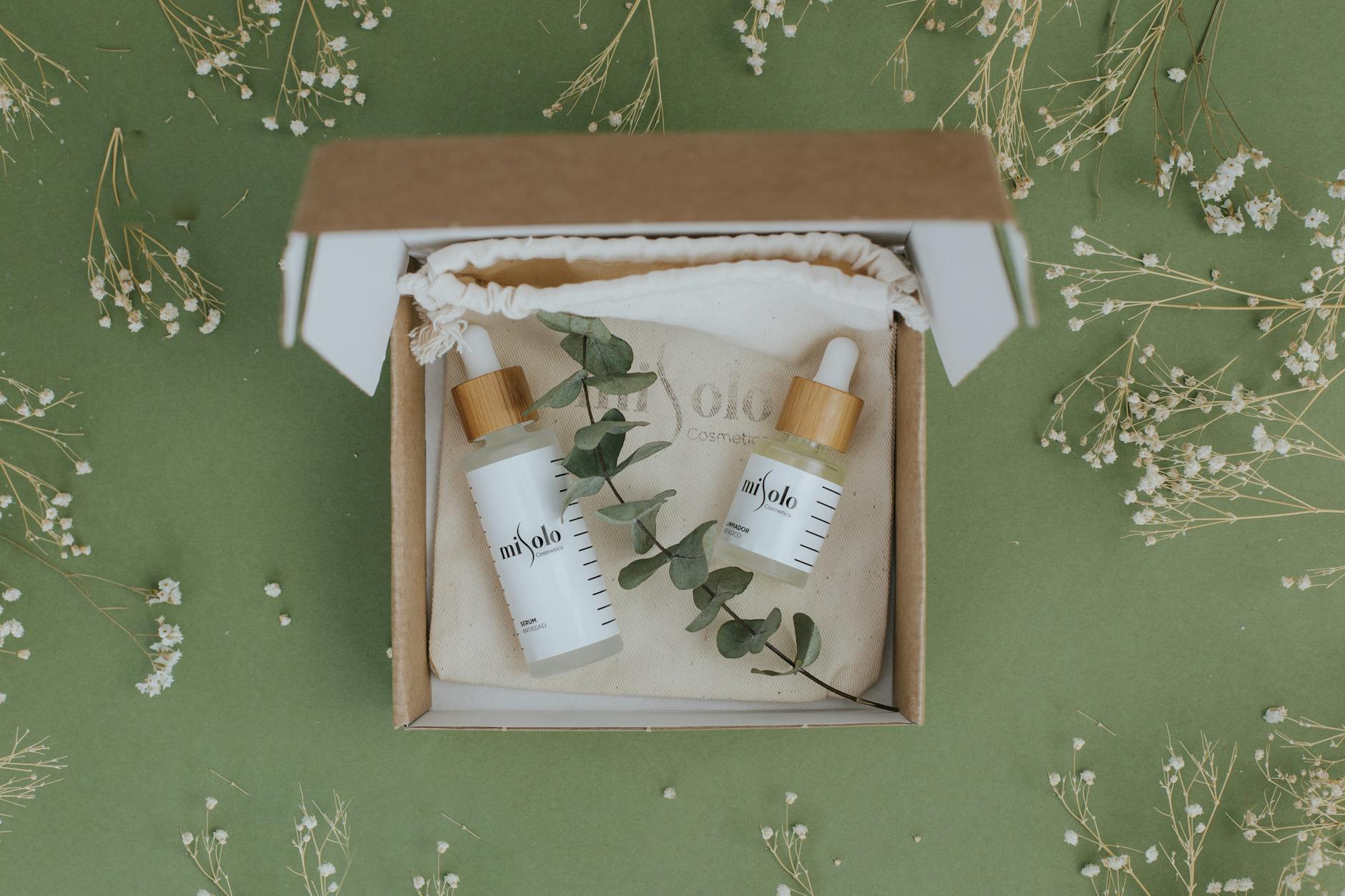
Choosing Products: Oil Cleansers, Second Cleansers, and Ingredient Considerations
For acne-prone skin, suitable oil cleansers include formulations with ingredients like squalane (a lightweight hydration oil), jojoba oil (which closely mimics skin’s natural sebum), or specialized balms like cleansing oils that are emulsifying (they turn milky when water is added, making them easy to rinse). Avoid heavily fragranced oils, mineral oil, coconut oil, and thick butters—these are either irritating or too heavy for acne-prone skin. The second cleanser should be a gentle foaming or gel formula without sulfates; ceramide-containing cleansers are ideal because they support barrier repair.
If your acne is mild to moderate, a simple gentle cleanser (like one containing centella asiatica or allantoin for soothing) is sufficient. If your acne is severe, you might use a second cleanser containing a low concentration of salicylic acid or glycolic acid, though this is only appropriate if you’re not already using strong acne medications. A specific example of a complementary routine: an acne-prone person might use a lightweight squalane oil cleanser first, then a pH-balanced gel cleanser with ceramides second, followed by their benzoyl peroxide prescription treatment. This approach ensures thorough cleansing while protecting the skin barrier, allowing the prescription treatment to work effectively without irritation complications.
The Long-Term Outcome: What Happens When Acne-Prone Skin Gets Properly Cleansed
When acne-prone skin is consistently double cleansed with appropriate products, most people notice improvements within 2-3 weeks: reduced blackheads and whiteheads, less inflammation, and fewer new breakouts. The skin barrier strengthens as irritation from under-cleansing decreases, which paradoxically leads to less oil production over time. Additionally, because pores are actually getting cleaned, active acne treatments (benzoyl peroxide, retinoids, etc.) can penetrate more effectively and work better.
Many dermatologists recommend double cleansing as a foundational step specifically because it makes all other acne treatments more efficacious. However, cleansing alone won’t resolve moderate to severe acne—those cases typically require prescription treatments, hormonal management, or targeted topical therapies. Double cleansing is a supporting practice that removes the barrier to treatment and prevents new comedones from forming, but it’s not a standalone acne cure. For mild acne, thorough double cleansing combined with a simple moisturizer and sunscreen might be all that’s needed; for more serious cases, it’s the first step before escalating to stronger interventions.
Conclusion
Double cleansing helps acne-prone skin by removing two layers of buildup that single cleansing cannot address: an oil-based first step dissolves sebum and makeup, while a water-based second step eliminates remaining impurities. This is particularly important for anyone wearing sunscreen or makeup daily, as incomplete removal of these products is a common hidden cause of persistent acne. The key is using appropriate products (lightweight, non-comedogenic oil cleansers and gentle, pH-balanced water-based cleansers) and avoiding the misconception that oil products worsen oily skin—when done correctly, double cleansing actually regulates sebum production and strengthens the skin barrier.
Starting double cleansing is straightforward: choose a non-comedogenic oil cleanser, use it gently once or twice daily, add water to emulsify, rinse, then follow with a gentle second cleanser. If you have very sensitive skin or active inflammatory acne, introduce the routine gradually. Most people see noticeable improvements in comedones and overall breakout frequency within 2-3 weeks, and the benefits compound as acne treatments become more effective on properly cleansed skin. Combined with appropriate acne medications or therapies recommended by a dermatologist, double cleansing removes a major obstacle to clear skin.
Frequently Asked Questions
Can I double cleanse if I’m using prescription acne medication like tretinoin?
Yes, but timing matters. Double cleanse first, wait at least 20-30 minutes for skin to dry completely, then apply your tretinoin or other prescription treatment. Don’t apply medications to skin that’s still damp or has cleanser residue, as this reduces product efficacy and increases irritation risk.
Will double cleansing make my oily skin oilier?
The opposite typically happens. Over-cleansing with harsh single cleansers strips the skin barrier, triggering compensatory oil production. Double cleansing with appropriate products removes impurities without stripping, which allows sebum regulation to normalize over time. Most people see decreased oiliness within 2-3 weeks.
How long should I massage the oil cleanser on my skin?
30-60 seconds of gentle massage is sufficient. You’re not trying to deeply exfoliate or scrub—just allow the oil time to dissolve makeup and sebum. Longer massaging doesn’t improve cleansing and increases irritation risk.
Can I use any oil as my first cleanser?
No. Avoid coconut oil, heavy mineral oil, and thick butters—these commonly clog acne-prone pores. Choose lightweight oils like squalane, jojoba, or formulated cleansing oils specifically marketed for acne-prone skin. Check the ingredient list to confirm it’s non-comedogenic.
Is double cleansing necessary every single day?
For most acne-prone people, yes—once in the morning and once at night. However, if your skin is extremely sensitive, you can start with once daily (usually at night to remove makeup/sunscreen) and gradually increase frequency as your skin adjusts.
What if double cleansing causes temporary breakouts?
This is often a “purging” response as buildup is being cleared from pores. It typically subsides within 1-2 weeks. However, if redness, stinging, or irritation persists beyond that, you may need to reduce frequency, switch to gentler products, or consult a dermatologist to ensure you’re not having an allergic or sensitivity reaction.