

When acne persists beyond the teenage years and becomes a chronic condition lasting months or years, it fundamentally changes how your skin behaves and how your body responds to it. Long-term acne triggers ongoing inflammation that thickens skin, increases sebum production, and weakens the skin barrier—creating a self-perpetuating cycle where breakouts become harder to treat and scarring becomes a real risk. A 30-year-old woman who has struggled with breakouts since her late teens, for example, may find that her skin has developed permanent changes: enlarged pores in breakout zones, post-inflammatory hyperpigmentation that doesn’t fade, and a compromised barrier that reacts to treatments that would have worked fine years earlier.
This article explores what happens physiologically when acne becomes a long-term condition, how your skin changes over time, why old treatments stop working, the risks of scarring and pigmentation damage, and what strategies actually prevent the cycle from deepening. Chronic acne is different from occasional breakouts because it’s not just a surface problem—it’s a systemic inflammation affecting deeper skin layers and your skin’s ability to heal. Understanding this difference is essential because it changes how you should approach treatment, what ingredients to prioritize, and when you need professional intervention.
Table of Contents
- How Does Chronic Acne Change Your Skin Structure Over Time?
- Why Do Acne Treatments Stop Working Over Time and Build Tolerance?
- What Are the Scarring and Pigmentation Risks of Chronic Acne?
- How Should Treatment Strategy Shift for Long-Term Acne?
- Why Does Chronic Acne Affect Skin Sensitivity and Barrier Function So Severely?
- How Does Chronic Acne Interact With Hormonal Changes and Life Stages?
- What Does Long-Term Acne Recovery and Prevention of Further Damage Look Like?
- Conclusion
- Frequently Asked Questions
How Does Chronic Acne Change Your Skin Structure Over Time?
Persistent acne causes measurable changes to skin architecture that compound over months and years. The repeated inflammation cycles stimulate excess collagen production in some areas and collagen breakdown in others, leading to permanent pore enlargement, textured skin, and loss of skin elasticity. The sebaceous glands—already overactive in acne-prone skin—become even more hyperactive because chronic inflammation triggers your skin to produce more oil, thinking it needs to protect itself. This creates a vicious loop: more oil leads to more bacterial growth and more inflammation, which stimulates more sebum production.
Additionally, the stratum corneum (your skin’s outermost barrier) becomes progressively damaged by repeated inflammation and aggressive treatments. For someone who has used strong topical retinoids or benzoyl peroxide for years, the barrier may become so compromised that even gentle cleansers and moisturizers cause redness and irritation. A 40-year-old with three decades of acne history might find their skin is simultaneously oily in the T-zone and dehydrated everywhere, because the damaged barrier can’t retain moisture while overactive sebaceous glands keep pumping out oil. The epidermis also thickens unevenly in response to chronic inflammation—a condition called acanthosis—which can make active breakouts feel deeper and more resistant to topical treatment. This is why someone with chronic acne often reports that new pimples feel “bigger” or “deeper” than they used to, even if the overall frequency hasn’t changed.
Why Do Acne Treatments Stop Working Over Time and Build Tolerance?
your skin doesn’t actually build immunity to acne medications in the traditional sense, but it does undergo changes that make them less effective. Chronic bacterial exposure to antibiotics—whether topical (clindamycin, erythromycin) or oral (doxycycline, minocycline)—selects for antibiotic-resistant strains of Cutibacterium acnes. Studies show that after 3-6 months of continuous antibiotic use, bacterial resistance can develop, rendering the treatment ineffective even if it worked perfectly initially. This is precisely why dermatologists recommend rotating antibiotics and never using them as monotherapy—pairing them with benzoyl peroxide or retinoids reduces resistance development. However, if X acne treatment has been used continuously for years, then Y likelihood of resistance and diminished efficacy is substantially higher.
Someone who took doxycycline for five straight years will likely see no benefit from it anymore, whereas someone who stopped after six months and used it again years later might find it works again. Retinoids don’t create true resistance, but skin can become adapted to them—the initial irritation and efficacy fades, requiring either a break period or a switch to a stronger retinoid. Non-antibiotic treatments like benzoyl peroxide and retinoids don’t generate biological resistance, but they do cause progressive skin sensitization in people with chronically compromised barriers. Someone with long-term acne whose barrier is already fragile may find that benzoyl peroxide, which worked fine at 2.5%, now causes excessive dryness and peeling at even that low concentration. The solution is not to stop treatment but to repair the barrier first, then reintroduce the treatment at a lower strength or frequency.
What Are the Scarring and Pigmentation Risks of Chronic Acne?
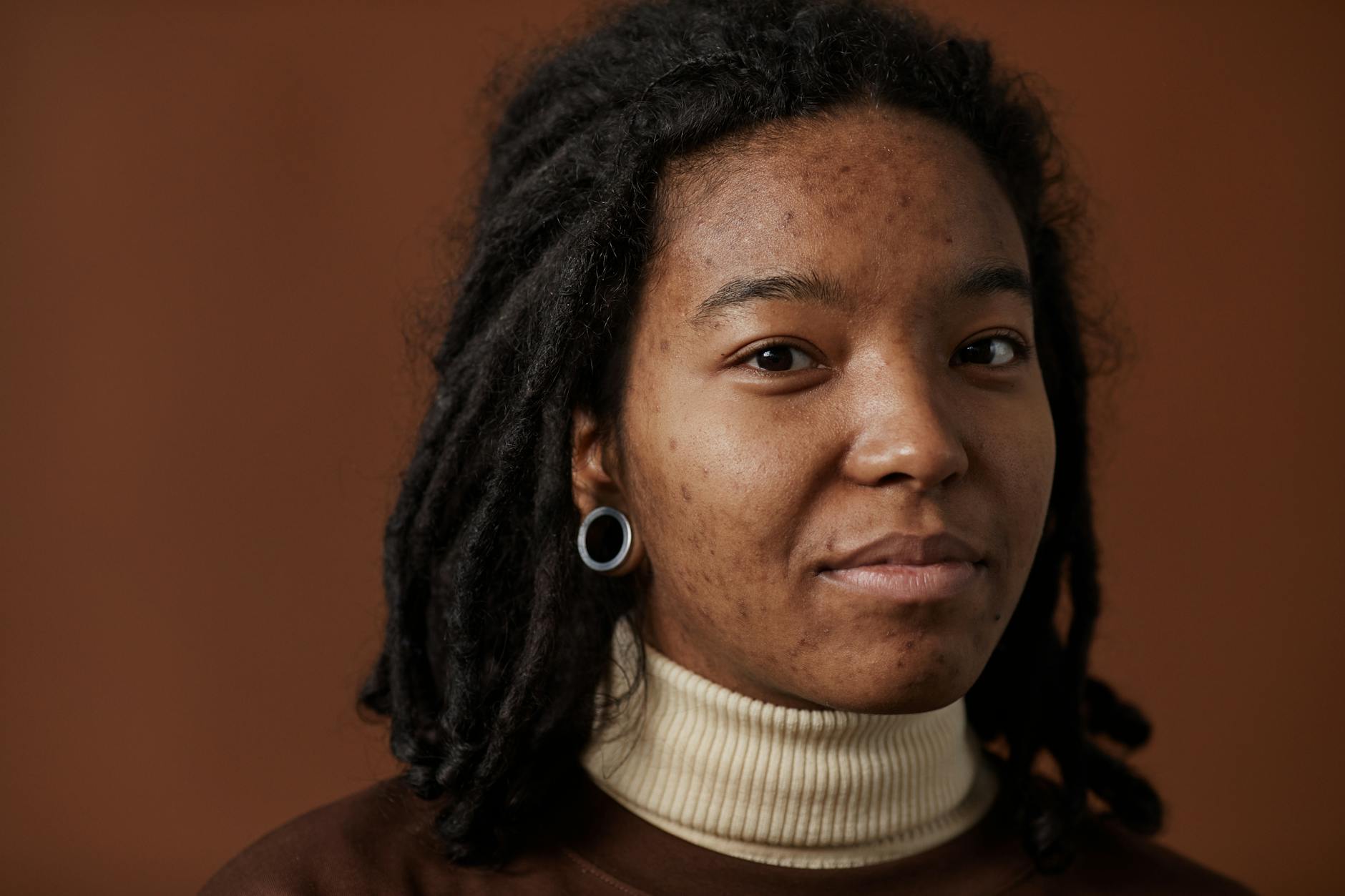
The longer acne persists, the greater the cumulative risk of permanent scarring and post-inflammatory hyperpigmentation (PIH). Scarring occurs when inflammation is severe enough to damage the dermis—the deeper skin layer—and the body’s healing response creates either indented scars (atrophic) or raised scars (hypertrophic). Someone with mild breakouts for one year might never scar, but someone with moderate-to-severe breakouts for ten years faces a much higher cumulative risk, especially if they have a genetic predisposition to poor wound healing or are of African, Latino, or Asian descent (which statistically have higher rates of post-inflammatory hyperpigmentation). Post-inflammatory hyperpigmentation is even more common than scarring in chronic acne cases. This isn’t a scar—it’s discoloration where a pimple was, caused by the skin increasing melanin production in response to inflammation. For people with darker skin tones, even mild acne can leave dark marks that persist for months or years.
One key limitation is that PIH often fades on its own given enough time (typically 6-12 months for mild cases, potentially years for severe ones), but waiting is frustrating. Treatments like vitamin C, niacinamide, and azelaic acid can speed fading, while professional options like laser therapy accelerate it further. Scarring, once formed, is permanent without professional intervention. The difference in approach is critical: if someone is still actively breaking out, the priority is stopping the breakouts to prevent new scarring. Only after acne is controlled should they focus on treating existing scars through dermatologic procedures like microneedling, chemical peels, or laser resurfacing. Treating scars while acne is still active is inefficient because new breakouts will create new scars.

How Should Treatment Strategy Shift for Long-Term Acne?
Long-term acne requires a completely different treatment philosophy than acute breakouts. Rather than chasing the strongest, fastest-acting treatment, the goal becomes preventing damage while maintaining skin barrier integrity. This means prioritizing gentler, non-irritating options that work over months rather than weeks. Oral medications like isotretinoin (Accutane) are typically reserved for severe, scarring acne precisely because they’re so powerful—they can clear acne so thoroughly that relapses are uncommon and permanent scarring is prevented. However, isotretinoin carries significant side effects (dry skin, potential birth defects, mood changes) and requires monthly blood monitoring, making it a last-resort option, not a first-line treatment. For long-term management without isotretinoin, the comparison between topical and oral approaches reveals trade-offs.
Topical treatments (retinoids, benzoyl peroxide, azelaic acid) allow you to control strength and frequency, minimizing systemic exposure, but they require consistent application and have slower results. Oral medications (antibiotics, spironolactone for hormonal acne, birth control) work systemically and faster, but they carry higher risks of side effects and resistance. The optimal approach for many people with chronic acne is a combination: a gentle oral medication paired with a barrier-supporting topical regimen. For example, low-dose doxycycline (20mg) paired with adapalene and a solid moisturizer often works better long-term than aggressive topical therapy alone, because the doxycycline addresses inflammation systemically while the adapalene targets structural improvements without overwhelming a fragile barrier. A critical shift is moving from “clearance” as the goal to “stability” and “damage prevention” as the goal. Someone with chronic acne might accept having 3-4 small pimples at any given time if it means their skin is stable, not scarring, and their barrier isn’t being destroyed. This mental shift—from perfection to sustainability—is essential for long-term success.
Why Does Chronic Acne Affect Skin Sensitivity and Barrier Function So Severely?
The repeated inflammatory assaults of chronic acne progressively damage the skin’s acid mantle and lipid barrier, making the skin hypersensitive and reactive. The acid mantle—a thin protective layer of natural oils and lactic acid—is disrupted by acne-causing bacteria, acne treatments, and repeated washing. Once this is compromised, the skin becomes sensitive to ingredients it previously tolerated: water can sting, fragrance causes reactions, and even some “gentle” products cause redness. This is why someone with a ten-year history of acne often feels like their skin has become more sensitive over time, not less—it has, objectively.
A major warning is that attempting to treat chronic acne with the same aggressive methods that work for acute breakouts will accelerate barrier damage. High-frequency use of strong retinoids, daily benzoyl peroxide, and multiple actives simultaneously might clear breakouts in the short term but will leave the skin barrier so compromised that secondary issues (rosacea-like symptoms, dermatitis, severe dryness) develop. The solution is stepping back, repairing the barrier with barrier-supporting ingredients (ceramides, fatty acids, glycerin, centella asiatica), and then reintroducing actives at much lower strength and frequency. Additionally, chronic acne makes the skin more vulnerable to infection because the repeated disruption of the skin barrier allows bacteria easier entry. Someone with chronic acne who regularly picks at pimples or uses very harsh extraction methods faces a much higher risk of turning mild breakouts into serious infections or keloid scars compared to someone with healthy skin barrier function.
How Does Chronic Acne Interact With Hormonal Changes and Life Stages?
Acne that persists into adulthood often has a hormonal component, even if this wasn’t obvious during teenage years. Adult acne, particularly in women, is frequently triggered or worsened by hormonal fluctuations related to the menstrual cycle, birth control changes, pregnancy, and menopause. Someone who had clear skin in their teens but developed acne at 25 due to hormonal shifts may experience patterns they don’t recognize—worse breakouts in the two weeks before their period, clearing when they start a new birth control, or sudden flaring in perimenopause.
For chronic hormonal acne, topical treatments alone often fail because they don’t address the underlying hormonal drive. This is where oral medications shine: spironolactone (an anti-androgen) is specifically effective for hormonal acne in women, and can be far more effective than stronger and stronger topical treatments. An example: a woman with chronic acne related to excess androgen sensitivity might see minimal improvement from years of tretinoin use, but significant clearing within 2-3 months of adding spironolactone (50-100mg daily) because it addresses the root cause rather than just the inflammation.
What Does Long-Term Acne Recovery and Prevention of Further Damage Look Like?
Recovery from long-term acne is possible at any age, but the timeline extends into months or years rather than weeks or months, and the goal shifts toward preventing further damage rather than achieving perfect skin. Someone who has struggled with acne for a decade can absolutely see significant improvement through consistent, barrier-respecting treatment, but they should expect that timeline to be 6-12 months or longer, not 8 weeks. The skin needs time to adapt, the barrier needs to rebuild, and treatments need to be rotated to prevent tolerance.
Prevention of further scarring and pigmentation during this recovery period is critical. This means resisting the urge to pick, keeping the skin barrier strong, and accepting some breakouts during the healing process. A forward-looking approach recognizes that technology continues to improve: new topical treatments like retinaldehyde offer efficacy closer to prescription retinoids with less irritation, and professional treatments like blue light therapy and certain laser options continue to advance, offering new options for people who haven’t responded to traditional approaches. The key insight is that long-term acne is a marathon, not a sprint, and the choices made to protect skin during treatment directly determine whether recovery leads to clear skin or clear skin with permanent scarring and pigmentation.
Conclusion
When acne becomes a long-term condition, it stops being simply a matter of treating breakouts and becomes a matter of managing chronic inflammation, protecting a damaged barrier, preventing scarring, and preventing treatment resistance. The skin changes structurally—pores enlarge, barrier function deteriorates, bacteria develop resistance—and traditional acne treatments become progressively less effective.
Success with chronic acne requires shifting from aggressive clearance approaches to gentle, sustainable approaches that prioritize barrier repair and long-term skin health over rapid results. The path forward involves working with a dermatologist to assess whether your acne has a hormonal component (which might respond better to oral medications), managing treatment to prevent resistance and barrier damage, accepting that recovery takes time, and building a routine around gentle, consistent care rather than chasing the strongest treatments. Scarring and pigmentation become serious concerns with chronic acne, making prevention through early control infinitely more valuable than trying to repair the damage afterward.
Frequently Asked Questions
Can chronic acne eventually go away on its own?
Sometimes acne improves with age—many women see significant improvement after menopause, and men often experience fewer breakouts in their 40s and beyond. However, acne that has persisted for a decade is unlikely to resolve without treatment. Waiting for it to disappear on its own risks permanent scarring in the meantime.
Is isotretinoin (Accutane) the only cure for chronic acne?
Isotretinoin is the only treatment with the potential for permanent cure or very long-term remission, but it’s not the only effective option. Many people achieve stable, manageable acne through long-term oral medications (like low-dose doxycycline or spironolactone) combined with topical treatments. The goal with these options is stability rather than permanent cure.
Why does my skin get worse before it gets better when I start new acne treatments?
This is a real phenomenon called “retinization” or adjustment period, especially with retinoid treatments. Your skin may purge—bringing existing congestion to the surface—and become irritated as it adjusts. This typically lasts 4-8 weeks and is a sign the treatment is working, not that you should stop.
Can picking or squeezing acne cause permanent scarring?
Yes, especially with chronic acne. Picking creates additional trauma and inflammation, increases infection risk, and can turn mild breakouts into deep scars or keloids. The combination of chronic inflammation from the acne itself plus trauma from picking significantly increases scarring risk.
Is acne scarring treatable after it forms?
Yes, but treatments are less effective and more expensive than prevention. Options include microneedling, chemical peels, laser therapy, and dermal fillers for indented scars. Results vary and often require multiple treatments. Prevention through controlling acne early is far more practical.
How long does post-inflammatory hyperpigmentation typically take to fade?
For mild cases, 6-12 months. For darker skin tones or severe pigmentation, it can take 1-2 years or longer without treatment. Professional treatments like laser therapy or chemical peels can accelerate fading to weeks or a few months, but they’re not necessary—most PIH fades eventually with sun protection and time.