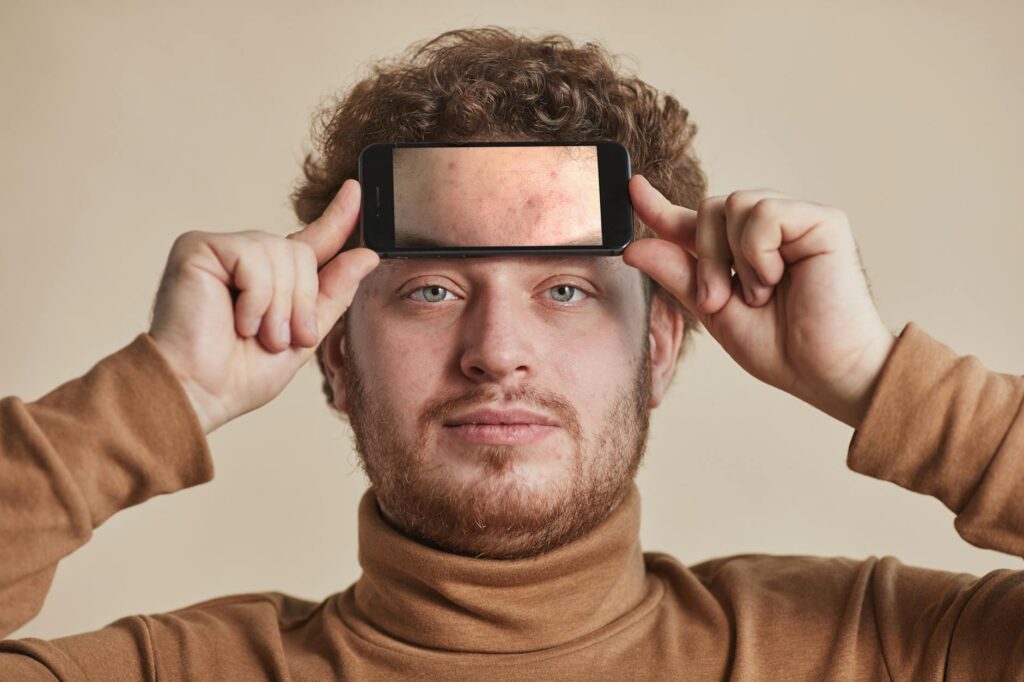
Tiny bumps on your forehead that never develop into pimples are most commonly milia, subclinical acne, or fungal folliculitis—not the typical inflammatory acne you’d expect. The key difference is that these bumps remain static or slow-moving because they’re either trapped dead skin cells (in the case of milia), clogged pores without inflammation (subclinical acne), or yeast-driven eruptions rather than bacterial ones (fungal acne). For example, if you’ve noticed small white, pearlescent bumps along your hairline and upper forehead that haven’t changed in weeks despite spot treatments, you’re likely looking at milia, which is fundamentally different from acne and requires a different approach. This article explores the six primary causes of these persistent forehead bumps, how to distinguish between them, and what actually works to address each one.
Table of Contents
- Why Do Some Forehead Bumps Never Develop Into Pimples?
- Milia and Other Keratin-Based Bumps
- Subclinical Acne as a Persistent Condition
- Fungal Acne and Pityrosporum Folliculitis
- Sebaceous Hyperplasia and Its Similarities to Other Conditions
- Folliculitis and When Bumps Indicate Hair Follicle Inflammation
- Professional Diagnosis and Long-Term Management
- Conclusion
Why Do Some Forehead Bumps Never Develop Into Pimples?
The reason certain bumps remain static is that they don’t follow the inflammatory acne pathway. Traditional pimples form when bacteria colonize a clogged pore, triggering an immune response that causes redness, swelling, and eventually either a whitehead or pustule. Non-pimple bumps, by contrast, involve either a physical blockage (dead skin cells or keratin) or a non-bacterial cause (fungal overgrowth), which means your immune system isn’t responding the same way. Milia, for instance, forms when a layer of skin traps dead cells beneath the surface—your skin simply can’t shed them naturally, so the bump stays put indefinitely unless manually extracted or treated with specific exfoliating ingredients.
Subclinical acne exists in a gray zone: it involves clogged pores and excess sebum, but the congestion doesn’t progress to inflammation. You might have dozens of these small, barely visible bumps across your forehead without a single one becoming an angry red pimple. This happens more commonly in people whose skin barrier is relatively healthy or whose immune systems don’t react aggressively to the bacteria in clogged pores. Understanding this distinction matters because it determines your treatment strategy—you can’t “spot treat” milia the way you would a pimple, and fungal acne won’t respond well to antibacterial ingredients.

Milia and Other Keratin-Based Bumps
Milia are small white or translucent cysts formed when dead skin cells become trapped beneath the skin’s surface instead of shedding naturally. They appear as smooth, firm, pearl-like bumps and are particularly common on the forehead, around the eyes, and on the cheeks. Because they’re mechanical blockages rather than infections, they can persist indefinitely—some people have the same milia for years. The confusion often arises because milia look similar to whiteheads, but treating them with acne products typically does nothing.
Spot treatments containing salicylic acid or benzoyl peroxide won’t dissolve a milia bump because there’s no bacteria or excess oil plugging the pore; instead, there’s a sealed pocket of dead skin cells. Keratosis pilaris represents another keratin-based condition, though it typically feels rougher and more sandpaper-like than milia. The bumps are usually flesh-colored or slightly red, caused by keratin protein blockage in hair follicles. However, keratosis pilaris more commonly appears on the arms and cheeks rather than the forehead specifically—if you have small bumps exclusively on your forehead and they’re smooth rather than rough, milia is more likely. One important limitation: if your forehead bumps are painful when pressed, grow rapidly, or show signs of infection (pus or spreading redness), neither milia nor keratosis pilaris is the culprit, and you should consult a dermatologist to rule out folliculitis or other inflammatory conditions.
Subclinical Acne as a Persistent Condition
Subclinical acne manifests as multiple small, colorless, or faintly red bumps scattered across the forehead caused by excess sebum buildup in clogged pores—they remain congested rather than developing into inflamed pimples. You might notice them most when your skin is slightly oily or dehydrated, and they tend to cluster across the entire T-zone rather than appearing as isolated lesions. This condition is particularly common in people with naturally oily skin, those who live in humid climates, or individuals using heavy skincare products that don’t suit their skin type. The frustrating aspect is that subclinical acne can persist for months, especially if you’re not addressing the root cause.
The distinction between subclinical acne and true acne lesions is crucial: with subclinical acne, your skin’s immune system isn’t mounting a visible inflammatory response. That’s why the bumps don’t progress to the red, swollen, painful stage typical of active acne. However, this also means the problem might be easier to address with consistent exfoliation and sebum control rather than stronger acne medications. If the bumps turn red or tender after a few days, that’s a sign the inflammation is starting, and they may progress into actual pimples. But if they remain stable for weeks, subclinical acne is likely your issue.
Fungal Acne and Pityrosporum Folliculitis
Pityrosporum folliculitis, often called “fungal acne,” is caused by an overgrowth of the Malassezia yeast—a microorganism naturally present on everyone’s skin but kept in balance by a healthy skin microbiome. When this fungus proliferates, it creates clusters of small red bumps that closely mimic acne, particularly on the forehead, chin, chest, and upper back. The bumps are usually uniform in size, itchy or tender, and frustratingly resistant to standard acne treatments because antibacterial ingredients don’t kill yeast. People with oily skin or those living in humid conditions face higher risk, as does anyone taking antibiotics (which kill bacteria that would normally keep fungal populations in check).
The comparison between fungal acne and bacterial acne is important: fungal acne typically creates a more uniform, clustered appearance, whereas bacterial acne tends to appear in isolated spots. Additionally, fungal acne often worsens with occlusive products like heavy moisturizers or silicone-based primers, whereas bacterial acne might improve with moisture. A practical distinction: if your bumps feel itchy or slightly irritated rather than inflamed, or if they don’t respond after six weeks of using benzoyl peroxide or salicylic acid, ask your dermatologist about a fungal acne diagnosis. Treatment requires antifungal ingredients like ketoconazole, selenium sulfide, or pyrithione zinc rather than standard acne medications.
Sebaceous Hyperplasia and Its Similarities to Other Conditions
Sebaceous hyperplasia involves the enlargement of sebaceous (oil) glands, causing small flesh-colored or yellowish bumps commonly found on the forehead, cheeks, and nose. These bumps are permanent enlargements of normal skin structures, not clogged pores or infections, which is why they don’t respond to acne treatments and don’t change appearance regardless of your skincare routine. They’re more common as skin ages and sebaceous glands naturally enlarge, though some people develop them earlier due to genetics or sun exposure. Unlike milia, sebaceous hyperplasia bumps have a characteristic tiny dimple or depression in the center, giving them a donut-like appearance.
One critical warning: because sebaceous hyperplasia mimics other skin conditions, misidentification is common. If you’re treating bumps as acne for weeks with no improvement, or if the bumps have a yellowish tint and a dimpled center, a dermatologist should evaluate them. Sebaceous hyperplasia cannot be treated with topical skincare products—professional treatments like laser therapy or electrocautery are the only effective options. Attempting to squeeze or extract them, as some people do with milia, will only cause inflammation and potentially scarring without removing the underlying gland enlargement.

Folliculitis and When Bumps Indicate Hair Follicle Inflammation
Folliculitis occurs when hair follicles become inflamed, producing pink, brown, or violet bumps that may contain pus but remain distinct from typical acne pimples. The inflammation can be caused by bacteria (most commonly Staphylococcus aureus), fungi, or even physical irritation from tight clothing or aggressive exfoliation. On the forehead, folliculitis often appears along areas where hair is present or where friction occurs—such as below the hairline or where glasses or hats sit. The bumps may be tender when touched and can spread if the hair follicle continues to be irritated.
A practical example: if your bumps appear exclusively below your hairline and worsen after wearing a tight hat or headband, mechanical irritation is likely triggering folliculitis. However, if the bumps are distributed across your entire forehead away from the hairline, folliculitis is less probable. The treatment differs significantly depending on the cause: bacterial folliculitis may respond to antibacterial cleansers or topical antibiotics, while fungal folliculitis requires antifungal treatment. If you have persistent bumps accompanied by itching, pain when hair is pulled, or signs of infection, a dermatologist should determine whether you have folliculitis and identify its specific cause.
Professional Diagnosis and Long-Term Management
While many forehead bumps can be identified by appearance and location, professional diagnosis ensures proper identification and prevents wasted time and money on ineffective treatments. A dermatologist can distinguish between milia, sebaceous hyperplasia, fungal acne, and folliculitis through visual examination and, if necessary, dermoscopy (magnified imaging) or biopsy. This is especially important if you’ve already spent weeks trying standard acne treatments without improvement—the bumps may simply not be acne, and continuing the same approach wastes time you could spend on an actual solution.
Moving forward, skincare for persistent forehead bumps should be tailored to the specific cause: chemical exfoliation (AHAs or BHAs) for milia and subclinical acne, antifungal ingredients for fungal acne, gentle cleansing without irritation for folliculitis, and acceptance of the need for professional treatment for sebaceous hyperplasia. Prevention strategies also differ—reducing heavy moisturizers and occlusive products helps with fungal acne, while consistent gentle exfoliation addresses milia, and avoiding follicle irritation prevents mechanical folliculitis. Understanding your specific condition transforms forehead bumps from a frustrating mystery into a manageable skincare issue.
Conclusion
Tiny bumps on your forehead that never turn into pimples are most likely milia, subclinical acne, fungal acne, keratosis pilaris, sebaceous hyperplasia, or folliculitis—each with distinct causes and treatment approaches. The common thread is that these bumps don’t follow the traditional inflammatory acne pathway, which is why standard acne treatments often fail. Identifying the correct cause through dermatological evaluation is the first step toward effective treatment rather than months of trial-and-error with the wrong products.
If bumps persist for several weeks, grow rapidly, bleed, change color, or are accompanied by itching or pain, consult a dermatologist for professional diagnosis. Once you understand what you’re dealing with, targeted skincare adjustments and, if necessary, professional treatments can finally provide the results you’ve been waiting for. Don’t settle for the assumption that every forehead bump is acne—getting the diagnosis right is what actually makes a difference.