

Post-inflammatory erythema (PIE)—those red marks left behind after acne heals—typically fades on its own within 3 to 6 months as inflammation subsides naturally. However, you don’t have to wait. The fastest way to reduce red marks is combining topical treatments like azelaic acid or niacinamide with professional laser therapy, which can accelerate fading by weeks or months. Most people see significant improvement within 4 to 8 weeks with active treatment, compared to months of waiting.
This article covers the most effective topical treatments, professional laser options, and realistic timelines so you can choose the approach that fits your skin and budget. The distinction between post-inflammatory erythema and post-inflammatory hyperpigmentation matters here. PIE is the red or pink discoloration from residual inflammation; it’s temporary but frustrating. Clinical data shows that 81.6% of patients experience resolution within 6 to 12 months without any intervention, but the remaining 18.3% can have marks that linger longer. Understanding this variability helps set realistic expectations while you pursue faster results.
Table of Contents
- What Is Post-Inflammatory Erythema and Why Does It Linger?
- Topical Treatments That Reduce Red Marks Most Effectively
- Professional Laser Treatments for Faster Results
- Alternative Professional Treatments and Their Trade-offs
- Understanding Treatment Limitations and When to Adjust Expectations
- Prevention and Minimizing New Post-Inflammatory Erythema
- Realistic Timelines and When to Expect Results
- Conclusion
What Is Post-Inflammatory Erythema and Why Does It Linger?
Post-inflammatory erythema occurs when acne ruptures the follicle wall, triggering inflammation that extends into surrounding skin. Even after the acne itself heals, blood vessels remain dilated and inflamed, creating visible redness that can last for months. The body gradually reabsorbs inflammatory cells, and the redness fades—but this process is slow. Understanding this mechanism is important because it explains why certain treatments work: anything that reduces inflammation or strengthens the skin barrier will speed healing.
The severity and longevity of PIE depend on how deep the acne was, your skin tone, and your body’s inflammatory response. Deeper inflammatory acne leaves more pronounced erythema, and this redness can persist for longer on some people than others. Age and genetics also play a role; younger skin often heals faster, while some individuals are simply predisposed to prolonged inflammation. This is why some people clear PIE in weeks while others see marks lasting a year or more.
Topical Treatments That Reduce Red Marks Most Effectively
Azelaic acid at 15% concentration is the most research-backed topical option for PIE. Clinical studies show significant improvement in both acne and residual erythema after 12 weeks of twice-daily application. Azelaic acid works by calming the inflammatory response and normalizing skin cell turnover, making it both a preventative (reducing new acne-related inflammation) and a treatment (reducing existing redness). It’s available over-the-counter and is gentle enough for sensitive skin, though it can occasionally cause mild irritation in very sensitive individuals. Niacinamide (vitamin B3) is another clinically proven option that decreases inflammatory markers and strengthens the skin barrier, both of which accelerate healing. Topical niacinamide serums or moisturizers at 4-5% concentration show meaningful results within 8 to 12 weeks.
The advantage here is versatility—niacinamide works on nearly all skin types and combines well with other actives. However, niacinamide tends to work slightly more slowly than azelaic acid; if you’re impatient for results, combining both products can provide synergistic benefits, though start with one to rule out irritation. Tranexamic acid at 5% is a newer topical option that blocks inflammatory substances involved in persistent redness. While less researched than azelaic acid, tranexamic acid shows promise with minimal side effects and can be particularly useful if you experience irritation from stronger actives. It’s often found in serums marketed toward post-procedure healing and rosacea, making it useful even if your redness isn’t primarily from acne. The limitation is availability; tranexamic acid products are less common in standard skincare lines.
Professional Laser Treatments for Faster Results
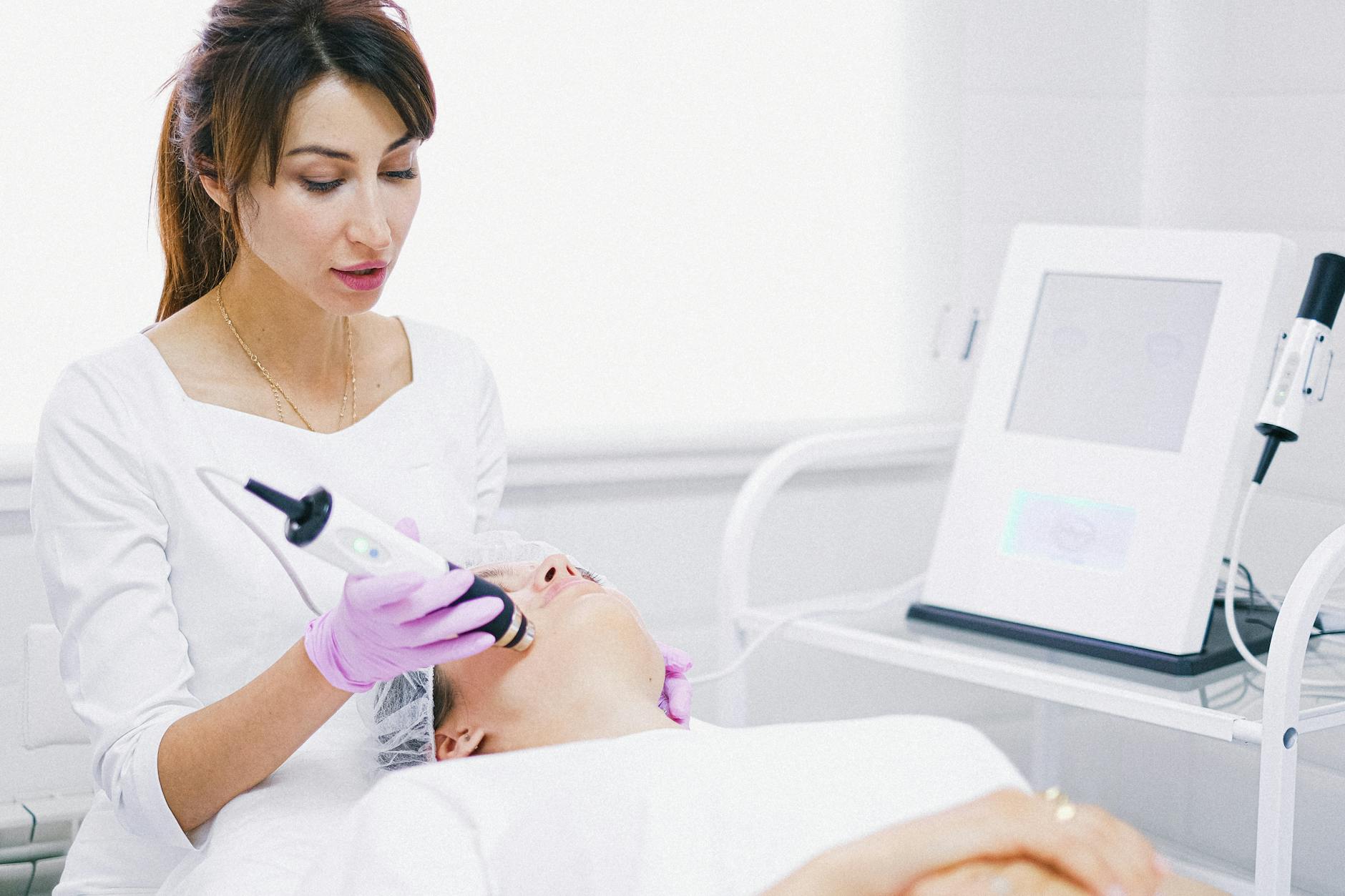
Pulsed dye laser (PDL) is considered the gold standard by dermatologists for PIE treatment—95% of dermatologists rank it as the first-line professional treatment. The pulsed dye laser targets the hemoglobin in dilated blood vessels, essentially collapsing them and reducing redness. Clinical outcomes show an 82.5% reduction in acne lesions and erythema intensity with PDL, meaning most people see dramatic improvement in their red marks. Results typically appear within 2 to 4 weeks after treatment, and most people need 2 to 3 sessions spaced 4 to 6 weeks apart for optimal results. Fractional CO2 laser is another effective option, particularly if you also have acne scarring alongside PIE.
This ablative laser resurfaces the skin, stimulating collagen production and reducing both redness and indented scars simultaneously. Clinical data shows that 43.3% of patients achieved excellent results, 25% achieved good results, and 31.7% had poor results at 6 months post-treatment, highlighting that while highly effective for many, results are variable. The downside is recovery time; fractional CO2 requires several days of downtime with redness and peeling, whereas PDL involves minimal downtime. The newer 1550-nm nonablative laser technology represents a recent advance (2025-2026) that shows effectiveness across all skin types without statistically significant differences in results or adverse events between lighter and darker skin. This is a meaningful advance because previous laser treatments sometimes carried higher risks for post-treatment hyperpigmentation in darker skin tones. If you have deeper skin and are considering professional laser, specifically asking about 1550-nm or other skin-tone-agnostic lasers is worth the conversation with your dermatologist.
Alternative Professional Treatments and Their Trade-offs
Microneedling creates controlled micro-injuries to stimulate collagen production and accelerate skin remodeling. The advantage is that it’s less invasive than ablative lasers and works on all skin types without specialized equipment. However, the timeline is longer—microneedling requires up to 12 months for full collagen effects to manifest, making it slower than laser options if your goal is rapid improvement. It’s a good option if you want to address both PIE and subtle scarring without downtime, but expect a gradual fade rather than dramatic before-and-after changes. Red light therapy (wavelengths around 600-700 nm) lowers inflammation and encourages collagen production to improve skin healing. It’s accessible, affordable, and can be done at home with LED devices, making it attractive for budget-conscious patients.
The trade-off is efficacy—red light therapy is less powerful than professional-grade lasers and works best as a supplement to other treatments rather than as a standalone solution. It’s realistic to expect 15-25% improvement over 8 to 12 weeks with consistent home use, whereas laser treatments often produce 60-80% improvement in similar timeframes. Combination approaches are increasingly popular and often produce the best results. Many dermatologists recommend starting with one or two professional laser sessions to rapidly reduce the most obvious redness, then maintaining with topical treatments and at-home red light therapy. This accelerates visible improvement while minimizing total treatment cost and downtime. For example, one PDL session followed by 12 weeks of azelaic acid and niacinamide often produces better results than either treatment alone.
Understanding Treatment Limitations and When to Adjust Expectations
The most important limitation is that some people have inherently persistent PIE. About 18.3% of patients experience erythema that lingers beyond 12 months despite treatment. This doesn’t mean treatments don’t work; it means some individuals’ bodies simply take longer to reabsorb inflammation. In these cases, the goal shifts from cure to management—continuous use of topical antioxidants and regular laser touch-ups can keep redness minimal even if it never fully disappears. Genetics and inflammatory tendency matter more than treatment choice in these cases. Deeper acne scars often have persistent redness that requires multiple treatment sessions for satisfactory results.
A single laser session might reduce redness by 40-50%, but achieving 80-90% improvement often requires 3 to 4 sessions. This is particularly true for severe nodulocystic acne that created deep, pitted scars alongside PIE. Understanding this upfront prevents disappointment; laser is transformative but not always a one-shot solution. Post-treatment side effects like transient erythema, edema (swelling), and post-inflammatory hyperpigmentation can temporarily make skin look worse after professional treatments. These resolve within a few weeks, but during that window, your skin will be red and potentially darker. This is normal and expected; it’s important not to panic or assume the treatment failed. Using topical antioxidants (vitamin C, E, and ferulic acid combined) after laser treatment reduces these complications and accelerates recovery.
Prevention and Minimizing New Post-Inflammatory Erythema
The best way to minimize redness is preventing acne in the first place, which means not picking or extracting lesions. This is the single most impactful behavior change—extracting pimples causes deeper inflammation, more extensive PIE, and longer fading times. People who religiously avoid picking often see their remaining PIE fade in 8 to 12 weeks, while those who continue picking see persistent inflammation that can last 6+ months. If you struggle with picking, physical barriers like hydrocolloid patches or keeping hands busy can help.
Daily broad-spectrum SPF 30+ is non-negotiable if you have active PIE. UV rays darken the inflamed blood vessels, making redness far more visible and potentially slowing fading. People who avoid sun exposure often see their PIE fade 20-30% faster than those without sun protection. If you’re undergoing laser treatment, SPF becomes even more critical—sun exposure immediately after laser can cause temporary or permanent hyperpigmentation, essentially replacing your red marks with brown ones.
Realistic Timelines and When to Expect Results
Natural fading without treatment takes 3 to 6 months for most people; clinical data shows that 81.6% resolve within 6 to 12 months total. For the impatient, this timeline is frustrating, but it’s important context: even doing nothing, most marks fade in months, not years. Adding topical treatment typically shaves 4 to 8 weeks off this timeline, so you’d see most improvement by week 8 to 12.
Professional laser accelerates this dramatically—most people see 50% improvement within 2 to 4 weeks and 80%+ improvement by 3 months with a series of treatments. Looking forward, advances in laser technology like the 1550-nm nonablative systems promise more effective results across diverse skin types with fewer complications. Combination protocols incorporating both professional and at-home treatments are becoming standard, offering faster results without excessive cost or downtime. The future of PIE treatment is increasingly personalized—matching skin type, scar depth, and patient timeline to the most effective combination rather than a one-size-fits-all approach.
Conclusion
Post-inflammatory erythema doesn’t have to be a 6-month waiting game. Combining evidence-based topical treatments—specifically azelaic acid or niacinamide—with professional laser therapy (particularly pulsed dye laser for fastest results) can reduce red marks by 60-80% within 8 to 12 weeks, compared to 3 to 6 months for natural fading. The specific approach depends on your budget, skin tone, and tolerance for downtime, but the data is clear: active treatment works and is worth pursuing rather than waiting.
Start with a consultation with a board-certified dermatologist or esthetician to assess your specific situation. If you have mainly redness without scarring, begin with topical azelaic acid or niacinamide for 6 to 8 weeks while protecting with daily SPF. If you have the budget and want faster results, schedule a pulsed dye laser consultation; most people combine 2 to 3 laser sessions with topical treatment for best results. Above all, avoid picking or extracting any remaining acne, as this perpetuates inflammation and delays healing.