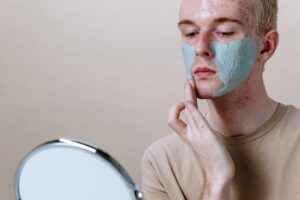
Managing expectations is the hardest part of acne scar treatment because the gap between what patients hope for and what medicine can actually deliver is enormous, and no one preparing to spend thousands of dollars out of pocket wants to hear that. A person who has spent years feeling self-conscious about pitted, uneven skin understandably walks into a dermatologist’s office wanting those scars gone. But the American Academy of Dermatology puts it plainly: “When you have damaged skin, no treatment will make it look perfect again.” Clinical studies across multiple treatment modalities consistently show 50 to 70 percent improvement rates, which means even the best outcomes leave some residual scarring behind. That is a difficult reality to absorb when you have been Googling before-and-after photos at two in the morning.
The expectation problem is compounded by the emotional weight acne scars carry. Research shows that 35.5 percent of people with acne scars avoid public appearances because of them, and 43.2 percent feel their scars have negatively impacted their relationships. When the psychological stakes are that high, anything short of dramatic transformation can feel like failure, even when the clinical outcome is objectively good. A patient who achieves 60 percent improvement might look meaningfully better by any dermatological measure but still feel crushed because they expected clear skin. This article breaks down exactly why the expectation gap exists, what the research says about realistic outcomes for different treatments, how cost and timeline factor into disappointment, and what patients can do to set themselves up for satisfaction rather than heartbreak.
Table of Contents
- Why Do So Many Acne Scar Patients End Up Disappointed with Treatment Results?
- What Can Acne Scar Treatments Realistically Achieve?
- The Timeline Problem and Why Patience Runs Out
- How the Cost of Acne Scar Treatment Amplifies the Expectation Gap
- The Psychological Weight That Makes Rational Expectations Nearly Impossible
- Why the Acne Scar Treatment Market Keeps Growing Despite These Limitations
- What a Better Expectations Conversation Looks Like Going Forward
- Conclusion
- Frequently Asked Questions
Why Do So Many Acne Scar Patients End Up Disappointed with Treatment Results?
The core issue is that acne scarring is structural damage to the skin, not a surface blemish that can be buffed away. Atrophic scars, the depressed, indented kind, account for 75 to 90 percent of all acne scars, and they come in three varieties: ice pick scars (60 to 70 percent of cases), boxcar scars (20 to 30 percent), and rolling scars (15 to 25 percent). Each type involves collagen loss at different depths and configurations, which is why a single treatment rarely addresses all of them effectively. A patient with a mix of deep ice pick scars and shallow rolling scars may need entirely different procedures for each, and neither procedure will erase them completely. Compare that to the curated before-and-after galleries on clinic websites, which tend to showcase the best possible outcomes under ideal lighting, and you can see how expectations get inflated before a consultation even happens. Dermatology experts have recognized this problem for years.
A published expert consensus statement emphasizes that it is “imperative to frankly discuss the unpredictability of results in acne scar therapy and the possible need for multiple procedures over time” during the initial consultation. Yet many patients report feeling blindsided by slow progress or modest results, which suggests that either the conversation is not happening thoroughly enough or the emotional weight of the scars makes it hard for patients to internalize what they are being told. Results depend on scar type, severity, skin type, and individual healing response, and no single protocol works universally. Two patients with similar-looking scars can have very different outcomes from the same laser treatment. The disappointment cycle often goes like this: a patient researches treatments online, sees promising results, commits to an expensive procedure, endures weeks of recovery, and then feels let down when their skin looks better but not transformed. That experience can be more demoralizing than the original scarring because it comes with financial loss and dashed hope attached.

What Can Acne Scar Treatments Realistically Achieve?
The honest answer is significant improvement, not elimination. The AAD notes that scars can diminish by as much as two-thirds after treatment, which represents a meaningful change in skin texture and appearance. For someone with moderate scarring, that could mean the difference between scars being the first thing they notice in the mirror and scars being something they have to look for. But two-thirds improvement still leaves one-third of the scarring intact, and for patients with severe scarring, the remaining third can still be quite visible. Satisfaction data across different treatments paints a mixed picture. A novel acne scar gel showed over 70 percent user satisfaction, with 83 percent of users noticing improvement in skin texture. Chemical peels produced good to very good improvement in 66 percent of patients, with 81.1 percent reporting overall satisfaction.
Poly-L-lactic acid injections achieved over 75 percent patient satisfaction at 24-month follow-up. Injectable fillers showed 64 percent treatment success compared to 33 percent in the control group at six months. These numbers are encouraging, but notice what they also reveal: in every modality, a meaningful percentage of patients did not see the results they hoped for. However, if your scarring is predominantly shallow rolling scars, you are more likely to see dramatic improvement than someone with deep ice pick scars, which are the most stubborn type to treat. Knowing your scar type before committing to a treatment plan is not optional. It is the single most important factor in calibrating what to expect. A patient with mostly rolling scars who undergoes a series of microneedling sessions may be thrilled with the results, while a patient with deep ice pick scars who does the exact same thing may feel they wasted their money.
The Timeline Problem and Why Patience Runs Out
One of the least discussed reasons expectations go sideways is the sheer length of the treatment timeline. Microneedling typically requires 3 to 6 sessions spaced 4 to 6 weeks apart, meaning you are looking at 3 to 9 months of active treatment before you can even evaluate the final result. Laser treatments generally require 3 to 5 sessions. Chemical peels call for 3 to 5 treatments every 2 to 4 weeks. And here is the part that catches people off guard: collagen remodeling takes weeks to months after each session, so what your skin looks like right after a procedure is not what it will look like when the process is complete. You might look worse before you look better. Consider someone who starts microneedling in January.
They complete their first session, deal with a few days of redness and sensitivity, and then wait six weeks for session two. By March, they have had two sessions and spent upwards of a thousand dollars, but their scars look roughly the same. The real improvements may not become apparent until summer or even fall, and during those months, they are questioning whether the whole thing is working. That slow drip of uncertainty, combined with ongoing cost, is where a lot of people emotionally check out or abandon treatment prematurely. The irony is that quitting early virtually guarantees disappointment. Many treatments show cumulative benefits, where sessions three through five build on the collagen stimulation from sessions one and two. Patients who stop after two sessions because they are not seeing results may have been on track for meaningful improvement had they stayed the course.

How the Cost of Acne Scar Treatment Amplifies the Expectation Gap
Money makes everything about expectations more fraught. Microneedling runs $200 to $700 per session, which adds up to $800 to $4,200 for a full course of 4 to 6 sessions. Chemical peels average around $400 per session. Laser resurfacing starts at $1,400 per session and can climb to several thousand dollars depending on the severity of scarring and the type of laser used. None of these treatments are typically covered by insurance, because scar treatment is classified as cosmetic. The financial comparison is stark.
A patient choosing between microneedling and laser resurfacing is not just choosing between different clinical approaches. They are choosing between spending roughly $2,500 on the low end for microneedling or potentially $7,000 or more for a course of laser treatments. The laser may produce superior results for certain scar types, but it also raises the financial stakes dramatically. If a patient spends $7,000 on laser resurfacing and ends up with 50 percent improvement rather than 70 percent, the emotional response is colored by the size of that investment. The same 50 percent improvement after $1,200 of microneedling might feel like a win. This is why dermatologists increasingly recommend starting with less expensive modalities and escalating only if needed. A patient who begins with chemical peels and achieves 40 percent improvement can then decide whether the remaining scarring justifies the cost of laser treatment, rather than going all in on the most expensive option and discovering that their expectations exceeded what the treatment could deliver.
The Psychological Weight That Makes Rational Expectations Nearly Impossible
The reason managing expectations is so uniquely difficult with acne scars, more so than many other cosmetic concerns, is the psychological burden patients carry into treatment. A multinational study found that 25.7 percent of patients with acne scars felt less attractive because of them, while 27.5 percent reported feeling embarrassed or self-conscious. More troubling, 8.3 percent of scarred individuals reported being verbally or physically abused on a regular basis because of their scars. These are not people making a casual cosmetic choice. They are trying to escape real social harm. Research has also found that even mild scarring can evoke “substantial emotional, social, and functional concerns.” A study measuring quality of life impact found a mean Dermatology Life Quality Index score of 6.26 for facial acne scars, and scores above 5 indicate a moderate to large effect on quality of life.
When someone’s daily functioning and social interactions are meaningfully impaired by their appearance, telling them to have realistic expectations can feel dismissive. It is clinically correct advice, but it lands differently when the patient sitting across from you has been avoiding job interviews because of their skin. This creates a bind for both patients and providers. The patient’s distress is real and valid, but it can also fuel unrealistic expectations. The more someone suffers from their scars, the more they need treatment to deliver a transformation, and the harder it becomes to accept that transformation has limits. Dermatologists who skip or rush the expectations conversation are not doing their patients any favors, no matter how eager both parties are to start treatment.

Why the Acne Scar Treatment Market Keeps Growing Despite These Limitations
The global scar treatment market was valued at $2.85 billion in 2025 and is projected to reach $6.45 billion by 2033, growing at a compound annual rate of 10.6 percent. That growth reflects both the massive prevalence of acne scarring, which occurs in up to 50 percent of acne cases among the roughly 85 percent of people who experience acne at some point, and genuine advances in treatment technology. Poly-L-lactic acid fillers showing over 75 percent satisfaction at two-year follow-up, for example, represent real progress over what was available a decade ago.
But market growth also reflects aggressive marketing by clinics and device manufacturers, which can contribute to the expectation problem. When a medspa promotes laser resurfacing with language that implies dramatic transformation, they are technically not lying, but they are also not centering the experience of the 30 to 50 percent of patients who see moderate rather than impressive results. Patients would benefit from more clinics framing treatment outcomes in terms of the published data rather than their best cases.
What a Better Expectations Conversation Looks Like Going Forward
The next frontier in acne scar treatment may not be a new laser or injectable. It may be a better process for preparing patients psychologically. Some clinics have begun incorporating standardized scar grading during consultations so patients can see exactly where they fall on a severity scale and what the evidence says about outcomes for their specific scar profile. Others use 3D imaging to track subtle improvements that the naked eye might miss, which helps patients recognize progress they would otherwise overlook.
The most important shift, though, is cultural. Acne scar treatment needs to move away from the implicit promise of perfection and toward a framework of meaningful improvement. A 60 percent reduction in scar visibility is a genuinely good outcome. It can change how someone feels about their face, how they interact with others, and how they move through the world. But only if they were prepared to see 60 percent as a success rather than a failure.
Conclusion
Managing expectations is the hardest part of acne scar treatment because it requires patients to hold two truths at once: their scars matter deeply, and no treatment will make them disappear completely. The data is clear that current treatments can deliver substantial improvement, with scars diminishing by as much as two-thirds and satisfaction rates ranging from 64 to over 80 percent depending on the modality. But the data also shows that results are variable, timelines are long, costs are high, and the emotional stakes make objectivity difficult.
If you are considering acne scar treatment, the most productive thing you can do before booking a procedure is get an honest scar assessment from a board-certified dermatologist, ask specifically about expected improvement percentages for your scar type, and decide in advance what level of improvement would feel worthwhile to you given the cost and time involved. Treatment works. It just does not work the way most people imagine it will, and closing that gap before you start is what separates patients who are satisfied from those who feel cheated by a process that actually helped them.
Frequently Asked Questions
How much improvement can I realistically expect from acne scar treatment?
Most clinical studies show 50 to 70 percent improvement across treatment modalities. The American Academy of Dermatology notes that scars can diminish by as much as two-thirds. Complete elimination of acne scars is not a realistic goal with current technology.
How long does it take to see results from acne scar treatment?
Most treatments require 3 to 6 sessions spread over several months. Microneedling sessions are spaced 4 to 6 weeks apart, chemical peels every 2 to 4 weeks, and laser treatments similarly. Collagen remodeling continues for weeks to months after each session, so final results may not be visible for 6 to 12 months after starting treatment.
Does insurance cover acne scar treatment?
No. Acne scar treatments including microneedling, chemical peels, and laser resurfacing are classified as cosmetic and are not typically covered by insurance. Out-of-pocket costs range from around $800 for a course of microneedling to several thousand dollars for laser resurfacing.
Which acne scar treatment has the highest patient satisfaction?
Satisfaction varies by treatment type. A novel acne scar gel showed over 70 percent satisfaction with 83 percent noticing texture improvement. Chemical peels achieved 81.1 percent satisfaction. Poly-L-lactic acid injections showed over 75 percent satisfaction at 24 months. The best treatment for you depends on your scar type, severity, and budget.
Are some types of acne scars harder to treat than others?
Yes. Ice pick scars, which are narrow and deep, account for 60 to 70 percent of atrophic acne scars and are the most resistant to treatment. Boxcar and rolling scars, which are wider and shallower, tend to respond better to treatments like microneedling and laser resurfacing.