Raking light photography reveals acne scar depth by positioning a light source at roughly 45 degrees from the skin surface, casting shadows into depressions that are otherwise invisible under standard frontal lighting. The technique makes it possible to see the true topography of scarred skin — every pit, divot, and uneven contour gets thrown into sharp relief. If you have ever looked at your skin under bathroom vanity lighting and noticed scars that seem to vanish in a selfie taken outdoors, you have already experienced this principle firsthand. The difference between those two views is essentially the difference between raking light and diffused light.
But raking light does more than just make scars look worse. When applied consistently, it becomes a practical clinical tool for tracking scar depth over time and evaluating treatment progress. The SWIRL method (Stephens Wrinkle Imaging using Raking Light), published in Skin Research and Technology in 2013, formalized this approach and demonstrated a correlation coefficient of approximately 0.8 against clinical grading scores for measuring count, length, width, area, and relative depth of skin surface depressions. That is a strong enough correlation to be clinically useful, even if it falls short of what newer 3D imaging systems can offer. This article covers how raking light works and what it actually shows about different scar types, the specific depth measurements associated with icepick, boxcar, and rolling scars, the limitations of 2D raking light compared to advanced imaging, and how to use consistent lighting to track your own treatment progress at home or in a clinical setting.
Table of Contents
- How Does Raking Light Make Acne Scars More Visible?
- What Scar Types and Depths Does Raking Light Expose?
- How the SWIRL Method Turned Raking Light into a Clinical Measurement Tool
- Raking Light Versus 3D Imaging — When Each Method Makes Sense
- Why Raking Light Can Be Misleading Without Proper Controls
- Cross-Polarized Light as a Complement to Raking Light
- Where Scar Imaging Is Headed
- Conclusion
- Frequently Asked Questions
How Does Raking Light Make Acne Scars More Visible?
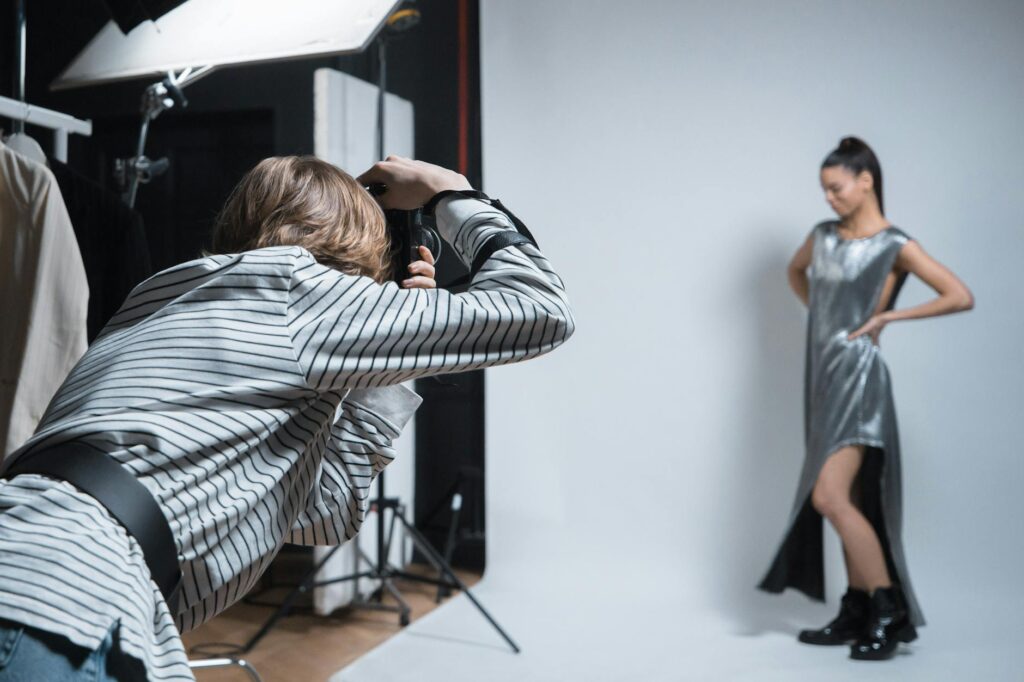
The principle is straightforward. When light hits skin head-on, it fills in surface depressions and minimizes the appearance of texture irregularities. Flat, diffused lighting is essentially flattering — it is the reason portrait photographers use softboxes and ring lights. Raking light does the opposite. By angling the light source to approximately 45 degrees from the side, shadows form inside every depression on the skin surface. The deeper the scar, the darker and more defined the shadow. This is the same technique art conservators use to examine brushstroke texture on old paintings, and it works on skin for exactly the same reason. The practical difference is dramatic.
A person with moderate rolling scars might look relatively smooth-skinned under the soft, even lighting of a phone camera flash. Under raking light, those same scars suddenly appear as distinct, shadowed valleys across the cheek. This is not the light making the scars worse — it is the light showing what is actually there. As the SHI Clinic has documented extensively, this discrepancy is why many before-and-after photos from cosmetic procedures can be misleading. A “before” photo taken under harsh side lighting and an “after” photo taken under soft frontal lighting can make almost any treatment look more effective than it actually was. For anyone evaluating their own skin or assessing a provider’s results, understanding this distinction matters. If a dermatologist or aesthetician shows you progress photos, look at whether the lighting angle and intensity are consistent between shots. If they are not, the comparison is unreliable regardless of what treatment was performed.
What Scar Types and Depths Does Raking Light Expose?
Atrophic acne scars — the depressed kind, as opposed to raised keloid or hypertrophic scars — fall into three categories with distinct depth profiles. According to Jacob et al. in the Journal of the American Academy of Dermatology (2001), icepick scars account for 60 to 70 percent of all acne scars, boxcar scars make up 20 to 30 percent, and rolling scars represent 15 to 25 percent. Each type responds to raking light differently because of its shape and depth. Histological measurements published in the Indian Journal of Dermatology, Venereology and Leprology quantified the actual depths: icepick scars average 1,933.4 micrometers deep (with a standard deviation of 1,117.8 micrometers), rolling scars average 1,357.1 micrometers, and boxcar scars average 1,327.9 micrometers. The difference between icepick and boxcar depth was statistically significant.
Under raking light, icepick scars are particularly conspicuous because their narrow, deep profile catches side-lighting shadows in a way that wider, shallower scars do not. A single icepick scar can appear as a sharp, dark point under angled light even when it is barely noticeable in a standard photograph. However, raking light is less effective at distinguishing between boxcar and rolling scars in terms of depth alone, since their mean measurements are close (1,327.9 versus 1,357.1 micrometers). The visual difference under raking light between these two types comes more from their width and edge definition than from depth. Boxcar scars have sharply defined vertical edges that create distinct shadow boundaries, while rolling scars have sloped, undulating borders that produce softer, more gradual shadow transitions. If you are trying to classify your own scars using raking light at home, edge sharpness is a more reliable indicator than perceived depth.
How the SWIRL Method Turned Raking Light into a Clinical Measurement Tool
Before SWIRL, raking light photography was largely informal — dermatologists and patients used it to visualize scars, but there was no standardized method for extracting quantitative data from the images. The SWIRL method, developed by Stephens and colleagues and published in Skin Research and Technology in June 2013, changed that by applying raking light profilometry directly to facial photography in a high-throughput, repeatable way. The technique casts surface depressions as dark shadows that can be measured and counted systematically. What makes SWIRL clinically useful is its validated accuracy. The method achieved a correlation coefficient of approximately 0.8 against clinical grading scores across all measured parameters — count, length, width, area, and relative depth.
That correlation is strong enough to be meaningful for tracking treatment progress over multiple sessions, which is exactly the kind of longitudinal data dermatologists need when managing scar revision cases. For example, a patient undergoing a series of fractional laser treatments could have SWIRL assessments at baseline and after each session, providing objective data on whether scar depth and count are actually decreasing rather than relying on subjective visual comparison. The limitation worth noting is that SWIRL still operates in two dimensions. It measures relative depth based on shadow intensity, not absolute volumetric depth. This means it can reliably track changes over time when the lighting setup remains constant, but it cannot tell you the exact depth of a scar in micrometers the way a histological cross-section or 3D imaging system can. For most clinical purposes, that tradeoff is acceptable — the value of SWIRL is its practicality and repeatability, not laboratory-grade precision.

Raking Light Versus 3D Imaging — When Each Method Makes Sense
Raking light photography is accessible, inexpensive, and requires nothing more than a consistent light source, a camera, and some discipline about positioning. That accessibility is its greatest strength and its most significant limitation. Standard 2D photography, including raking light, is significantly affected by lighting angle, intensity, and shadow behavior, making it unreliable for precise volumetric measurement. Neither the absolute depth nor the volume of atrophic scars can be readily evaluated from 2D photographs alone, as documented in research on stereoscopic scar assessment published in PubMed (2021). Three-dimensional stereophotogrammetry and stereoscopic optical systems have been validated as more reliable and objective methods for assessing cumulative scar depth and monitoring treatment response.
These systems capture the skin surface from multiple angles simultaneously and reconstruct a 3D model that can be measured with high precision. The tradeoff is cost and availability — 3D imaging systems are expensive, require calibrated equipment, and are typically found only in research institutions and well-equipped dermatology practices. A patient tracking scars at home or a general dermatologist without specialized equipment will get far more practical value from consistent raking light photography than from no objective tracking at all. The decision between methods depends on context. For clinical trials evaluating a new scar treatment, 3D imaging is the standard because it eliminates the variability inherent in 2D techniques. For a patient monitoring their own progress between appointments, or a dermatologist documenting outcomes in routine practice, raking light with consistent technique is a reasonable and far more practical choice.
Why Raking Light Can Be Misleading Without Proper Controls
The same property that makes raking light useful — its sensitivity to surface topography — also makes it easy to manipulate, intentionally or not. Slight changes in light angle, distance from the skin, or ambient lighting conditions can make the same scar look dramatically different from one photo to the next. A 45-degree angle produces different shadow patterns than a 30-degree or 60-degree angle. Moving the light source closer intensifies shadows; moving it farther away softens them. These variations can create the illusion of improvement or worsening that has nothing to do with actual changes in scar depth. This is a genuine problem in the aesthetics industry.
The SHI Clinic has pointed out that before-and-after photos frequently use different lighting setups — sometimes deliberately — to exaggerate treatment results. A “before” photo taken under harsh raking light and an “after” photo taken under soft, diffused frontal lighting will make virtually any treatment appear more successful than it was. Patients should be skeptical of any comparison photos where the lighting conditions are not visibly identical. Beyond intentional manipulation, even well-meaning attempts at consistency can fall short. Skin hydration levels, the presence of makeup or moisturizer, the time of day (due to skin swelling and fluid retention), and even subtle head positioning changes all affect how scars appear under raking light. For tracking to be meaningful, dermatologists recommend clean skin with no makeup, the same camera and distance, a consistent 45-degree light angle, and a dated photo log that allows objective comparison over time.
Cross-Polarized Light as a Complement to Raking Light
Raking light excels at revealing surface topography — the physical depth and texture of scars. But acne scarring often involves more than just surface depressions. Post-inflammatory hyperpigmentation, erythema, and deeper dermal changes are part of the full picture, and raking light alone cannot capture them.
Cross-polarized light photography addresses this gap by filtering out surface reflections and enhancing the visualization of deeper dermal structures and subsurface chromophores, as documented in research published in PubMed (1997). The combination of raking light for texture and cross-polarized light for color and pigmentation provides a more complete assessment than either technique alone. In practice, this means a thorough scar evaluation might involve two sets of photographs: one under raking light to document surface depressions and texture, and one under cross-polarized light to document the inflammatory and pigmentary components that may also need treatment. A scar that appears shallow under raking light might still show significant subsurface redness under polarized imaging, suggesting ongoing inflammation that could benefit from treatment even if the physical depth is not severe.
Where Scar Imaging Is Headed
The trajectory of scar assessment technology is moving toward integration. Rather than relying on any single imaging modality, emerging clinical workflows combine 2D raking light, cross-polarized photography, and 3D stereophotogrammetry into multi-modal assessments that capture topography, depth, volume, pigmentation, and vascularity in a single session. As the cost of 3D imaging hardware continues to decrease, these tools will likely become standard in dermatology practices rather than being limited to research settings.
For patients and clinicians right now, the most important takeaway is that no single photograph tells the whole story. Raking light remains one of the most practical and accessible methods for visualizing scar depth, but its value depends entirely on consistency and an honest understanding of its limitations. Used properly, it is a powerful tool for tracking real progress. Used carelessly, it can be the source of false hope or unnecessary discouragement.
Conclusion
Raking light photography works by casting angled shadows into skin depressions, making acne scar depth visible in ways that standard lighting conceals. The SWIRL method has validated this approach clinically, achieving approximately 0.8 correlation against clinical grading for key scar parameters. Different scar types respond to raking light differently — icepick scars, the deepest at an average of 1,933 micrometers, produce the most dramatic shadows, while the shallower and wider boxcar and rolling scars (averaging around 1,328 and 1,357 micrometers respectively) are better distinguished by edge characteristics than by shadow depth alone. The practical value of raking light depends on disciplined, consistent technique.
Maintain the same 45-degree light angle, camera distance, and skin preparation for every session if you want meaningful comparisons over time. Recognize that 2D raking light cannot replace 3D volumetric imaging for precise depth measurement, and consider cross-polarized photography as a complement for evaluating pigmentation and vascular changes. If you are evaluating a provider’s before-and-after photos, check the lighting conditions before drawing conclusions. The most honest assessment of your scars comes from the most consistent imaging conditions, not the most flattering ones.
Frequently Asked Questions
Can I do raking light photography at home to track my acne scars?
Yes. Use a single directional light source (a desk lamp or phone flashlight works) positioned at roughly 45 degrees to the side of your face. Keep the same setup, distance, and angle every time. Photograph clean, dry skin with no makeup. Date each photo. The value is in the consistency between shots, not in any single image.
Does raking light make acne scars look worse than they actually are?
It makes them more visible, not worse. Raking light reveals texture that is physically present but hidden by flat lighting. The scars are the same depth regardless of how they are lit — raking light simply provides a more accurate picture of surface topography than everyday lighting does.
Which type of acne scar shows up most under raking light?
Icepick scars, which are the deepest (averaging about 1,933 micrometers) and narrowest type. Their steep, narrow profile catches side-lighting shadows more dramatically than the wider, shallower boxcar or rolling scar types.
Why do some before-and-after scar treatment photos look so different from my real results?
Lighting manipulation is the most common reason. Before photos taken under harsh raking light and after photos taken under soft frontal lighting will make any treatment appear more effective. Always look for consistent lighting conditions in comparison photos before trusting the results.
Is raking light photography used in clinical settings or just by patients at home?
Both. The SWIRL method, published in Skin Research and Technology in 2013, formalized raking light photography for clinical use with validated measurements of scar count, area, and relative depth. Many dermatologists also use informal raking light photos to document treatment progress in routine practice.
Should I use raking light or 3D imaging to evaluate my scars?
If you have access to 3D stereophotogrammetry through your dermatologist, it provides more precise and objective volumetric measurements. However, consistent raking light photography is far more accessible and still clinically useful for tracking changes over time. Most patients will get the best practical value from disciplined raking light technique combined with professional assessment during office visits.