Free dermatology clinics typically offer acne patients a surprisingly broad range of services, including professional skin assessments, prescription-strength topical treatments like tretinoin and benzoyl peroxide, oral antibiotics for moderate to severe cases, and ongoing follow-up visits to monitor progress. Many of these clinics also provide extractions, chemical peels, and patient education on skincare routines, all at no cost. For example, the Remote Area Medical volunteer corps regularly sets up temporary clinics across Appalachia and the rural South where board-certified dermatologists diagnose and treat acne alongside other skin conditions, sending patients home with medications that would otherwise cost hundreds of dollars out of pocket.
What surprises most people is that free clinics are not limited to basic advice and over-the-counter product samples. Depending on the clinic’s funding and affiliation, patients may receive the same caliber of treatment available at a private dermatology practice, including isotretinoin management in some university-affiliated settings. The gap is real, though, and not every free clinic operates at the same level. This article covers exactly what services you can expect, how to find these clinics, what limitations exist, which patients benefit most, and how free clinic care compares to what you would get through insurance or a cash-pay dermatologist.
Table of Contents
- What Types of Acne Treatments Do Free Dermatology Clinics Actually Provide?
- How Free Clinic Acne Care Differs from Private Practice Dermatology
- Who Qualifies for Free Dermatology Clinics and How to Find Them
- Making the Most of a Free Dermatology Appointment for Acne
- Limitations and Common Problems with Free Clinic Acne Treatment
- The Role of Dermatology Residents in Free Clinic Acne Care
- The Future of Accessible Acne Care Beyond Free Clinics
- Conclusion
- Frequently Asked Questions
What Types of Acne Treatments Do Free Dermatology Clinics Actually Provide?
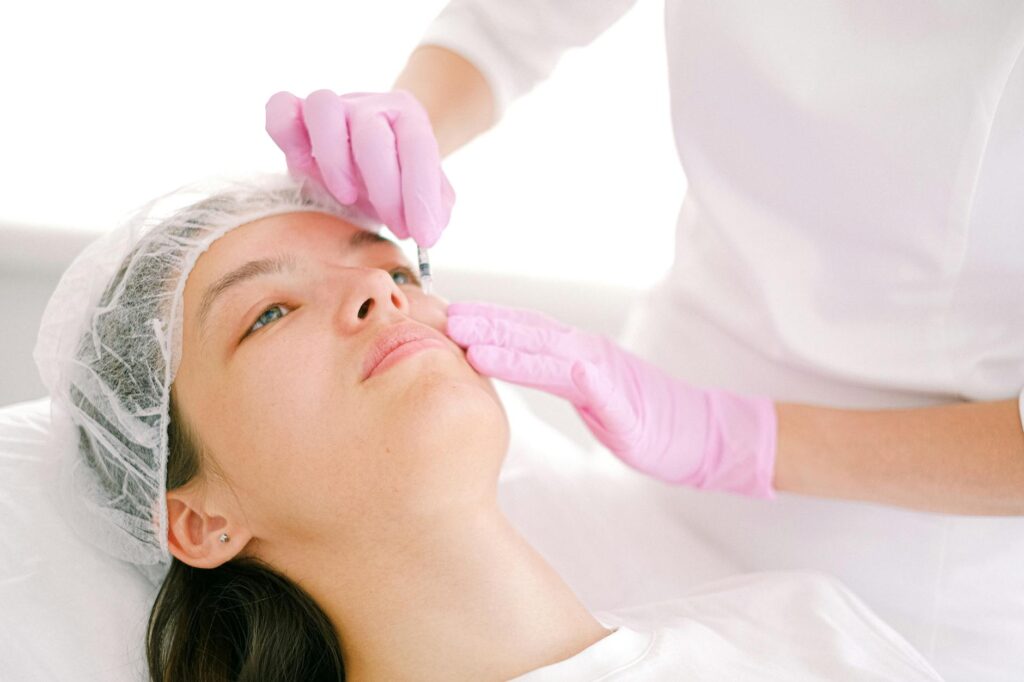
The core offering at most free dermatology clinics is a clinical evaluation followed by a treatment plan. A dermatologist or supervised dermatology resident will assess your acne type, whether comedonal, inflammatory, cystic, or a mix, and determine severity using standard grading scales. From there, the treatment path usually starts with topical retinoids and antimicrobials, which are first-line therapies recommended by the American Academy of Dermatology. Clinics connected to hospital systems or medical schools often have in-house pharmacies or partnerships with pharmaceutical assistance programs that provide these medications directly, bypassing the need for a separate prescription fill. Beyond prescriptions, many free clinics offer procedural treatments for acne. Comedone extractions, intralesional corticosteroid injections for painful cystic lesions, and light chemical peels are common at clinics with trained staff and proper equipment. The dermatology department at the University of Miami’s Miller School of Medicine, for instance, runs a free clinic where residents perform these procedures under attending supervision.
Compare this to a standard urgent care visit for acne, where you are far more likely to receive a generic antibiotic prescription and little else. The difference in specificity of care is significant. Where free clinics distinguish themselves from retail or telehealth quick-visit models is in follow-up. acne treatment is iterative. A topical regimen that works for mild acne at week one may need adjustment by week eight. Many free clinics build in scheduled return visits, sometimes monthly, to reassess and modify treatment. This continuity matters because acne patients who abandon treatment early due to initial side effects like dryness or purging are among the most common treatment failures, and follow-up visits catch that problem before the patient gives up.

How Free Clinic Acne Care Differs from Private Practice Dermatology
The most honest comparison between free clinics and private dermatology offices comes down to three factors: wait times, medication access, and procedural scope. Private practices can typically see a new acne patient within one to three weeks. Free clinics, depending on location and demand, may have wait lists stretching six weeks to several months. In cities with only one or two free dermatology programs, the backlog can be considerable. If your acne is worsening rapidly or you are dealing with scarring cystic breakouts, that wait can mean the difference between catching it early and dealing with permanent damage. Medication access is another point of divergence. A private dermatologist can prescribe any FDA-approved acne drug and assume your insurance or wallet will cover it.
Free clinics work within formulary constraints. They stock what they can afford or what pharmaceutical companies donate. This means you are more likely to get generic tretinoin than brand-name adapalene-benzoyl peroxide combination gels, and you may receive doxycycline over minocycline simply because the former costs less. Clinically, these substitutions are usually reasonable, but they are not always identical in tolerability or efficacy for individual patients. However, if your acne requires isotretinoin, the picture gets more complicated. Isotretinoin demands monthly blood work, pregnancy testing for female patients through the iPLEDGE system, and close monitoring for side effects. Some university-affiliated free clinics can manage this, but many community free clinics cannot absorb the lab costs or logistical burden. If isotretinoin is what you need, ask about it upfront when contacting a clinic so you do not waste months on a treatment ladder that the clinic cannot complete.
Who Qualifies for Free Dermatology Clinics and How to Find Them
Eligibility varies by clinic, but most free dermatology programs serve uninsured and underinsured patients. Some use federal poverty level guidelines, typically requiring household income below 200 percent of the poverty line. Others, particularly those affiliated with academic medical centers, are more flexible and may accept patients regardless of income if they lack dermatology coverage. federally Qualified Health Centers with dermatology departments, such as those in the Community Health Center network, use a sliding fee scale, so even if you do not qualify as fully free, your visit might cost five to twenty dollars. Finding these clinics requires some digging. The American Academy of Dermatology’s Access to Dermatology Care program maintains a database of free skin cancer screening events, but their acne-specific offerings are less centralized.
A more reliable route is to search the Health Resources and Services Administration’s health center finder at findahealthcenter.hrsa.gov, filtering for centers with dermatology services. Additionally, medical schools with dermatology residency programs almost universally operate resident clinics where supervised care is free or low-cost. There are roughly 150 accredited dermatology residency programs in the United States, and most of them see acne patients regularly. One practical example: Volunteers in Medicine clinics, operating in over 100 locations nationwide, connect retired and active physicians with uninsured patients. Several of their sites include dermatologists on their volunteer rosters. The catch is availability. Dermatology is one of the most in-demand specialties at these clinics, so getting an appointment often means calling early and being persistent.
Making the Most of a Free Dermatology Appointment for Acne
Because appointment slots at free clinics are scarce, preparation matters more than it might at a regular office visit. Bring a list of every product you currently use on your skin, including cleansers, moisturizers, and sunscreens, as well as any medications you have tried for acne in the past, whether prescription or over-the-counter. If you have been using a benzoyl peroxide wash for two months with no improvement, that information saves the dermatologist time and moves you to a more effective treatment faster. Photographs are undervalued in acne care. Take clear, well-lit photos of your skin on the day you schedule your appointment and again the day before your visit. Acne fluctuates, and showing the dermatologist what your worst breakout looked like two weeks ago, alongside what your skin looks like today, gives them a much more complete picture.
This is especially important at free clinics where follow-up intervals may be longer than at a private practice; visual documentation bridges the gap between visits. The tradeoff to weigh honestly is time versus cost. A free clinic appointment might take half a day when you account for travel, waiting, and the visit itself. A telehealth acne consultation through a service like Apostrophe or Curology might cost thirty to fifty dollars and take fifteen minutes, with medications shipped to your door. For someone with mild comedonal acne, the telehealth route may be more practical. But for moderate to severe acne, especially inflammatory or cystic presentations that benefit from hands-on evaluation, an in-person free clinic visit provides a level of assessment that a screen cannot replicate.
Limitations and Common Problems with Free Clinic Acne Treatment
The most persistent limitation of free dermatology clinics is continuity of care. At teaching hospitals, you may see a different resident every visit as trainees rotate through the clinic. Each new provider needs to get up to speed on your history, and treatment philosophies can shift between providers. One resident may favor a topical-first approach while the next prefers adding an oral antibiotic sooner. This inconsistency can extend your treatment timeline and create confusion about what you should actually be doing at home. Another common issue is the scope of what free clinics will treat beyond the acne itself.
Acne scarring, hyperpigmentation, and post-inflammatory erythema are significant concerns for many patients, but most free clinics draw the line at active disease management. Cosmetic treatments like laser resurfacing, microneedling, or even prescription-strength hydroquinone for dark spots may fall outside the clinic’s mandate. If scarring is your primary concern rather than active breakouts, a free clinic may not be the right fit, and you may need to explore sliding-scale medical spas or dermatology school training clinics that offer discounted cosmetic procedures. Prescription refills can also become a logistical headache. Free clinics often dispense medications on-site, but refills between appointments may require returning in person. If the clinic is an hour away and you run out of your topical retinoid at week five of an eight-week interval between visits, you are stuck either going without or paying out of pocket at a pharmacy. Ask at your first visit about the refill process and whether prescriptions can be sent to an outside pharmacy if needed.

The Role of Dermatology Residents in Free Clinic Acne Care
A significant portion of free dermatology care in the United States is delivered by residents in training, and this is not necessarily a disadvantage. Dermatology residents are physicians who have completed medical school and are in the midst of a rigorous three- to four-year specialty program. They are supervised by attending dermatologists who review treatment plans and are available for complex cases. In many academic settings, residents are more current on recent literature and guideline updates than physicians who have been in private practice for decades.
At the University of California San Francisco’s free dermatology clinic, for example, residents evaluate acne patients, develop treatment plans, and present their reasoning to the supervising attending before any prescription is written. The result is effectively a two-physician review of your case, which can be more thorough than a solo private practice visit where one doctor spends eight minutes with you and moves on. The tradeoff is efficiency. Resident clinic visits tend to run longer, and the workflow is slower, but the depth of evaluation often compensates.
The Future of Accessible Acne Care Beyond Free Clinics
The landscape of affordable acne treatment is shifting in ways that may reduce reliance on traditional free clinics over time. Teledermatology programs have expanded dramatically since 2020, and several states now allow dermatologists to prescribe across state lines through interstate compacts. Organizations like Direct Dermatology partner with safety-net health systems to provide store-and-forward consultations, where a primary care provider photographs the patient’s skin and a dermatologist reviews the images remotely, often within 48 hours. This model keeps the expertise of a specialist in the loop without requiring the patient to travel.
Pharmaceutical access programs are also broadening. Galderma and other manufacturers of acne medications have expanded patient assistance programs that cover brand-name topicals for qualifying patients, and generic retinoid prices have dropped substantially in the last five years. As these trends converge with growing advocacy for dermatology access in underserved communities, the options available to acne patients without insurance or resources are likely to improve. The free clinic will remain a critical piece of that ecosystem, but it will increasingly function as one node in a larger network rather than the only option.
Conclusion
Free dermatology clinics offer acne patients far more than most people expect, from prescription retinoids and antibiotics to procedural treatments like extractions and corticosteroid injections, often with structured follow-up care. The quality of treatment, particularly at university-affiliated programs, can rival private practice dermatology, with the main tradeoffs being longer wait times, formulary limitations, and potential gaps in continuity when rotating providers are involved. Knowing what a clinic can and cannot do before your first visit, and preparing thoroughly for that appointment, makes a meaningful difference in outcomes.
If you are dealing with acne and cost is a barrier to seeing a dermatologist, start with the HRSA health center finder and your nearest academic medical center’s dermatology department. Be specific when you call: ask whether they treat acne, what medications they can provide, and whether isotretinoin management is available if your acne is severe. The care exists, and it is often better than people assume. The challenge is finding it and navigating the logistics, and that is a solvable problem.
Frequently Asked Questions
Do free dermatology clinics prescribe Accutane (isotretinoin)?
Some do, particularly those affiliated with university hospitals that can absorb the cost of required monthly blood work and iPLEDGE monitoring. Many community-based free clinics, however, cannot manage isotretinoin due to the logistical and financial burden. Always ask about this specific capability before your first appointment if you suspect you may need it.
How long is the typical wait to get into a free dermatology clinic for acne?
Wait times range widely, from two weeks at well-staffed academic programs to three months or more at high-demand community clinics. Calling multiple clinics in your area and getting on more than one waitlist is a practical strategy.
Will a free clinic treat my acne scars?
Most free dermatology clinics focus on active disease rather than cosmetic concerns. Treatments for scarring like laser resurfacing or microneedling are generally outside their scope. Some dermatology residency programs offer discounted cosmetic procedures through their training clinics, which is worth asking about separately.
Do I need a referral from a primary care doctor to be seen at a free dermatology clinic?
It depends on the clinic. Federally Qualified Health Centers often require patients to be established in their primary care system first. Standalone free clinics and some academic programs accept self-referrals. Check the specific clinic’s intake process before assuming either way.
Can I get free acne treatment if I have insurance but it does not cover dermatology?
Many free clinics serve underinsured patients, not just uninsured ones. If your insurance plan lacks dermatology benefits or has a prohibitively high deductible for specialist visits, you may still qualify. Eligibility is typically based on income and coverage gaps rather than insurance status alone.