FSA and HSA funds can cover a surprisingly broad range of acne treatments, from drugstore benzoyl peroxide washes to prescription isotretinoin courses to in-office laser procedures. Under IRS Code Section 213(d), acne qualifies as a diagnosable medical condition, which means most products and services aimed at treating it — not just concealing it — are reimbursable through a Flexible Spending Account, Health Savings Account, or Health Reimbursement Arrangement. If you have been paying out of pocket for a $45-to-$200 tube of tretinoin or shelling out $150 to $300 for an initial dermatologist visit, there is a good chance your tax-advantaged health account can foot the bill.
What makes this especially useful in 2026 is that the annual FSA contribution limit has risen to $3,400 and the HSA self-only limit now sits at $4,400, giving you more pre-tax dollars to work with than in previous years. Since the CARES Act took effect on January 1, 2020, you no longer need a prescription to use FSA or HSA money on over-the-counter acne medicines, which removed one of the biggest hurdles people used to face. This article breaks down exactly which OTC products, prescriptions, and procedures qualify, what falls outside the eligible line, how much common treatments actually cost, and the documentation steps that keep your reimbursements from getting flagged.
Table of Contents
- Which OTC Acne Products Can You Buy With FSA and HSA Funds?
- Prescription Acne Medications and Dermatologist Visits That Qualify
- Are Acne Procedures Like Laser Treatments and Chemical Peels Covered?
- How to Maximize Your FSA or HSA for Acne Costs in 2026
- What Acne-Related Expenses Are Not Eligible — and Common Mistakes
- The Letter of Medical Necessity — When You Need One and How to Get It
- Looking Ahead — FSA and HSA Rules to Watch
- Conclusion
- Frequently Asked Questions
Which OTC Acne Products Can You Buy With FSA and HSA Funds?
The simplest place to start spending your FSA or HSA dollars is the drugstore aisle. acne-targeted facial cleansers, spot treatments, medicated pads, pimple patches, body washes, sprays, gels, and creams are all eligible as long as they are marketed and labeled specifically for treating acne. The key active ingredients to look for are benzoyl peroxide, salicylic acid, adapalene (sold over the counter as Differin Gel), and sulfur-based formulations. A $12 tube of benzoyl peroxide wash and a $35 box of Differin Gel both qualify equally — the IRS does not distinguish between budget and premium products as long as the treatment purpose is clear. The critical distinction here is between a product that treats acne and one that simply cleans your face.
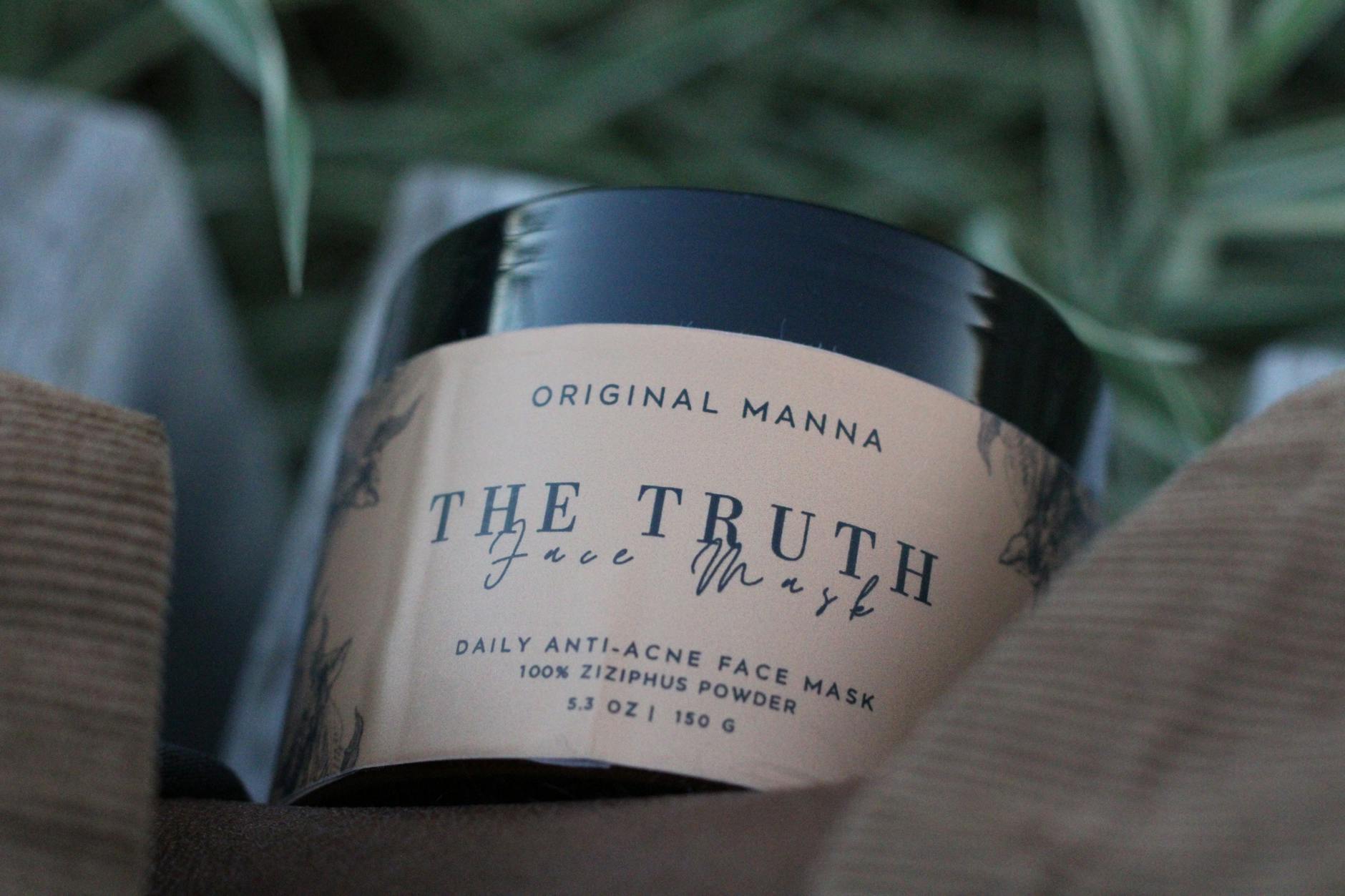
A gentle daily moisturizer, a cosmetic exfoliating scrub, or a charcoal face mask marketed for “pore detox” without a specific acne drug fact label will not qualify. The product needs to contain an active ingredient recognized for acne treatment or be explicitly indicated for acne on its packaging. If you are unsure, check the Drug Facts panel on the back — products regulated as OTC drugs will have one, while cosmetic products will not. One comparison worth noting: before 2020, buying that same tube of Differin Gel with FSA money required a doctor’s prescription even though it was sitting on the shelf at any pharmacy. The CARES Act eliminated that requirement for all OTC medicines and menstrual products, which was a meaningful change for people managing mild-to-moderate acne without regular dermatologist visits. If you were turned down for an OTC acne reimbursement years ago, the rules have changed in your favor.
Prescription Acne Medications and Dermatologist Visits That Qualify
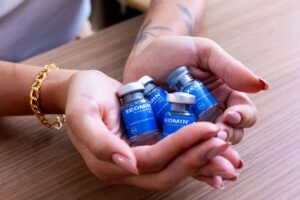
For moderate-to-severe acne, the treatments that tend to make the biggest difference are the ones that require a prescription, and every one of them is FSA and HSA eligible. Topical retinoids like tretinoin (Retin-A), topical antibiotics like clindamycin, and oral medications including isotretinoin (Accutane) all qualify. The dermatologist visit where you receive the diagnosis and prescription is itself a covered expense, whether you pay a $20-to-$50 insurance copay or the full $150-to-$300 out-of-pocket cost for an uninsured first visit. However, the sticker shock on some of these prescriptions is exactly why FSA and HSA dollars matter so much. A single tube of tretinoin can run $45 to $200 without insurance.
Oral antibiotics for acne typically cost $20 to $100 per month. And isotretinoin courses are in a league of their own — expect $250 to $500 per month when you factor in the required monthly blood work and office visits, with a full course often lasting five to six months. Paying for a $2,500 isotretinoin course with pre-tax FSA money instead of after-tax income can effectively save you $600 to $900 depending on your tax bracket. One limitation to be aware of: if your dermatologist prescribes a compounded medication or an off-label use product, your FSA administrator may require additional documentation before approving the expense. The prescription itself usually suffices for standard acne medications, but compounded formulations sometimes trigger a manual review. Keep a copy of the prescription and any notes from your provider explaining the medical necessity.
Are Acne Procedures Like Laser Treatments and Chemical Peels Covered?
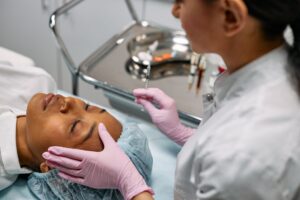
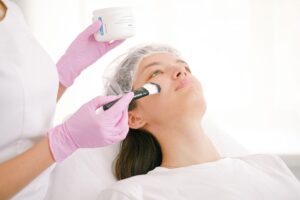
In-office procedures occupy a grayer area than medications, but several do qualify. Acne laser treatments are FSA and HSA eligible when they are medically necessary — meaning your dermatologist is using them to treat active acne or acne-related skin damage, not simply for cosmetic skin resurfacing. If you are dealing with cystic acne that has not responded to topical or oral treatments, a laser procedure recommended by your provider should clear the eligibility bar. Chemical peels for acne are a more conditional category. When a dermatologist recommends a chemical peel specifically to treat severe acne or active scarring, the cost can qualify — but your FSA or HSA administrator may require a Letter of Medical Necessity (LMN) from the prescribing dermatologist.
A cosmetic peel done at a med spa for “glowing skin” will not qualify no matter how you frame it. The dividing line is medical treatment versus aesthetic preference, and the IRS takes that distinction seriously. For a real-world example, consider someone with persistent hormonal acne along the jawline who has tried adapalene, clindamycin, and spironolactone without full clearance. Their dermatologist recommends a series of salicylic acid peels every four to six weeks. With an LMN documenting the failed prior treatments and the medical rationale, those peels become a legitimate FSA or HSA expense. Without that letter, the same series of peels could be denied on review.

How to Maximize Your FSA or HSA for Acne Costs in 2026
The 2026 contribution limits give you meaningful room to plan. For an FSA, you can set aside up to $3,400 in pre-tax dollars, up $100 from the 2025 limit of $3,300. The FSA rollover maximum is $680, so if you do not use the full amount, a portion carries into the next year — but most of it does not, which makes planning critical. For an HSA, the self-only limit is $4,400 and the family limit is $8,750, with an additional $1,000 catch-up contribution available if you are 55 or older. Unlike an FSA, unspent HSA funds roll over indefinitely. This difference between FSA and HSA creates a meaningful strategic tradeoff.
If you have a high-deductible health plan and access to an HSA, you can contribute the maximum, invest the funds, and let them grow tax-free until you need them — even years from now. That makes an HSA a better long-term vehicle if your acne treatment costs are unpredictable. An FSA, on the other hand, operates on a use-it-or-lose-it basis within the plan year (minus the rollover), which makes it better suited if you know your costs in advance and want to lock in the tax savings now. Someone planning a five-month isotretinoin course at $300 per month, for example, can estimate a $1,500 annual outlay and set their FSA election accordingly rather than risking unused funds. One thing that catches people off guard: neither a Limited-Purpose FSA (LPFSA) nor a Dependent Care FSA (DCFSA) covers acne treatment. LPFSAs are restricted to dental and vision expenses, and DCFSAs are for childcare costs. If your employer offers multiple FSA options, make sure you are contributing to the general-purpose health FSA if acne treatment reimbursement is part of your plan.
What Acne-Related Expenses Are Not Eligible — and Common Mistakes
The most common mistake people make is assuming that anything related to their skin is FSA or HSA eligible. It is not. General skincare products — moisturizers, non-medicated cleansers, cosmetic exfoliants, toners, and serums — do not qualify unless they contain an active acne-fighting ingredient and are marketed as acne treatment. Your $48 hyaluronic acid serum and your $22 vitamin C moisturizer are not making the cut even if you use them as part of your acne routine. Acne scar treatments and cosmetic procedures done purely for aesthetic reasons also fall outside the eligible line. This is where the distinction gets frustrating: treating active acne is medical, but erasing the marks it left behind is often classified as cosmetic.
A course of microneedling or fractional laser resurfacing for old acne scars will typically be denied unless your dermatologist can document that the scarring is causing a functional issue (for example, scar tissue that restricts movement or causes pain) or that the treatment is addressing ongoing active acne as well. The same applies to cosmetic chemical peels — the word “cosmetic” is doing the disqualifying work in that phrase. Another pitfall is purchasing acne products from non-verified retailers or using a general credit card and then seeking reimbursement after the fact. While post-purchase reimbursement is allowed, the burden of proof shifts to you. Your FSA administrator can request itemized receipts showing the exact product name, and a vague credit card charge to “Amazon” or “Target” may not be sufficient. Dedicated FSA store retailers make this easier because their inventory is pre-screened for eligibility, but you pay the same price or sometimes more for that convenience.
The Letter of Medical Necessity — When You Need One and How to Get It
For any acne treatment that sits in a gray area — chemical peels, certain combination skincare-plus-treatment products, or off-label uses of medications — a Letter of Medical Necessity from your dermatologist can be the difference between approval and denial. The LMN is a straightforward document in which your provider states your diagnosis, the recommended treatment, and why it is medically necessary rather than cosmetic. Most dermatologists are familiar with the format and can produce one during a regular appointment.
A practical example: if your dermatologist recommends a high-concentration glycolic acid peel series to manage acne that has not responded to standard topical treatments, requesting the LMN at the same appointment saves you a follow-up visit. Keep the original letter and submit a copy with your reimbursement claim. Some FSA administrators accept the LMN as a blanket authorization for a treatment course, while others require resubmission for each claim — check with your plan administrator to avoid surprises.
Looking Ahead — FSA and HSA Rules to Watch
The trend in recent years has been toward expanding what tax-advantaged health accounts can cover, not restricting it. The CARES Act’s 2020 expansion to OTC medicines was the most significant shift for acne patients, and there has been periodic Congressional discussion about further broadening HSA eligibility and raising contribution limits. The jump to $3,400 for FSAs and $4,400 for HSAs in 2026 continues an incremental upward trend that benefits anyone with recurring medical expenses.
For acne patients specifically, the growing availability of telehealth dermatology means that the cost of an initial consultation — and therefore the barrier to getting prescriptions and LMNs — continues to drop. A virtual dermatology visit that costs $75 and results in a tretinoin prescription and an LMN for chemical peels can unlock hundreds or thousands of dollars in FSA- and HSA-eligible spending. As more treatments move to over-the-counter availability (adapalene was prescription-only until 2016), the number of acne products you can buy directly with your FSA or HSA card without any extra paperwork will likely keep growing.
Conclusion
FSA and HSA accounts are genuinely useful tools for managing the cost of acne treatment, covering everything from a $10 tube of benzoyl peroxide to a $2,500 isotretinoin course. The key is understanding where the IRS draws the line: products and services that treat acne as a medical condition are in, cosmetic products and purely aesthetic scar treatments are out, and anything in between may require a Letter of Medical Necessity from your dermatologist. With the 2026 FSA limit at $3,400 and HSA limits at $4,400 for individuals and $8,750 for families, there is substantial room to offset acne treatment costs with pre-tax dollars.
The most actionable step you can take right now is to inventory your current and anticipated acne expenses for the year, compare them against the eligible categories outlined above, and adjust your FSA or HSA contribution during your next open enrollment accordingly. If you are already mid-plan-year, start using your existing balance on qualifying products and save every receipt. For anything that requires an LMN, schedule that conversation with your dermatologist sooner rather than later — the letter costs you nothing extra if you request it during a routine visit, and it can unlock reimbursement for treatments that would otherwise come out of your after-tax pocket.
Frequently Asked Questions
Do I need a prescription to use my FSA or HSA on over-the-counter acne products?
No. Since January 1, 2020, the CARES Act eliminated the prescription requirement for OTC medicines purchased with FSA, HSA, or HRA funds. You can buy benzoyl peroxide wash, salicylic acid pads, Differin Gel, and similar acne treatments directly with your FSA or HSA card.
Is a dermatologist visit for acne covered by my FSA or HSA?
Yes. Dermatologist office visits for acne evaluation and treatment are eligible expenses. Whether you pay a $20-to-$50 copay or the full $150-to-$300 uninsured visit cost, the expense qualifies for reimbursement.
Can I use my FSA or HSA to pay for acne scar removal?
Generally, no. Treatments performed purely for cosmetic scar removal are not FSA or HSA eligible. However, if your dermatologist determines that scar treatment is medically necessary — for instance, to address active acne in scarred areas — a Letter of Medical Necessity may make the expense eligible.
What is the difference between an FSA and an HSA for acne treatment coverage?
Both cover the same acne treatments. The main differences are structural: FSA funds mostly expire at year-end (with up to $680 rolling over in 2026), while HSA funds roll over indefinitely and can be invested. HSAs require a high-deductible health plan, while FSAs do not. If your acne costs are predictable, an FSA works well; if costs vary year to year, an HSA’s rollover feature provides more flexibility.
Can I use a Limited-Purpose FSA or Dependent Care FSA for acne treatment?
No. Limited-Purpose FSAs are restricted to dental and vision expenses only, and Dependent Care FSAs cover childcare costs. Only a general-purpose health FSA, HSA, or HRA can be used for acne treatment.
Should I save my receipts for FSA and HSA acne purchases?
Yes. The IRS may request itemized receipts to verify that your FSA or HSA expenses were for eligible products and services. Save receipts for all acne product purchases, prescription fills, and dermatologist visits. For products bought at general retailers, make sure the receipt clearly shows the product name, not just a store charge.