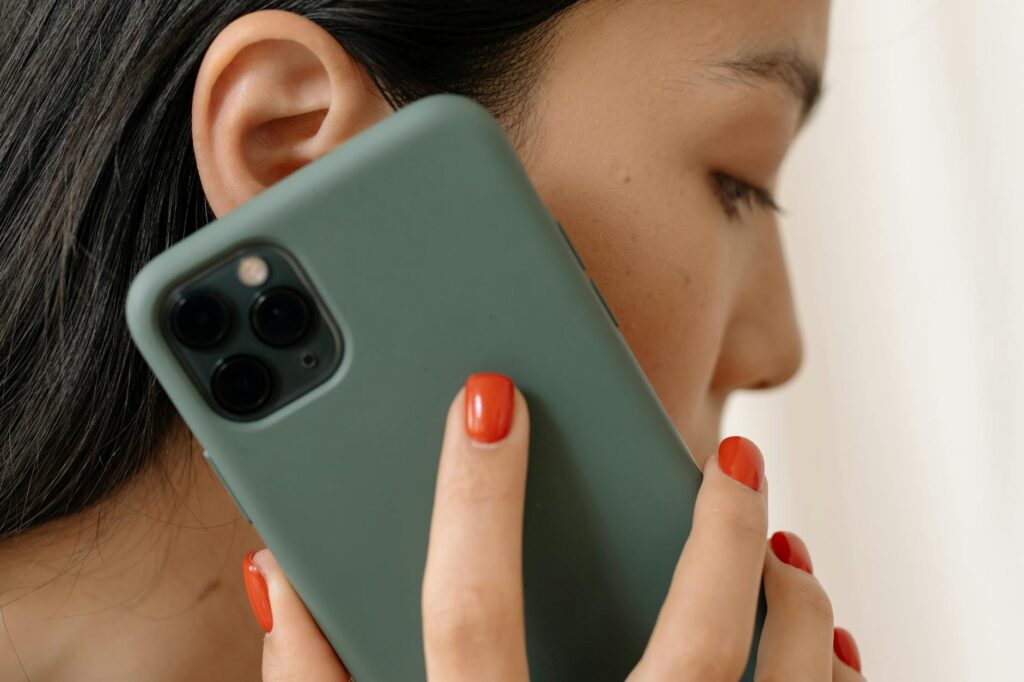
The phone you press against your cheek several times a day carries roughly 25,000 bacteria per square inch — making it approximately ten times dirtier than a toilet seat and eighteen times more contaminated than a public restroom toilet handle. That bacterial payload gets transferred directly into your pores every time you take a call, and dermatologists have a clinical name for the breakouts it causes: acne mechanica. Meanwhile, the supposed link between your diet and your acne remains what McGill University’s Office for Science and Society calls an “ambiguous association,” with no meta-analyses or randomized controlled trials conclusively proving that food causes breakouts. This isn’t to say diet is irrelevant to skin health.
But if you’ve been obsessing over whether that slice of pizza gave you a pimple while ignoring the petri dish you hold against your face for hours each week, your priorities are backwards. A 2020 case study published in the Journal of the European Academy of Dermatology and Venereology documented thirteen patients whose acne was visibly worse on the side of their face where they held their phone — a pattern that emerged during COVID lockdowns as screen time and call duration spiked. The mechanism is direct, documented, and fixable. This article breaks down the science behind phone-related acne, explains why the evidence against diet is weaker than most people assume, and gives you a practical plan for reducing breakouts that doesn’t require overhauling what you eat.
Table of Contents
- How Does Phone Bacteria Cause More Acne Than the Food You Eat?
- What Exactly Is Acne Mechanica and Why Your Phone Triggers It
- The Blue Light Factor Most People Overlook
- How to Actually Reduce Phone-Related Breakouts Without Giving Up Your Phone
- Why the Diet-Acne Myth Persists Despite Weak Evidence
- When Phone Acne and Existing Skin Conditions Collide
- The Future of Phone Hygiene and Skin Health
- Conclusion
- Frequently Asked Questions
How Does Phone Bacteria Cause More Acne Than the Food You Eat?
The four established pillars of acne pathogenesis are keratinocyte hyperproliferation, excess sebum production, colonization by Cutibacterium acnes bacteria, and inflammation. Notice that bacterial colonization is one of the direct, proven mechanisms — not a fringe theory, not a debated association, but a core part of how acne develops. When you press a phone screen carrying Staphylococcus aureus, E. coli, and potentially fecal matter (one in six phones have it, per the London School of Hygiene) against your cheek, you’re introducing foreign bacteria directly into the environment where breakouts form. Roughly 68% of smartphones harbor harmful bacteria, and C. acnes itself reproduces every twelve hours, meaning a single contamination event can escalate quickly. Diet, by contrast, operates through indirect and poorly understood pathways.
A 2022 systematic review found that evidence regarding dairy, chocolate, and high-glycemic foods is “so far inconclusive.” A 2010 review in Clinics in Dermatology noted that older studies refuting the diet-acne connection had “weak scientific foundations,” but subsequent research hasn’t replaced them with anything definitive. The difference in evidence quality is stark: phone bacteria act through a direct, mechanically obvious pathway — physical transfer of pathogens into pores combined with friction and heat — while diet’s influence, if it exists, is systemic, diffuse, and modulated by individual metabolic variation. Consider a practical comparison. If you eat a candy bar, any potential effect on your skin would need to travel through your digestive system, affect your hormonal balance or inflammatory markers, and eventually influence sebum production or bacterial growth — a chain with many weak links. If you press a bacteria-coated phone against your cheek for twenty minutes, you’ve deposited pathogens directly onto your skin, trapped them against your pores with pressure and warmth, and created the friction that defines acne mechanica. One pathway is speculative. The other is mechanical.
What Exactly Is Acne Mechanica and Why Your Phone Triggers It
Acne mechanica is a specific form of acne caused by a combination of pressure, friction, and heat against the skin. It was originally studied in athletes — think chin-strap acne on football players or forehead breakouts from tight helmets. Your phone creates the same conditions on a smaller scale: the glass or plastic surface presses against your cheek, generates friction as you shift position during a call, and traps heat between the screen and your skin. Add the bacterial load described above, and you have a localized acne trigger that’s far more potent than anything happening in your digestive tract. The 2020 case study in JEADV is particularly telling. All thirteen patients showed unilateral worsening — acne was worse specifically on the phone side of their face. This wasn’t a vague correlation pulled from a food diary.
It was a visible, side-specific pattern that matched phone-holding behavior. During COVID lockdowns, people were spending more time on calls, and the increased contact time produced measurable results. If diet were the dominant factor, you’d expect symmetrical breakouts, since blood carries nutrients to both sides of your face equally. However, if you rarely hold your phone to your face — if you primarily text or use earbuds — acne mechanica from phone contact may not be your issue. This mechanism requires direct, repeated skin contact. People who already use speakerphone or headphones won’t see the same pattern. The point isn’t that phones are the only cause of cheek acne, but that for anyone who takes calls the traditional way, the phone is a more evidence-backed trigger than the salad they skipped at lunch.
The Blue Light Factor Most People Overlook
Beyond bacterial transfer and mechanical friction, there’s a third way your phone may be feeding breakouts that gets almost no attention: blue light. Short-wavelength visible light emitted by phone screens has been shown to increase the proliferation of Staphylococcus aureus bacteria. When your phone is pressed against your cheek during a call, the screen is still emitting light directly into the skin surface where bacteria have already been deposited. You’re not just transferring pathogens — you may be giving them a growth advantage at the contact site. This is a relatively new area of research, and the clinical significance of blue light’s effect on skin bacteria in real-world phone use hasn’t been fully quantified. But it adds another mechanistic layer to the phone-acne connection that diet simply doesn’t have. Dietary triggers, even in the most generous interpretation of the research, work through systemic hormonal and inflammatory pathways.
Phone contact works through at least three simultaneous local mechanisms: bacterial transfer, mechanical friction and pressure, and light-stimulated bacterial growth. The cumulative effect is harder to ignore than a disputed correlation with milk. For context, think about the last time you took a long phone call and noticed your cheek felt warm and slightly greasy afterward. That warmth is trapped heat encouraging bacterial growth. The greasiness is sebum that’s been pressed and spread across the contact area. And the bacteria on your screen have had twenty or thirty minutes of direct access to your pores. No food produces that kind of localized, multi-vector skin assault.

How to Actually Reduce Phone-Related Breakouts Without Giving Up Your Phone
The most effective intervention is also the simplest: stop pressing your phone against your face. Dermatologists consistently recommend using speakerphone, earbuds, or Bluetooth headsets for calls. This eliminates the bacterial transfer, the friction, the pressure, and the heat trapping in one behavioral change. If you compare this to the dietary approach — which might require weeks of elimination diets with uncertain outcomes — the phone fix is immediate, free, and evidence-based. For the times when you do hold your phone to your ear, clean your screen with 70% isopropyl alcohol wipes at least twice daily. The twice-daily recommendation isn’t arbitrary: C. acnes reproduces every twelve hours, so cleaning on that schedule helps interrupt the bacterial growth cycle.
Keep a small pack of alcohol wipes at your desk or in your bag. Some people clean their phone once a week and consider that sufficient — it isn’t, any more than brushing your teeth once a week would be. There’s a tradeoff worth noting. Alcohol wipes can degrade oleophobic coatings on phone screens over time, which means your screen may attract fingerprints and oils more easily as the coating wears. Some manufacturers recommend against alcohol-based cleaners for this reason. The practical compromise is to use a microfiber cloth for daily smudge removal and save the alcohol wipes for a thorough disinfecting once or twice a day. A degraded oleophobic coating is a minor inconvenience compared to persistent cheek acne.
Why the Diet-Acne Myth Persists Despite Weak Evidence
The belief that specific foods cause acne is deeply embedded in popular culture and has been repeated so often that many people treat it as established fact. But the scientific reality is more complicated. The diet-acne link has been described as “extensively debated and still relatively controversial” in peer-reviewed literature, and a 2022 systematic review found no meta-analyses or randomized controlled trials that conclusively prove the connection. The studies that do suggest a link tend to rely on self-reported food diaries and observational data — methods that are vulnerable to recall bias and confounding variables. This matters because people who believe diet is the primary driver of their acne may spend months eliminating dairy, sugar, or gluten while continuing to press a bacteria-laden phone against their cheek every day. They may see no improvement and conclude that their acne is just genetic or hormonal, when the actual trigger is sitting in their pocket.
Dietary changes aren’t harmful, and eating well has obvious health benefits, but prioritizing an unproven trigger over a mechanically documented one is a misallocation of effort. A critical limitation: none of this means diet has zero effect on skin. Some individuals do report improvement after cutting dairy or reducing sugar intake, and there may be real mechanisms — like insulin-like growth factor 1 stimulating sebum production — that future research will clarify. The point is about relative evidence quality and practical priority. If you’re going to change one thing first, change how you use your phone. It’s the intervention with the strongest supporting evidence and the fastest potential payoff.

When Phone Acne and Existing Skin Conditions Collide
If you already have acne, rosacea, or another inflammatory skin condition, phone contact doesn’t just create new breakouts — it worsens existing ones. As dermatologist Dr. Leslie Baumann has noted, phone contact can aggravate pre-existing acne even in cases where it wouldn’t be the sole cause. The friction irritates already-inflamed skin, the bacteria compound an existing microbial imbalance, and the heat increases local blood flow to areas that are already red and swollen. This creates a vicious cycle that’s worth recognizing. You break out on your cheek.
You don’t connect it to your phone. You continue taking calls normally, recontaminating the area daily. The breakout persists or worsens. You assume it’s hormonal or dietary and change your skincare routine or eating habits instead of addressing the mechanical trigger. Weeks pass. The acne on your phone-side cheek remains stubbornly worse than the other side, and you can’t figure out why. If this description sounds familiar, try switching your phone to the other hand for a week and see what happens.
The Future of Phone Hygiene and Skin Health
Antimicrobial phone cases and UV-C sanitizing devices are becoming more common, and some phone manufacturers are beginning to incorporate antimicrobial coatings into screen glass. These are welcome developments, but they don’t eliminate the mechanical component of phone acne — no coating prevents the friction, pressure, and heat of pressing a flat surface against your face. The long-term solution is cultural: as wireless earbuds become ubiquitous and voice-to-text improves, fewer people may hold phones to their faces at all. In the meantime, dermatology is gradually shifting its messaging.
The old advice to “watch what you eat” for clear skin is being supplemented — and in some practices, replaced — by practical hygiene recommendations about the objects that touch your face. Phones, pillowcases, and hands are getting more clinical attention as acne triggers, and that’s a correction that’s overdue. The evidence was always stronger for contact-based mechanisms than for dietary ones. It just took a pandemic-era spike in phone use to make it impossible to ignore.
Conclusion
Your phone is one of the dirtiest objects you own, and you press it against acne-prone skin multiple times a day. The bacteria it carries — including Staphylococcus aureus and E. coli — transfer directly into your pores, while friction, heat, and even blue light from the screen compound the problem. By contrast, the diet-acne link remains scientifically inconclusive after decades of research, with no randomized controlled trials proving causation.
If you’re choosing where to focus your acne-fighting efforts, the evidence points to your phone before your plate. Start with the highest-impact changes: switch to speakerphone or earbuds for calls, clean your phone screen with 70% isopropyl alcohol wipes twice daily, and wash your face morning and night. If you notice that breakouts are consistently worse on one side of your face, your phone is likely a contributing factor. These are small behavioral adjustments with strong evidence behind them — and unlike an elimination diet, you won’t have to wait weeks to see whether they’re working.
Frequently Asked Questions
Can my phone really cause acne if I only make a few calls a day?
Yes. Even brief calls transfer bacteria from a surface that carries roughly 25,000 bacteria per square inch. The combination of bacterial transfer, pressure, and heat can trigger acne mechanica even with moderate phone use, especially if you never clean your screen.
How often should I clean my phone to prevent breakouts?
At least twice daily. C. acnes bacteria reproduce every twelve hours, so cleaning on that schedule helps disrupt the growth cycle. Use 70% isopropyl alcohol wipes for disinfection and a microfiber cloth for in-between cleanings.
Does this mean I don’t need to worry about my diet at all?
Not exactly. Eating well supports overall health, and some individuals may notice skin improvements from dietary changes. But the scientific evidence linking specific foods to acne is inconclusive, while the evidence for contact-based triggers like phones is mechanically direct and well-documented. Address the proven triggers first.
Will a phone case with antimicrobial coating solve the problem?
It can help reduce bacterial load on the case itself, but your screen — the part that touches your face — still accumulates bacteria from your hands and environment. An antimicrobial case also doesn’t prevent the friction, heat, and pressure that cause acne mechanica. Earbuds or speakerphone remain the most effective solutions.
I already use earbuds but still get cheek acne. What else could it be?
Other common contact-based triggers include dirty pillowcases, resting your chin or cheek on your hands, and makeup brushes or sponges that aren’t cleaned regularly. If you’ve eliminated phone contact and still see unilateral cheek acne, examine what else touches that side of your face — including which side you sleep on.
Is the blue light from my phone really enough to affect my skin?
Research has shown that short-wavelength visible light can increase the proliferation of Staphylococcus aureus bacteria. During a call, the screen emits this light directly against your skin where bacteria have already been deposited. The clinical significance in everyday use is still being studied, but it represents an additional mechanism beyond simple bacterial transfer.