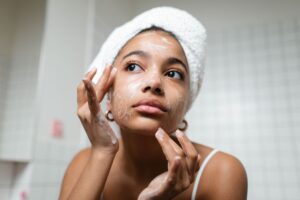
The idea that forehead breakouts signal digestive trouble is one of the most persistent claims in skincare, and it is largely unfounded. Face mapping, rooted in traditional Chinese medicine and Ayurveda, assigns different organs to different facial zones — the forehead supposedly reflecting the gut and liver. But dermatologists classify acne face mapping as pseudoscience. There is no scientific data connecting pimple placement on your forehead to what is happening in your stomach. No controlled studies have confirmed that acne location correlates with specific internal organ dysfunction, according to researchers at McGill University’s Office for Science and Society. That does not mean your gut has zero relationship with your skin.
It does. But the connection operates systemically — affecting your entire body, not routing itself to a particular patch of your face like some kind of dermatological GPS. If your gut microbiome is disrupted, you might break out on your cheeks, your back, or your forehead. There is nothing special about the forehead in this equation. The real reasons you keep getting pimples above your eyebrows are far more mundane and far more treatable. This article breaks down what actually causes forehead acne, why the face mapping myth persists, what the gut-skin connection really looks like according to recent research, and what you should actually do about breakouts in the T-zone instead of overhauling your diet based on pimple geography.
Table of Contents
- Is There Any Scientific Basis for the Forehead-Digestion Connection?
- What Actually Causes Forehead Acne If Not Digestion?
- What the Gut-Skin Axis Actually Looks Like According to Research
- How to Actually Treat Forehead Acne Based on Evidence
- When Gut Health Genuinely Warrants Attention Alongside Acne
- Why the Face Mapping Myth Keeps Spreading
- Where Skin-Gut Research Is Headed
- Conclusion
- Frequently Asked Questions
Is There Any Scientific Basis for the Forehead-Digestion Connection?
The short answer is no. The face mapping tradition assigns the forehead to the digestive system and liver, the cheeks to the lungs, and the chin to the reproductive organs. It is a framework that has existed for centuries, and it carries intuitive appeal — people want a simple explanation for why they break out in specific spots. But wanting something to be true is not the same as it being true. Dermatologists who have examined this claim consistently find no controlled evidence supporting organ-to-zone mapping on the face. There is exactly one location-specific acne correlation that holds up under scrutiny, and it is not the forehead. Jawline and chin acne have a documented relationship with hormonal fluctuations, specifically androgens. That area of the face has a high concentration of androgen-sensitive sebaceous glands, which is why many women notice breakouts along the jaw around their menstrual cycle.
This is a measurable, reproducible finding. No equivalent evidence exists for the forehead-digestion claim. The fact that one face zone does correlate with an internal factor makes the absence of evidence for the forehead connection more telling, not less. Researchers have looked. They have not found it. The persistence of the myth comes partly from confirmation bias. If someone eats poorly and breaks out on their forehead the next day, they connect the two. But they likely also broke out on their chin or jawline or had clogged pores elsewhere — they just were not paying attention to those spots because the map told them to watch the forehead. Meanwhile, the greasy hair product they used that morning, the baseball cap they wore to the gym, and the stress from their week were all doing real, documented work on their pores.

What Actually Causes Forehead Acne If Not Digestion?
The forehead is part of the T-zone — that strip running across the forehead and down the nose to the chin — which has a higher density of sebaceous glands than the rest of the face. More oil glands mean more sebum production, which means more opportunities for pores to clog. This is basic dermatological anatomy. Your forehead breaks out more than your temples for the same reason your nose gets oily faster than your cheeks: gland density. No digestive diagnosis required. Hair products are one of the most common and most overlooked culprits. Gels, pomades, oils, leave-in conditioners, and even some dry shampoos contain ingredients that migrate from the hairline onto the forehead and clog pores. Dermatologists call this acne cosmetica.
It is especially common in people who style their hair forward or wear bangs. If your breakouts cluster along the hairline rather than the center of your forehead, your styling products deserve more suspicion than your intestines. Switching to non-comedogenic hair products or simply keeping products away from the hairline often resolves the problem entirely — something a digestive cleanse would never accomplish. However, if your forehead acne is widespread rather than concentrated at the hairline, friction may be the issue. Hats, headbands, helmets, and even the habit of resting your forehead on your hand create what dermatologists call acne mechanica. The combination of pressure, heat, and trapped sweat creates an ideal environment for breakouts. Athletes, construction workers, and anyone who wears a hard hat or headband regularly will recognize this pattern. The fix is mechanical too: clean the item regularly, wear a moisture-wicking liner, and cleanse the skin promptly after sweating.
What the Gut-Skin Axis Actually Looks Like According to Research
Here is where the conversation gets more nuanced, because the gut genuinely does influence skin health. A 2024 Mendelian randomization study published in Frontiers in Microbiology identified specific gut microbes — including the Gastranaerophilales order, Streptococcaceae family, and Streptococcus genus — that are causally associated with increased acne risk. This is not folk wisdom. This is genetic epidemiology confirming a real biological pathway. The critical detail that face mapping advocates miss: these microbes affect acne anywhere on the body, not specifically on the forehead. A 2025 review in Gut Microbes went further, confirming that the gut-skin axis is a bidirectional, microbiota-driven relationship. When the gut microbiome is disrupted — through poor diet, antibiotics, chronic stress, or illness — it can worsen inflammatory skin conditions including acne.
But the mechanism is systemic immune activation and inflammatory signaling, not some invisible pipeline from your intestines to your forehead. Another 2025 review, published in Clinical Dermatology Review, described the gut-brain-skin axis: stress disrupts gut microbiota, which then triggers systemic inflammation affecting skin broadly. Again, this is a whole-body process. The practical implication is important. If your gut health is poor, fixing it may help your skin — but it will help your skin everywhere, not just on your forehead. Emerging treatments like probiotics, postbiotics, and even fecal microbiota transplantation show promise for acne management by restoring gut microbial balance. These are legitimate areas of research. But they support the idea that gut health is one systemic factor among many, not that your forehead is a digestive dashboard.
How to Actually Treat Forehead Acne Based on Evidence
The evidence-based approach to forehead acne starts with the external and works inward, which is the opposite of what face mapping suggests. First, audit your hair products. Switch anything that touches or drips onto the forehead to non-comedogenic formulas. This alone resolves a surprising number of forehead-specific breakout patterns. Second, evaluate friction sources. If you wear hats, helmets, or headbands regularly, clean them more often and consider a breathable liner. For the baseline oil production that comes with having a T-zone, standard acne treatments apply. Salicylic acid cleansers work well for forehead acne because they are oil-soluble and can penetrate sebum-filled pores.
Benzoyl peroxide is effective for inflammatory lesions. Retinoids address both active breakouts and the comedones (clogged pores) that precede them. The tradeoff with retinoids is an adjustment period — initial dryness, peeling, and sometimes a temporary worsening of acne before improvement. Many people abandon retinoids during this phase, which is why a dermatologist’s guidance on titrating the dose matters. Compare this with the face-mapping-inspired approach: someone notices forehead acne, concludes their digestion is off, starts a juice cleanse or an elimination diet, and waits. Meanwhile, the pomade they apply every morning continues to clog their pores. One approach addresses the documented cause. The other addresses a hypothetical one. This is not a close call.
When Gut Health Genuinely Warrants Attention Alongside Acne
There are real scenarios where gut health and acne coexist as problems, and addressing the gut can improve skin outcomes. If you have diagnosed inflammatory bowel disease, celiac disease, or significant gut dysbiosis, the systemic inflammation these conditions produce can make acne worse — or make it harder to treat. In these cases, working with a gastroenterologist alongside a dermatologist makes sense. The acne is not appearing on your forehead because of your gut; it is appearing everywhere because your immune system is under siege. The warning is this: do not let face mapping logic delay you from treating the skin directly. Some people spend months adjusting their diets, taking unregulated supplements, and avoiding dermatological care because they believe the acne is a symptom of an internal problem only.
Acne is a skin condition. It involves sebum production, pore clogging, bacterial colonization (particularly Cutibacterium acnes), and inflammation. Even when gut health is a contributing factor, topical and systemic dermatological treatments remain the first line because they target the skin pathology directly. A related limitation: the probiotic research is promising but still early. No specific probiotic strain has been validated in large-scale clinical trials as an acne treatment. Taking a general probiotic supplement is unlikely to harm you, but it is also unlikely to clear your forehead on its own. Treat it as a potential complement to proven treatments, not a replacement.
Why the Face Mapping Myth Keeps Spreading
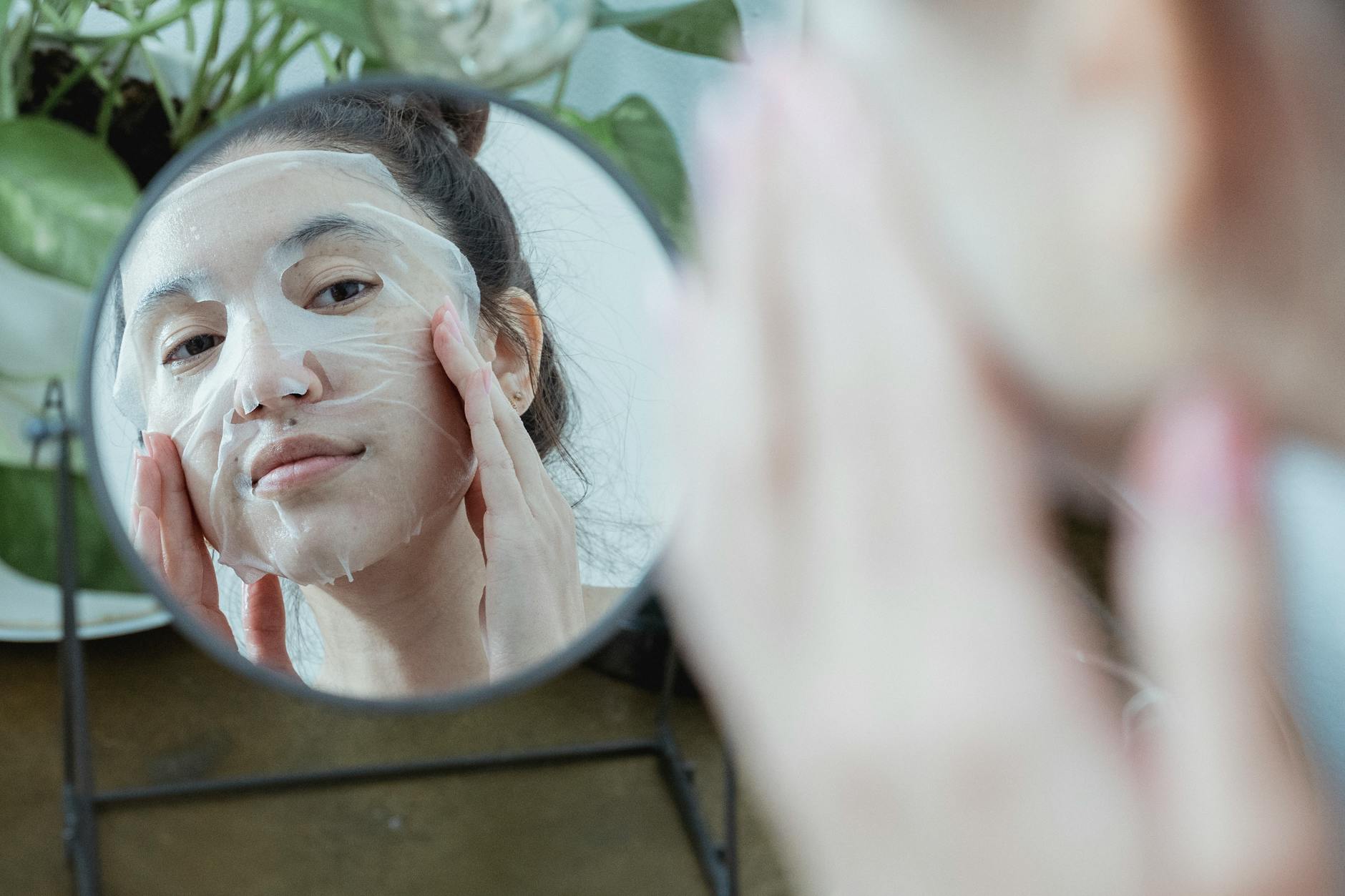
Social media has given face mapping a second life. Infographics dividing the face into labeled zones circulate widely on Instagram and TikTok, presented with the authority of medical diagrams but the rigor of horoscopes. They are visually clean, easy to share, and offer something people desperately want: a simple, self-diagnosable explanation for a frustrating condition.
A post saying “forehead acne means poor digestion” gets more engagement than one saying “forehead acne is multifactorial and primarily driven by sebaceous gland density, comedogenic topical products, and mechanical friction.” Nuance does not trend. The result is that many people arrive at their dermatologist’s office having already diagnosed themselves via face map, sometimes having spent months or years on dietary interventions that were never going to address their hair gel allergy or their unwashed baseball cap. Dermatologists report this as a recurring pattern — not because patients are unintelligent, but because the misinformation is pervasive and the myth is satisfying in its simplicity.
Where Skin-Gut Research Is Headed
The gut-skin axis is a legitimate and active field of research, and the next several years will likely produce more specific, actionable findings. Scientists are working to identify which microbial strains are protective against acne and which promote it, with the goal of developing targeted probiotic therapies rather than broad-spectrum supplements. Postbiotic treatments — products derived from beneficial bacterial metabolites — are also in development. Fecal microbiota transplantation, already used for C.
difficile infections, is being explored for dermatological applications. What this research will almost certainly not produce is validation that your forehead specifically reflects your digestive tract. The biology simply does not work that way. As gut-skin science matures, expect it to reinforce the systemic model — that overall microbial health influences overall skin health — while further discrediting the zone-mapping framework. The future of acne treatment will be more personalized and more microbiome-aware, but it will not involve reading your face like a map of your organs.
Conclusion
Forehead acne is common, treatable, and overwhelmingly caused by factors that have nothing to do with digestion. High sebaceous gland density in the T-zone, comedogenic hair products, friction from hats and helmets, stress-driven cortisol spikes, and basic hygiene patterns explain the vast majority of forehead breakouts. The face mapping claim — that forehead pimples indicate digestive dysfunction — has no controlled scientific evidence behind it and is classified as pseudoscience by dermatologists. The gut-skin axis is real, and poor gut health can worsen acne.
But it does so systemically, through immune and inflammatory pathways that affect the entire body, not through invisible channels that route specifically to the forehead. If you are dealing with persistent forehead acne, start with the proven causes: check your hair products, reduce friction, use evidence-based topical treatments, and see a dermatologist if over-the-counter options are not working. Your forehead is not a window into your stomach. It is skin, and it responds to skin-level interventions.
Frequently Asked Questions
Can eating greasy food cause forehead acne?
The old claim that greasy food directly causes acne is not well-supported. However, high-glycemic diets may contribute to acne systemically by increasing insulin and androgen levels, which boost sebum production. This would affect your entire face and body, not just the forehead. Greasy food touching your skin (from hands or steam) is a more direct concern for the face.
Should I take probiotics for forehead acne?
Probiotics show early promise for acne in research, but no specific strain has been validated in large clinical trials as a standalone acne treatment. A probiotic supplement is unlikely to hurt, but do not rely on it as your primary treatment for forehead breakouts. Address topical causes and proven treatments first.
Is jawline acne actually hormonal?
This is the one face-mapping adjacent claim with scientific support. The jawline and chin area have a high concentration of androgen-sensitive sebaceous glands, and research confirms a correlation between hormonal fluctuations and breakouts in this zone. This does not validate the rest of the face map — it is a specific, documented exception.
Why does my forehead break out when I wear a hat?
This is acne mechanica — breakouts caused by friction, pressure, heat, and trapped sweat. Hats, helmets, and headbands create the perfect environment for clogged pores on the forehead. Clean headwear regularly, use moisture-wicking liners when possible, and cleanse your forehead after prolonged wear.
If I fix my gut health, will my forehead acne clear up?
Improving gut health may modestly improve acne outcomes overall, based on emerging research into the gut-skin axis. But this effect is systemic — it would affect acne everywhere, not specifically the forehead. If your forehead is the primary problem area, external causes like hair products and friction are statistically far more likely culprits than gut dysfunction.