
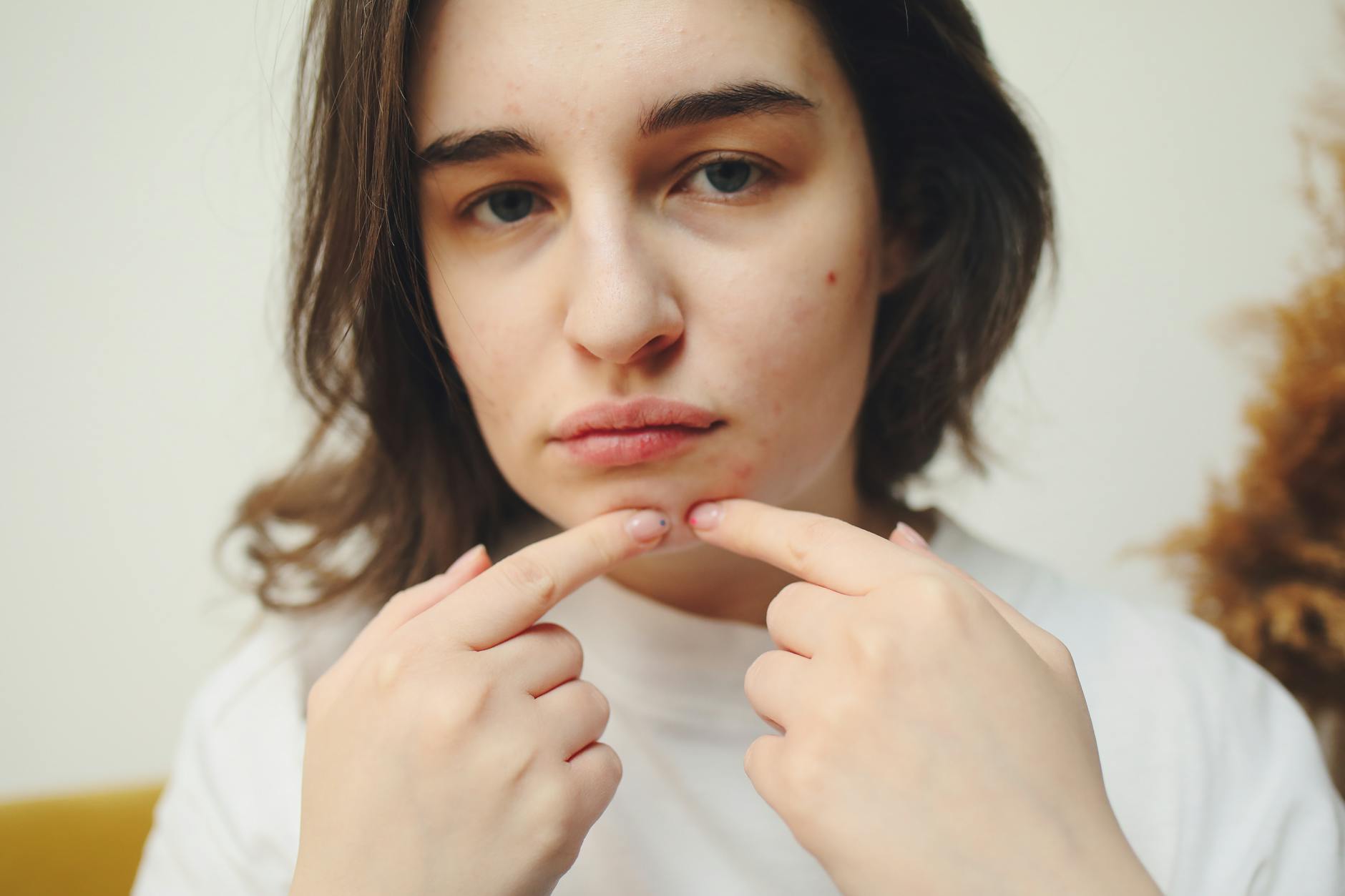
The most effective way to stop compulsive pimple picking is a structured behavioral approach called Habit Reversal Training, which teaches you to recognize the urge before your fingers reach your face and redirect that impulse into a competing physical action — like clenching your fists or pressing your palms flat on a table — for at least one minute until the urge passes. Combined with practical barrier methods such as hydrocolloid patches, reduced mirror access, and fidget tools, most people can significantly reduce picking episodes without medication alone. For those with more severe cases, adding an SSRI or the supplement N-acetylcysteine to a therapy plan can improve outcomes further. What many people dismiss as a bad habit is actually a recognized psychiatric condition.
Compulsive skin picking — formally called Excoriation Disorder or Dermatillomania — is classified in the DSM-5 under Obsessive-Compulsive and Related Disorders. It affects roughly 2.1% of the population at any given time, with lifetime prevalence around 3.1% according to a large U.S. community study. Yet fewer than 20% of people who struggle with it ever seek treatment, often because they feel ashamed or genuinely believe they should be able to just stop. This article covers what drives the behavior, the therapy and medication options backed by clinical evidence, practical self-help strategies you can start today, and when the condition requires professional intervention.
Table of Contents
- Why Can’t You Just Stop Picking at Pimples?
- Habit Reversal Training — The Leading Treatment for Skin Picking
- Medications That Help With Compulsive Picking
- Practical Strategies to Reduce Pimple Picking Starting Today
- When Compulsive Picking Requires Professional Help
- The Role of Acne Treatment in Breaking the Picking Cycle
- New Research and the Future of Picking Disorder Treatment
- Conclusion
- Frequently Asked Questions
Why Can’t You Just Stop Picking at Pimples?
Compulsive pimple picking is a body-focused repetitive behavior, which means it operates on a different neurological circuit than a simple conscious choice. The same way someone with OCD cannot stop intrusive thoughts through willpower alone, a person with Excoriation disorder is caught in a loop where the temporary relief or satisfaction from picking reinforces the behavior at a deep, automatic level. Some people pick while fully focused on it — carefully examining their skin in a magnifying mirror — while others do it almost unconsciously while reading, watching television, or sitting in traffic. Both patterns are well-documented, and many people experience a blend of the two. The condition rarely exists in isolation.
Research shows that 63.4% of people with skin picking disorder also meet criteria for generalized anxiety disorder, 53.1% experience depression, and 27.7% have panic disorder. This means the picking is frequently entangled with emotional states that make stopping far more complicated than it sounds. A person who picks primarily when anxious, for example, will find that addressing only the picking — without treating the underlying anxiety — produces limited and temporary results. Women are significantly more affected than men, with studies showing a female-to-male odds ratio of 1.45. Prevalence estimates across different studies range from 1.4% to 5.4%, partly because many people never disclose the behavior to a healthcare provider. The gap between how common this condition actually is and how rarely it gets treated represents one of the larger blind spots in dermatological and mental health care.
Habit Reversal Training — The Leading Treatment for Skin Picking
Habit Reversal Training is the most-studied and broadly recommended psychotherapy for Excoriation Disorder. Developed originally for tic disorders and later adapted for body-focused repetitive behaviors, it works through two core components. First, awareness training helps you identify the specific triggers, situations, postures, and internal sensations that precede a picking episode. You might discover that you always pick after washing your face at night, or that running your fingers across your jawline while thinking is the gateway motion. Second, competing response training teaches you to perform a physically incompatible action — clenching your fists, crossing your arms, sitting on your hands, or squeezing a stress ball — the moment you notice the urge or the precursor behavior. The recommendation is to hold the competing response for at least one minute, which is typically long enough for the urge to peak and begin subsiding.
However, standard HRT does not work equally well for everyone, and the effects can fade over time if the underlying emotional drivers are not addressed. This is where newer adaptations come in. ACT-enhanced HRT combines traditional habit reversal with Acceptance and Commitment Therapy, which teaches you to observe uncomfortable urges without judgment and without needing to act on them. Research shows this combination produces improved short-term results that are maintained several months after treatment ends, likely because it builds a different relationship with the urge itself rather than simply blocking the behavioral output. The Comprehensive Behavioral Model, developed by the International OCD Foundation, takes an even broader approach by addressing sensory triggers, cognitive patterns, emotional states, motor habits, and environmental cues all within a single framework. For someone whose picking is driven by multiple factors — say, both the tactile sensation of bumpy skin and the emotional relief from anxiety — this multi-channel approach may be more effective than HRT alone. A 2025 study in JAAD Reviews provided updated systematic evidence supporting these behavioral interventions as first-line treatment, while also noting that telehealth delivery of HRT has been found as effective as in-person sessions, which significantly expands access for people in areas without specialized therapists.
Medications That Help With Compulsive Picking
When behavioral therapy alone is not enough, or when severe anxiety or depression is fueling the picking, medication becomes an important part of the treatment plan. SSRIs — selective serotonin reuptake inhibitors — show the most promising pharmacological results for Excoriation Disorder. The specific SSRIs studied in this context include citalopram (Celexa), fluoxetine (Prozac), fluvoxamine (Luvox), and sertraline (Zoloft). These are the same medications commonly prescribed for OCD and generalized anxiety, which makes sense given the neurological overlap between these conditions. A 2025 review published in ScienceDirect provided updated analysis of pharmacologic management options, reinforcing SSRIs as the most evidence-supported medication class. N-acetylcysteine, commonly called NAC, is an amino acid supplement available over the counter that has become well-established as a treatment option for skin picking disorder.
It modulates glutamate signaling in the brain, which is thought to play a role in compulsive behaviors. NAC is generally well-tolerated with a mild side-effect profile, making it an appealing first step for people who are reluctant to start a prescription medication. Naltrexone, an opioid antagonist typically associated with addiction treatment, has also been studied for skin picking, though the evidence base is smaller. The important caveat with medication is that it works best as part of a combined approach. Taking an SSRI without learning behavioral strategies for managing urges is like treating the soil without pulling the weed — the underlying habit loop remains intact. Clinicians increasingly recommend pairing pharmacotherapy with cognitive behavioral therapy for the strongest and most durable outcomes. If you are already on an SSRI for anxiety or depression and still picking, that does not mean medication has failed — it may mean the behavioral component is the missing piece.
Practical Strategies to Reduce Pimple Picking Starting Today
While professional treatment produces the most reliable results, there are concrete steps you can implement immediately that serve as both standalone interventions and complements to therapy. The first and possibly most impactful is modifying your environment. Covering or removing magnifying mirrors, reducing bathroom lighting to a level that does not highlight every pore, and setting designated skin-check times — say, once in the morning and once at night — can dramatically reduce opportunity-driven picking. One common pattern is the person who goes into the bathroom to brush their teeth and emerges forty-five minutes later having picked their entire face under bright vanity lighting. Changing that environment changes the behavior. Barrier methods are another practical line of defense. Applying hydrocolloid pimple patches to active breakouts serves a dual purpose: the patch physically prevents your fingers from reaching the blemish while also drawing out fluid and reducing inflammation, which means the pimple heals faster than it would if picked.
Keeping skin well-moisturized reduces the rough texture that many people describe as a tactile trigger — the feeling of a bump or flake under their fingertips that demands to be smoothed out. Some people find that wearing thin gloves while watching television or scrolling their phone interrupts the automatic hand-to-face pathway. The tradeoff with self-help strategies is between effectiveness and sustainability. Wearing gloves at home is highly effective at preventing picking but socially impractical in many contexts and easy to abandon. Fidget tools — textured rings, spiky sensory balls, magnetic putty — are more socially acceptable and keep hands busy, but they address only the motor component and do nothing for the emotional urge. The most sustainable approach combines environmental modification, which requires effort only once, with a portable competing response you can use anywhere. The patches-plus-fidget combination tends to be the most practical for daily life.
When Compulsive Picking Requires Professional Help
There is a meaningful difference between occasional pimple picking — which most people do from time to time — and Excoriation Disorder that warrants clinical intervention. The key markers are tissue damage that goes beyond what the original blemish would have caused, repeated unsuccessful attempts to stop, and significant distress or impairment in daily functioning. If you are arriving late to work because you cannot leave the bathroom mirror, avoiding social events because of visible wounds, or developing infections from open sores, you have crossed from a bad habit into a clinical condition. The warning that often goes unspoken is that delaying treatment has compounding consequences. Repeated picking in the same areas causes scarring that becomes progressively more difficult and expensive to treat.
Post-inflammatory hyperpigmentation, atrophic scars, and secondary infections can create a vicious cycle where the skin damage itself becomes a new trigger for picking — you are now picking at the scars from previous picking. Seeking help when you first notice the behavior becoming compulsive, rather than waiting until the skin damage is severe, preserves both treatment options and skin integrity. Finding the right provider matters. Not all therapists are trained in HRT or familiar with body-focused repetitive behaviors. The TLC Foundation for Body-Focused Repetitive Behaviors and the International OCD Foundation both maintain directories of specialists. The 2025 research on telehealth delivery of HRT is particularly encouraging here — if no local specialist exists, remote sessions with an experienced therapist produce comparable outcomes to in-person treatment.
The Role of Acne Treatment in Breaking the Picking Cycle
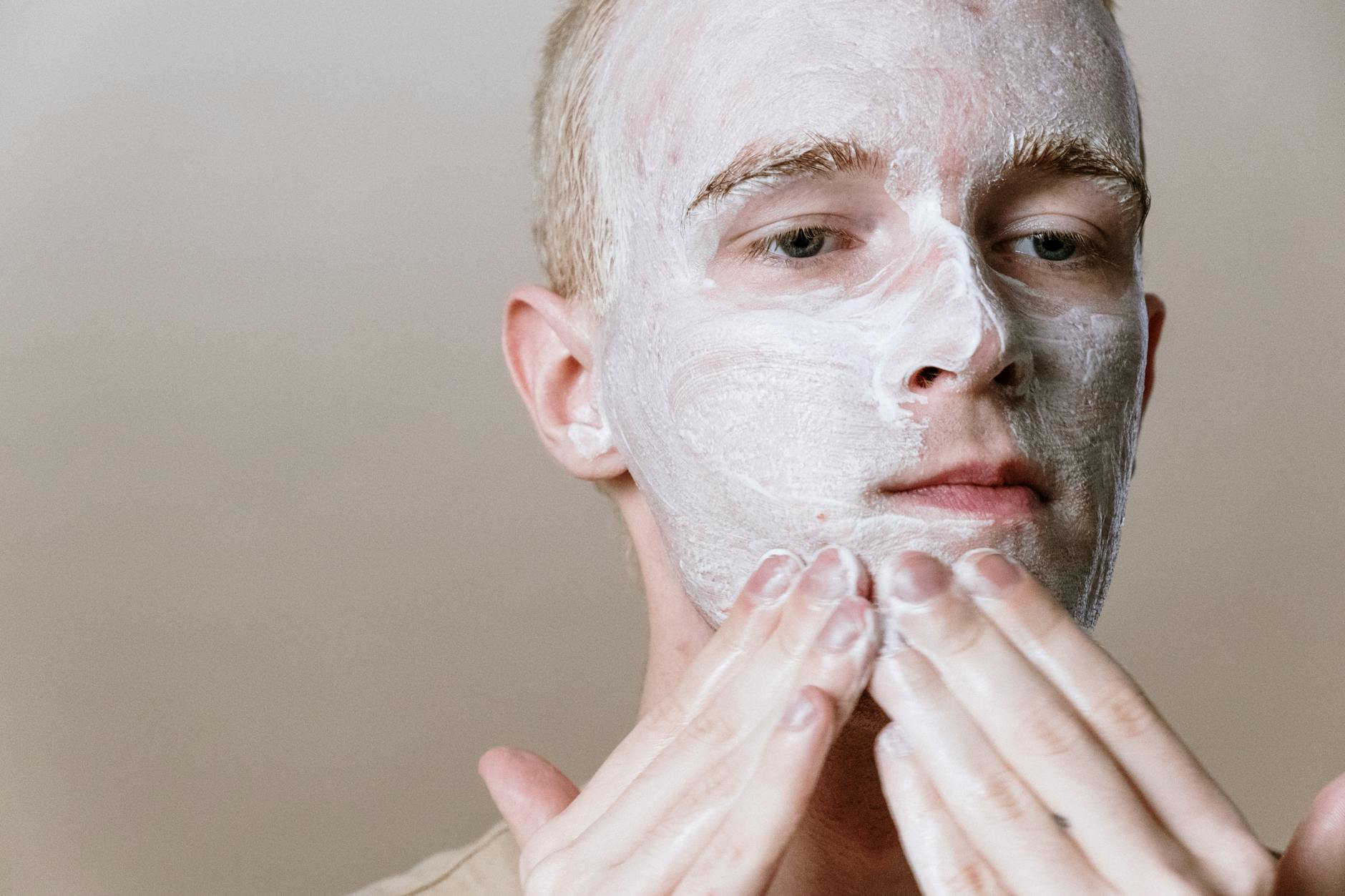
One underappreciated aspect of compulsive picking is that effectively treating the acne itself can remove the primary trigger. A person who picks exclusively at active breakouts may find that clearing their skin with appropriate acne treatment — whether topical retinoids, benzoyl peroxide, or prescription options — dramatically reduces picking episodes simply because there is less to pick at. This is not a substitute for addressing the compulsive behavior, but it can lower the behavioral threshold enough to make other interventions more effective.
The limitation here is obvious: many people with Excoriation Disorder will pick at skin that has no acne at all, targeting normal texture, dry patches, perceived imperfections, or completely healthy skin. For these individuals, acne treatment addresses only a fraction of the problem. The clinical question to ask yourself honestly is whether you pick only at actual blemishes or whether you would find something to pick at regardless. The answer determines how much of your treatment plan should focus on skin versus behavior.
New Research and the Future of Picking Disorder Treatment
The landscape of Excoriation Disorder treatment is evolving. A 2025 systematic review published in JAAD Reviews synthesized updated evidence on risk factors, comorbidities, and treatment efficacy, while a separate 2025 review in ScienceDirect examined the expanding pharmacologic toolkit beyond traditional SSRIs. The validation of telehealth as an effective delivery method for Habit Reversal Training has been one of the most practically significant developments, removing a major access barrier for patients outside metropolitan areas.
Research into the neurobiological underpinnings of body-focused repetitive behaviors continues to refine our understanding of why some people develop these conditions and others do not. As the field moves toward more personalized treatment — matching specific interventions to the individual’s primary triggers and comorbidity profile — outcomes should improve. The most important near-term shift, though, may simply be awareness. With fewer than 20% of affected individuals currently seeking treatment, the greatest gains will come from people recognizing that compulsive picking is a treatable medical condition, not a character flaw.
Conclusion
Compulsive pimple picking is a clinically recognized disorder with effective treatments. Habit Reversal Training remains the first-line approach, teaching you to catch the urge and redirect it before skin damage occurs. When combined with SSRIs or N-acetylcysteine for those who need pharmacological support, and reinforced with practical strategies like hydrocolloid patches, environmental modification, and fidget tools, most people can achieve significant and lasting reduction in picking behavior.
The most important step is also the hardest: acknowledging the behavior as a medical condition rather than a personal failing. With roughly 2 to 5 percent of the population affected, this is far from rare — and with evidence-based treatment, it is far from hopeless. If self-help strategies are not producing results after a consistent effort of several weeks, seek out a therapist trained in HRT or the Comprehensive Behavioral Model. The sooner treatment begins, the less scarring — both physical and emotional — accumulates.
Frequently Asked Questions
Is compulsive pimple picking the same as having OCD?
Not exactly. Excoriation Disorder is classified under the same DSM-5 category as OCD — Obsessive-Compulsive and Related Disorders — and shares neurological similarities, but it is a distinct diagnosis. The key difference is that skin picking is a body-focused repetitive behavior driven primarily by urges and sensory triggers, whereas OCD typically involves intrusive thoughts and ritualized compulsions aimed at reducing anxiety about a feared outcome.
Can you stop compulsive picking without therapy?
Some people with mild cases successfully reduce picking through self-help strategies alone — environmental modification, barrier methods, and fidget tools. However, research strongly supports professional Habit Reversal Training for moderate to severe cases, and fewer than 20% of affected individuals seek treatment despite having a condition that rarely resolves on its own. If you have been trying to stop on your own for more than a few weeks without improvement, professional help is the reasonable next step.
Does N-acetylcysteine (NAC) actually work for skin picking?
NAC has become well-established as a treatment option for skin picking disorder based on clinical research. It works by modulating glutamate signaling, which is involved in compulsive behaviors. It is available over the counter and generally well-tolerated. That said, it is typically more effective as part of a combined approach with behavioral therapy rather than as a standalone treatment.
How long does it take for Habit Reversal Training to work?
Most structured HRT protocols run 8 to 12 sessions, with many patients noticing meaningful reductions in picking within the first few weeks as awareness training takes effect. However, durability of results depends on continued practice and, for many people, addressing co-occurring anxiety or depression. ACT-enhanced HRT has shown improved maintenance of gains several months after treatment ends compared to standard HRT alone.
Will my skin heal from picking scars?
Skin can recover substantially, but the degree depends on the type and depth of scarring. Post-inflammatory hyperpigmentation — the dark marks left after a picked spot heals — typically fades over weeks to months with sun protection and topical treatments like vitamin C or retinoids. Atrophic or pitted scars are more permanent and may require dermatological procedures such as microneedling or laser resurfacing. The critical variable is stopping the ongoing picking, as continued trauma prevents healing and deepens scars.