
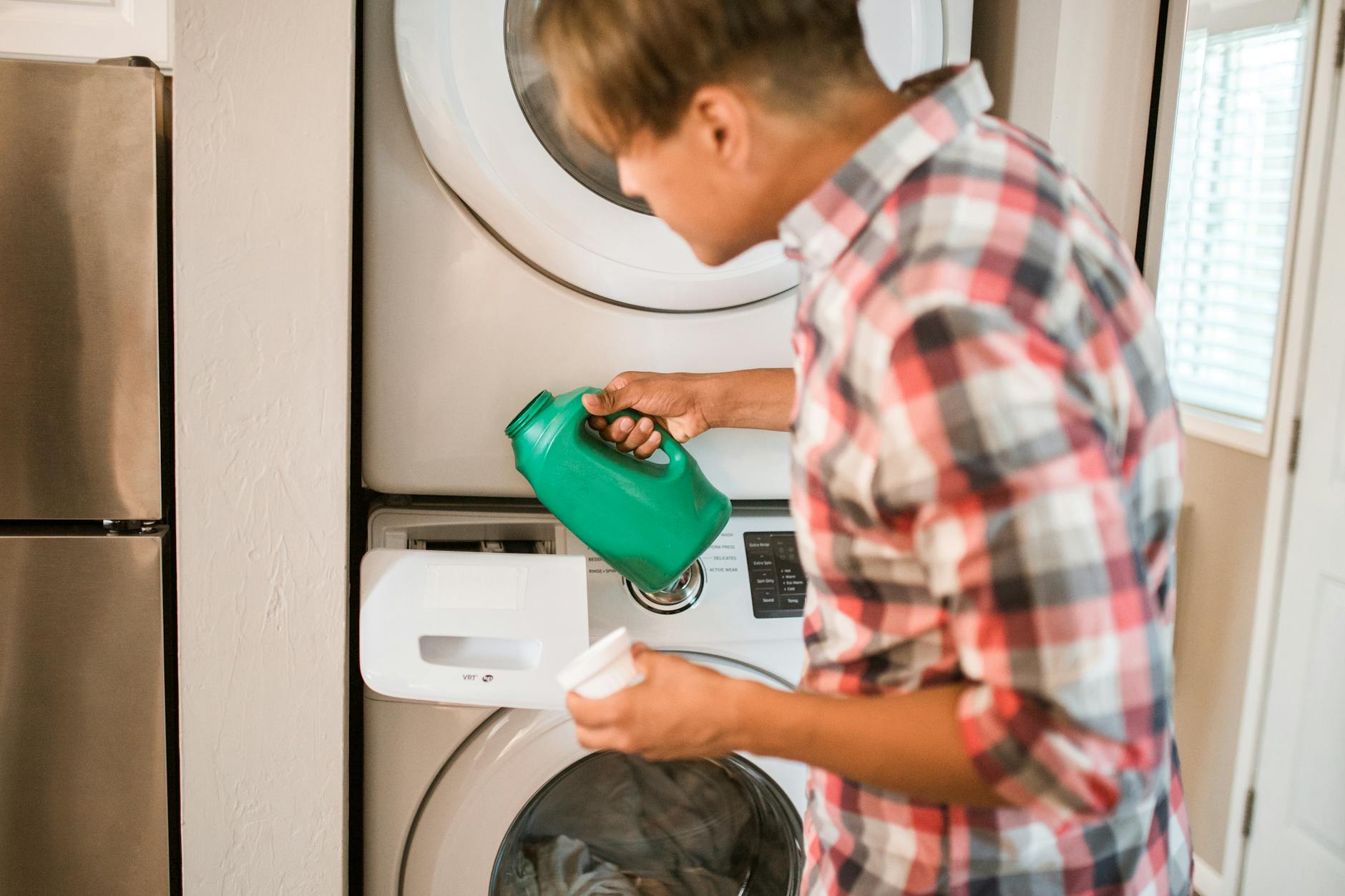
Your laundry detergent may be one of the most overlooked causes of body acne, and the reason is straightforward: residual chemicals left in fabric after washing sit against your skin for hours, clogging pores and triggering inflammatory reactions. Fragrances, surfactants, and optical brighteners — ingredients found in most mainstream detergents — are known skin irritants that can cause or worsen breakouts on the back, chest, shoulders, and anywhere clothing fits snugly. If you have been cycling through body washes and acne treatments without improvement, your detergent deserves serious scrutiny. This is not a fringe theory.
Dermatologists have long recognized a condition called contact dermatitis, which can mimic or aggravate acne, and laundry products are among the most common household triggers. One person might switch from a heavily fragranced detergent to a free-and-clear formula and see their back acne resolve within two to three wash cycles of their bedding and clothes. Another might need to eliminate fabric softener and dryer sheets as well before noticing a difference. The connection is well established but rarely the first thing people consider. This article covers exactly how detergent ingredients interact with your skin, which chemicals are the worst offenders, how to identify whether your detergent is the problem, and what to use instead.
Table of Contents
- How Can Laundry Detergent Cause Body Acne and Skin Irritation?
- Which Detergent Ingredients Are the Worst Offenders for Acne-Prone Skin?
- How to Tell if Your Detergent Is Behind Your Body Breakouts
- What to Use Instead — Comparing Detergent Alternatives for Sensitive, Acne-Prone Skin
- Mistakes People Make When Switching Detergents for Body Acne
- The Role of Washing Machine Maintenance in Skin Reactions
- What Dermatology Research Suggests About Fabric and Skin Health Going Forward
- Conclusion
- Frequently Asked Questions
How Can Laundry Detergent Cause Body Acne and Skin Irritation?
Laundry detergent works by using surfactants to break apart oils and dirt, but those same surfactants do not fully rinse out of fabric — especially in modern high-efficiency machines that use less water. When you wear a shirt or sleep on sheets washed with residual detergent, your body heat and sweat reactivate those chemicals against your skin. The surfactants can strip the skin’s natural lipid barrier, leading to dryness that paradoxically triggers excess oil production. Meanwhile, fragrances and dyes in the detergent can provoke an immune response in the skin, resulting in red, inflamed bumps that look identical to traditional acne. The mechanism is slightly different from hormonal or bacterial acne, though the end result can appear the same.
What detergent-related breakouts often produce is a combination of true comedonal acne — where pores are physically blocked by residue — and irritant contact dermatitis, where the skin’s inflammatory response creates papules and pustules. A useful comparison: if your face is relatively clear but your chest, back, or shoulders are persistently broken out, and those areas happen to be where clothing fits tightest, detergent is a much more likely culprit than diet or hormones alone. It is worth noting that this does not affect everyone equally. People with sensitive skin, eczema, or a history of allergic reactions are significantly more vulnerable. But even those with historically resilient skin can develop sensitivity over time, especially after a manufacturer quietly reformulates a product — something that happens more often than consumers realize.
Which Detergent Ingredients Are the Worst Offenders for Acne-Prone Skin?
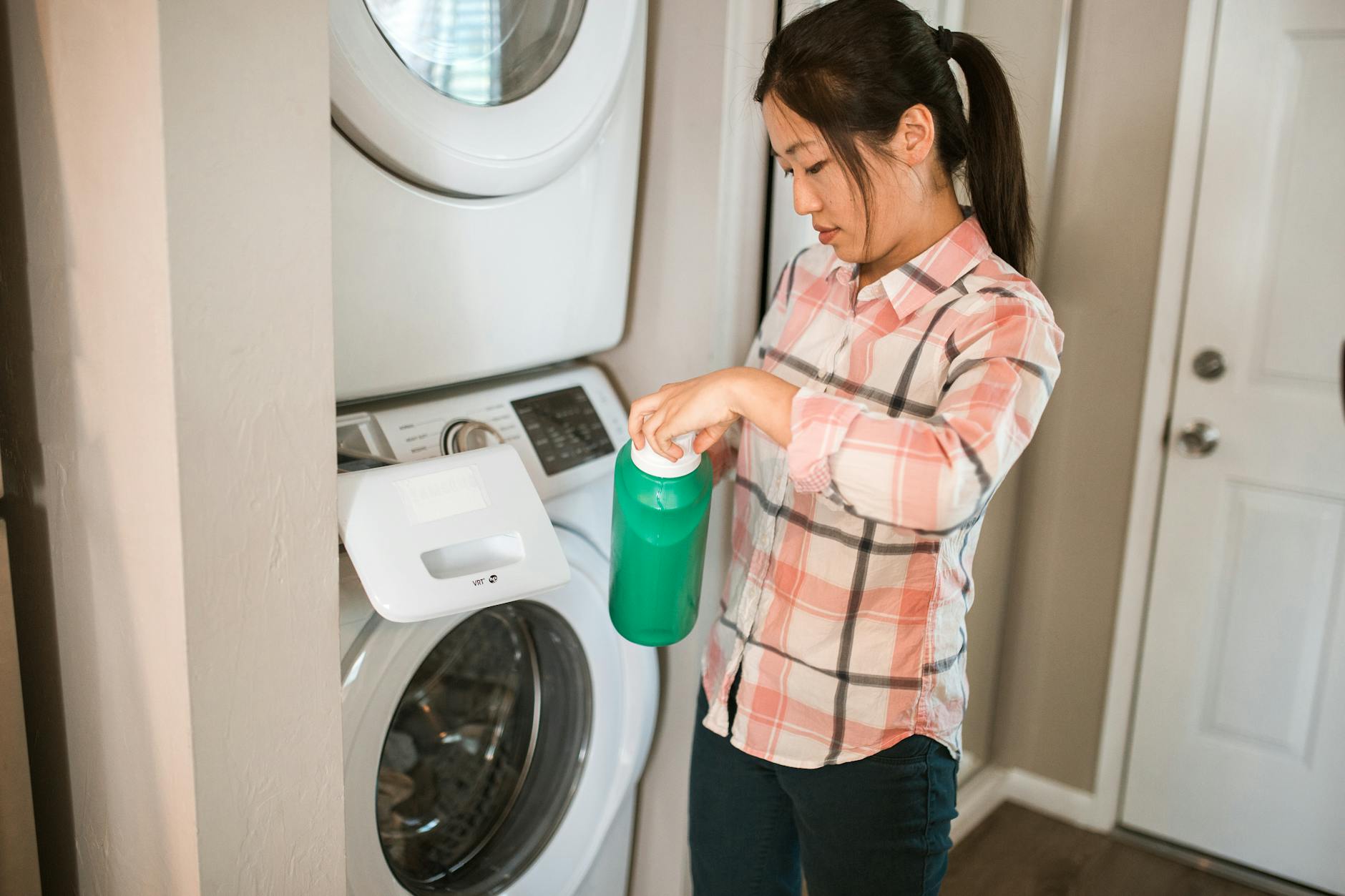
The ingredient list on most detergent bottles is deliberately vague, but several categories of chemicals are consistently linked to skin reactions. Synthetic fragrances are the single biggest offender. The word “fragrance” on a label can represent dozens of individual chemical compounds, many of which are known allergens and irritants. The International Fragrance Association has identified over 3,000 materials used in fragrance formulations, and manufacturers are not required to disclose which specific ones they use. Sodium lauryl sulfate and sodium laureth sulfate, common surfactants, are aggressive degreasers that disrupt the skin barrier. Optical brighteners — the chemicals that make whites appear whiter under UV light — are designed to stay in fabric permanently, meaning they are always in contact with your skin.
Fabric softeners and dryer sheets compound the problem. They work by coating fibers with a thin layer of lubricating chemicals, often including quaternary ammonium compounds. This waxy residue is specifically engineered not to wash away, which means it builds up over time in your clothing and bedding. For someone prone to body acne, this is essentially layering a pore-clogging film onto every surface that touches their skin. However, if you have confirmed acne vulgaris driven by hormonal factors or bacterial overgrowth, switching detergents alone will not resolve the issue — it may reduce irritation but will not address the root cause. The key distinction is this: detergent-related breakouts tend to follow the pattern of where fabric contacts skin and often spare areas that are uncovered. If your acne does not follow that pattern, the detergent may be a contributing factor rather than the primary cause, and you should pursue other treatments alongside the switch.
How to Tell if Your Detergent Is Behind Your Body Breakouts
The most reliable way to test the detergent theory is an elimination approach. Rewash all of your bedding, towels, and frequently worn clothing using a fragrance-free, dye-free detergent with no fabric softener, and run an extra rinse cycle. Then observe your skin over two to three weeks. If the breakouts begin clearing in areas where they were previously persistent, you have a strong signal. One dermatologist-recommended method is to wash only your pillowcase and one set of pajamas with the new detergent first — if the skin that contacts those items improves while other areas do not, the evidence is fairly conclusive. Pay attention to the pattern of your breakouts.
Detergent-related acne tends to be widespread and relatively uniform across areas covered by clothing, rather than concentrated in the oiliest zones. It often presents as small, similarly sized bumps rather than a mix of deep cysts and surface pimples. The back of the neck, where collars sit, and the waistband area are particularly telling — these are high-friction zones where fabric presses detergent residue into pores most aggressively. One complication: if you have been using the same detergent for years without issues and suddenly develop body acne, do not rule out the detergent just because it is familiar. Manufacturers reformulate products without changing the packaging or name. A detergent you tolerated for a decade might contain different fragrance compounds or surfactant ratios than it did a year ago. Check whether your breakouts coincided with purchasing a bottle from a new production batch or a slightly redesigned label.

What to Use Instead — Comparing Detergent Alternatives for Sensitive, Acne-Prone Skin
Free-and-clear detergents are the standard first recommendation, but not all of them are equal. Products labeled “free and clear” eliminate fragrances and dyes but may still contain harsh surfactants. A better benchmark is to look for detergents that are also free of sulfates and optical brighteners. Historically, brands that dermatologists have commonly recommended include versions of All Free Clear, Seventh Generation Free and Clear, and Molly’s Suds — though formulations change, so always verify current ingredient lists rather than relying on brand reputation alone. The tradeoff with gentler detergents is real: they generally do not clean as aggressively. If you work a physically demanding job or deal with heavy stains, a fragrance-free detergent alone may not cut it.
In that case, pre-treating stains with a targeted stain remover and running a longer wash cycle is a better strategy than adding more detergent. Overloading on detergent — regardless of the brand — increases residue left in fabric, which defeats the purpose of switching. Using about three-quarters of the recommended amount and adding a second rinse cycle tends to be more effective than using the full dose. Another option that has gained traction is laundry stripping — soaking clothing and bedding in a hot bath with borax, washing soda, and a small amount of detergent to remove months of built-up residue. This can be a useful reset, especially for items like pillowcases and fitted sheets that accumulate detergent and softener deposits over many washes. It is not a substitute for switching products, but it accelerates the transition.
Mistakes People Make When Switching Detergents for Body Acne
The most common error is switching the detergent but continuing to use fabric softener or dryer sheets. These products deposit just as many irritating chemicals onto fabric as the detergent itself, sometimes more. If you are serious about testing whether laundry products are causing your breakouts, you need to eliminate all three — detergent, softener, and dryer sheets — simultaneously. Wool dryer balls are a reasonable alternative for reducing static without chemical coatings. A second mistake is not rewashing existing clothing and bedding. Simply using a new detergent on your next load does not remove residue already embedded in your current sheets, towels, and shirts.
Every item that touches your skin needs to be rewashed — ideally twice with the new detergent and an extra rinse cycle — before you can fairly evaluate whether the switch is helping. People who skip this step often conclude that the new detergent made no difference when the real problem is months of accumulated residue in their existing fabrics. Finally, be cautious with “natural” or “plant-based” detergents that still contain essential oils or botanical fragrances. Lavender oil, tea tree oil, and citrus extracts are natural, but they are also common skin sensitizers. Natural does not mean non-irritating. For truly acne-prone skin, unscented means no fragrance compounds of any kind, including essential oils.
The Role of Washing Machine Maintenance in Skin Reactions
Your washing machine itself can contribute to the problem. Front-loading machines in particular are prone to mold and mildew buildup in the rubber door gasket and detergent drawer, and those microorganisms transfer to your laundry. Running a monthly cleaning cycle with hot water and white vinegar or a machine-cleaning tablet can reduce this.
One dermatology forum case that circulated widely involved a patient whose persistent body folliculitis resolved only after they cleaned visible mold from their washer gasket — the detergent switch alone had not been enough. If you use a shared or communal washing machine, you have less control over what residues are left behind by other users. Running an empty hot rinse cycle before your own load is an imperfect but worthwhile precaution. In apartment buildings with shared laundry, this is an underrecognized contributor to skin issues that residents often attribute to stress, diet, or other causes.
What Dermatology Research Suggests About Fabric and Skin Health Going Forward
The relationship between textiles, laundry chemistry, and skin health is an area that is likely to get more attention in coming years. As of recent reporting, there has been growing interest in the dermatology community around the concept of the “textile microenvironment” — the idea that the chemical and microbial conditions inside your clothing directly influence skin barrier function and the cutaneous microbiome. Some researchers have begun investigating whether certain fabric types retain more detergent residue than others, with preliminary suggestions that synthetic fabrics like polyester may trap more irritants than natural fibers like cotton.
For now, the practical takeaway is that anyone struggling with unexplained body acne should consider their laundry routine a legitimate variable worth investigating, not just an afterthought. As consumer awareness grows and detergent manufacturers face more pressure toward ingredient transparency, we may see clearer labeling and more formulations specifically designed for skin health rather than just cleaning performance. Until then, the burden is on the individual to read labels carefully and test methodically.
Conclusion
Laundry detergent is one of the most common and most overlooked contributors to body acne. The fragrances, surfactants, optical brighteners, and fabric softener residues left in clothing and bedding create a persistent chemical exposure that can clog pores, disrupt the skin barrier, and trigger inflammatory breakouts — particularly on the back, chest, shoulders, and anywhere fabric fits tightly against the body. Identifying the connection requires a systematic elimination approach: switching to a truly fragrance-free and dye-free detergent, ditching fabric softener and dryer sheets entirely, rewashing all existing fabrics, and observing your skin over several weeks.
If your body acne improves with these changes, you have your answer and can refine from there. If it does not, you have at least ruled out a major variable and can focus your efforts on other causes with greater confidence. Either way, reducing the chemical load on your skin from laundry products is a low-risk, low-cost intervention that deserves a place early in any body acne troubleshooting process — before expensive treatments or prescription medications.
Frequently Asked Questions
How long does it take for body acne to clear after switching laundry detergent?
Most people who see improvement notice it within two to three weeks, assuming they have also rewashed their existing bedding and clothing with the new detergent. Skin cell turnover takes roughly 28 days, so a full cycle may be needed before the difference is conclusive. If you see no change after four to six weeks of consistent use, the detergent is likely not the primary cause.
Can laundry detergent cause acne on your face too?
Yes, particularly from pillowcases. Your face rests against your pillowcase for hours each night, and detergent residue in that fabric can irritate facial skin and contribute to breakouts along the cheeks, jawline, and forehead — areas that press into the pillow. Switching your pillowcase to one washed with fragrance-free detergent is often the easiest first test.
Is liquid detergent or powder detergent better for acne-prone skin?
Neither format is inherently better or worse — what matters is the ingredient list. That said, powder detergents sometimes leave more visible residue on clothing if they do not fully dissolve, particularly in cold-water washes. Liquid detergents dissolve more readily but may contain more synthetic surfactants. The key is choosing a product that is free of fragrances, dyes, and optical brighteners regardless of format.
Are detergent pods safe for sensitive skin?
Pods contain highly concentrated detergent, which can mean more residue per load if your machine does not rinse thoroughly. Some dermatologists recommend using half a pod or switching to a measured liquid so you can control the amount more precisely. The convenience of pods is real, but the lack of dosing flexibility can be a disadvantage for people with skin sensitivities.
Should I use hot or cold water to reduce detergent residue?
Warm water generally dissolves detergent more completely than cold water, reducing the amount left in fabric. However, hot water can shrink certain fabrics and is not always practical. A good compromise is washing in warm water and adding an extra rinse cycle in cold water. The second rinse does more to remove residue than the temperature of the first wash.
Can fabric softener cause body acne even if my detergent is fragrance-free?
Absolutely. Fabric softeners coat fibers with a waxy chemical layer that is designed to persist through wear, and this residue can clog pores and irritate skin independently of your detergent choice. Many people switch to a gentle detergent but keep using their regular softener or dryer sheets, then wonder why their skin has not improved. Eliminating all scented laundry products simultaneously is essential for an accurate test.