
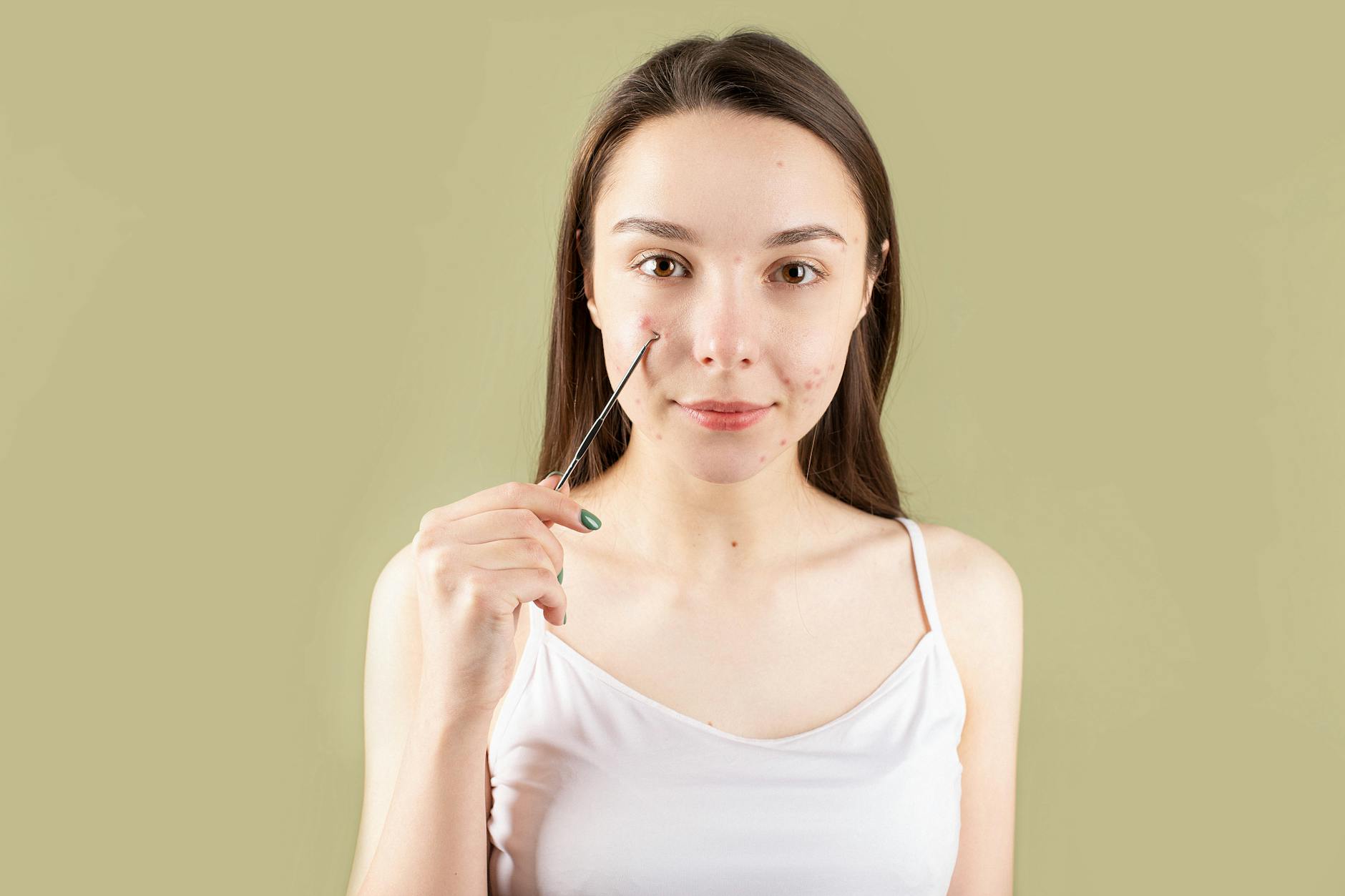
Forehead acne keeps coming back because the forehead sits in the T-zone, where sebaceous glands are densest and oil production is highest, making it uniquely vulnerable to repeated breakouts even after you think you have cleared your skin. The cycle typically works like this: excess sebum mixes with dead skin cells and blocks pores, bacteria colonize the plug, inflammation follows, and the pimple surfaces. You treat it, it fades, but the underlying oil production and pore-clogging pattern never actually stopped.
Someone who switches to a salicylic acid wash might see improvement for a few weeks, only to break out again when seasonal humidity shifts, a new hair product migrates onto the skin, or stress spikes cortisol levels that ramp up oil glands. The real frustration is that forehead acne is rarely caused by a single factor. It is almost always a combination of internal triggers like hormones and diet interacting with external ones like product buildup, hat friction, and inconsistent skincare routines. This article breaks down the specific mechanisms that drive recurrence, identifies the most overlooked culprits, explains when forehead acne signals something that basic skincare cannot fix, and offers a realistic approach to reducing flare-ups over the long term rather than chasing temporary clearing.
Table of Contents
- What Causes Forehead Acne to Return After It Clears?
- How Hair Products and Headwear Trigger Recurring Forehead Breakouts
- The Role of Skincare Routine Gaps in Forehead Acne Recurrence
- Building a Targeted Forehead Acne Routine That Actually Sticks
- When Forehead Acne Signals Something Skincare Cannot Fix
- Seasonal and Environmental Patterns That Drive Flare-Ups
- Emerging Treatments and What the Research Actually Supports
- Conclusion
- Frequently Asked Questions
What Causes Forehead Acne to Return After It Clears?
The forehead contains roughly 800 to 900 sebaceous glands per square centimeter, significantly more than the cheeks or jawline. These glands respond to androgens like testosterone and DHEA-S, which fluctuate throughout the menstrual cycle, during periods of stress, and as part of normal hormonal shifts in both men and women. When androgen levels rise, sebum production increases, and because the forehead already runs oily, it hits the clogging threshold faster than other areas of the face. A person might clear a breakout with a targeted treatment, but the hormonal fluctuation that triggered excess oil hasn’t been addressed, so the next cycle or the next stressful week starts the whole process over. Skin cell turnover also plays a role that most people underestimate. The forehead’s skin renews every 28 to 40 days depending on age, and dead keratinocytes that don’t shed properly become the other half of the comedone equation. Retinoids and chemical exfoliants speed up turnover and prevent that buildup, but people frequently stop using them once the skin looks clear, treating them as a treatment rather than maintenance.
Compare this to someone who takes blood pressure medication only when they feel symptoms and then stops. The underlying condition hasn’t resolved, and the breakouts return within a few weeks of discontinuation. There is also a bacterial component worth understanding. Cutibacterium acnes lives on everyone’s skin and is not inherently harmful, but when trapped inside a clogged pore with sebum, it multiplies rapidly and triggers an inflammatory immune response. Antibacterial treatments like benzoyl peroxide can reduce the population temporarily, but C. acnes is a normal part of the skin microbiome and recolonizes quickly. Killing it off without also managing the pore-clogging environment is like mopping a floor while the faucet is still running.
How Hair Products and Headwear Trigger Recurring Forehead Breakouts
One of the most underdiagnosed causes of persistent forehead acne is pomade acne, a term dermatologists use for breakouts caused by hair products migrating onto the skin. Oils, silicones, and waxes in styling products, leave-in conditioners, and even some shampoos slide down from the hairline onto the forehead, especially during sleep or exercise. The result is a band of small comedones and pustules concentrated along the hairline that people often mistake for hormonal or stress-related acne. Switching to non-comedogenic hair products or simply keeping products away from the hairline can resolve this specific pattern entirely, but the connection is rarely obvious to the person experiencing it. Hats, headbands, helmets, and even VR headsets create another mechanical trigger called acne mechanica. The combination of pressure, friction, and trapped heat and sweat against the forehead creates an environment where pores clog faster and existing microcomedones become inflamed.
Athletes, construction workers, and anyone who wears a hat daily often struggle with forehead acne that clears on vacation or over weekends and returns during the work week. However, if your breakouts persist even during extended periods without headwear, acne mechanica is probably a contributing factor rather than the primary cause, and you need to look elsewhere. The tricky part is that these external triggers often layer on top of internal ones. Someone with mildly oily skin who would otherwise have occasional breakouts might develop chronic forehead acne specifically because they wear a baseball cap eight hours a day. Remove the cap and the acne improves but doesn’t fully resolve because the baseline oil production is still slightly elevated. This is why identifying and addressing multiple contributing factors matters more than finding the single cause.
The Role of Skincare Routine Gaps in Forehead Acne Recurrence
Inconsistency is the most common and least acknowledged reason skincare routines fail against recurring forehead acne. Clinical studies on topical retinoids consistently show that patients who use them daily for 12 weeks see significant improvement, but adherence surveys reveal that nearly half of acne patients stop using their treatments within six months because the skin looks better. The forehead, being the first area to show improvement for many people, creates a false sense of resolution. A college student who clears their forehead acne with adapalene over summer break might stop using it when school starts and they get busy, only to be dealing with the same breakouts by October. Product layering mistakes also contribute.
The forehead does not need as much moisturizer as drier areas like the cheeks, and applying heavy creams uniformly across the face can overwhelm the already oil-rich forehead skin. Conversely, people with oily foreheads sometimes over-cleanse or skip moisturizer entirely, which damages the moisture barrier and triggers compensatory oil production, making breakouts worse. The practical approach is to treat the forehead as a separate zone: lighter moisturizer or none at all, with active ingredients like salicylic acid or retinoids concentrated there. There is also a sequencing problem that comes up frequently. Applying benzoyl peroxide and then immediately layering a silicone-based sunscreen on top can trap the active ingredient under an occlusive film, reducing its efficacy while simultaneously increasing the chance of pore congestion. Waiting two to three minutes between layers, or choosing gel-based sunscreens for the forehead, makes a practical difference that product labels rarely explain.

Building a Targeted Forehead Acne Routine That Actually Sticks
The most effective long-term approach uses a combination of a keratolytic agent to prevent pore clogging and a maintenance retinoid to regulate skin turnover. Salicylic acid at 2 percent works well as a daily cleanser or leave-on treatment because it is oil-soluble and can penetrate into the pore lining, unlike glycolic acid which works primarily on the surface. For people who have tried salicylic acid without lasting results, adapalene 0.1 percent, available over the counter in most countries, offers stronger comedone prevention but comes with a tradeoff: an initial purging period of four to six weeks during which breakouts temporarily worsen before they improve. Benzoyl peroxide at 2.5 percent has been shown in studies to be nearly as effective as 10 percent concentrations with significantly less irritation and dryness.
This matters for forehead-specific routines because the forehead skin is thinner than on the cheeks and lower face, making it more susceptible to barrier damage from harsh treatments. A lower-concentration benzoyl peroxide paired with a lightweight moisturizer containing niacinamide strikes a practical balance: antibacterial coverage without excessive dryness, plus niacinamide’s ability to reduce sebum production by up to 20 percent over several weeks. The comparison that matters most is consistency versus intensity. A gentle routine followed daily for three months will outperform an aggressive routine that someone abandons after two weeks because of peeling and irritation. Starting with lower concentrations and building tolerance is slower but leads to routines people actually maintain, which is the entire point when the goal is preventing recurrence rather than just treating the current breakout.
When Forehead Acne Signals Something Skincare Cannot Fix
Persistent forehead acne that does not respond to three months of consistent topical treatment may indicate an underlying hormonal imbalance that requires medical evaluation. In women, conditions like polycystic ovary syndrome can drive chronically elevated androgens that no topical product can counteract. If forehead acne is accompanied by irregular periods, thinning hair, or acne along the jawline, these are signs worth discussing with a dermatologist or endocrinologist rather than cycling through another set of over-the-counter products. Fungal acne, technically called pityrosporum folliculitis, is another condition that mimics bacterial acne but does not respond to standard acne treatments. It presents as uniform small bumps across the forehead, often itchy, and is caused by an overgrowth of Malassezia yeast rather than C. acnes bacteria.
Standard acne treatments, including antibiotics, can actually worsen fungal acne by disrupting the skin’s microbial balance and allowing the yeast to proliferate further. An antifungal shampoo containing ketoconazole applied to the forehead as a short-contact treatment for five minutes before rinsing is the first-line approach, but getting the right diagnosis matters because treating the wrong condition is worse than doing nothing. Gut health is an area that gets both overhyped and underappreciated. There is legitimate research linking gut dysbiosis and increased intestinal permeability to inflammatory skin conditions, but the relationship is not straightforward enough to justify the claim that probiotics or dietary cleanses will clear acne. What is better supported is that high-glycemic diets and dairy consumption correlate with increased acne severity in multiple studies. Reducing refined sugar and monitoring dairy intake for eight weeks is a low-risk experiment, but anyone expecting a dietary change alone to resolve stubborn forehead acne is likely to be disappointed.
Seasonal and Environmental Patterns That Drive Flare-Ups
Forehead acne often follows predictable seasonal cycles that people do not track. Summer heat increases sebum production and sweat output, while winter indoor heating dehydrates the skin surface and can trigger compensatory oil production. A person who breaks out every June and again every December might assume their acne is random, but mapping breakouts to a calendar over two or three cycles often reveals clear environmental triggers. Adjusting the routine by season, using lighter products and more frequent cleansing in summer, adding a humidifier and barrier-supporting ingredients in winter, can flatten these cycles significantly.
Air quality also plays a documented role. Particulate matter from pollution adheres to the skin’s lipid layer and promotes oxidative stress that accelerates comedone formation. Urban commuters who spend time in traffic with exposed foreheads often notice worse acne compared to periods spent mostly indoors. A gentle evening cleanse specifically targeting the forehead becomes more important in high-pollution environments than in cleaner settings.
Emerging Treatments and What the Research Actually Supports
The next generation of acne treatments is moving beyond antibiotics and retinoids toward microbiome-targeted approaches. Researchers are developing topical bacteriophages, viruses that selectively kill C. acnes strains associated with acne while sparing beneficial strains, which could offer precision treatment without the resistance concerns of antibiotics.
Separately, sebum-reducing agents that target sebaceous gland activity at the cellular level are in clinical trials, with some showing 30 to 50 percent reductions in oil production without the severe side effects associated with isotretinoin. For now, the most practical advancement widely available is the combination of prescription-strength adapalene with benzoyl peroxide in a single formulation, which simplifies routines and improves adherence, the single biggest predictor of whether forehead acne stays gone. The fundamentals have not changed: manage oil, prevent clogs, reduce bacteria, and do it consistently. What is changing is how precisely and gently we can do those things.
Conclusion
Forehead acne recurs because it is driven by a combination of high baseline oil production, environmental and product-related triggers, and inconsistent treatment approaches. Clearing a breakout and preventing the next one require different strategies. Clearing is about reducing active inflammation and bacteria.
Preventing recurrence is about maintaining pore-clearing agents like salicylic acid or retinoids as part of a daily routine, eliminating external triggers like comedogenic hair products and headwear friction, and adjusting for seasonal changes. The most productive next step is to audit your current routine and environment for the specific triggers discussed here: hair products touching the forehead, over-moisturizing the T-zone, stopping active treatments once skin clears, and ignoring seasonal shifts. If three months of consistent, targeted topical care does not produce lasting improvement, that is the appropriate time to see a dermatologist for evaluation of hormonal factors or fungal involvement rather than continuing to rotate through products hoping something will stick.
Frequently Asked Questions
Can bangs cause forehead acne?
Yes. Bangs trap oil and sweat against the forehead and transfer hair product residue onto the skin throughout the day. Pinning bangs back at night and washing them frequently can reduce breakouts along the hairline and mid-forehead.
How long should I try a forehead acne routine before deciding it is not working?
Give any consistent routine a minimum of 8 to 12 weeks before changing course. Skin cell turnover takes roughly a month, so you need at least two to three full cycles to evaluate whether a product is genuinely reducing new breakouts versus just clearing existing ones.
Is forehead acne hormonal or bacterial?
It is typically both. Hormones drive the excess oil production that creates the environment, and bacteria cause the inflammatory response within clogged pores. Targeting only one without the other is why many treatments produce temporary results.
Does drinking more water clear forehead acne?
Hydration supports overall skin health, but no clinical evidence shows that increasing water intake above normal levels reduces acne. If you are already drinking adequate water, adding more glasses will not address sebum production or pore clogging.
Should I exfoliate my forehead daily to prevent breakouts?
Daily chemical exfoliation with a low-concentration salicylic acid can be appropriate for oily foreheads, but daily physical exfoliation with scrubs or brushes typically causes micro-tears and irritation that worsen breakouts. Less is more with mechanical exfoliation; two to three times per week maximum.