
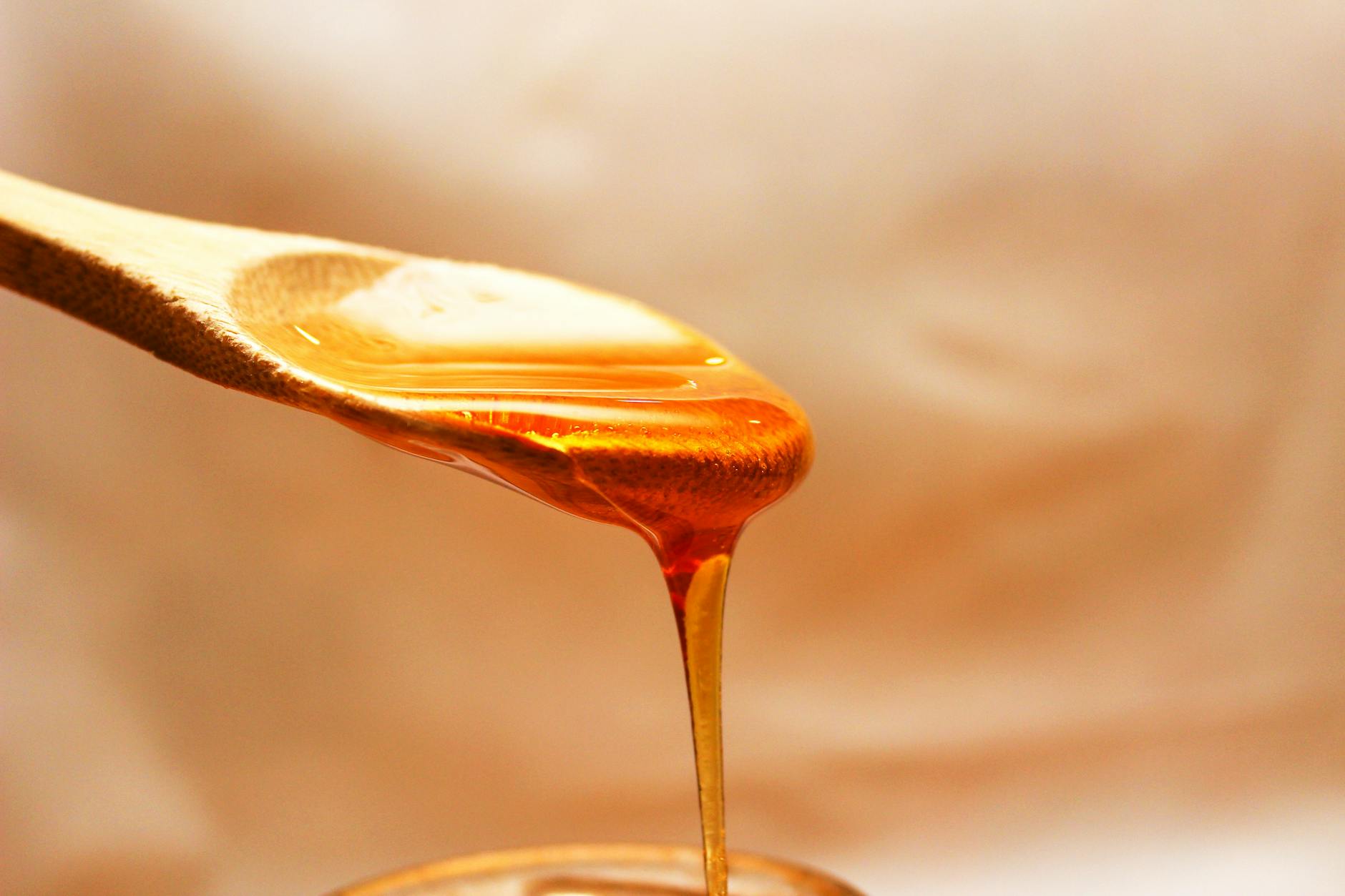
The short answer is no””applying honey does not effectively clear acne based on current clinical evidence. While honey has well-documented antibacterial and wound-healing properties in laboratory settings, these benefits have not translated into meaningful acne treatment outcomes in human trials. A 2016 randomized controlled trial involving 136 participants found that medical-grade kanuka honey added to standard antibacterial soap was no more effective than soap alone for treating facial acne. The American Academy of Dermatology’s 2024 guidelines, which provide 18 evidence-based recommendations for acne treatment, do not include honey or other plant-based alternatives among their recommendations.
This does not mean honey is worthless for skin health””it simply means that if you are dealing with active acne breakouts, honey should not be your primary treatment strategy. Consider someone with moderate inflammatory acne who spends weeks applying raw honey masks expecting their skin to clear, only to find their condition unchanged or worsened from delayed proper treatment. This scenario plays out frequently when people choose unproven remedies over established options like benzoyl peroxide or topical retinoids. This article examines the actual science behind honey and acne, explains why laboratory findings do not always predict real-world results, reviews what dermatologists actually recommend, and helps you understand where honey might fit into a broader skincare routine””if at all.
Table of Contents
- What Does the Clinical Evidence Say About Honey for Acne Treatment?
- Why Honey’s Skin Benefits Do Not Extend to Acne Clearing
- What Dermatologists Actually Recommend for Treating Acne
- How Honey Compares to Proven Acne Treatments
- Common Misconceptions About Natural Acne Remedies
- When Honey Might Have a Supporting Role in Skincare
- The Future of Natural Compounds in Acne Research
- Conclusion
What Does the Clinical Evidence Say About Honey for Acne Treatment?
The most rigorous clinical trial examining honey’s effectiveness for acne was published in 2016 and involved 136 participants between ages 16 and 40. Researchers tested medical-grade kanuka honey (formulated as 90% honey with 10% glycerine) applied to facial acne alongside standard antibacterial soap. The results were underwhelming: only 7.6% of participants in the honey group showed significant improvement compared to 1.9% in the control group. While this difference exists, researchers concluded that adding medical-grade honey to standard soap treatment was not clinically superior to soap alone.
This finding is particularly significant because the study used medical-grade honey””a standardized, controlled product with verified antimicrobial activity””rather than the grocery store honey most people would actually use at home. If medical-grade honey could not outperform basic soap in a controlled trial, raw honey purchased from a supermarket is unlikely to perform better. Laboratory studies do show that honey has antimicrobial activity against Propionibacterium acnes (the bacteria implicated in acne development), but in vitro results frequently fail to translate into effective treatments when applied to human skin in real-world conditions. The gap between laboratory promise and clinical reality is common in skincare research. A substance may kill bacteria in a petri dish but fail to penetrate skin effectively, remain on the skin long enough to work, or address the multiple factors beyond bacteria that contribute to acne””including excess sebum production, follicular hyperkeratinization, and inflammation.

Why Honey’s Skin Benefits Do Not Extend to Acne Clearing
Honey possesses genuine therapeutic properties that have earned it a place in medical treatment for certain conditions. Manuka honey received FDA approval in 2007 for wound treatment, and research supports its use for wound healing, ulcers, and atopic dermatitis. However, acne is notably absent from the list of conditions where honey has demonstrated clinical efficacy. Understanding why requires examining what acne actually is and how it differs from conditions honey does help. Wounds and ulcers involve damaged tissue that benefits from honey’s moisture-retention properties, antibacterial action, and ability to promote healing in compromised skin barriers.
Atopic dermatitis involves dry, inflamed skin where honey’s humectant and anti-inflammatory properties can provide relief. Acne, by contrast, is a complex condition involving overactive sebaceous glands, abnormal skin cell turnover within follicles, bacterial colonization, and inflammatory responses””all occurring within relatively intact skin that does not need the same type of support that damaged tissue requires. However, if your skin concern involves post-acne healing or you have dry, irritated skin from harsh acne treatments, honey might offer some supportive benefit as a moisturizing or soothing agent. This is different from claiming it clears acne. The distinction matters because conflating “good for skin” with “treats acne” leads people to make ineffective treatment choices.
What Dermatologists Actually Recommend for Treating Acne
The American Academy of Dermatology’s 2024 guidelines represent the current consensus on effective acne treatment, based on systematic review of available evidence. The AAD strongly recommends benzoyl peroxide, topical retinoids, topical antibiotics, and oral doxycycline as core treatment options. These recommendations emerge from decades of clinical trials demonstrating meaningful improvement in acne severity across diverse patient populations. Regarding honey and similar alternatives, the AAD stated explicitly that “available evidence was insufficient to develop recommendations for alternative therapies such as vitamins or plant-based products.” This is not a dismissal born from bias against natural treatments“”it reflects the reality that clinical evidence supporting these approaches simply does not exist at the level required for medical recommendations.
When dermatologists see patients who have tried honey, tea tree oil, or other natural remedies without success, they typically transition them to proven treatments and observe improvement. A practical example: someone with moderate acne who uses a 2.5% benzoyl peroxide product consistently for 8-12 weeks will typically see measurable improvement in inflammatory lesions. The same person using honey masks over the same period would be unlikely to see comparable results based on available evidence. This does not mean natural approaches have no place in skincare, but for active acne specifically, the evidence favors conventional treatments.

How Honey Compares to Proven Acne Treatments
When comparing honey to AAD-recommended treatments, the differences in evidence quality and clinical outcomes become stark. Benzoyl peroxide works through multiple mechanisms””killing P. acnes bacteria, reducing inflammation, and helping prevent antibiotic resistance when used alongside antibiotics. Topical retinoids normalize skin cell turnover within follicles, preventing the blockages that initiate acne formation. These mechanisms have been validated repeatedly in clinical trials involving thousands of participants.
Honey’s proposed mechanisms for acne involve antibacterial action and anti-inflammatory effects. While these properties exist, honey applied topically must penetrate the follicle, remain in contact with bacteria long enough to exert antimicrobial effects, and do so at concentrations that matter clinically. The 2016 kanuka honey trial suggests that even under favorable conditions with medical-grade product, these requirements are not met sufficiently to produce meaningful acne improvement. The tradeoff some people consider is tolerability: honey is generally non-irritating, while benzoyl peroxide can cause dryness, peeling, and irritation, and retinoids often cause initial purging and sensitivity. However, choosing a treatment that is well-tolerated but ineffective is not actually a beneficial tradeoff. For those who cannot tolerate first-line treatments, dermatologists have alternatives within the evidence-based framework””adjusting concentrations, trying different formulations, or using different medication classes entirely.
Common Misconceptions About Natural Acne Remedies
One persistent misconception holds that natural substances are inherently safer or more effective than synthetic treatments because they are “what nature intended.” This reasoning does not hold up to scrutiny. Poison ivy is natural. So is arsenic. Meanwhile, many pharmaceutical treatments are derived from or inspired by natural compounds but refined for effectiveness and safety. The relevant question is not whether something is natural but whether it works and is safe””questions answered through clinical research. Another misconception involves assuming that because honey helps with wound healing, it should help with any skin condition. This represents a category error.
Different skin conditions have different underlying causes and require different interventions. A treatment effective for diabetic foot ulcers may be irrelevant for fungal infections, psoriasis, or acne. Specificity matters in medicine. A warning for those tempted to try honey anyway: raw honey purchased from stores is not standardized for antimicrobial activity and may contain varying levels of the compounds thought to provide benefit. Some people also experience allergic reactions to honey or its components. Using honey in place of proven acne treatments may allow acne to worsen, potentially leading to scarring that could have been prevented with timely, appropriate treatment. The risk-benefit calculation does not favor honey for acne treatment.
When Honey Might Have a Supporting Role in Skincare
While honey should not serve as an acne treatment, it may have limited supporting roles in a broader skincare routine. For someone using drying acne treatments like benzoyl peroxide or retinoids, a honey-based mask used occasionally might provide moisturizing and soothing benefits without interfering with active treatments. This is using honey for what it can do””hydrate and calm””rather than expecting it to address acne directly.
For example, someone experiencing irritation and dryness from tretinoin might use a honey mask once weekly as a hydrating treatment on nights they skip their retinoid. This approach does not treat acne but may improve overall skin comfort and tolerance of effective treatments. The key distinction is understanding honey as a supportive, comfort-focused product rather than a treatment.
The Future of Natural Compounds in Acne Research
Scientific interest in natural compounds for dermatological applications continues, with manuka honey still drawing research attention as of January 2026 for its antibacterial and wound-healing properties. However, translating laboratory findings into effective acne treatments requires rigorous clinical trials, and current evidence suggests honey is unlikely to emerge as a primary acne therapy.
The 2025 dermatology guidance emphasizing “keeping things simple” with proven treatments reflects the field’s current stance. Future research may identify specific honey-derived compounds with better skin penetration or more targeted activity against acne-related factors, but any such developments would require clinical validation before recommendation. Until then, honey remains an interesting substance with documented benefits for certain conditions””just not acne.
Conclusion
Applying honey does not effectively clear acne based on current clinical evidence. The 2016 randomized controlled trial found medical-grade kanuka honey no better than soap alone, and the American Academy of Dermatology’s 2024 guidelines do not include honey among their evidence-based recommendations for acne treatment. While honey has legitimate uses for wound healing and certain inflammatory skin conditions, acne is a different condition requiring different approaches.
For those dealing with acne, the most productive path involves consulting a dermatologist or starting with over-the-counter benzoyl peroxide or adapalene (a retinoid now available without prescription in many countries). These treatments have robust clinical evidence supporting their use and form the foundation of effective acne management. Honey may have a minor supporting role as a soothing, moisturizing product for irritated skin, but expecting it to clear breakouts will likely lead to disappointment and delayed effective treatment.