Finding the best setting powders for acne prone skin requires understanding both the unique needs of breakout-prone complexions and the specific ingredients that can either help or harm them. For those dealing with acne, makeup application becomes a careful balancing act between achieving a polished, long-lasting finish and avoiding products that clog pores or exacerbate existing breakouts. Setting powder, while essential for locking in foundation and controlling shine, can be particularly problematic when chosen incorrectly, leading to caked-on texture over blemishes, increased oil production, or new breakouts that seem to appear overnight. The challenge of selecting an appropriate setting powder goes beyond simple oil control.
Acne prone skin often exists in a state of contradiction: oily in some areas while simultaneously dry or irritated in others, especially when undergoing active acne treatment. Many conventional setting powders contain ingredients like talc, bismuth oxychloride, or artificial fragrances that can trigger sensitivity reactions or settle into pores in ways that promote bacterial growth. Understanding which formulations work with your skin rather than against it can mean the difference between a makeup routine that supports skin health and one that perpetuates a frustrating cycle of breakouts. By the end of this guide, readers will understand the science behind why certain setting powders work better for acne prone skin, which ingredients to seek out and which to avoid, and how to properly apply powder without aggravating existing blemishes. This comprehensive overview covers everything from the basics of powder formulation to advanced techniques for those with severe or persistent acne, providing the knowledge needed to make informed purchasing decisions and develop application habits that support clearer skin over time.
Table of Contents
- What Makes a Setting Powder Safe for Acne Prone Skin?
- Key Ingredients to Look for in Setting Powders for Breakout-Prone Complexions
- Ingredients That Worsen Acne and Should Be Avoided in Setting Powders
- How to Choose the Right Setting Powder Formula for Your Acne Type
- Common Mistakes When Using Setting Powder on Acne Prone Skin
- The Role of Setting Powder in a Complete Acne-Safe Makeup Routine
- How to Prepare
- How to Apply This
- Expert Tips
- Conclusion
- Frequently Asked Questions
What Makes a Setting Powder Safe for Acne Prone Skin?
The safety of a setting powder for acne prone skin depends primarily on its comedogenic rating and ingredient composition. Comedogenicity refers to an ingredient’s likelihood of clogging pores, measured on a scale from 0 to 5, with 0 being non-comedogenic and 5 being highly likely to cause blockages. Setting powders formulated for acne prone skin typically rely on ingredients rated 0 to 2 on this scale, avoiding substances like coconut oil derivatives, certain silicones, and heavy waxes that score higher. However, comedogenic ratings represent averages across populations, meaning individual reactions can vary based on personal skin chemistry, pore size, and oil production levels.
Beyond comedogenicity, the particle size and texture of a setting powder significantly impact its suitability for breakout-prone complexions. Finely milled powders with smaller particles tend to sit more evenly on the skin’s surface rather than sinking into pores, reducing the risk of blockages. Conversely, heavily pigmented or coarsely textured powders may require more product to achieve adequate coverage, increasing the likelihood of buildup in areas where acne is already present. Mineral-based formulas using ingredients like silica, rice powder, or kaolin clay often provide effective oil absorption without the pore-clogging potential of synthetic alternatives.
- Non-comedogenic ingredients prevent new breakouts by avoiding pore blockages
- Finely milled particles sit on skin’s surface rather than settling into pores
- Oil-absorbing components like silica and kaolin control shine without over-drying
- Fragrance-free formulations reduce risk of irritation and inflammation
- Antibacterial properties in certain mineral ingredients can actively support skin health
Key Ingredients to Look for in Setting Powders for Breakout-Prone Complexions
The ingredient list of a setting powder reveals its potential benefits or drawbacks for acne prone skin. Silica, derived from silicon dioxide, stands out as one of the most effective and skin-safe options for oil control. This lightweight mineral absorbs excess sebum without disrupting the skin’s moisture barrier, and its spherical particle structure creates a soft-focus effect that minimizes the appearance of texture and scarring. Unlike talc, which has faced concerns regarding contamination and potential irritation, silica provides comparable mattifying benefits with a cleaner safety profile.
Kaolin clay and rice powder represent two naturally derived alternatives that have gained popularity in acne-safe setting powders. Kaolin, a gentle white clay, draws out impurities while absorbing oil, making it particularly valuable for those with oily, acne-prone skin. Rice powder, used for centuries in Asian beauty traditions, offers mild oil absorption alongside soothing properties that can calm inflammation. Some formulations also incorporate zinc oxide, which provides not only a mattifying effect but also possesses antibacterial and anti-inflammatory properties that can actively benefit acne-prone skin. Niacinamide, though less common in powder formulations, sometimes appears in innovative products, offering sebum regulation and skin barrier support.
- Silica provides oil absorption with a smooth, non-irritating texture
- Kaolin clay offers natural oil control and impurity extraction
- Rice powder delivers gentle mattifying effects with soothing properties
- Zinc oxide contributes antibacterial benefits alongside shine control
- Sulfur, in some specialized formulas, actively fights acne-causing bacteria
Ingredients That Worsen Acne and Should Be Avoided in Setting Powders
Knowing which ingredients to avoid proves equally important as identifying beneficial ones when selecting setting powders for acne prone skin. Talc, the most common base ingredient in traditional setting powders, presents concerns for several reasons. While pure cosmetic-grade talc carries a low comedogenic rating, it can be contaminated with other minerals during extraction, and its fine particles may cause respiratory irritation when inhaled.
More problematically, talc creates a barrier on the skin that some dermatologists believe can trap bacteria and sebum beneath the surface, potentially worsening breakouts in sensitive individuals. Bismuth oxychloride, a synthetic pearl-like ingredient that gives many powders their luminous finish, frequently causes problems for acne-prone users. This ingredient tends to settle into pores and fine lines, and its crystalline structure can cause itching and irritation that leads to touching or scratching the face””behaviors that spread bacteria and worsen acne. Artificial fragrances and dyes represent additional concerns, as they serve no functional purpose in setting powders while potentially triggering inflammatory responses that aggravate existing breakouts or cause new ones to form.
- Talc may trap bacteria and sebum beneath skin’s surface
- Bismuth oxychloride settles into pores and causes irritation
- Artificial fragrances trigger inflammation in sensitive skin
- Certain silicones like dimethicone can create occlusive barriers
- Heavy pigments requiring thick application increase pore-clogging risk

How to Choose the Right Setting Powder Formula for Your Acne Type
Different types of acne require different approaches to setting powder selection, making it essential to understand your specific skin concerns before purchasing. Those dealing primarily with hormonal acne, which typically appears along the jawline and chin, often experience fluctuating oil levels throughout their menstrual cycle. For this type, a moderate-coverage setting powder with adaptable oil control works best, avoiding heavy formulas that might dry out skin during less oily phases while still providing adequate shine control during peak sebum production. Loose mineral powders with adjustable application allow for day-to-day customization based on current skin needs.
Inflammatory acne, characterized by red, swollen papules and pustules, requires the gentlest possible approach to setting powder. Heavy coverage or excessive application over inflamed areas not only looks unnatural but can physically irritate already compromised skin. For this acne type, translucent or lightly tinted loose powders applied with a soft brush provide the best results. Those with comedonal acne””primarily blackheads and whiteheads””should prioritize non-comedogenic claims backed by actual ingredient analysis, as these closed comedones form specifically from pore blockages that incorrect powder choices directly exacerbate.
- Hormonal acne benefits from adaptable formulas that adjust to oil fluctuations
- Inflammatory acne requires lightweight, non-irritating translucent powders
- Comedonal acne demands verified non-comedogenic ingredients
- Cystic acne sufferers should consult dermatologists before adding powder to routines
- Combination skin may require different powders for different facial zones
Common Mistakes When Using Setting Powder on Acne Prone Skin
Even the best setting powder for acne prone skin can cause problems when applied incorrectly, yet many users inadvertently sabotage their skin through common application errors. Over-application represents the most frequent mistake, as those with oily, breakout-prone skin often believe that more powder equals better oil control. In reality, excessive powder settles into pores, mixes with sebum throughout the day to form a paste-like substance, and actually highlights rather than conceals texture and active breakouts. This buildup also makes thorough cleansing more difficult, leaving residue that contributes to further congestion.
Using dirty brushes or sponges to apply setting powder introduces bacteria directly onto compromised skin. Studies have found that makeup applicators can harbor significant bacterial colonies, including strains associated with acne, within just a few uses. This problem compounds for those with active breakouts, as the applicator picks up bacteria from inflamed areas and spreads it across the face with each application. Another overlooked mistake involves applying powder over sunscreen or treatment products before they’ve fully absorbed, which prevents proper adhesion and can pill or cake over blemishes in unflattering ways.
- Over-application causes powder to settle into pores and highlight texture
- Dirty applicators spread acne-causing bacteria across the face
- Applying powder before skincare absorbs leads to pilling and uneven finish
- Using expired powder introduces degraded ingredients that irritate skin
- Pressing powder into skin rather than dusting pushes product into pores

The Role of Setting Powder in a Complete Acne-Safe Makeup Routine
Setting powder functions most effectively as part of a thoughtfully constructed makeup routine that prioritizes skin health at every step. The products applied before powder””primer, foundation, concealer””significantly impact how powder performs and whether it contributes to breakouts. A non-comedogenic primer creates a smooth base that prevents subsequent products from settling into pores, while a breathable foundation formulated for acne-prone skin provides coverage without completely occluding the skin’s surface. When these base layers work harmoniously with an appropriate setting powder, the result is a finished look that lasts throughout the day without compromising skin health.
The removal process at day’s end proves equally important to the application routine. Setting powder, particularly mineral formulas, requires thorough cleansing to fully remove, as residue left overnight mixes with sebum and dead skin cells to create the perfect environment for bacterial growth. Double cleansing””using an oil-based cleanser followed by a water-based formula””effectively dissolves both powder and any accumulated oil without requiring harsh scrubbing that could irritate active breakouts. Following removal with appropriate acne treatments ensures that skin remains clear despite daily powder use.
How to Prepare
- **Cleanse thoroughly but gently** using a non-stripping cleanser that removes overnight oil accumulation without disrupting the skin barrier. Foaming cleansers containing salicylic acid work well for oily, acne-prone skin, while cream cleansers suit those using retinoids or experiencing dryness alongside breakouts. Pat skin dry rather than rubbing, which can spread bacteria and irritate active blemishes.
- **Apply acne treatments and allow full absorption** before any makeup application. Active ingredients like benzoyl peroxide, salicylic acid, or prescription retinoids need direct contact with skin to work effectively. Wait a minimum of five minutes, or until products have completely absorbed and skin feels dry to the touch, before proceeding to the next step.
- **Moisturize with a lightweight, non-comedogenic formula** even if skin feels oily. Skipping moisturizer triggers increased sebum production as skin attempts to compensate for perceived dryness, leading to more shine and potential breakouts throughout the day. Gel-based or water-based moisturizers provide hydration without heaviness.
- **Apply a mattifying, silicone-free primer** to areas prone to excess oil and enlarged pores, particularly the T-zone. Primer creates a smooth surface that prevents foundation and powder from settling into pores while extending wear time. Allow primer to set for two to three minutes before foundation application.
- **Use a damp beauty sponge for foundation application** rather than brushes, which can deposit bacteria and drag across active breakouts. The bouncing motion of a sponge presses product into skin without disturbing blemishes, creating a more even canvas for setting powder application.
How to Apply This
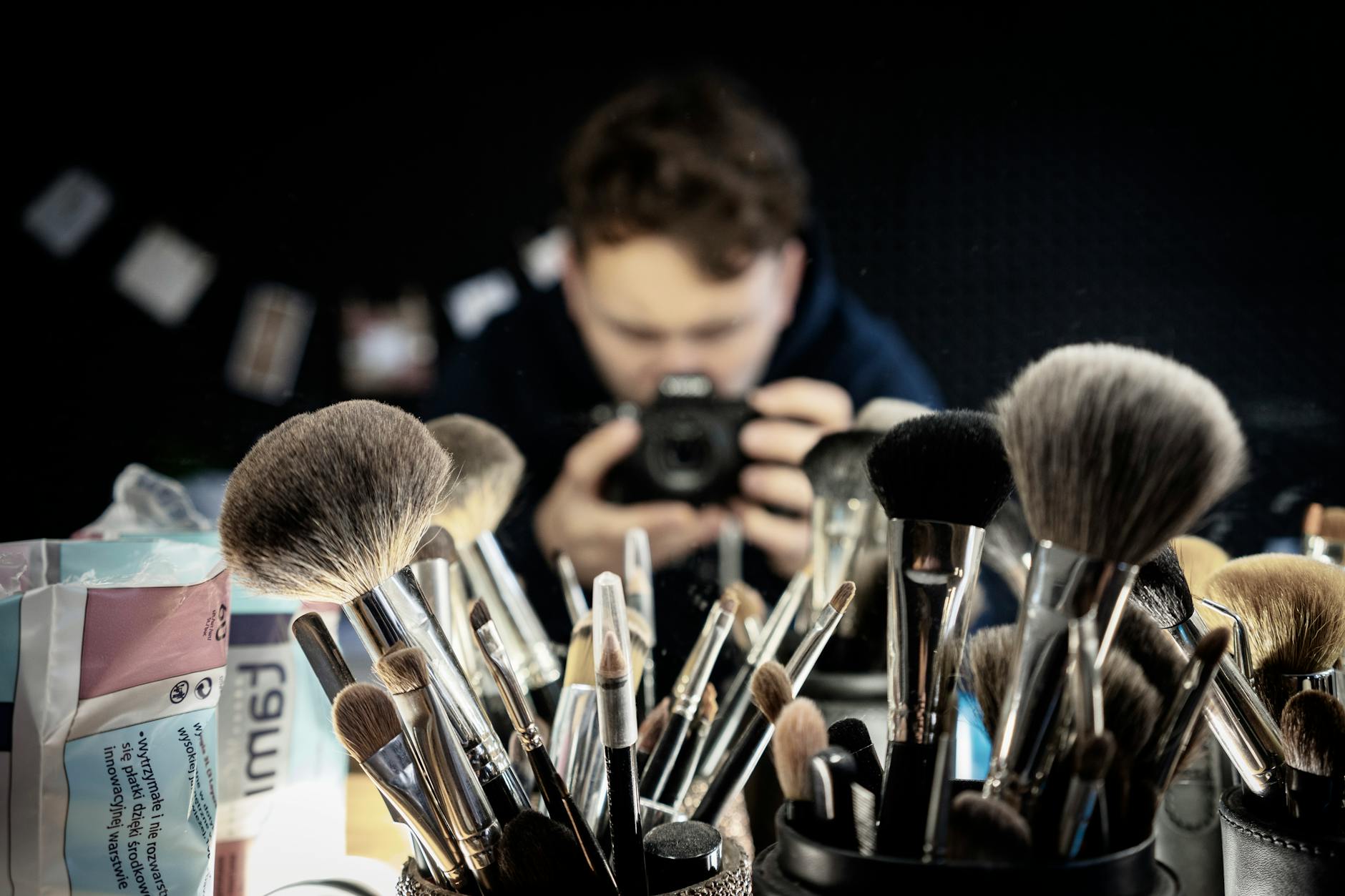
- **Select the appropriate applicator** based on your coverage needs and skin sensitivity. A large, fluffy brush works best for sheer, all-over application, while a smaller precision brush allows targeted application to oily areas without disturbing makeup over treated blemishes. Ensure all brushes are freshly cleaned or sanitized before use.
- **Tap excess powder from the brush** before bringing it near your face. Hold the loaded brush over the powder container and gently tap the handle to release loose particles. This step prevents the common mistake of depositing too much product at once, which leads to cakey buildup over textured areas.
- **Apply with light, sweeping motions** rather than pressing or stippling. Begin in the T-zone where oil control matters most, then sweep remaining powder outward toward the cheeks and jawline. Use even less product around the under-eye area and any dry patches, which require minimal setting and can appear aged or textured with excessive powder.
- **Set your work with a clean, empty brush** using gentle circular motions to blend any visible powder and ensure seamless integration with your base makeup. This final step removes excess product that might otherwise settle into pores throughout the day while creating a polished, natural finish.
Expert Tips
- **Store setting powder in a cool, dry location** away from bathroom humidity, which can introduce moisture that encourages bacterial growth in the product and causes clumping that leads to uneven application. Consider keeping powder in a bedroom vanity or closet rather than near the shower.
- **Replace powder products every 12 to 18 months** even if they haven’t been fully used, as preservatives degrade over time and bacterial contamination increases with each use. Mark the opening date on the container to track product age accurately.
- **Consider separate powders for different facial zones** if combination skin makes single-product solutions challenging. A more mattifying formula for the T-zone paired with a lighter, hydrating powder for cheeks accommodates varying needs across the face.
- **Blot before reapplying powder throughout the day** rather than layering more product over accumulated oil. Blotting papers remove excess sebum without disturbing underlying makeup, creating a fresh surface for touch-up powder that won’t cake or appear heavy.
- **Test new powders on a small facial area for several days** before committing to full-face use. The jawline provides an ideal testing location, as it’s prone to breakouts yet less visible than the center of the face. Monitor for new comedones or increased inflammation before incorporating the product into your regular routine.
Conclusion
Selecting the best setting powder for acne prone skin involves understanding the intersection of ingredient science, formulation technology, and individual skin needs. The ideal powder absorbs excess oil without over-drying, sits smoothly on the skin’s surface without settling into pores, and contains no ingredients known to trigger breakouts or irritation. By prioritizing non-comedogenic formulas based on silica, kaolin, rice powder, or zinc oxide””and avoiding problematic ingredients like bismuth oxychloride and artificial fragrances””those with acne-prone skin can achieve a polished, long-lasting makeup finish without sacrificing skin health.
The journey to finding the right setting powder often requires some experimentation, as individual skin chemistry varies significantly. What works perfectly for one person may cause breakouts in another, even when both products carry non-comedogenic claims. Approach the search with patience, testing products carefully and paying attention to how skin responds over days and weeks rather than expecting immediate answers. With the knowledge provided in this guide, readers possess the tools to evaluate products critically, apply them correctly, and build a makeup routine that supports rather than undermines their efforts toward clearer skin.
Frequently Asked Questions
How long does it typically take to see results?
Results vary depending on individual circumstances, but most people begin to see meaningful progress within 4-8 weeks of consistent effort. Patience and persistence are key factors in achieving lasting outcomes.
Is this approach suitable for beginners?
Yes, this approach works well for beginners when implemented gradually. Starting with the fundamentals and building up over time leads to better long-term results than trying to do everything at once.
What are the most common mistakes to avoid?
The most common mistakes include rushing the process, skipping foundational steps, and failing to track progress. Taking a methodical approach and learning from both successes and setbacks leads to better outcomes.
How can I measure my progress effectively?
Set specific, measurable goals at the outset and track relevant metrics regularly. Keep a journal or log to document your journey, and periodically review your progress against your initial objectives.
When should I seek professional help?
Consider consulting a professional if you encounter persistent challenges, need specialized expertise, or want to accelerate your progress. Professional guidance can provide valuable insights and help you avoid costly mistakes.
What resources do you recommend for further learning?
Look for reputable sources in the field, including industry publications, expert blogs, and educational courses. Joining communities of practitioners can also provide valuable peer support and knowledge sharing.