
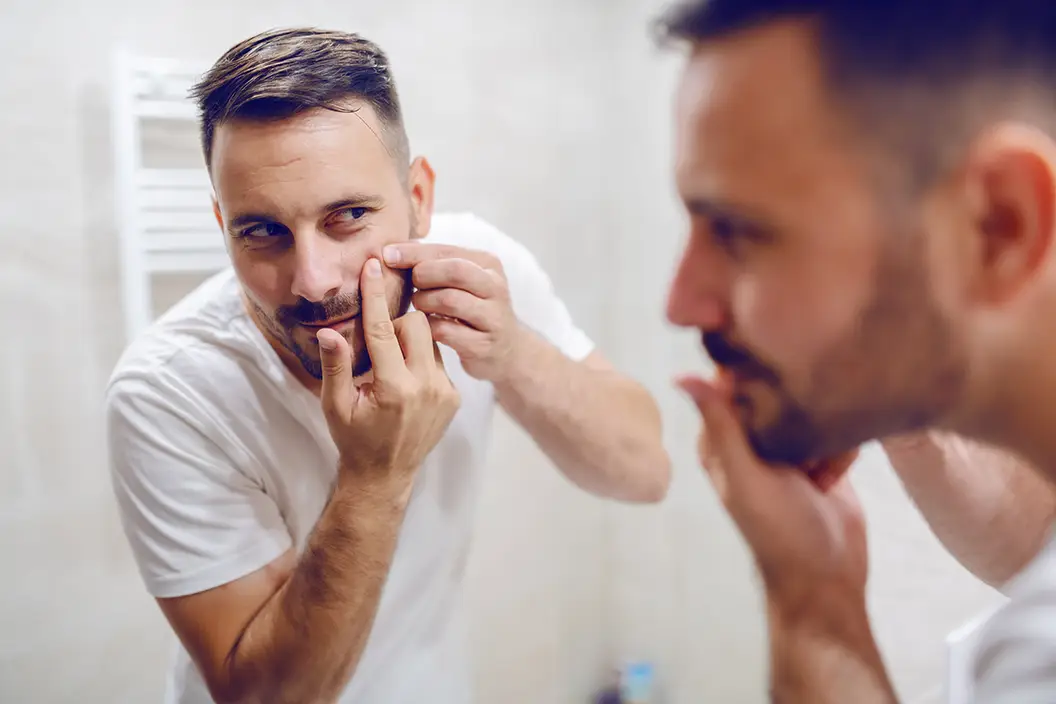
What Causes Acne to Cluster in Certain Areas
Acne often shows up in groups on specific parts of the body because of things like oil gland density, hormones, habits, and skin conditions that mimic acne. These clusters form when pores clog with oil, dead skin, and bacteria in areas that are naturally more prone to trouble.[1][2][4]
The face has zones packed with sebaceous glands that pump out oil, or sebum. The T-zone, which covers the forehead, nose, and chin, gets oily fast because of these glands. Blackheads and whiteheads cluster here from excess sebum mixing with dead skin cells. Stress or poor sleep can make it worse by ramping up oil production.[3][4]
On the jawline and chin, breakouts tend to cluster due to hormones like androgens. These hormones spike during periods, stress, or conditions like PCOS, telling oil glands to overwork. You might see painful cysts in these spots because inflammation digs deep.[1][2][3]
Cheeks often flare from outside friction. Phones pressed against the skin, dirty pillows, or masks rub and trap bacteria, leading to acne mechanica. This repeated irritation keeps pimples coming back in the same cluster until the habit stops.[2][3]
Body areas like the back, chest, and shoulders cluster acne for similar reasons. These spots have lots of oil glands and sweat during heat or workouts, clogging pores. Tight clothes or heavy backpacks add friction, sparking more breakouts.[1][4]
Not all clusters are true acne. Fungal acne shows as uniform itchy bumps on the chest, back, or forehead from yeast overgrowth in moist conditions. Keratosis pilaris looks like rough, flesh-colored bumps on arms, thighs, or cheeks from built-up keratin, not oil or bacteria.[5][6][7]
Habits play a big role too. Touching your face spreads bacteria to prone areas. High-sugar foods or dairy can boost oil in hormone-sensitive zones. Overwashing strips the skin barrier, making clusters worse by letting bacteria linger.[1][2]
Genetics set the stage by making some areas oilier from birth. If family members get acne in the same spots, you might too. Bacteria like C. acnes thrive in these oily clusters, turning clogs into red, inflamed pimples.[1][4]
Sources
https://londondermatologyclinics.com/cystic-acne-your-guide-to-causes-and-management/
https://consciouschemist.com/blogs/good-skin-blog/why-you-keep-getting-pimples-in-the-same-spot-and-how-to-stop-it
https://timesofindia.indiatimes.com/life-style/health-fitness/acne-mapping-what-your-breakout-patterns-reveal-about-skin-health-and-habits/articleshow/125958499.cms
https://naturalimageskincenter.com/common-misconceptions-about-bacterial-acne-how-to-identify-it-correctly/
https://www.usdermatologypartners.com/blog/bumpy-and-dry-skin/
https://glimmergoddess.com/blogs/skin-school/fungal-acne-explained-causes-triggers-gentle-treatment
https://slmdskincare.com/blogs/learn/understanding-chicken-skin-aka-keratosis-pilaris
https://www.felixforyou.ca/blog-posts/what-is-acne