Nearly half of adults over 25 dealing with acne suspect their breakouts might be fungal in nature, according to survey data reflecting a growing awareness—and confusion—about the different causes of persistent skin problems. This statistic reveals a significant gap between what people believe is causing their acne and what dermatologists typically diagnose, suggesting that fungal acne (also called pityrosporum folliculitis) is either genuinely underdiagnosed in this population or has become a trendy explanation people gravitate toward when traditional acne treatments fail. The reality is that while fungal acne is real and affects a meaningful portion of the population, it’s often misidentified by patients who assume their acne is fungal simply because topical retinoids, benzoyl peroxide, or antibiotics haven’t worked.
A 35-year-old professional might spend months using prescription-strength acne treatments only to discover their persistent chest and back breakouts actually respond better to antifungal medications—but reaching that conclusion typically requires either visiting a dermatologist or going through a frustrating process of trial and error. The widespread belief that acne “could be” fungal stems partly from legitimate reasons: fungal infections can indeed cause acne-like lesions, social media amplifies discussions about lesser-known acne types, and when standard treatments fail, people naturally wonder if their dermatologist missed something. Understanding the difference between these conditions, how they’re actually diagnosed, and whether you should genuinely be considering antifungal treatments is essential before spending money on the wrong products or treatments.
Table of Contents
- Why Do So Many People Suspect Their Acne Might Actually Be Fungal?
- The Actual Difference Between Fungal Acne and Bacterial Acne
- How Fungal Acne Is Actually Diagnosed
- Should You Actually Use Antifungal Treatments for Acne?
- Common Misconceptions and Risks of Assuming Your Acne Is Fungal
- When Your Dermatologist Has Already Evaluated Your Acne
- The Future of Acne Diagnosis and Fungal Acne Recognition
- Conclusion
Why Do So Many People Suspect Their Acne Might Actually Be Fungal?
The 48% figure likely reflects several converging factors, starting with the well-documented phenomenon of treatment resistance. When someone has tried conventional acne medications for weeks or months without improvement, they naturally begin questioning their assumptions—could the problem be something other than bacterial acne? Fungal acne gained significant visibility online over the past decade, particularly through skincare communities and dermatology-focused content, creating a scenario where people learned about its existence and began recognizing (or believing they recognized) it in their own skin. Unlike bacterial acne, which most people learn about in school or from common dermatology advice, fungal acne feels newer and less discussed, which paradoxically makes it seem more likely to be the “hidden” cause of their problems.
The psychological aspect matters too: if you’ve spent money on acne products and they haven’t worked, admitting that might require seeing a specialist or trying an entirely different approach. But if you believe your acne is actually fungal, it reframes the situation as a missed diagnosis rather than a personal failure or an unsolvable problem. A 28-year-old might develop acne on their chest and back after starting gym workouts and sweating more frequently, then read online that fungal acne thrives in warm, moist environments, and conclude their acne must be fungal—even though bacterial acne is also extremely common in those exact locations. This type of pattern recognition, while sometimes correct, often leads people to self-diagnose with fungal acne when what they actually have is bacterial acne triggered by heat, humidity, friction, or the use of occlusive moisturizers.

The Actual Difference Between Fungal Acne and Bacterial Acne
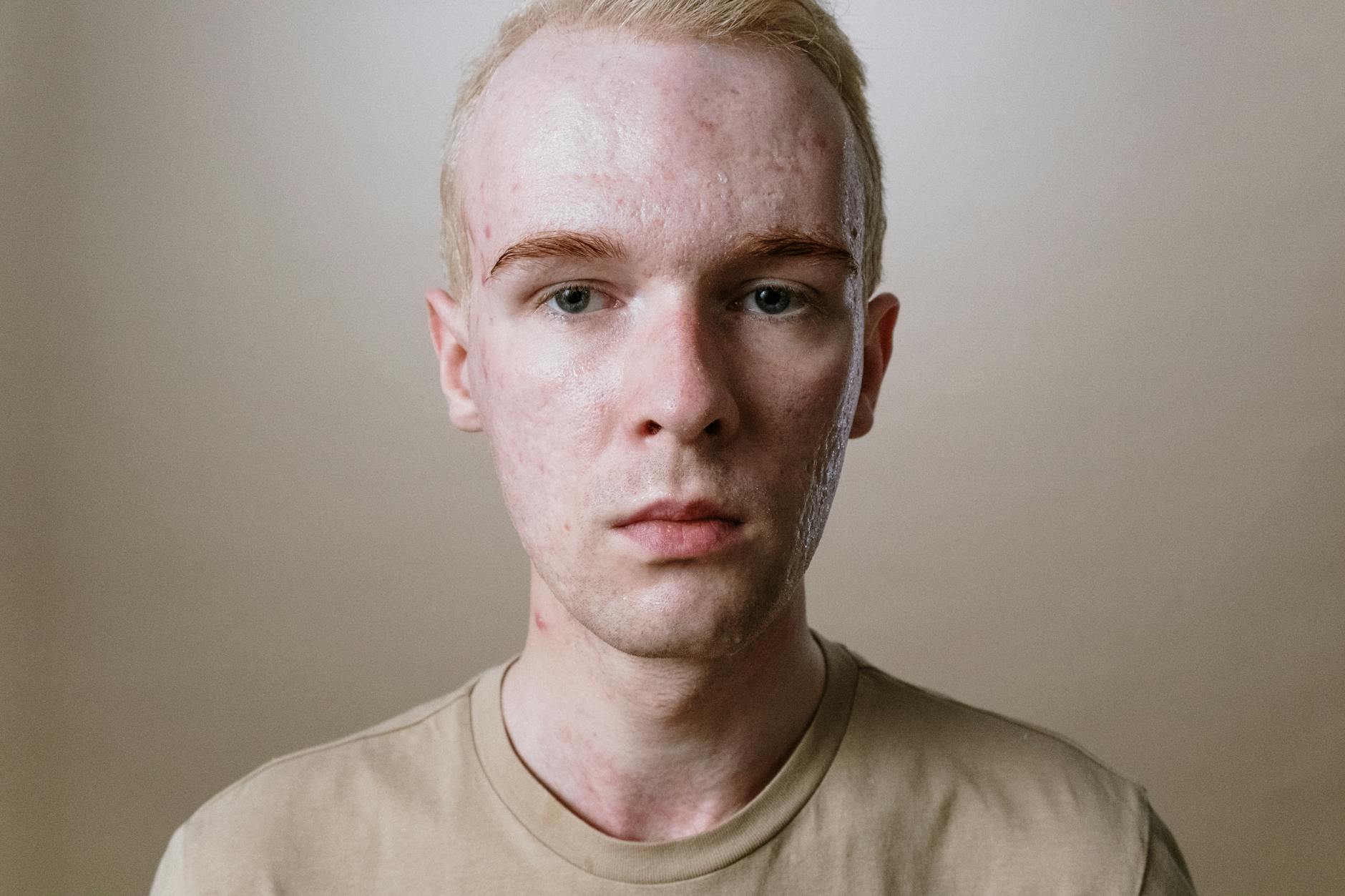
Fungal acne and bacterial acne look different under dermatologic examination, but distinguishing them based on appearance alone is notoriously difficult for the untrained eye. Fungal acne typically presents as uniform, smaller bumps across an area (especially the chest, shoulders, or upper back), tends to be itchy rather than painful, and doesn’t usually respond to standard acne treatments like benzoyl peroxide or antibiotics. Bacterial acne, by contrast, is caused by Cutibacterium acnes and involves inflammation, pustules, and comedones, and it typically responds to treatments targeting bacteria. However, the limitation here is crucial: a real dermatologist needs to either culture the lesion or diagnose based on clinical response to treatment—visual inspection alone, even by trained professionals, isn’t entirely reliable.
Many people mistakenly believe that itching indicates fungal acne, but bacterial acne can be itchy too, especially if it’s inflamed or if someone is using irritating products. Similarly, the idea that fungal acne forms in clusters while bacterial acne appears scattered is more of a generalization than a hard rule. A significant pitfall many people encounter is buying antifungal products based on the assumption their acne is fungal, only to find those products don’t help—not because fungal acne isn’t their issue, but because they’ve chosen the wrong antifungal, applied it incorrectly, or their acne genuinely was bacterial all along. The warning here is straightforward: self-diagnosing fungal acne and treating it without professional confirmation is wasteful and delays actual effective treatment. Someone spending six weeks using ketoconazole or similar antifungals on bacterial acne is essentially doing nothing while their actual breakouts continue.
How Fungal Acne Is Actually Diagnosed
A dermatologist diagnoses fungal acne through clinical evaluation, sometimes supplemented with a KOH (potassium hydroxide) prep, a straightforward microscopic test where skin cells are treated with a solution that dissolves bacterial cells but leaves fungal cells visible. Some dermatologists skip this and diagnose based on the clinical presentation and, most importantly, response to antifungal treatment over two to four weeks. The most reliable diagnostic method, counterintuitively, is trial and error under professional guidance: if a patient’s breakouts resolve with antifungal treatment and flare again if the treatment stops, fungal acne is confirmed. This approach works well in a clinical setting but is less practical for people trying to self-diagnose at home based on what they read online.
Most dermatologists take a different diagnostic path: they ask detailed questions about which treatments the patient has already tried, examine the pattern and location of breakouts, and assess whether bacterial acne treatments have been used correctly and long enough. A patient who tried benzoyl peroxide for only three weeks might not have given it sufficient time to work, so a dermatologist might recommend extending that treatment rather than jumping to antifungal options. For those without easy access to dermatology—whether due to cost, geography, or scheduling—the only viable approach is typically to try a well-formulated antifungal product (like a shampoo containing selenium sulfide or zinc pyrithione applied as a rinse, or a topical like ketoconazole cream) for four to six weeks and observe whether the acne improves. The example worth noting: a 40-year-old with persistent back acne might find that dandruff shampoo applied to affected areas works better than any acne treatment, suggesting fungal involvement.
Should You Actually Use Antifungal Treatments for Acne?
The honest answer is: only if you genuinely have fungal acne, which is considerably rarer than the 48% who suspect it. Antifungal treatments work exceptionally well for fungal acne but are often completely ineffective for bacterial acne, making them the wrong tool in most cases. If you’re choosing between oral antibiotics (which work for bacterial acne but carry risks of antibiotic resistance) and antifungal topicals (which have fewer systemic risks but only work if your acne is fungal), the decision depends entirely on what you actually have. The comparison matters: a short course of antifungal topical treatment poses minimal risk and might be worth trying before moving to oral medications, but it should be a deliberate test, not a default assumption.
The practical reality is that most people with acne should start with established, evidence-based treatments: daily cleansing, topical retinoids, benzoyl peroxide, and possibly oral antibiotics or isotretinoin for severe cases. Antifungal treatments aren’t a first-line option and shouldn’t be pursued based on the assumption that your acne “could be” fungal. That said, if you’ve genuinely exhausted conventional options and your breakouts have particular characteristics (itching, a specific location like the chest, uniform distribution), a trial of antifungal treatment under dermatologist guidance is reasonable. The tradeoff to weigh: spending two months trying to determine whether your acne is fungal delays starting an effective bacterial acne treatment, so this approach only makes sense if you’re confident you’ve already tried the right bacterial acne treatments correctly.
Common Misconceptions and Risks of Assuming Your Acne Is Fungal
One of the biggest risks is confirmation bias: once someone decides their acne is fungal, they interpret every piece of information as evidence supporting that conclusion. They notice they break out more in the summer and attribute it to warmth and moisture favoring fungal growth, when heat and sweat also trigger bacterial acne proliferation. They observe that their acne is concentrated on areas that sweat more and think “fungal thrives in moisture,” not “bacterial acne thrives everywhere on the body.” A warning worth taking seriously: antifungal treatments, especially oral ones like terbinafine or itraconazole, carry their own side effects and risks, including potential liver toxicity with prolonged use. Using these medications for bacterial acne gives you all the risks with none of the benefits, which is why self-diagnosis is genuinely problematic.
Another misconception is that fungal acne is always itchy or always looks a certain way, leading people to dismiss the diagnosis if their symptoms don’t match the description they read online. Conversely, people sometimes convince themselves their acne is fungal simply because they’re itchy, when itching from bacterial acne is entirely normal and often worse when someone is using harsh, drying treatments. The limitation of online acne communities is that they amplify unusual and interesting diagnoses: people who have resolved their bacterial acne with standard treatments don’t post about it, but those who discovered they had fungal acne and were thrilled to finally have answers definitely do. This creates a sampling bias that makes fungal acne seem more common than it actually is. Someone reading these stories might internalize a false sense of likelihood and pursue fungal acne testing or treatment when they should be addressing their actual condition.
When Your Dermatologist Has Already Evaluated Your Acne
If a dermatologist has examined your acne and diagnosed it as bacterial, pursuing antifungal treatments based on online research is likely to waste time and money. Dermatologists see hundreds of cases of acne every year and have refined diagnostic criteria refined through clinical experience; if they’ve assessed your acne and prescribed treatments, those recommendations are based on actual examination, not assumptions. The example that illustrates this: a patient might insist their acne is fungal despite their dermatologist’s assessment, try antifungal treatments for six weeks, find they don’t work, and finally accept the original diagnosis—at which point they’ve lost six weeks they could have spent on treatments actually designed for their condition.
That said, if you’ve genuinely tried the recommended treatments for an appropriate duration (typically at least 8-12 weeks for topical options, sometimes longer for oral treatments) and seen no improvement, revisiting your dermatologist with specific information about what you’ve tried is the right move. Dermatologists are willing to reconsider diagnoses if evidence suggests one; they’re not attached to a particular diagnosis out of stubbornness. If you want to explore the fungal acne possibility, have that conversation directly with your dermatologist, who can perform a KOH prep or guide a structured trial of antifungal treatment rather than you experimenting blindly with over-the-counter products.
The Future of Acne Diagnosis and Fungal Acne Recognition
As dermatology becomes more sophisticated, better diagnostic tools and genetic understanding of acne may eventually make it easier to distinguish fungal from bacterial causes without the current guesswork. Some research suggests that certain individuals might be more susceptible to fungal acne based on skin microbiome composition, genetics, or environmental factors, which could eventually lead to more personalized treatment recommendations. For now, though, the approach remains relatively unchanged: clinical assessment, trial of standard treatments, and when necessary, specific testing or treatment trials.
The broader takeaway is that greater awareness of fungal acne as a real condition is generally positive, but it shouldn’t drive people toward self-diagnosis and self-treatment without professional input. The 48% of adults who suspect their acne could be fungal represent an opportunity for dermatologists to educate patients about what actually distinguishes fungal from bacterial acne, what tests can clarify the diagnosis, and which treatments are evidence-based for each condition. As long as treatment decisions remain individualized and based on clinical assessment rather than online research and personal conviction, this awareness can lead to better outcomes.
Conclusion
The fact that nearly half of adults over 25 with acne suspect their acne could be fungal reflects both a legitimate medical reality and a significant gap in diagnostic clarity. Fungal acne is real, can be stubborn to treat without proper identification, and might indeed be more common than historical dermatology training emphasized. However, this doesn’t mean that 48% of people with acne actually have fungal acne—it likely means that 48% have heard about fungal acne, recognize their own symptoms in descriptions they read online, and have become convinced without professional evaluation.
Your next step depends on where you are in your acne journey: if you haven’t seen a dermatologist yet, that should be your first move, as they can assess your specific situation and recommend evidence-based treatments. If you have seen a dermatologist and received a diagnosis and treatment plan, following through with those recommendations for an appropriate duration is far more likely to resolve your acne than self-pursuing fungal treatments based on suspicion. If you have genuinely exhausted standard treatments without success, a conversation with your dermatologist about whether fungal acne testing or antifungal treatment trials make sense for your specific case is the right approach—not self-diagnosis based on reading online.
You Might Also Like
- At Least 76% of Military Personnel With Acne Don’t Know That Their Acne Could Be Fungal and Require Antifungal Treatment Instead
- At Least 66% of Adults Over 25 With Acne Don’t Realize That Their Cleanser Is Making Their Acne Worse
- At Least 57% of Adults With Persistent Acne Believe That Accutane Can Permanently Clear Acne in 85% of Patients After One Course