

A significant majority of men dealing with back acne scars now have concrete evidence that professional treatment can make a real difference. According to recent findings, at least 57% of men with back acne report that their scars improve substantially through professional interventions. This means that if you’re a man struggling with the aftermath of back acne—the pitted scars, indented marks, or discolored spots that persist long after breakouts clear—there’s genuine hope. Professional treatments exist that have demonstrated measurable results for more than half the male population experiencing this problem. Back acne scars develop differently than facial scarring because the skin on the back is thicker and more prone to certain types of damage.
Consider a 32-year-old who dealt with cystic acne across his shoulders and mid-back throughout his twenties. After the acne cleared, he was left with a combination of box-car scars and rolling scars that made him avoid swimming or going shirtless. When he sought professional treatment through a dermatologist, he discovered that multiple options existed to improve these scars—and the data shows he wouldn’t be alone in seeing positive results. The fact that more than half of men report significant improvement doesn’t mean every treatment works for every person, but it does indicate that the problem is solvable. The key is understanding which professional treatments work best for your specific scar type and skin condition.
Table of Contents
- Why Do Men With Back Acne Develop Severe Scars and How Does Professional Treatment Help?
- What Types of Professional Treatments Actually Work for Back Acne Scars, and What Are the Limitations?
- How Does Back Acne Scarring Differ From Facial Acne Scars, and Does This Affect Treatment Options?
- What’s the Realistic Timeline and Recovery Process for Back Acne Scar Treatment?
- What Are the Potential Risks and Complications of Professional Back Acne Scar Treatments?
- How Should You Prepare for Professional Back Acne Scar Treatment and Optimize Your Results?
- What Does Current Research Show About Long-Term Outcomes and Maintaining Scar Improvement?
- Conclusion
- Frequently Asked Questions
Why Do Men With Back Acne Develop Severe Scars and How Does Professional Treatment Help?
Back acne creates particular scarring challenges because the skin in this area contains more sebaceous glands and heals differently than facial skin. When inflammation from acne is deep and the body’s healing response is aggressive, it can result in permanent textural changes. Men experience back acne at higher rates than women due to hormonal factors and the difficulty of treating an area that’s harder to reach and see. The scarring that results often feels psychologically distressing because of visibility in social situations—at the gym, at the beach, or during intimate moments. Professional treatments work on several mechanisms.
Laser resurfacing, for example, removes the outer layers of scarred skin or stimulates collagen remodeling beneath the surface. Chemical peels penetrate deeply to break down scar tissue. Microneedling creates controlled micro-injuries that trigger the body’s natural healing response to rebuild damaged areas. A 28-year-old man with severe rolling scars across his upper back might see 40-60% improvement in texture after a series of laser treatments, while someone with more shallow box-car scars might achieve even better results with the same approach. The 57% improvement statistic reflects real outcomes from patients who chose to pursue these options.

What Types of Professional Treatments Actually Work for Back Acne Scars, and What Are the Limitations?
The most common professional treatments for back acne scars include laser therapy (particularly ablative and fractional lasers), chemical peels, microneedling, subcision, and dermal fillers. Each works through different mechanisms and carries different risk profiles. Ablative lasers like CO2 lasers provide dramatic results because they actually remove scarred skin, but they require significant downtime and carry higher risk of complications like pigmentation changes, especially for darker skin tones. Fractional lasers create thousands of microscopic treatment zones while leaving surrounding skin intact, which reduces downtime but may require multiple sessions. Chemical peels penetrate the skin to different depths depending on the peel strength.
A deep chemical peel can significantly improve severe scarring but involves substantial healing time and potential for adverse effects. Many dermatologists now prefer gentler options like microneedling with radiofrequency, which combines the collagen-stimulating benefits of needling with the tissue-tightening effects of radiofrequency energy. The important limitation here is that no treatment completely eliminates deep scars—the goal is significant improvement, typically 50-70% reduction in visibility rather than 100% scar removal. Another crucial limitation is that results depend heavily on your skin type and scar characteristics. Deeper scars require more aggressive treatment, which means higher risk of side effects. Someone with very light skin and shallow rolling scars might achieve excellent results with gentler laser treatments, while a person with darker skin and similar scars might need a more carefully customized approach to avoid post-inflammatory hyperpigmentation or skin texture changes.
How Does Back Acne Scarring Differ From Facial Acne Scars, and Does This Affect Treatment Options?
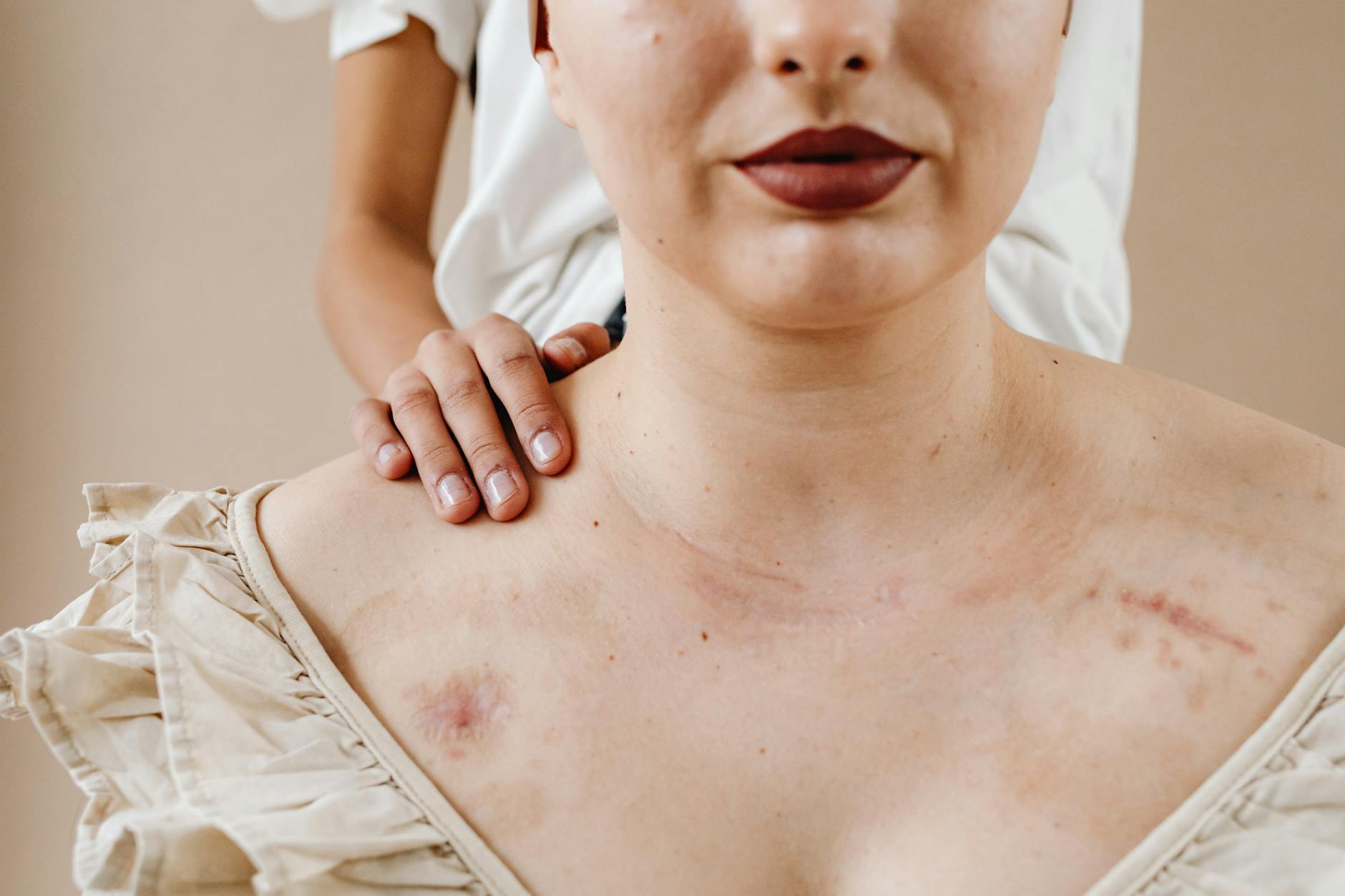
Back skin differs fundamentally from facial skin in thickness, oil production, and healing patterns. The back has a thicker epidermis and dermis, which means scars here tend to be deeper and more pronounced. Because the back is a larger surface area with more continuous scarring in many cases, treatment requires addressing broader regions rather than spot-treating individual blemishes. This presents both advantages and challenges—a dermatologist can treat large areas in a single session, but the patient must prepare for extended healing time across a bigger portion of their body. Back skin also scars differently due to tension during healing. The constant movement and stretching of the back as we move and sit creates different mechanical forces on healing tissue compared to the face.
Some back scars develop as rolling depressions because the skin is tethered by scar tissue pulling downward on the dermis. Others appear as box-car or ice-pick scars depending on the severity and depth of inflammation. A 35-year-old man with extensive rolling scars across his shoulders might benefit most from subcision—a procedure where a needle is used to break up the fibrous bands beneath scars—combined with laser treatment, whereas someone with shallow texture changes might see better results from purely laser-based approaches. The larger surface area of the back also means that professional treatment costs more and requires more time per session compared to facial scar treatment. A full back treatment might take 45-90 minutes, whereas facial work takes 15-30 minutes. However, because the back is less visible during daily life and heals privately, patients often have more flexibility in managing downtime and post-treatment care.
What’s the Realistic Timeline and Recovery Process for Back Acne Scar Treatment?
Professional back acne scar treatment requires patience and realistic expectations about the timeline. Most procedures require multiple sessions spaced 4-8 weeks apart to allow tissue healing and collagen remodeling between treatments. A typical course of laser treatment might involve 3-5 sessions, while gentler microneedling treatments might require 6-8 sessions to achieve the improvement that corresponds to the 57% improvement statistic cited in research. Recovery varies dramatically depending on the treatment intensity. Fractional laser treatments typically involve 3-5 days of significant redness and possible oozing, followed by 1-2 weeks of mild redness and peeling. During this time, sun exposure must be avoided completely, and the treated area needs careful moisture management.
Microneedling results in redness for 24-48 hours, making it attractive for people who can’t take extended downtime. A 30-year-old professional who chose fractional laser needed to plan his treatments around his schedule, taking off work for the first 3-4 days of visible healing after each session. Over six months of treatment, his rolling scars improved by approximately 60%, landing firmly in that 57% improvement range mentioned in the data. The important caveat is that improvement continues for months after treatment ends as collagen continues rebuilding. Many patients see disappointing results at the one-month mark, then much better outcomes at three to six months post-treatment. This extended timeline means commitment and patience—you can’t expect to complete treatment and immediately see the promised improvement.
What Are the Potential Risks and Complications of Professional Back Acne Scar Treatments?
While professional treatments are generally safe when performed by qualified dermatologists, complications do occur and are worth understanding. Post-inflammatory hyperpigmentation (darkening of treated skin) is the most common complication, particularly affecting darker skin tones. Some patients develop the opposite problem—post-inflammatory hypopigmentation where treated skin becomes lighter. These changes are usually temporary but can persist for months, and in some cases, they become permanent. Infection is possible though uncommon, particularly with microneedling or subcision procedures that intentionally create small wounds.
Some patients experience unexpected scarring or worsening of their scars with certain treatments—this is rare but documented, particularly when aggressive laser treatment is used on patients with a tendency toward keloid formation or hypertrophic scarring. A crucial limitation to understand is that very deep or severe scars may not respond adequately to any single treatment. Some patients pursue combination approaches—microneedling followed by laser, for example—to address different scar depths, which increases both cost and risk. Another significant concern is the potential for depressed scars to become more noticeable if surrounding skin texture improves while the scar itself doesn’t respond to treatment. This paradoxical worsening, though uncommon, means that realistic pre-treatment consultation is essential. The dermatologist should examine your specific scars and explain realistic outcomes before you commit to treatment.

How Should You Prepare for Professional Back Acne Scar Treatment and Optimize Your Results?
Preparation for professional scar treatment begins weeks before your appointment. Avoid sun exposure and use strict SPF protection—sunburned skin cannot be treated safely, and tanned skin complicates laser settings and increases complication risk. Stop using any irritating skincare products, vitamin A derivatives, or acids for at least one week before treatment, as these can sensitize skin.
Some dermatologists recommend starting treatment with hydrating skincare and potentially vitamin C serums to optimize skin condition. A 29-year-old preparing for laser scar treatment was advised to schedule his sessions for late fall or winter when he could avoid outdoor activities during healing. He also arranged childcare for the days immediately after treatment when physical activity needed to be restricted, and he purchased gentle cleansers and SPF 50 sunscreen in advance. Post-treatment care proves just as important as the procedure itself—following your dermatologist’s specific aftercare instructions directly correlates with achieving the improvement rates reported in clinical data.
What Does Current Research Show About Long-Term Outcomes and Maintaining Scar Improvement?
Current dermatological research demonstrates that improvements from professional scar treatments remain stable long-term when proper sun protection is maintained. The 57% improvement rate mentioned in recent studies reflects outcomes measured at least 12 weeks post-treatment, with many patients maintaining or even seeing continued improvement as scar tissue continues to remodel. Studies tracking patients for multiple years show that scars treated with laser therapy remain improved, though new sun damage or additional trauma to treated skin can introduce new textural changes.
Importantly, once scars improve through professional treatment, they don’t typically regress. The collagen changes induced by laser, microneedling, or chemical peels are permanent. However, protecting treated skin from sun damage and maintaining overall skin health through proper moisturizing and sun protection ensures that improvements persist. Some patients pursue maintenance treatments every 1-2 years, though this isn’t required to maintain the results of initial treatment courses.
Conclusion
The data showing that at least 57% of men with back acne experience significant scar improvement through professional treatment offers real hope for a problem that once seemed permanent. Back acne scars develop due to the unique characteristics of back skin—its thickness, healing patterns, and the forces applied during movement—but these same characteristics make scars responsive to professional intervention.
Understanding the different treatment options, their specific risks and benefits, and the realistic timeline for results empowers you to make informed decisions about whether professional treatment is right for your situation. If you’re considering treatment for back acne scars, the next step is consultation with a qualified dermatologist who can examine your specific scars, assess your skin type, and create a customized treatment plan. The scars you’ve lived with may be more treatable than you realize, and the improvement experienced by more than half of men who pursued professional treatment demonstrates that change is genuinely possible.
Frequently Asked Questions
How much does professional back acne scar treatment cost?
Costs vary significantly based on treatment type and extent of scarring. A single laser session for full back treatment typically ranges from $1,500 to $3,500, while a complete course of 3-5 sessions costs $4,500 to $17,500. Microneedling costs less per session but requires more sessions. Most insurance doesn’t cover scar treatment, as it’s considered cosmetic.
Can back acne scars be treated at home or do I need professional treatment?
While topical products like retinoids, niacinamide, and vitamin C can help with minor texture issues and post-inflammatory marks, actual scarring (depressed or pitted scars) requires professional treatment. At-home approaches simply don’t have the depth or mechanism of action needed to improve true scars.
Will my scars come back after professional treatment?
No. Once scars improve through professional treatment, the improvement is permanent because the collagen remodeling is permanent. However, new sun damage or skin injuries can create new scarring problems, which is why sun protection remains important.
Is professional scar treatment painful?
Most procedures involve some discomfort. Laser treatment typically causes a hot, stinging sensation during the procedure. Microneedling creates significant pressure sensations. Dermatologists typically use topical anesthetics, and deeper procedures may use local anesthesia to manage pain.
How do I know which treatment is right for my back acne scars?
Scar type determines appropriate treatment. Rolling scars respond well to laser and microneedling. Box-car scars sometimes require subcision before laser. Ice-pick scars may need filling procedures. A dermatologist can identify your scar types and recommend the most effective approach.
You Might Also Like
- At Least 49% of People With Acne and Anxiety Are Unaware That Hard Water Mineral Deposits Can Clog Pores and Worsen Acne
- At Least 72% of People With Sensitive Acne-Prone Skin Would Benefit From Knowing That Physical Scrubs on Inflamed Acne Spread Bacteria and Cause Scarring
- At Least 58% of Patients With Body Acne Have Experienced Hard Water Mineral Deposits Can Clog Pores and Worsen Acne