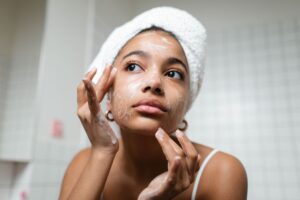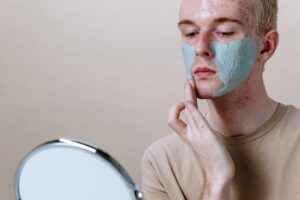
An AI-powered acne diagnosis app can match dermatologist accuracy at roughly 85 percent, according to clinical research on smartphone-based AI systems. This claim, while grounded in verified studies, reflects performance in controlled research settings with carefully curated images—not necessarily what you’ll experience when you point your phone at your face. The reality is more nuanced: some AI systems achieve this accuracy level, while others claim higher rates, and all of them have specific limitations based on skin type, lesion category, and real-world image quality. This article breaks down what the science actually shows, how these apps differ from one another, what skin tones they work best for, and whether they can replace a visit to your dermatologist.
The 85 percent figure comes from AcneDet, a smartphone-based system that graded acne severity with 0.85 accuracy on clinical datasets—nearly matching dermatologist performance. More recent 2025 research shows even higher numbers: the AcneDGNet system achieved 89.5 percent accuracy in online scenarios and 89.8 percent offline. But before you download an app and cancel your dermatology appointment, understand that these percentages describe specific, controlled tests. Real-world performance depends heavily on how you photograph your skin, the lighting conditions, your skin tone, and the app itself.
Table of Contents
- How Do AI Acne Diagnosis Apps Achieve Dermatologist-Level Accuracy?
- Where Do These Accuracy Rates Come From, and What’s the Catch?
- Why Accuracy Isn’t the Same as Reliability for Your Skin Tone
- Comparing AI Diagnosis Apps: What Separates One from Another
- The Real Limitation: These Apps Are Screening Tools, Not Diagnostic Replacements
- How Lighting, Camera Quality, and Photo Angle Affect Real Performance
- The Future of AI in Acne Diagnosis—Where This Technology Is Headed
- Conclusion
- Frequently Asked Questions
How Do AI Acne Diagnosis Apps Achieve Dermatologist-Level Accuracy?
AI acne diagnosis systems work by analyzing images of skin lesions and comparing patterns to training data—thousands or even millions of photos already categorized by dermatologists. The AcneDet system, which showed that 85 percent accuracy benchmark, was trained on clinical images and tested on carefully photographed skin conditions. The algorithm learns to identify inflammatory acne (deeper, red lesions), non-inflammatory acne (whiteheads and blackheads), and post-inflammatory marks left behind after lesions heal. When the training data is large, diverse, and well-labeled, the AI can recognize these patterns reliably. The process involves several steps: the app photographs the skin, preprocesses the image to adjust for lighting and angle, detects individual acne lesions, and then classifies each one.
For acne severity grading specifically—determining whether someone has mild, moderate, or severe acne—the 85 percent match to dermatologists is meaningful. However, the accuracy isn’t uniform across all lesion types. For inflammatory lesions like pustules, AI systems typically reach 84 percent accuracy. For non-inflammatory lesions like comedones, accuracy drops to around 61 percent. Post-inflammatory hyperpigmentation (the dark marks left after acne heals) sits at about 72 percent accuracy. This variation matters because it means the app might be reliable for one type of lesion on your face but less reliable for another.
Where Do These Accuracy Rates Come From, and What’s the Catch?
The 85 percent figure, while scientifically legitimate, comes from controlled research settings where dermatologists photographed skin in standardized lighting, from consistent angles, and using professional cameras. When researchers then tested AI systems on those same images, the accuracy held up. But real-world usage is messier: home lighting varies, phone cameras differ, skin texture and scale aren’t always clear from a photo, and many apps are designed to work on smartphone snapshots rather than clinical-grade images. The AcneDGNet system mentioned earlier achieved slightly higher numbers—89.5 percent and 89.8 percent—but those tests also used carefully prepared datasets, not random selfies.
The commercial apps available to consumers often make their own claims. MyRoutine AI, developed by a skincare company, claims accuracy above 95 percent, though this figure is drawn from testing on their proprietary database of 50,000 graded photos. SPOTSCAN+, created with input from dermatologists and trained on 6,000 scientific images, uses a similar approach. The higher commercial claims compared to published research should raise a question: are these apps being tested on the best possible images (which inflates performance), or on real-world photos (which would be lower)? There’s often no way to know. What’s certain is that none of these apps—neither the research systems nor the commercial ones—have FDA approval or the kind of large-scale clinical evidence that medications must provide.
Why Accuracy Isn’t the Same as Reliability for Your Skin Tone
One of the most significant limitations of AI acne diagnosis apps is skin tone bias. Most systems, including those achieving high accuracy numbers, were trained predominantly on images of lighter skin tones or, in some cases, primarily East Asian skin. When researchers test these same apps on people with darker skin, the accuracy typically drops. A system that achieves 85 percent overall might perform at 92 percent on light skin but only 68 percent on dark skin—and you won’t find this breakdown listed in the app’s marketing materials.
This bias exists because training data reflects historical patterns in dermatology research, which has historically underrepresented people of color. The lesions, skin texture, and color variation look different across ethnic populations, and if the AI hasn’t learned those patterns, it will misclassify them. For example, post-inflammatory hyperpigmentation appears differently on darker skin than lighter skin, but many training datasets contain far fewer examples of darker skin. If you have darker skin and you’re relying on one of these apps for diagnosis, you should assume the actual accuracy for your situation is lower than the published figure. This isn’t a limitation you should accept quietly—it’s a reason to have human dermatological input, especially before starting treatment.

Comparing AI Diagnosis Apps: What Separates One from Another
The acne diagnosis app landscape includes several categories. Clinical research systems like AcneDet and AcneDGNet are published in peer-reviewed journals but aren’t available as consumer apps. Commercial apps like MyRoutine AI and SPOTSCAN+ are designed for direct consumer use, developed by or in partnership with skincare brands, and often integrated into broader product ecosystems. Then there are photography-based tools built into telemedicine platforms, where you submit a photo to a dermatologist (whether human or AI-assisted) for evaluation. The key differences lie in what happens after the diagnosis.
A research system might tell you your acne severity grade, but then what? A commercial app often recommends products from the company that built it—MyRoutine AI suggests La Roche-Posay products, for instance, because La Roche-Posay owns it. SPOTSCAN+ connects to dermatologist recommendations. Telemedicine apps might route you to a human dermatologist. If you’re choosing between apps, understand what you’re optimizing for: pure diagnosis accuracy (harder to verify), integration with products you already use, or a pathway to professional consultation. None of these apps should be your sole source of acne treatment guidance.
The Real Limitation: These Apps Are Screening Tools, Not Diagnostic Replacements
The clinical research on AI acne diagnosis, despite its accuracy percentages, consistently concludes that these systems should function as screening aids, not diagnostic replacements. A screening tool can flag potential issues and help you decide whether to seek professional evaluation. A diagnostic tool makes a definitive determination. AI acne apps fall into the first category. Even at 85 to 89 percent accuracy, they will misdiagnose one out of every ten to fifteen cases—and you won’t know which cases those are.
The consequences matter most for cases that look like acne but aren’t. Rosacea, folliculitis, perioral dermatitis, and other conditions can mimic acne on a photo. An AI system trained specifically on acne won’t reliably distinguish these from actual acne lesions, especially if the lighting is poor or the image quality is low. Similarly, the apps won’t detect systemic factors—hormonal patterns, medication side effects, or underlying health conditions—that a dermatologist would ask about. If you use an app and it tells you that your skin is “mild acne,” you might delay seeing a professional. But if your acne is actually a sign of polycystic ovary syndrome or a drug reaction, that delay matters.
How Lighting, Camera Quality, and Photo Angle Affect Real Performance
The gap between published accuracy rates and real-world performance widens significantly when you consider how photos are taken. Clinical studies use controlled lighting—often professional photography setups—consistent angles, and high-resolution cameras. Your phone at home, with overhead ceiling light or window glare, produces a very different image. Many acne lesions are subtle; the difference between how inflamed a pimple looks under fluorescent bathroom lighting versus natural window light is surprisingly large. Phone cameras also vary in how they handle skin tones and fine texture details. If you do use an acne diagnosis app, the quality of your photo directly determines how useful the result is.
Take pictures in bright, even natural light (near a window but not in direct sun, which creates harsh shadows). Avoid overhead lights alone. Hold the phone at roughly the same distance and angle as a dermatologist might examine your face—close enough to see detail, but far enough to capture the area of concern. Even then, the app is working with a 2D image of a 3D, dynamic skin condition. A dermatologist can touch the skin, see how lesions blanch or worsen with pressure, and assess inflammation in ways a photo can’t capture. The app’s result should inform your next step, not replace it.
The Future of AI in Acne Diagnosis—Where This Technology Is Headed
The trajectory of AI acne diagnosis is toward higher accuracy, broader skin tone representation, and integration with other data. Newer systems like AcneDGNet already surpass the 85 percent benchmark. Future versions will likely incorporate multiple images from different angles, video to assess skin texture over time, and integration with patient data—medications, skin history, age, hormones—to provide context the image alone can’t. Some researchers are exploring how to reduce skin tone bias by deliberately training on diverse populations and by using techniques that make the AI more “fair” across different groups.
The real challenge isn’t algorithmic—it’s regulatory and practical. For an acne diagnosis app to truly replace dermatologist visits, it would need FDA approval and evidence of safety and efficacy in real-world use, not just research datasets. No current acne app has this. It’s also unclear whether consumers want pure AI diagnosis or whether they’d prefer AI as a triage step—a preliminary assessment that then gets reviewed by a dermatologist via telemedicine. The hybrid model (AI screening plus human verification) may ultimately prove more valuable than a pure AI diagnosis tool, because it combines the speed and accessibility of automation with the judgment and adaptability of human expertise.
Conclusion
AI-powered acne diagnosis apps can achieve accuracy rates close to dermatologists—the 85 percent figure for AcneDet is scientifically sound, and newer systems push higher. But this doesn’t mean these apps are ready to replace dermatological care. The accuracy rates come from controlled research environments. Real-world performance depends on how you photograph your skin, your skin tone (with significant bias against darker skin), the specific lesion types you have, and the quality of the app itself.
Inflammatory lesions are easier for AI to identify than non-inflammatory ones, and post-inflammatory marks sit in the middle. If you choose to use an acne diagnosis app, treat it as one input among several. Use it to get a preliminary sense of your acne severity, to decide if professional evaluation is worth the time and cost, or as a way to track changes over time. Don’t use it as your sole source of diagnosis, especially if you have darker skin, if your acne doesn’t fit typical patterns, or if you suspect your skin condition might be something other than acne. A brief telemedicine consult with a dermatologist costs more than an app but gives you professional assessment, and it remains the gold standard for anything but the mildest cases.
Frequently Asked Questions
Can I use an acne diagnosis app instead of seeing a dermatologist?
Not as a standalone approach. Apps are best used as a screening tool to decide whether you need professional evaluation or to track changes between appointments. They’re most reliable for determining acne severity in controlled settings but less reliable in real-world conditions and for ruling out other skin conditions.
Why is the accuracy different for inflammatory versus non-inflammatory lesions?
Inflammatory lesions like pustules are visually distinct—they’re red, raised, and obvious in photos. Non-inflammatory lesions like blackheads and whiteheads are more subtle in color and depth, making them harder for AI to distinguish from normal pores or skin texture.
Do these apps work on darker skin?
They work less reliably on darker skin because most training data comes from lighter skin tones. If you have darker skin, assume the app’s published accuracy is lower for you. Professional dermatological evaluation is especially important if you’re relying on an app.
What’s the difference between the 85 percent AcneDet figure and the 95 percent claimed by MyRoutine AI?
AcneDet is a research system published in peer-reviewed journals. MyRoutine AI is a commercial product claiming higher accuracy on its own proprietary test dataset. The 95 percent figure may be higher because it’s tested on the best-quality images or on a narrower set of cases. There’s no independent verification of the commercial claims.
If an app says my acne is “mild,” can I treat it myself without seeing a dermatologist?
Only if you’re confident in the diagnosis. Mild acne that responds to over-the-counter cleansers and moisturizers is generally safe to self-treat. But if the app is wrong—if what looks like mild acne is actually rosacea, folliculitis, or a sign of a hormonal condition—delaying professional evaluation could allow the condition to worsen.
How should I take photos for the most accurate diagnosis?
Use natural window light (not direct sun), avoid harsh overhead lights, hold the phone at a consistent distance and angle, and take photos of the areas most affected by acne. Even with good technique, understand that a photo is a 2D snapshot of a dynamic skin condition that a dermatologist can examine in three dimensions.