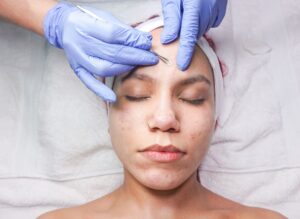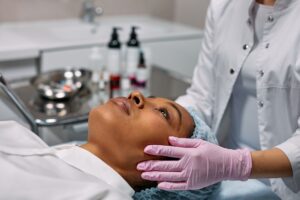
Most people with acne take the OTC route first, and for good reason—over 70% of patients try over-the-counter treatments before ever scheduling a dermatologist appointment. The appeal is obvious: these products are accessible, affordable, and don’t require a doctor’s visit. However, this approach has a significant limitation.
While OTC treatments can effectively manage mild acne and reduce lesions by 30-50% in responsive cases, they often fall short for moderate-to-severe acne. When acne is moderate to severe—particularly cystic or nodular forms—dermatologists typically recommend prescription treatments, as OTC products alone rarely deliver the results patients need. This article explores why the vast majority start with over-the-counter options, what those products can realistically achieve, and when and why prescription treatment becomes necessary.
Table of Contents
- Why Do 70% of Acne Patients Start With OTC Products?
- What OTC Acne Treatments Actually Accomplish
- The Reality for Moderate-to-Severe Acne Cases
- When to Switch From OTC to Prescription Treatment
- OTC vs. Prescription: Understanding the Medication Options
- Individual Response Variation and Treatment Timelines
- Building the Right Treatment Plan From the Start
- Conclusion
Why Do 70% of Acne Patients Start With OTC Products?
The statistics tell a clear story: over 70% of people with acne use over-the-counter treatments first, often for at least a year, before consulting a dermatologist. Several practical reasons drive this behavior. OTC products are immediately available at drugstores and online without appointments, insurance coverage discussions, or prescription costs. For someone dealing with their first breakout or mild acne, buying a retinoid or benzoyl peroxide cleanser feels like a reasonable first step—and in many cases, it is. The accessibility barrier alone explains much of this pattern; even in developed countries, scheduling a dermatology appointment can take months, while acne is an immediate concern.
Cost is another major factor. A bottle of OTC retinoid like Differin costs around $10-15, while a dermatologist visit typically runs $150-300 without insurance, plus prescription medication costs. For adolescents and young adults managing acne on limited budgets, this gap is decisive. Additionally, there’s a cultural and psychological component: many people view acne as something they should handle themselves first, reserving doctors for “serious” skin conditions. This mindset, combined with the fact that acne is extremely common (affecting about 85% of Americans at some point), creates a normalized expectation that OTC treatment should be attempted first.
What OTC Acne Treatments Actually Accomplish
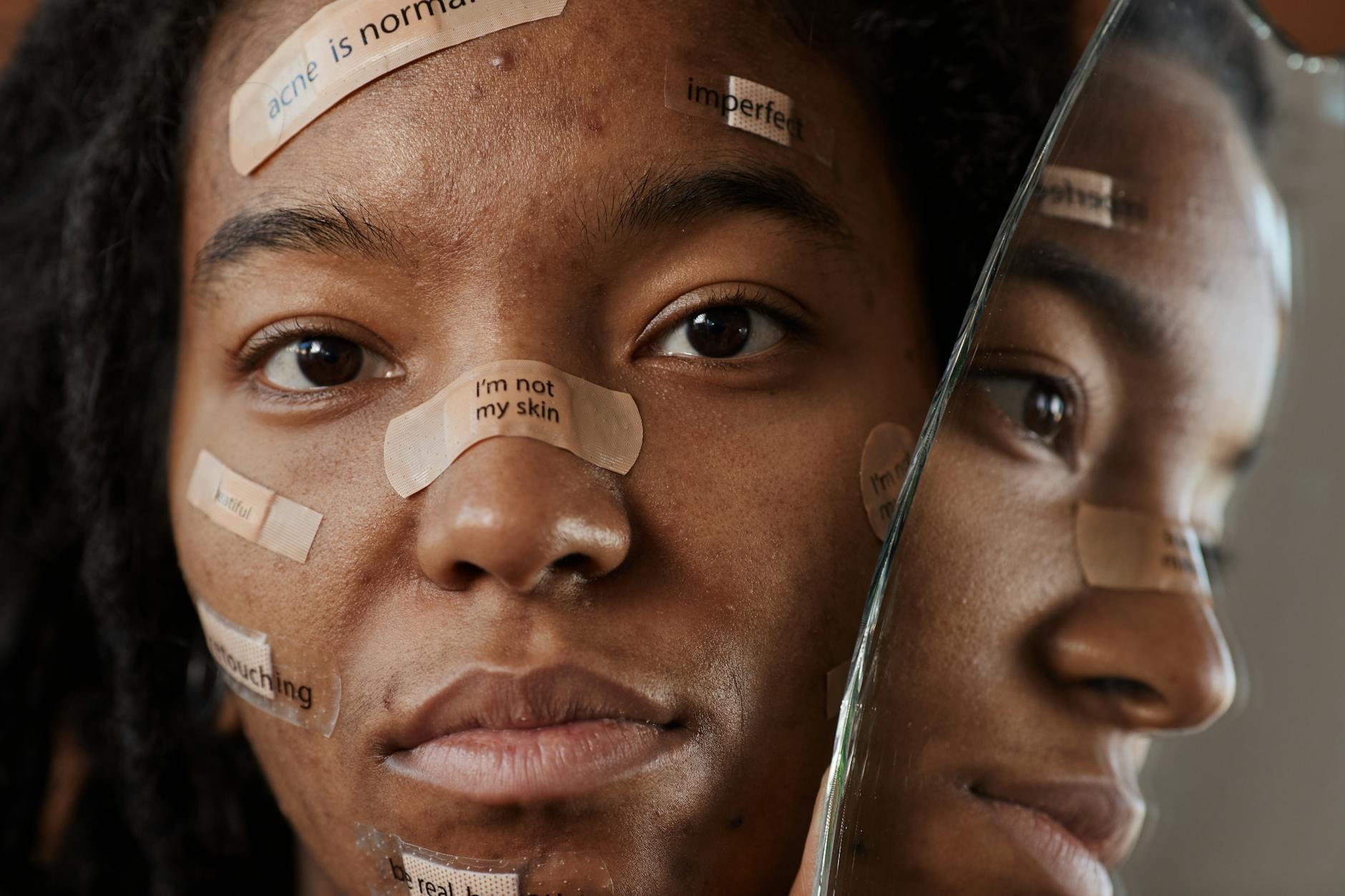
OTC products have legitimate effectiveness for the right type of acne. Differin (adapalene), a retinoid available over-the-counter in most markets, showed a 30-50% reduction in total lesion counts by week 12 in patients with mild-to-moderate acne during clinical trials. This is a meaningful improvement—fewer visible pimples, less inflammation, and visible progress that motivates continued treatment. Other proven OTC options include benzoyl peroxide, which works by killing acne bacteria and reducing sebum; salicylic acid, which unclogs pores; and azelaic acid, which addresses inflammation and bacterial overgrowth. However, there’s a critical limitation embedded in these statistics.
That 30-50% reduction applies to mild-to-moderate acne in controlled studies with compliant patients. In real-world use, results often fall short because patients misuse products—applying too much, using them inconsistently, combining incompatible treatments, or not allowing enough time for results. Additionally, the 30-50% improvement means that if someone starts with 40 lesions, they might expect 20-28 remaining after 12 weeks. For mild acne, this is acceptable. For moderate acne with deeper nodules or widespread inflammation, a 30-50% reduction still leaves significant visible, uncomfortable acne that impacts quality of life.
The Reality for Moderate-to-Severe Acne Cases
This is where the gap between OTC effectiveness and patient needs becomes stark. Moderate-to-severe acne—characterized by numerous inflammatory papules, pustules, nodules, or cysts—rarely responds adequately to OTC treatments alone. Dermatologists consistently recommend prescription options when acne shows no meaningful improvement after three months of OTC use, or when the acne is moderate-to-severe from the outset. The reasons are biochemical and practical.
Severe acne often involves deeper, nodular lesions where bacteria thrive in layers beneath the skin’s surface; topical OTC products simply cannot penetrate deeply enough to resolve these lesions. A concrete example illustrates this limitation: consider a 22-year-old with painful, deep nodular acne across their jaw and cheeks—the kind that feels tender to touch and doesn’t come to a whitehead. Applying a retinoid every night for months may reduce surface inflammation slightly, but the underlying cystic lesions persist because they require systemic treatment (like oral antibiotics or hormonal therapy) or stronger topical medications (like prescription-strength tretinoin or adapalene concentrations). The patient has wasted 12+ weeks on ineffective treatment during a period when prescription medication could have cleared the acne and prevented scarring. This delay matters because severe acne often leaves permanent marks; every month without appropriate treatment increases scarring risk.

When to Switch From OTC to Prescription Treatment
Knowing when to move beyond OTC treatments is crucial, yet many people continue with ineffective products out of habit or hope. The American Academy of Dermatology (AAD) and other medical organizations recommend escalating to prescription treatment if OTC products haven’t produced noticeable improvement after three months of consistent, correct use. The keyword here is “consistent”—giving a product only two weeks or using it sporadically doesn’t constitute a fair trial. However, three months is also not indefinite; dermatologists recognize that delaying appropriate treatment reduces the chance of completely clearing acne and increases scarring risk.
There’s an important distinction between different presentations of acne. If someone has mild comedonal acne (small bumps and blackheads), waiting three months on Differin is reasonable; they might see gradual improvement. If someone has moderate inflammatory acne with numerous red papules or pustules, three months is still the suggested guideline, but dermatologists often recommend starting prescription medication sooner given the inflammatory nature. And if someone presents with severe, nodular, or cystic acne, waiting at all is counterproductive—prescription treatment (often isotretinoin, oral antibiotics, or hormonal therapy) should begin immediately. Attempting OTC treatment in this scenario delays healing and increases scarring likelihood without any offsetting benefit.
OTC vs. Prescription: Understanding the Medication Options
The difference between OTC and prescription acne medications often comes down to potency, delivery mechanism, and systemic effects. OTC retinoids like adapalene are real medications with proven efficacy, but they’re available without prescription specifically because they have manageable side effect profiles when used topically. Prescription retinoids like tretinoin (Retin-A) are chemically similar but stronger and require medical supervision because they cause more irritation and photosensitivity. Similarly, while OTC benzoyl peroxide maxes out at 10% concentration in most products, dermatologists can prescribe higher concentrations or combine it with antibiotics in formulations unavailable over-the-counter.
For moderate-to-severe acne, the prescription arsenal includes options OTC products cannot match: oral antibiotics (like doxycycline or minocycline) that reduce bacteria throughout the skin, hormonal treatments (birth control or spironolactone) that address hormone-driven acne, and isotretinoin, a powerful medication that can permanently clear severe acne after a defined course. These systemic treatments work on mechanisms that topical OTC products cannot address. A limitation to note: oral antibiotics work well for bacterial acne but won’t address hormonal or cystic components, and over-reliance on antibiotics risks bacterial resistance. Isotretinoin is highly effective but requires monthly blood tests and carries pregnancy risks, making it a decision requiring careful medical guidance.

Individual Response Variation and Treatment Timelines
One of the most frustrating aspects of acne treatment is that response varies dramatically between individuals. The same OTC retinoid that clears one person’s acne in eight weeks might show minimal effect in another after 16 weeks, even with perfect technique. This variation stems from differences in skin barrier sensitivity, acne type (bacterial vs. hormonal vs. comedonal), severity of underlying sebum production, and genetic factors affecting treatment response.
Some people’s skin adapts quickly to retinoids and shows visible improvement; others experience months of irritation before any benefit appears. Timeline expectations matter greatly for patient satisfaction and treatment compliance. Studies showing 30-50% lesion reduction assume 12 weeks of consistent treatment, but individual results vary. Someone with mild acne might see noticeable improvement by week 4-6, while someone with moderate inflammatory acne might require the full 12 weeks to assess whether OTC treatment is working. The risk of variation is that patients may prematurely abandon effective treatments (because they expected faster results) or persist with ineffective ones (hoping their skin will eventually respond). This is where professional guidance helps; a dermatologist can assess after 4-6 weeks whether a treatment is likely to work eventually or should be replaced.
Building the Right Treatment Plan From the Start
The ideal approach to acne treatment involves upfront assessment rather than trial-and-error with OTC products. This doesn’t mean everyone with acne needs a dermatologist immediately—mild acne truly can be managed effectively with OTC treatments and good skincare habits. However, moderate-to-severe acne benefits from early professional assessment that determines the right starting medication rather than gambling on over-the-counter options.
The current reality is that most people don’t follow this path; the 70% OTC-first statistic reflects real-world behavior more than optimal care. For people starting with OTC treatments, a practical framework helps: give the chosen product a genuine three-month trial with consistent use, understand what “improvement” realistically means (fewer lesions, less redness, less soreness—not necessarily complete clearance), and most importantly, recognize warning signs that prescription treatment is needed. These warnings include: no visible improvement after 4-6 weeks in moderate acne, emergence of nodular or cystic lesions, acne worsening despite treatment, or significant scarring appearing. When these signs emerge, professional consultation stops being optional and becomes necessary to prevent further skin damage and improve quality of life.
Conclusion
The 70% statistic on OTC-first treatment reflects both the accessibility of over-the-counter products and the reality that mild acne genuinely can respond well to them. Products like OTC retinoids, benzoyl peroxide, and salicylic acid are legitimate treatments, not placebos, and showing 30-50% lesion reduction in responsive cases. However, this effectiveness is context-dependent; it applies to mild-to-moderate acne in compliant patients, and results in real-world use often fall short of clinical trial benchmarks. The critical insight is that moderate-to-severe acne—characterized by nodules, deep cysts, or widespread inflammation—rarely resolves with OTC products alone, and attempting to do so wastes time while scarring risk accumulates.
The path forward depends on acne severity and response to treatment. If you have mild acne, a three-month trial of OTC retinoid is reasonable and evidence-based. If you have moderate acne, the same three-month timeline applies, but with heightened awareness that prescription treatment may be necessary. If you have severe acne, particularly nodular or cystic, consulting a dermatologist before extensive OTC experimentation prevents unnecessary delay and skin damage. The 70% who start with OTC products aren’t wrong to do so—but the 30% limitation should be a reminder that not all acne is created equal, and knowing when to escalate treatment is as important as knowing what to try first.