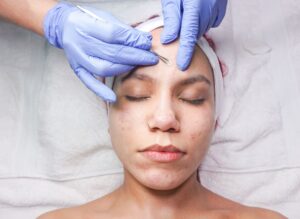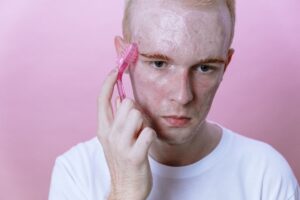
Americans spent approximately $5.6 billion on acne treatment in 2024, with over-the-counter products capturing more than 60% of that market—a figure that reflects both the prevalence of acne and consumers’ preference for accessible, self-directed solutions. This spending surge underscores a major shift in how Americans approach skincare: rather than waiting for a dermatologist appointment, millions reach for drugstore solutions, salicylic acid cleansers, and benzoyl peroxide spot treatments.
The acne treatment market has become one of the most dynamic sectors in dermatological healthcare, driven by 50 million Americans living with acne and an expanding array of product options at every price point. What accounts for this spending pattern? The answer lies in three converging factors: acne’s stubbornness as a chronic condition affecting both teenagers and adults, the accessibility and affordability of OTC alternatives, and growing consumer education about ingredient efficacy. This article breaks down the $5.6 billion acne market, explains why OTC products dominate consumer spending, and helps you understand which treatments actually deliver results based on clinical evidence rather than marketing claims.
Table of Contents
- How Is the $5.6 Billion U.S. Acne Market Divided Between OTC and Prescription?
- Why OTC Products Dominate the Acne Treatment Market
- Who Is Buying $5.6 Billion Worth of Acne Treatment?
- Which OTC Acne Ingredients Justify the Cost?
- When OTC Products Fail and What to Do Next
- The Rising Cost of Acne Treatment and Insurance Coverage Gaps
- Market Growth and the Future of Acne Treatment
- Conclusion
How Is the $5.6 Billion U.S. Acne Market Divided Between OTC and Prescription?
The U.S. acne treatment market totaled $5.45 billion in 2024, with OTC products accounting for more than 60% of all spending—translating to over $3 billion in over-the-counter sales alone. This is not a marginal segment; OTC acne treatments represent the dominant share of the market. Prescription treatments, including oral antibiotics, isotretinoin, and prescription-strength retinoids, make up the remaining 40%, yet this still represents billions in professional treatment spending.
The split reveals a critical truth: most americans dealing with acne are self-treating with products they buy themselves, without dermatologist involvement. The OTC segment has grown at a compound annual growth rate (CAGR) of 5.2%, outpacing many other skincare categories. Consumer behavior supports this dominance—84% of acne sufferers report using OTC products, and the average person spends approximately $121.99 per year on over-the-counter acne treatments. For context, that translates to roughly $10 per month, which buys multiple products across different product categories: cleansers, spot treatments, face masks, and supplements. This spending pattern reflects both the trial-and-error nature of acne care and the relatively low cost barrier to entry compared to dermatology appointments or prescription options.

Why OTC Products Dominate the Acne Treatment Market
OTC acne products win on three practical fronts: immediate accessibility, lower cost, and minimal friction. You can buy benzoyl peroxide or salicylic acid at any drugstore without a prescription, appointment, or insurance coverage. A bottle of OTC retinol costs $15 to $30; an equivalent prescription retinoid requires a dermatologist visit ($150–$300 without insurance) plus a pharmacy fill. For mild to moderate acne, this cost difference alone explains why consumers gravitate toward OTC options.
However, there’s a significant limitation: OTC products cannot provide the strongest treatments. If you have severe cystic acne, OTC ingredients simply cannot resolve the underlying hormonal and inflammatory drivers. Isotretinoin—a prescription medication reserved for severe acne—has a 90% cure rate and can permanently clear acne in many patients, but it requires monthly blood tests, pregnancy prevention measures for women of childbearing age, and dermatologist oversight. If you’ve tried OTC products for 3 months without improvement, or if you have large inflamed cysts, seeing a dermatologist for prescription options isn’t optional—it’s the evidence-based next step. The OTC market dominates because most acne cases are mild to moderate, not because OTC is universally superior.
Who Is Buying $5.6 Billion Worth of Acne Treatment?
The answer surprises many people: more adults are buying acne treatments than teenagers. While acne is stereotypically a teenage problem, approximately 85% of acne sufferers are adults and teenagers combined, and adult acne specifically affects millions of people in their 20s, 30s, and beyond. This demographic shift has reshaped the market entirely. Adult acne tends to cluster around the chin, jawline, and lower face—often hormonally driven in women—and persists longer, creating a more stable, long-term customer base for acne product companies.
The spending breakdown reflects this diversity. A 16-year-old might buy a single bottle of spot treatment; a 35-year-old might purchase a complete routine: prescription retinoid from a dermatologist, OTC vitamin C serum, salicylic acid cleanser, benzoyl peroxide face wash, and a hydrating moisturizer to counteract irritation. The $121.99 annual average masks significant variation—some people spend $50 per year, others spend $500. Acne severity, trial-and-error experimentation, and skin sensitivity all drive individual spending upward.

Which OTC Acne Ingredients Justify the Cost?
The most clinically validated OTC ingredients are benzoyl peroxide, salicylic acid, niacinamide, and sulfur. Benzoyl peroxide kills acne-causing bacteria and works best for inflammatory acne; salicylic acid unclogs pores and suits comedonal acne (whiteheads and blackheads). These two have decades of clinical support. Niacinamide reduces sebum production and inflammation with minimal irritation, making it suitable for sensitive skin. Sulfur is underrated and effective but comes with a distinctive odor that limits consumer adoption.
Where consumers often waste money is on trendy or unproven ingredients. Retinol—the OTC form of vitamin A—does work, but it’s weaker than prescription retinoids and requires weeks of consistent use to show results. Azelaic acid is effective but less well-known than the market leaders. The comparison matters because a $40 product with unproven actives won’t outperform a $12 product with salicylic acid. Many people spend more expecting better results, but the evidence doesn’t support premium pricing for most acne treatments. A basic routine of benzoyl peroxide cleanser, salicylic acid toner, and a non-comedogenic moisturizer costs under $40 and delivers results comparable to premium brands costing three times as much.
When OTC Products Fail and What to Do Next
OTC treatments work for mild to moderate acne—roughly 70–80% of cases. They fail when acne is driven by hormonal factors (especially in women), when bacteria have developed resistance to benzoyl peroxide, or when inflammation is severe enough to create nodules or cystic lesions. If you’ve used a well-formulated OTC routine consistently for 8–12 weeks without meaningful improvement, OTC has reached its limit. Continuing to buy new OTC products in hopes of finding a magic formula is not evidence-based treatment; it’s expensive experimentation.
The warning here is specific: persistent acne is not a character flaw or a sign you’re not trying hard enough. It’s often a signal that you need prescription-strength treatment. Oral antibiotics (doxycycline, minocycline), oral contraceptives for hormonal acne in women, spironolactone for androgen-driven acne, and prescription retinoids (tretinoin, adapalene, tazarotene) are significantly more effective for moderate to severe cases. A dermatologist visit, even if you pay out of pocket, typically costs $150–$250 and can lead to a prescription that actually resolves your acne—a far better investment than six months of trial-and-error with OTC products.
The Rising Cost of Acne Treatment and Insurance Coverage Gaps
The $5.6 billion market reflects not just the number of people treating acne, but also increasing product diversity and price escalation. Prescription acne treatments are often covered by insurance, but OTC products are almost never covered—putting the burden entirely on consumers. For uninsured or underinsured people, this creates a barrier: a dermatology visit might cost $300 out of pocket, but it unlocks access to generic tretinoin or doxycycline that costs $10–$30 per month.
Paradoxically, lower-income individuals often end up spending more on ineffective OTC products because the upfront cost of a dermatology visit feels prohibitive. Some dermatology practices and telemedicine platforms now offer affordable alternatives: online consultations with dermatologists cost $40–$100 and can result in prescriptions sent directly to pharmacies. For severe acne sufferers, this access point has been transformative. The market’s future likely includes more direct-to-consumer dermatology options, further shifting treatment patterns away from pure OTC and toward accessible professional care.
Market Growth and the Future of Acne Treatment
The acne treatment market is projected to reach $9.51 billion by 2034, growing at a compound annual rate of 5.80% over the next decade. This growth is driven by several trends: increasing prevalence of adult acne, expansion of prescription options (new acne medications are in development), rising awareness of acne’s psychological impact on quality of life, and the normalization of skincare spending across age groups. The OTC segment will continue to dominate by volume, but prescription treatments are growing faster, suggesting that more people are seeking professional-grade solutions as awareness grows.
One forward-looking insight: the future of acne treatment is personalized. Direct-to-consumer DNA testing and skin microbiome analysis are beginning to inform treatment decisions, moving acne care from one-size-fits-all products toward targeted solutions. This shift will likely increase overall spending per person but reduce wasted spending on ineffective products. The $5.6 billion market of 2024 represents mostly trial and error; the $9.51 billion market of 2034 will likely represent smarter, more efficient treatment pathways.
Conclusion
The $5.6 billion spent on acne treatment in the U.S. in 2024 reflects a massive, profitable problem affecting 50 million Americans. Over 60% of that spending goes to OTC products purchased without professional guidance, driven by accessibility, low cost, and consumer preference for self-directed care. While OTC treatments work for mild to moderate acne, they reach a hard ceiling for severe cases, hormonal acne, and resistant bacteria—situations where prescription treatment becomes necessary and cost-effective.
Understanding the market breakdown helps you make smarter decisions about your own acne treatment spending. Start with evidence-backed OTC ingredients like benzoyl peroxide and salicylic acid; invest in consistency rather than product switching; and if you see no improvement after 8–12 weeks, move to professional care rather than continuing OTC experimentation. The $121.99 annual average masks both underspending (missing effective treatments) and overspending (buying ineffective premium products). The path forward is not more OTC products—it’s the right product at the right time, backed by clinical evidence and professional guidance when needed.