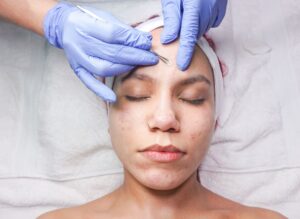
Androstenedione testing is part of your acne hormone workup because this intermediate steroid hormone directly influences sebum production, and elevated levels often correlate with persistent hormonal acne that doesn’t respond well to topical treatments alone. When a dermatologist suspects hormonal acne—particularly in adult women with deep cystic breakouts along the jawline, chin, or lower face—androstenedione measurement helps clarify whether androgen excess is driving the condition. For example, a 28-year-old woman with clear skin until her mid-twenties, suddenly experiencing recurring cystic acne despite good skincare, may have elevated androstenedione that’s boosting sebaceous gland activity, and testing confirms this before starting hormonal birth control or spironolactone. This article explores why dermatologists order this specific test, how to interpret results, what happens when levels are high, and when additional testing becomes necessary.
Table of Contents
- What Is Androstenedione and Why Does It Matter for Acne?
- The Hormone Conversion Pathway and Acne Development
- How High Androstenedione Levels Explain Hormonal Acne Patterns
- Interpreting Androstenedione Results and Treatment Implications
- When Androstenedione Testing Reveals Complex Endocrine Dysfunction
- Androstenedione Testing Within the Full Hormone Panel
- Moving from Testing to Long-Term Acne Management
- Conclusion
What Is Androstenedione and Why Does It Matter for Acne?
Androstenedione is a weak androgen precursor hormone produced primarily by the adrenal glands and ovaries; the body converts it into stronger androgens like testosterone and dihydrotestosterone (DHT), both of which bind to receptors on sebaceous glands and make them larger, more active, and more likely to produce excess oil. Unlike testosterone itself, which requires a simple blood test, androstenedione is often elevated in conditions like mild androgen excess or polycystic ovary syndrome (PCOS) where other androgen markers might fall within “normal” range. A 35-year-old woman with lifelong acne that worsens around her menstrual cycle, combined with slightly irregular periods and borderline insulin resistance, might show elevated androstenedione while her testosterone appears normal—a pattern that directly explains why birth control with an anti-androgen component (like drospirenone or cyproterone acetate) would likely help.

The Hormone Conversion Pathway and Acne Development
Androstenedione sits in the middle of the androgen synthesis pathway; it’s produced from pregnenolone and can be converted to testosterone by the enzyme 17β-HSD, or shunted to estrone via aromatase, meaning a person’s body chemistry and enzyme expression determine how much active androgen they actually generate from a given androstenedione level. This matters because two women with identical androstenedione blood levels might experience very different acne severity depending on how much of their adrenal output gets converted to powerful DHT (which has higher receptor affinity than testosterone).
However, if a patient has high androstenedione but her skin remains clear, it doesn’t automatically mean no treatment is needed—local factors like skin barrier dysfunction, P. acnes colonization, or individual sebaceous gland sensitivity to androgens also play a role, so testing alone doesn’t predict outcome.
How High Androstenedione Levels Explain Hormonal Acne Patterns
When androstenedione is elevated, it drives sebaceous gland enlargement and increased sebum secretion, which alters the skin microbiome, traps keratin more easily, and creates an environment where *Cutibacterium acnes* (formerly *P. acnes*) thrives; the result is usually deeper, more inflamed lesions that cluster in androgen-sensitive zones like the jawline, chin, chest, and upper back rather than scattered across the entire face. A 32-year-old woman starting perimenopause with high androstenedione might develop cystic acne for the first time in decades because hormonal fluctuations amplify her androgen precursor levels; her dermatologist can order androstenedione specifically to confirm this mechanism, then decide between lifestyle modifications (managing insulin if PCOS is present), topical retinoids to increase cell turnover and counteract excess sebum, or systemic therapy.

Interpreting Androstenedione Results and Treatment Implications
Most labs report androstenedione in ng/dL or nmol/L, with typical ranges around 30–200 ng/dL for women; results above 200 suggest androgen excess and warrant investigation for PCOS, androgen-secreting tumors, or adrenal enzyme defects, but even “high-normal” levels (150–200) can contribute to acne in susceptible individuals, especially if other androgens are also mildly elevated. Once results come back, your dermatologist weighs the androstenedione level against other markers (free testosterone, DHEA-S, LH/FSH ratio) and clinical signs (irregular periods, hirsutism, male-pattern baldness) to decide on therapy; a woman with only mildly elevated androstenedione and acne but no other PCOS features might respond to spironolactone (a selective androgen receptor blocker) or oral contraceptives, whereas someone with significantly elevated androstenedione and irregular cycles may need additional endocrinology referral and treatment of the underlying hormonal disorder itself.
When Androstenedione Testing Reveals Complex Endocrine Dysfunction
Elevated androstenedione can indicate not just PCOS but also 21-hydroxylase deficiency (the most common form of congenital adrenal hyperplasia or CAH), an autoimmune condition like Hashimoto’s thyroiditis that indirectly increases adrenal androgen output, or rarely an androgen-secreting tumor of the adrenal glands or ovaries—situations where dermatologic treatment of acne alone would fail unless the underlying endocrine disorder is addressed. This is why a dermatologist who finds significantly elevated androstenedione (>300 ng/dL, for example) typically refers the patient to an endocrinologist rather than starting topical retinoids and expecting success; the acne is a symptom of a systemic issue, not a primary skin disease. Additionally, some medications and supplements that boost DHEA (a precursor to androstenedione) can paradoxically worsen acne in people already prone to hormonal breakouts, so be cautious about over-the-counter “anti-aging” supplements.

Androstenedione Testing Within the Full Hormone Panel
A comprehensive acne hormone workup typically includes androstenedione, testosterone (total and free), DHEA-S, LH, FSH, and prolactin; androstenedione alone tells only part of the story, and a dermatologist who orders it in isolation may miss a patient with elevated DHEA-S (suggesting adrenal androgen excess specifically) or an LH/FSH ratio that points to PCOS. For example, a 26-year-old athlete with acne worsening over six months might have high androstenedione, high-normal testosterone, and low DHEA-S, suggesting ovarian (not adrenal) androgen production—a pattern that helps determine whether birth control or an anti-androgen would be most effective.
Moving from Testing to Long-Term Acne Management
Once androstenedione levels are known and any underlying endocrine disorder is either ruled out or being managed, acne treatment can be personalized; a patient with high androstenedione due to PCOS might combine metformin (to improve insulin sensitivity and lower androgen levels) with spironolactone and a retinoid, while someone with isolated high androstenedione and no metabolic disorder might do well on an oral contraceptive plus topical adapalene. The future of acne medicine increasingly recognizes that hormonal testing earlier in the workup—rather than waiting months for empirical treatments to fail—can accelerate diagnosis and improve outcomes, particularly for women over 25 and anyone with acne in androgen-sensitive distribution patterns.
Conclusion
Androstenedione testing is part of acne hormone workup because elevated levels directly drive sebaceous gland activity and sebum production, creating an environment where acne develops and worsens, especially in adult women and around the menstrual cycle. Testing is most valuable when acne is persistent, concentrated in androgen-sensitive areas, or accompanied by other signs of hormonal imbalance (irregular cycles, hirsutism, male-pattern hair loss), and the results guide treatment decisions—helping dermatologists choose between topical therapies alone versus hormonal suppression or endocrine referral.
If your acne has been resistant to conventional treatments or you’re noticing patterns linked to your menstrual cycle, ask your dermatologist whether a hormone panel including androstenedione makes sense for you. Getting a clear picture of your androgen levels can explain why certain treatments work or don’t, and help rule out conditions like PCOS that need broader medical management alongside dermatologic care.