
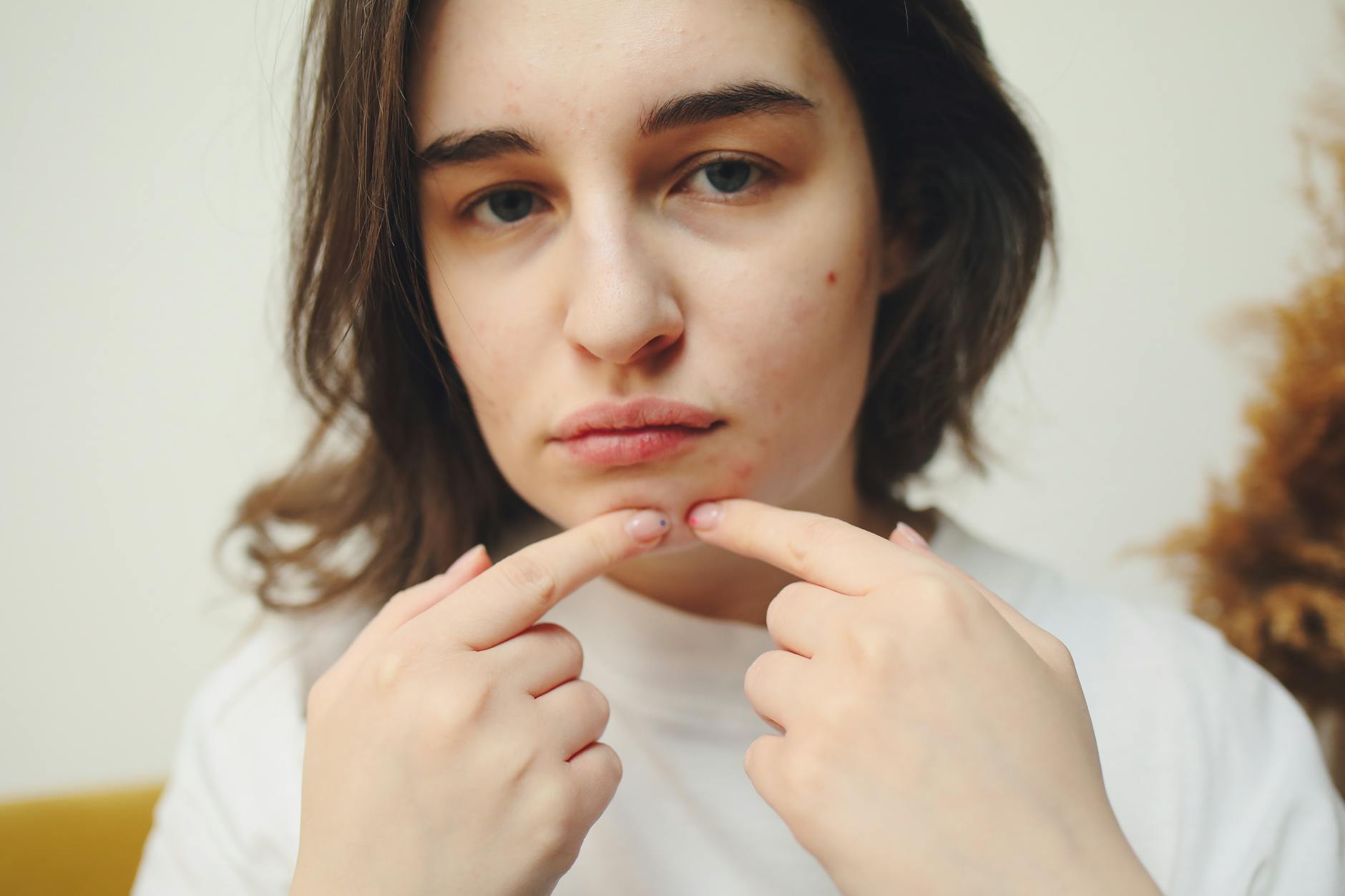
Pro-retinol can be effective for mild acne in sensitive skin, but only if used carefully and with the right approach. Unlike stronger retinoids, pro-retinol (also called retinyl palmitate or retinol esters) converts to retinoic acid gradually in the skin, which makes it gentler and allows sensitive skin to tolerate it better. For someone with mild acne—think scattered whiteheads or the occasional inflamed pimple rather than extensive breakouts—pro-retinol can help normalize skin cell turnover, reduce comedones, and even improve skin texture without triggering the intense irritation or peeling that prescription retinoids like tretinoin cause. This article explains what pro-retinol actually does, how to use it safely on sensitive skin, what results to expect, and when it might not be the right choice.
Pro-retinol works by stimulating skin cell turnover and increasing collagen production, which helps unclog pores and reduces the buildup of dead skin cells that bacteria thrive on. For mild acne, this means fewer new breakouts over time and a smoother complexion. The key difference with sensitive skin is that pro-retinol’s conversion process happens in the skin rather than being delivered as active retinoic acid, so you get a slower, more tolerable introduction to retinoid benefits. However, this also means results take longer—typically 8 to 12 weeks before noticeable improvement, compared to 6 to 8 weeks with stronger retinoids.
Table of Contents
- How Pro-Retinol Tackles Mild Acne in Sensitive Skin Types
- The Sensitivity Concern—Why Pro-Retinol is Gentler But Still Requires Caution
- Timeline and Realistic Results for Mild Acne
- The Right Protocol—How to Use Pro-Retinol Without Aggravating Sensitive Skin
- Common Mistakes and Potential Side Effects
- When to Pause or Switch to a Different Approach
- Long-Term Use and Maintenance for Sustained Acne Control
- Conclusion
How Pro-Retinol Tackles Mild Acne in Sensitive Skin Types
Pro-retinol works through a conversion pathway: the skin’s natural enzymes slowly transform it into retinaldehyde, then into retinoic acid, the active form that cells actually recognize and respond to. This gradual conversion is why pro-retinol is tolerable for sensitive skin—you’re not flooding your skin with a potent active from day one. For mild acne, this mechanism addresses two underlying problems: excess sebum and follicle blockage. Retinoids increase skin cell turnover from the normal 28-day cycle to something faster, preventing dead cells from accumulating in pores.
At the same time, they regulate sebaceous gland activity, reducing the excess oil production that feeds acne bacteria. A practical example: someone with sensitive skin using a 0.3% retinyl palmitate cream might see fewer whiteheads and blackheads on the chin and forehead after 6 weeks of consistent use. Meanwhile, someone with sensitive skin who jumps straight to tretinoin 0.025% would likely experience significant redness, peeling, and irritation by week two, potentially triggering more inflammation and temporary breakouts from the “retinization” process. Pro-retinol doesn’t produce that intense adjustment period, making it a legitimate starting point for mild acne in reactive skin. The tradeoff is slower results—but for mild acne, slow and steady often beats fast and inflammatory.
The Sensitivity Concern—Why Pro-Retinol is Gentler But Still Requires Caution
sensitive skin has a compromised or reactive barrier, meaning it’s prone to irritation from multiple ingredients and environmental stressors. Even though pro-retinol is weaker than other retinoids, it still triggers some increase in sun sensitivity and can cause dryness, mild redness, or irritation if not introduced properly. The key is that pro-retinol carries less risk of the extreme barrier disruption that prescription retinoids can cause. However, if your sensitive skin is currently dealing with active inflammation, barrier damage, or conditions like rosacea, pro-retinol may still provoke unwanted reactions and should be delayed until your skin stabilizes.
The biggest limitation of pro-retinol for sensitive skin is dose—it’s weaker than retinol or retinaldehyde, so you need a higher concentration (usually 0.5% to 1%) to see the same effects as a 0.25% retinol product. Higher concentrations increase irritation risk. Additionally, many pro-retinol formulations are paired with other actives like niacinamide or peptides that might be irritating in their own right. Always check the full ingredient list and consider patch testing a new product on the inner arm for a few days before applying to the face. If your sensitive skin is barrier-compromised (showing signs like persistent redness, tightness, or stinging when applying any moisturizer), hold off on pro-retinol until you’ve spent 2–3 weeks repairing your barrier with bland moisturizers and no actives.
Timeline and Realistic Results for Mild Acne
Most people don’t see clear changes from pro-retinol until 8 to 12 weeks of consistent use, and full results often don’t appear until 16 weeks. This is slower than stronger retinoids but worth noting if you’re impatient for clearer skin. The first visible changes are usually smoother texture and slightly reduced blackheads; inflammatory acne (red pimples) takes longer to improve because pro-retinol is working at the cellular level rather than providing immediate anti-inflammatory relief. For someone with just a few mild blemishes on an otherwise clear face, pro-retinol may eliminate them completely. For someone with persistent low-grade breakouts across multiple zones, pro-retinol can significantly reduce the frequency and severity, though it may not achieve perfect clearness.
A real example: a 28-year-old with sensitive skin and mild acne (5–7 small spots per month) starts 0.5% retinyl palmitate at night, slowly ramping up over 3 weeks. By week 8, spots drop to 2–3 per month and existing spots heal faster. By week 12, skin is visibly smoother and breakouts are minimal, though not zero. If the same person had used tretinoin 0.025% from the start, they would have seen faster results (weeks 6–8) but would have endured peeling and redness for the first 4 weeks and risked triggering more temporary breakouts from retinization. The slower timeline with pro-retinol is often worth it for sensitive skin because consistency is easier to maintain without discomfort.

The Right Protocol—How to Use Pro-Retinol Without Aggravating Sensitive Skin
The standard approach is the “low and slow” method: start with a low concentration (0.25% to 0.3%) used 1–2 times per week, gradually increasing frequency and concentration over 6–8 weeks as skin adapts. For sensitive skin, resist the urge to accelerate. Even if you feel fine after two weeks, stay at your current dose for at least three weeks before increasing. Use the “sandwich method”: apply a light layer of moisturizer to clean, slightly damp skin, then apply pro-retinol, then seal with another layer of moisturizer or an occlusive like Vaseline. This reduces irritation significantly because the moisturizer buffers the retinoid and helps skin retain hydration. The second critical rule is sunscreen—nonnegotiable.
Pro-retinol increases sun sensitivity, and sensitive skin is already more reactive to UV damage. Use a mineral sunscreen (zinc oxide or titanium dioxide) at SPF 30 or higher every single day, even if it’s cloudy. Chemical sunscreens sometimes irritate sensitive skin more than minerals. Avoid other potentially irritating actives during the first 8 weeks: don’t use vitamin C serums, AHAs, BHAs, or niacinamide concentrations above 5% in the same routine as pro-retinol. Save those for other nights or drop them temporarily. Compare this to someone with resilient, non-sensitive skin who can layer pro-retinol with multiple actives and be fine—sensitive skin requires more simplicity and patience to avoid overwhelming the barrier.
Common Mistakes and Potential Side Effects
The most common mistake is using too much, too soon. Sensitive skin doesn’t need high concentrations right away, and pushing the dose too fast leads to dryness, redness, and peeling that makes people quit. Another frequent error is stopping sunscreen or skipping it on cloudy days, which leads to hyperpigmentation or damage that negates acne improvement. Some people also mix pro-retinol with other actives on the same night, thinking they’ll accelerate results, but this usually just triggers irritation and stops people from continuing.
Potential side effects in sensitive skin include temporary dryness (especially around the mouth and eyes), mild redness lasting 30 minutes to a few hours after application, slight flaking (minimal compared to stronger retinoids), and occasional sensitivity to fragrance-free moisturizers that seemed fine before. These usually resolve within 3–4 weeks as skin adapts. However, if you experience persistent itching, hives, severe redness that doesn’t fade, or sensitivity that worsens instead of improves after 4 weeks, stop using pro-retinol and consider consulting a dermatologist—you may have true retinoid intolerance or an allergy to another ingredient. Also, pro-retinol is not recommended during pregnancy or while breastfeeding, as retinoid safety in these contexts is not fully established. Additionally, if you’re on isotretinoin (Accutane) or have recently finished a course, avoid pro-retinol until at least 6 months after stopping, as combining retinoids increases toxicity risk.

When to Pause or Switch to a Different Approach
If after 12 weeks of consistent use you see minimal improvement in mild acne, pro-retinol may not be the right fit, and you have options. Some sensitive skin simply doesn’t respond well to any retinoid; for those cases, azelaic acid (10% to 20%) is a gentler alternative that targets acne and is well-tolerated by sensitive skin. Another scenario is if pro-retinol improves acne but you’re struggling with too much dryness or irritation despite using the sandwich method and limiting other actives.
In that case, reduce frequency to once weekly or switch to a lower concentration (0.3% instead of 0.5%), or consider pausing for a month and reintroducing it later when your skin barrier feels stronger. If mild acne worsens or becomes moderate despite pro-retinol use—meaning breakouts spread or become more inflamed—that’s a signal to stop and see a dermatologist. Worsening acne can indicate that the irritation from the retinoid is creating more inflammation, triggering bacterial overgrowth, or that you need a different treatment strategy altogether. Additionally, if you develop cystic acne after starting pro-retinol, this is not typical retinization and warrants professional evaluation.
Long-Term Use and Maintenance for Sustained Acne Control
Once your skin adapts and acne improves (usually around week 12–16), pro-retinol can be used indefinitely 2–4 times per week as a maintenance treatment to prevent new breakouts. Many people continue at this lower frequency long-term because even modest retinoid use supports skin health through increased collagen production and cell turnover. For sensitive skin, the beauty of maintenance is that you can stay at a lower concentration indefinitely rather than chasing stronger and stronger actives—a 0.3% pro-retinol used twice weekly is often enough to keep mild acne from returning.
Looking forward, if your mild acne control is excellent on pro-retinol but you’re curious about faster or stronger results, you might consider upgrading to retinol (0.25% to 0.5%) after 6 months of successful pro-retinol use, since your skin will be more adapted to retinoids. However, for true sensitive skin, there’s no shame in staying with pro-retinol indefinitely—it’s effective, tolerable, and supports long-term skin health without the harsh effects of prescription retinoids. The key is consistent, patient use and honoring your skin’s boundaries rather than pushing for dramatic transformation.
Conclusion
Pro-retinol is a practical, tolerable option for mild acne in sensitive skin because it delivers retinoid benefits through a gradual conversion process that minimizes irritation. Results take 8 to 12 weeks and require careful attention to sun protection, barrier support, and a simplified routine, but for sensitive skin prone to irritation from stronger actives, this slow approach often leads to better long-term adherence and fewer flare-ups. The goal is not dramatic overnight transformation but steady improvement and sustained control—clearer skin that doesn’t come at the cost of a damaged barrier or constant irritation.
Start with a low concentration (0.25% to 0.3%) used once or twice weekly, use the sandwich method, wear sunscreen daily without exception, and resist the urge to add other actives or increase frequency too quickly. If pro-retinol works for you after 12 weeks, you have a gentle, long-term solution you can rely on for years. If it doesn’t, that’s valuable information pointing you toward azelaic acid, niacinamide, or a consultation with a dermatologist about other options suited to sensitive skin.