
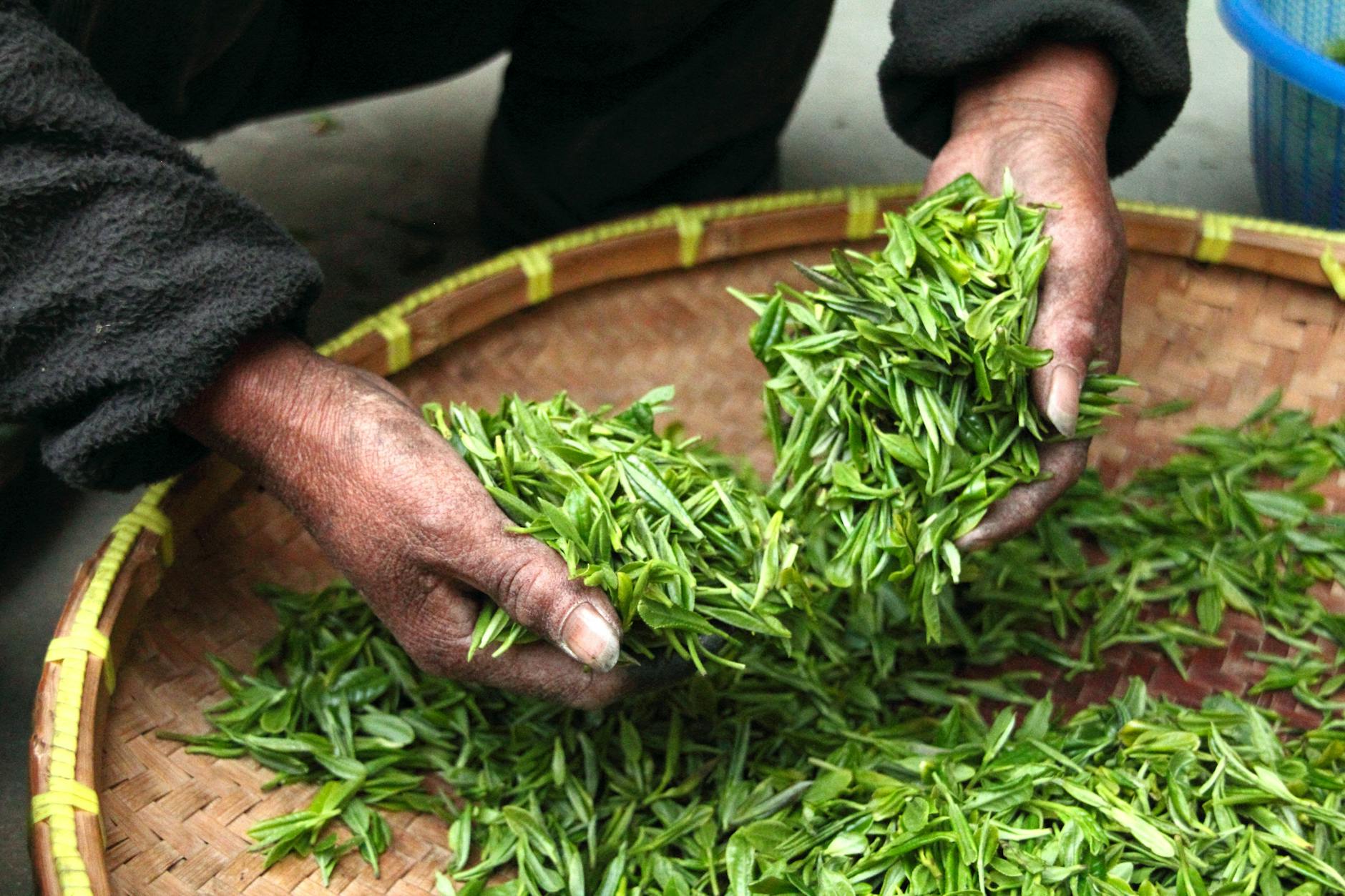
Green tea extract works topically for acne primarily through epigallocatechin-3-gallate (EGCG), a catechin that reduces sebum production, suppresses inflammation, and inhibits acne-causing bacteria. When applied at effective concentrations like 2% to 3%, EGCG blocks the enzyme 5-alpha-reductase, which normally converts testosterone into dihydrotestosterone—the hormone that triggers sebaceous glands to overproduce the oily sebum that feeds acne development. This three-pronged mechanism makes green tea extract one of the few topical ingredients with solid clinical backing for acne treatment.
Clinical trials demonstrate measurable results: a 2% green tea lotion showed significant efficacy for mild-to-moderate acne vulgaris, while a 3% green tea emulsion produced “ideal results” in reducing sebum production by measurably decreasing sebaceous gland activity. The evidence suggests green tea extract can work as well as or comparable to benzoyl peroxide for many people, often with fewer side effects. This article explores how green tea actually tackles acne at the cellular level, what the clinical data shows, when it works best, and how to use it effectively.
Table of Contents
- How EGCG Blocks Testosterone-Driven Sebum Production
- Anti-Inflammatory and Antibacterial Actions Work in Parallel
- What Clinical Trials Actually Show About Topical Concentrations
- Concentration Matters: Balancing Potency and Tolerability
- Who Green Tea Extract Works Best For—And Who Should Look Elsewhere
- Oral Green Tea Extract: A Complementary Route
- Safety Profile and Realistic Expectations for Results
- Conclusion
How EGCG Blocks Testosterone-Driven Sebum Production
The primary mechanism behind green tea extract‘s acne-fighting power involves hormone regulation. EGCG inhibits 5-alpha-reductase, the enzyme responsible for converting testosterone into dihydrotestosterone (DHT). Since DHT is the hormone that signals sebaceous glands to produce excess sebum, blocking this conversion naturally reduces the oily buildup that clogs pores and feeds Propionibacterium acnes bacteria. This is why green tea extract tends to be particularly effective for acne driven by hormonal overactivity rather than bacterial overgrowth alone. Consider someone with persistent breakouts around the chin and jawline—classic hormonal acne zones.
When they apply a green tea extract product consistently, they’re directly suppressing the DHT signaling in the skin’s sebaceous glands. A 3% green tea emulsion study documented measurable reductions in skin sebum production, suggesting that users experience less oily skin within weeks rather than months. This matters because less sebum means fewer nutrients for acne bacteria to thrive on, plus naturally unclogged pores that are harder for bacteria to colonize. The limitation here is timing: this mechanism works best as a preventive measure rather than an emergency spot treatment. It takes consistent daily application over 2-4 weeks to meaningfully suppress sebaceous gland activity, so green tea extract is not an immediate solution for an inflamed cyst or pustule that’s already formed. It prevents future breakouts more effectively than it shrinks existing ones.

Anti-Inflammatory and Antibacterial Actions Work in Parallel
Beyond sebum suppression, EGCG simultaneously tackles inflammation and bacteria—the two other pillars of acne development. The catechin suppresses NF-κB and AP-1 signaling pathways, which are responsible for activating immune cells and producing pro-inflammatory cytokines like IL-6, IL-8, and TNF-α. Reducing these inflammatory messengers calms redness, swelling, and pain associated with active acne lesions. At the same time, EGCG increases apoptosis (programmed cell death) in sebocytes and directly reduces the viability and colony-forming units of Propionibacterium acnes, the primary acne-causing bacterium. This dual action—reducing inflammation while killing bacteria—explains why green tea extract can improve existing acne rather than just preventing future breakouts.
A user with inflamed papules or pustules may see those lesions calm down within a week or two, not because the bacteria die instantly, but because EGCG simultaneously reduces inflammatory signaling and limits bacterial growth. The result is that the skin’s immune response isn’t as aggressive, so the lesion doesn’t get worse even if it takes longer to fully resolve. However, this anti-inflammatory effect has a caveat: it’s less potent than prescription antibiotics or benzoyl peroxide for severe bacterial acne. If someone has a heavy P. acnes load or cystic acne driven primarily by infection rather than sebum or hormones, green tea extract alone may not be enough. It performs best as part of a layered approach or for mild-to-moderate cases where inflammation is a significant component.
What Clinical Trials Actually Show About Topical Concentrations
The strongest clinical evidence centers on two specific formulations. A 2% green tea lotion demonstrated significant efficacy for mild-to-moderate acne vulgaris in published trials, making it a cost-effective standard that many over-the-counter products use. A 3% green tea emulsion went further, showing “ideal results” in controlling sebum production with measurable reductions in sebaceous gland activity. Additionally, topical EGCG solutions at 1% and 5% concentrations significantly improved acne lesions in 8-week clinical trials, suggesting a relatively broad effective range.
The difference between 2% and 3% is subtle but real: a 3% concentration delivers marginally faster results for sebum reduction, while 2% still works well and may be gentler for sensitive skin. An 8-week timeframe is important to note—this is how long the clinical trials ran before measuring improvements. Users shouldn’t expect visible results in one or two weeks; the changes are gradual as sebaceous glands downregulate oil production and bacterial populations decline. Most of the robust clinical evidence comes from 2009-2020 studies, and while green tea extract remains well-regarded, newer publications specifically on this topic are limited in current databases. This doesn’t invalidate the findings; it reflects that the mechanism is well-established and new formulations tend to build on these proven concentrations rather than searching for entirely new active concentrations.

Concentration Matters: Balancing Potency and Tolerability
Not all green tea products are created equal, and concentration directly affects results. A 2% lotion provides proven efficacy with minimal irritation risk—ideal for beginners or those with sensitive skin. A 3% emulsion delivers stronger sebum reduction but introduces marginally higher risk of irritation or stinging in sensitive individuals. EGCG solutions at 5% are available in some research-grade and professional products but sit at the edge of what most people tolerate without irritation. The tradeoff is straightforward: higher concentration equals faster results but greater irritation risk.
Someone with resilient skin and moderate acne might use a 3% or even 5% EGCG product and see measurable improvements in 4-6 weeks. Someone with rosacea-prone or very sensitive skin is better served by a 2% formulation, even if results take 8-10 weeks. Starting with 2% and potentially upgrading after four weeks of tolerance is the pragmatic approach—it avoids the frustration of buying a strong product only to find it causes persistent stinging or peeling. It’s also important to note that “green tea extract” on a label doesn’t specify concentration; you need to look for EGCG content or the specific percentage listed in the product’s ingredient description. A serum listing green tea extract at the end of an ingredients list may contain under 1% active EGCG and deliver minimal benefit, whereas a “green tea lotion 2%” explicitly tells you the active concentration.
Who Green Tea Extract Works Best For—And Who Should Look Elsewhere
Green tea extract shines for mild-to-moderate acne, particularly cases driven by hormonal overactivity, excess sebum, or mild bacterial involvement. Someone dealing with persistent comedones (blackheads and whiteheads) along the T-zone and cheeks, coupled with occasional inflammatory papules, is an ideal candidate. The sebum-reducing mechanism makes it especially useful for people whose acne worsens during high-hormone times (menstrual cycle, puberty) or who struggle with oily skin year-round. Conversely, green tea extract is less effective for severe cystic acne, which typically requires prescription-strength interventions like isotretinoin or oral antibiotics. Someone with deep nodules that are painful and slow to resolve will likely be disappointed by topical green tea alone.
Similarly, acne driven primarily by bacterial overgrowth in the presence of normal sebum levels may respond better to benzoyl peroxide, which is a more aggressive bacteria-killer. Acne caused by medication side effects, hormonal dysregulation (PCOS, thyroid), or dietary triggers also requires addressing the root cause—green tea can help manage symptoms but won’t fix the underlying problem. A realistic limitation: green tea extract is effective but not magic. It works best alongside other acne management strategies like gentle cleansing, avoiding pore-clogging moisturizers, and addressing lifestyle factors like sleep and stress. Using a 2% green tea lotion while continuing to touch your face or sleep on a pillowcase that isn’t washed regularly will undercut the topical treatment’s effectiveness.
Oral Green Tea Extract: A Complementary Route
While this article focuses on topical application, the oral data is worth noting because it reveals how seriously green tea works systemically. A double-blind, placebo-controlled trial involving 80 subjects found that 1500 mg of decaffeinated green tea extract (approximately 856 mg EGCG) taken daily produced statistically significant reductions in inflammatory lesions on the nose, perioral area, and chin within 4 weeks. This suggests that oral green tea extract can complement topical use, particularly for hormonal and inflammatory acne that appears in multiple areas.
The advantage of oral supplementation is systemic reach—it circulates throughout the body and can address acne on the chest, back, or shoulders where topical application is cumbersome. The disadvantage is slower results (4 weeks versus 2-3 weeks for topical) and the digestive processing that reduces EGCG bioavailability compared to direct skin application. Many dermatologists suggest combining both routes for maximum effect: topical green tea for localized problem areas and oral supplementation for widespread or persistent acne.
Safety Profile and Realistic Expectations for Results
Green tea extract is remarkably well-tolerated topically. Clinical trials documented adverse effects limited to mild, transient pruritus (itching) and temporary stinging sensations in a small subset of participants. These effects typically resolve within a few days as skin acclimates, and they’re dramatically less common than the side effects associated with benzoyl peroxide (dryness, peeling, bleaching) or prescription retinoids (flaking, increased sensitivity). This favorable safety profile means that green tea extract is an excellent starting point for anyone new to acne treatment, especially those hesitant about stronger actives.
Users can apply it twice daily without worrying about the severe dryness or irritation that comes with harsher treatments. Realistic results: expect to see a meaningful reduction in sebum, reduced breakout frequency, and calmer inflammation within 6-8 weeks of consistent daily use. Some people see changes in 4 weeks; others take the full 8. Patience and consistency matter more than product strength in this case.
Conclusion
Green tea extract works topically for acne because EGCG simultaneously addresses the three root causes of acne: excess sebum production (via 5-alpha-reductase inhibition), inflammation (via NF-κB and AP-1 suppression), and bacterial colonization (via increased apoptosis and reduced P. acnes viability). Clinical evidence supports efficacy at 2% to 3% concentrations, with measurable improvements visible in 4-8 weeks of consistent daily application.
It’s particularly effective for hormonal and inflammatory acne, works well for those with sensitive skin, and pairs safely with other skincare ingredients. If you’re considering green tea extract for acne, start with a 2% formulation to assess tolerance, apply it consistently morning and night, and give it a full 6-8 weeks before evaluating results. For widespread or severe acne, combining topical and oral green tea extract may amplify benefits. The evidence is solid, the side effects are minimal, and for many people, it delivers meaningful improvement without the harshness of stronger treatments—making it a pragmatic first-line choice for mild-to-moderate acne management.