

Vitex berry extract helps PMS acne by regulating the hormonal fluctuations that trigger breakouts in the second half of your menstrual cycle. The supplement works on the luteal phase by supporting progesterone production and moderating estrogen levels—changes that directly reduce sebum overproduction and the inflammatory cascade that creates cyclical acne flares. If you experience acne that clusters in the 7-14 days before your period and clears after menstruation begins, vitex may be more effective for you than topical treatments alone because it addresses the hormonal root cause rather than just the surface symptoms. This article covers what vitex does at the hormonal level, how long it takes to see results, which women see the best outcomes, potential side effects and drug interactions, how it compares to other hormonal acne treatments, and practical guidance on dosing and when to seek professional help instead.
Table of Contents
- How Does Vitex Berry Extract Regulate Hormones to Reduce PMS Acne?
- How Long Does Vitex Take to Show Results for Acne?
- Which Women See the Best Results From Vitex for PMS Acne?
- Vitex Dosing and How It Compares to Birth Control for Acne
- Potential Side Effects and Drug Interactions to Know
- Combining Vitex With Topical Acne Treatments
- Tracking Whether Vitex Is Working and Long-Term Use Considerations
- Conclusion
- Frequently Asked Questions
How Does Vitex Berry Extract Regulate Hormones to Reduce PMS Acne?
Vitex (Vitex agnus-castus, also called chasteberry) doesn’t contain hormones itself, but it signals the pituitary gland to improve the body’s own hormone production. Specifically, it increases luteinizing hormone (LH) production, which stimulates the corpus luteum to produce more progesterone during the luteal phase. Higher progesterone levels help counterbalance estrogen dominance—the hormonal imbalance that triggers increased sebum production, narrowed pores, and heightened skin inflammation before your period. The mechanism matters because it means vitex works differently than hormonal birth control, which suppresses ovulation and flattens hormone curves entirely.
With vitex, your natural cycle continues, but the ratio of hormones normalizes. Studies measuring hormone levels show that women taking vitex for 3+ months experience a measurably longer luteal phase and higher progesterone peaks. For acne specifically, this hormonal stabilization reduces the spike in sebaceous gland activity that normally occurs right before menstruation, making breakouts fewer and less severe. One important caveat: vitex works best for cycle-related acne, not acne from other causes like polycystic ovary syndrome (PCOS), bacterial overgrowth, or genetic predisposition to clogged pores. If your acne is constant throughout the month regardless of cycle timing, vitex alone is unlikely to clear it significantly.

How Long Does Vitex Take to Show Results for Acne?
The most commonly cited timeline is 3 months of consistent use before you’ll see meaningful improvement in PMS acne. This isn’t arbitrary—it’s because vitex needs time to recalibrate pituitary signaling and allow your body to build up the compound in your system. Many women notice a slight shift in their cycle length or mood within 1-2 months, but acne improvement typically lags behind other changes because skin repair and sebum normalization take longer than hormonal signaling does. However, if you have a 28-day cycle, you’re looking at roughly 12 cycles minimum to evaluate whether vitex is actually working for you or not.
some women see acne improvement by month 2; others don’t see real results until month 4-5. Starting vitex and expecting clear skin in 2-3 weeks is a common reason for premature discontinuation, when a few more weeks of consistency would have delivered results. One limitation is that if you’ve been taking hormonal birth control for years and only recently stopped, your body’s natural hormone regulation may take 4-6 months to rebalance on its own before vitex can even show its full effect. Patience matters here, and tracking your acne day-by-day on a calendar makes it easier to spot patterns rather than relying on memory.
Which Women See the Best Results From Vitex for PMS Acne?
Vitex works best for women with predictable, cycle-dependent acne—the kind that flares in the same phase every month, peaks 2-3 days before menstruation, and resolves within a few days of bleeding. Women in their 20s and 30s who haven’t used birth control for years (or who recently stopped) tend to see better results because their pituitary gland responds more readily to the supplement’s signaling. If you have regular 25-35 day cycles, your body has a clearer baseline to normalize toward, making vitex’s effect more noticeable. Women with PCOS, amenorrhea, or severely irregular cycles often see vitex help normalize cycle length first, with acne improvement coming second.
In these cases, the hormone rebalancing is more pronounced but also takes longer. Conversely, women approaching menopause (35-45 age range) may see inconsistent results because the pituitary and ovaries are already shifting their responsiveness to signaling hormones. A specific example: a woman with a 28-day cycle who gets 4-5 whiteheads and one or two painful cysts around day 23-26 every month is an ideal candidate. After 3 months of vitex, she might reduce that to 1-2 small bumps that don’t become inflamed—a real improvement in breakout severity, timing, and healing speed. Contrast this with a woman whose acne is constant all month; for her, vitex might reduce the worst flare slightly, but the baseline acne remains unchanged.

Vitex Dosing and How It Compares to Birth Control for Acne
The standard vitex dose for hormonal symptoms is 400-500 mg per day, standardized to 0.6% agnusides (the active compound). Some brands vary from 300-600 mg, and consistency matters more than hitting a precise dose—the key is taking the same amount every day. Most women see results on the 400 mg dose; jumping to 600 mg doesn’t speed up improvement and increases the risk of side effects. Taking vitex with food doesn’t reduce absorption, but taking it at the same time each day helps maintain steady blood levels. The trade-off between vitex and birth control for PMS acne is worth understanding.
Birth control (especially formulations with higher progestin-to-estrogen ratios, like norgestimate or drospirenone pills) can completely eliminate cycle-related acne by suppressing ovulation and flattening hormone fluctuations—results often visible within 1-2 months. The downside: birth control carries risks of blood clots, migraines with aura, and mood changes, and acne often rebounds if you stop. Vitex is gentler, works with your natural cycle, and has minimal side effects, but it takes longer and works less predictably than hormonal contraception. If you’ve tried birth control in the past and couldn’t tolerate it, vitex is a logical next step. If you want to avoid hormonal contraception entirely, vitex plus targeted skincare (retinoids, salicylic acid, niacinamide) is a reasonable combined approach, though the timeline to clear skin is longer.
Potential Side Effects and Drug Interactions to Know
Vitex is generally well-tolerated, but side effects do occur in 10-15% of users: the most common are mild nausea, headaches, breast tenderness, and mood changes (irritability or depressed mood in the first 2-3 weeks). These often resolve as your body adjusts. More rarely, some women experience dizziness, rashes, or worsening acne in the first 4 weeks—the latter is sometimes described as a “detox” or “adjustment phase,” though this explanation isn’t well-established medically. If worsening acne persists past week 4, vitex may not be the right supplement for you. Vitex can interact with dopamine antagonists (antipsychotics like risperidone or haloperidol) because vitex itself has some dopamine-suppressing properties—don’t use together without medical clearance.
It also shouldn’t be combined with dopamine agonists used for Parkinson’s disease or prolactin disorders. If you take any psychiatric or neurological medications, discuss vitex with your doctor first. Importantly, vitex is not recommended during pregnancy or breastfeeding, though it’s sometimes suggested for fertility—never assume it’s safe to continue vitex if you’re trying to conceive or become pregnant without talking to your OB/GYN. One warning: vitex doesn’t work well if you have very low body fat, are under significant chronic stress, or have just come off long-term hormonal birth control, because in these scenarios the pituitary and ovaries are already under strain. Addressing those factors first—eating enough, managing stress, allowing 3-6 months post-pill recovery—often makes vitex more effective later.
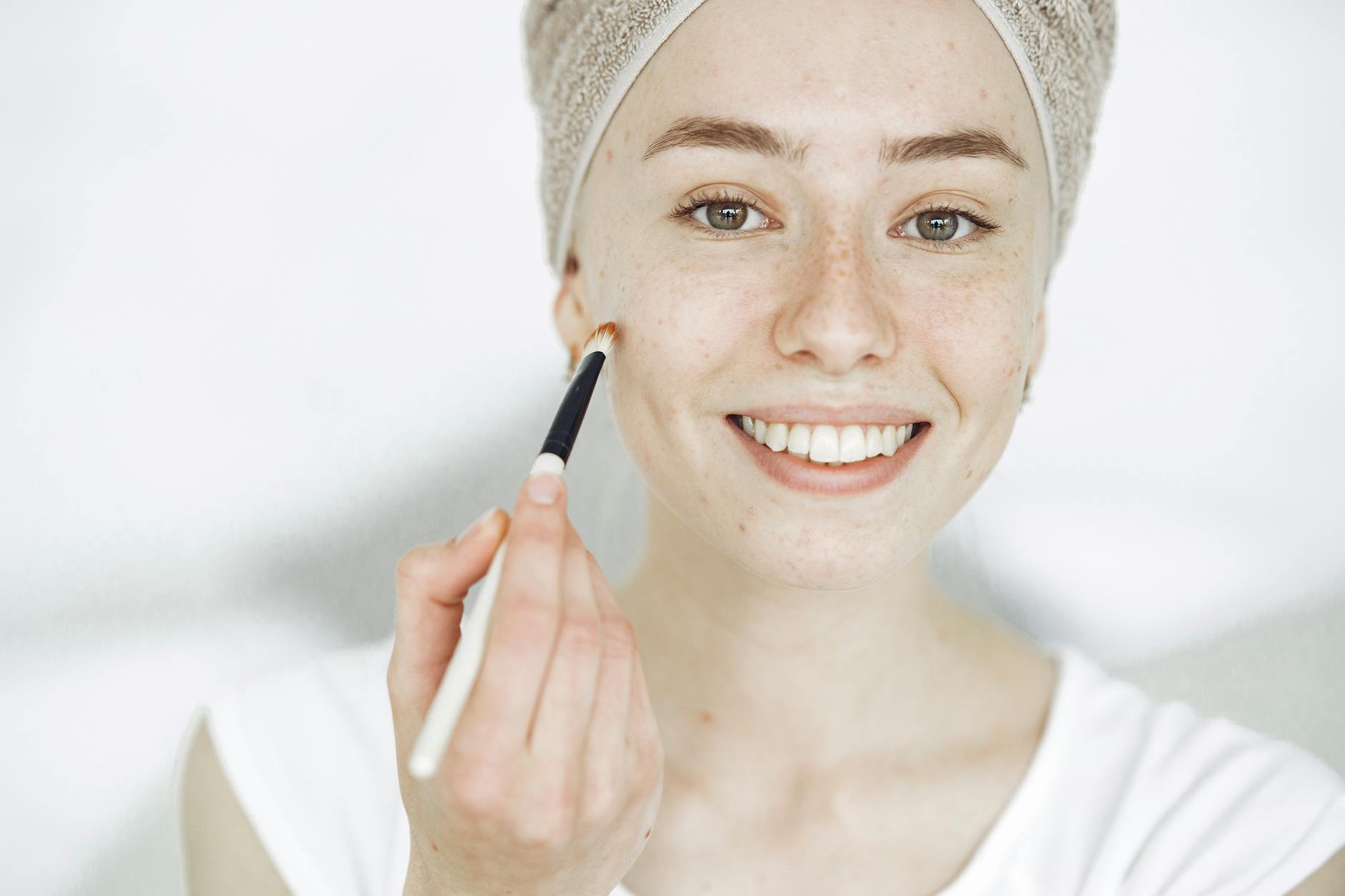
Combining Vitex With Topical Acne Treatments
Vitex addresses the hormonal root cause of PMS acne, but it doesn’t replace topical treatments that prevent bacterial overgrowth and unclog pores. A common mistake is expecting vitex alone to clear acne, when in reality the most reliable approach is vitex plus a retinoid (tretinoin, adapalene, or retinol), plus salicylic acid or benzoyl peroxide for the congested phase. Using topical treatments while vitex rebalances your hormones means you see some improvement immediately (from clearer, less inflamed pores) and additional improvement over 3 months as hormones stabilize.
For example, a woman taking vitex 400 mg daily, applying adapalene 0.3% three nights per week, and using a 2% salicylic acid cleanser typically sees noticeable breakout reduction by month 2 and nearly complete clearing of PMS acne by month 4. If she had only taken vitex without any topical treatment, the same result would have taken 5-6 months. The topicals aren’t fighting against vitex—they’re working on different problems simultaneously.
Tracking Whether Vitex Is Working and Long-Term Use Considerations
The best way to know if vitex is working is to track acne breakouts on a calendar tied to your cycle dates, noting the severity, location, and timing. After 3 months, compare months 1-3 to months 4-6: do breakouts appear later in the cycle or resolve faster? Is the peak severity lower? Even a reduction from five bumps to two is meaningful improvement. If there’s no change by month 4, vitex isn’t likely your answer, and you should consider other approaches (dermatologist evaluation, birth control, or different supplements like spearmint tea or inositol).
Long-term vitex use is safe for years without losing efficacy—the benefit doesn’t diminish over time as it sometimes does with oral antibiotics. Most women can stay on vitex indefinitely if it works for them, though some practitioners recommend a month off every 6-12 months to assess whether hormones have stabilized enough that vitex can be discontinued. In reality, many women who stop vitex after achieving clear skin see acne return within 1-2 cycles, suggesting they benefit from ongoing use. Vitex isn’t a cure for hormonal imbalance; it’s a tool for managing symptoms while hormones naturally normalize over years.
Conclusion
Vitex berry extract reduces PMS acne by supporting your body’s natural progesterone production and rebalancing estrogen dominance during the luteal phase, resulting in less sebum overproduction and inflammation. Results take 3-4 months of consistent 400 mg daily dosing, making it slower than birth control but gentler and hormone-regulation-preserving. It works best for women with predictable, cycle-dependent breakouts and integrates well with topical acne treatments.
If you have cycle-related acne, vitex is worth a 3-month trial before assuming you need stronger interventions. Track your breakouts on a cycle calendar, combine vitex with topical treatments for faster results, and be prepared for the possibility that you’ll need to continue vitex long-term to maintain the improvement. If acne isn’t tied to your cycle or if vitex doesn’t move the needle after 4 months, schedule an appointment with a dermatologist to evaluate other hormonal or dermatological causes.
Frequently Asked Questions
Can I take vitex while on birth control?
No. Vitex works by stimulating the pituitary gland to produce more progesterone naturally, which directly conflicts with hormonal birth control’s mechanism of suppressing ovulation. Taking both is pointless and could cause unexpected bleeding or hormone fluctuations. Choose one or the other.
Does vitex work for hormonal acne if I have PCOS?
Vitex can help PCOS-related acne, but results are less predictable because PCOS involves insulin resistance and androgen excess, not just progesterone deficiency. Many women with PCOS benefit more from inositol, spearmint, or spironolactone (a prescription anti-androgen) than from vitex alone. Talk to your doctor about testing if PCOS is confirmed.
What’s the difference between vitex and spearmint tea for acne?
Both address hormonal acne, but spearmint tea is a botanical infusion with antiandrogenic compounds, while vitex is a concentrated extract that affects progesterone more directly. Vitex is stronger and acts faster, but spearmint is cheaper and has fewer side effects. Some women use both; neither conflicts with the other.
Will my acne come back if I stop vitex?
Likely yes, within 1-2 cycles. Vitex doesn’t permanently rewire your hormones; it supports the pituitary gland’s function. Once you stop, if the underlying hormonal imbalance persists, acne usually returns to previous levels. Many women stay on vitex long-term for that reason.
Can vitex cause acne to get worse at first?
Some women report worsening acne in weeks 1-4, sometimes described as an adjustment phase. This is rare but possible. If it continues past week 4, vitex is probably not right for you. Don’t push through severe flaring hoping it will resolve.