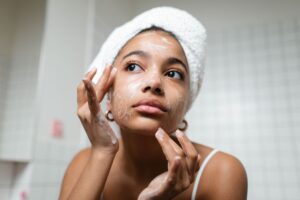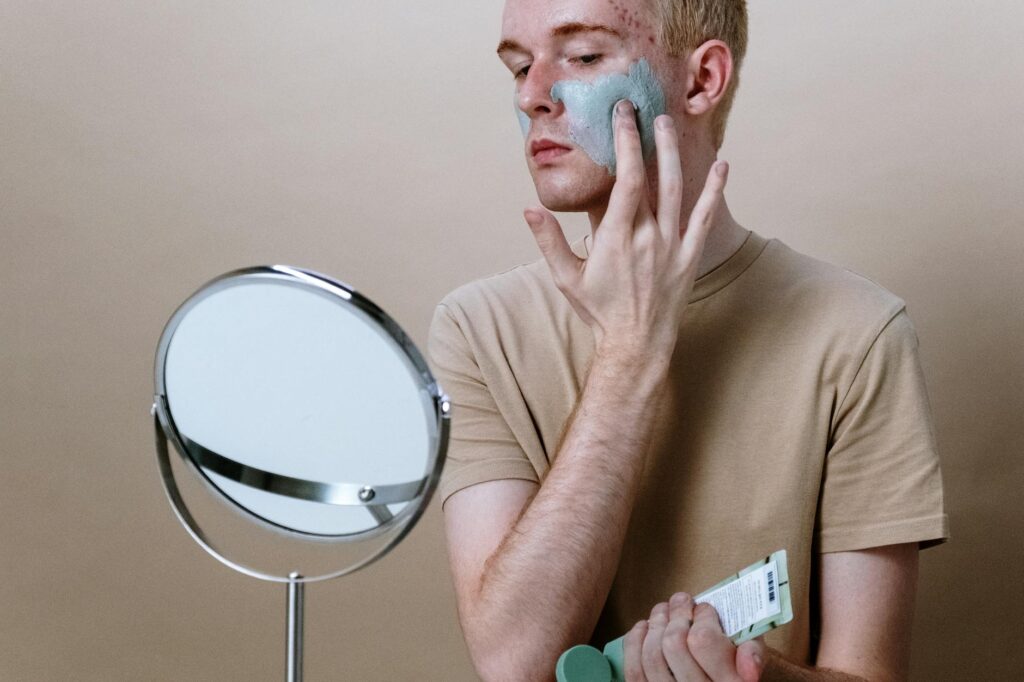
Acne in your 20s feels like a betrayal. You made it through your teenage years, survived the pizza-face phase, and suddenly expected to have clear skin as an adult. Instead, you’re dealing with breakouts that feel worse—more painful, more persistent, more strategically placed on your jawline right before an important event.
This happens because acne in your 20s operates on completely different triggers than the acne you dealt with as a teenager. While teen acne is driven almost entirely by the hormonal surge of puberty, adult acne in your 20s stems from a complex combination of stress, hormonal imbalances, birth control changes, and your body’s increasing sensitivity to environmental factors. The result is acne that doesn’t just disappear when your hormones stabilize the way it often did in your teens—it sticks around, changes location, and becomes far more resistant to the treatments that worked when you were 15. This article breaks down exactly why acne behaves differently in your 20s, where it tends to show up, why it’s more persistent than teen acne, and what makes it harder for your skin to bounce back from the damage it causes.
Table of Contents
- How Teenage Acne and 20-Something Acne Have Completely Different Root Causes
- Acne Location Matters—And Your 20s Acne Is Appearing in Different Places
- Hormonal Fluctuations Hit Harder in Your 20s Because Your Life Is More Complicated
- Your Skin’s Recovery Ability Declines, Making Acne Damage More Visible
- Resistant Bacteria and the Products That No Longer Work
- Environmental and Lifestyle Factors Play a Bigger Role in Your 20s
- Understanding Your 20s Acne as a Signal, Not Just a Skin Problem
- Conclusion
How Teenage Acne and 20-Something Acne Have Completely Different Root Causes
Teen acne is straightforward: puberty triggers a surge in androgens (mainly testosterone), which enlarge your oil glands and ramp up oil production. That’s it. The mechanism is simple, which is why teen acne often follows a predictable path and frequently clears up as hormone levels stabilize. About 85% of adolescents experience acne, and for many, it naturally improves or disappears by their early 20s. Adult acne in your 20s is far messier. Yes, hormones still play a role—about 50% of women in their 20s experience hormonal acne specifically. But acne in your 20s also involves chronic stress (which increases cortisol and androgens), hormonal imbalances like PCOS, disruptions from birth control changes, sensitivity to certain cosmetics, and bacteria that have become resistant to the treatments you’ve been using since high school.
For example, a woman might have clear skin at 19, switch birth control pills at 22, and suddenly develop stubborn jawline acne that doesn’t respond to the benzoyl peroxide wash that worked perfectly five years earlier. This isn’t a failure of the treatment—it’s a completely different acne problem with a different cause. The prevalence numbers tell the story. While 85% of teenagers get acne, only about 25% of men and 50% of women in their 20s and 30s experience acne. But here’s the crucial difference: teenage acne peaks and then often fades. Adult acne, once it starts, tends to persist. You’re no longer riding a wave of puberty-driven hormone shifts that will eventually level out. You’re dealing with acne that could stick around for years unless you identify and address the underlying trigger.
Acne Location Matters—And Your 20s Acne Is Appearing in Different Places
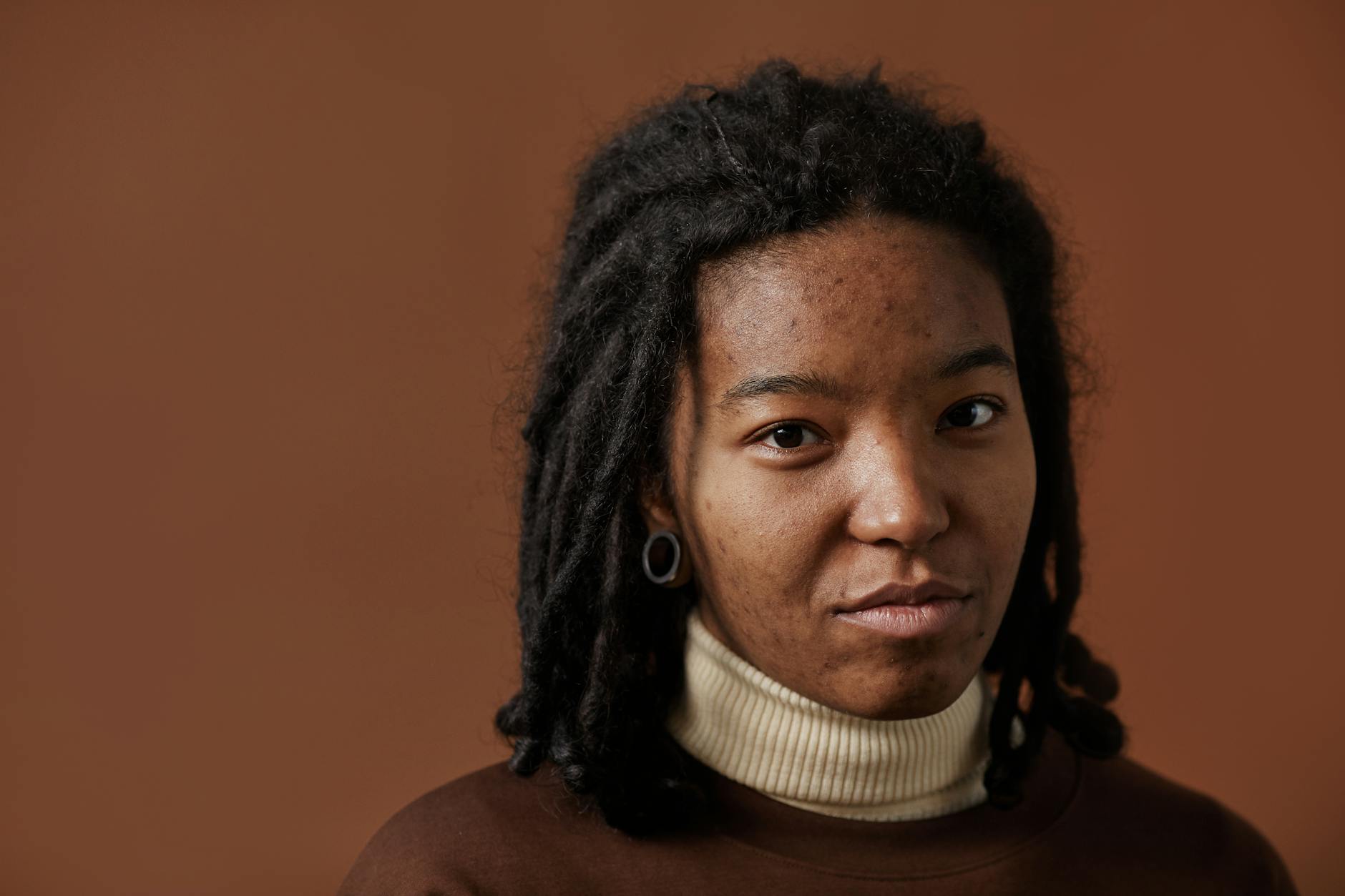
Teenage acne loves the T-zone. You get breakouts across your forehead, down the bridge of your nose, and across your cheeks—the oiliest parts of your face. This makes sense given that puberty-driven acne is fundamentally about excess oil production. Adult acne in your 20s gravitates toward your jawline and chin. This isn’t random.
The jawline is where androgens and stress-related hormonal shifts hit hardest, and it’s also an area where many people unconsciously touch their face, introduce bacteria, or where friction from phone use and masks create irritation. If you’re noticing breakouts appearing lower on your face than they did in your teens, that’s actually a reliable sign that you’re dealing with adult acne rather than lingering teenage acne. The location shift is one of the clearest indicators that the cause has changed. This location difference also affects treatment strategy. Products that worked brilliantly on your T-zone breakouts might not be the right choice for jawline acne, which often has hormonal or stress-related components that require different approaches. However, if you’re developing both T-zone acne (from excess oil) and jawline acne (from hormones or stress), you may need a combination approach—which makes diagnosing the root cause even more critical.
Hormonal Fluctuations Hit Harder in Your 20s Because Your Life Is More Complicated
In your teens, your hormones were in constant flux as a baseline state of being. In your 20s, hormonal changes become more specific events: starting or switching birth control pills, menstrual cycle fluctuations, potential pregnancy, or conditions like PCOS that may not have been diagnosed yet. Each of these creates a distinct trigger for acne, and the acne often emerges several weeks after the hormonal shift—making it easy to miss the connection. Birth control changes are a classic example. Someone might have been on the pill since age 17, when it actually kept their acne under control. At 22, they switch to a different formulation or stop taking it altogether.
Two weeks later, chin breakouts appear. They blame their skincare routine, start using harsher products, and make the acne worse. The real culprit was the hormonal shift—specifically a change in estrogen or progestin levels that altered how their body responds to androgens. Stress amplifies this. According to Johns Hopkins Medicine, stress increases cortisol and androgens, which stimulate oil glands and increase inflammation in the skin. A 24-year-old dealing with a demanding job, relationship stress, or financial pressure may experience acne that they didn’t have during a less stressful period of their life.

Your Skin’s Recovery Ability Declines, Making Acne Damage More Visible
This is one of the cruelest aspects of acne in your 20s: not only is it more persistent, but your skin recovers from it more slowly. Teenage skin has faster cell turnover and is naturally oilier, which sounds bad for acne but actually means it heals faster and bounces back more quickly from breakouts. Adult skin in your 20s begins to lose some of that rapid cell regeneration, and the skin also tends to be drier (especially if you’re treating acne aggressively). This means that the red marks, dark spots, and potential scarring from acne in your 20s stick around longer.
A 17-year-old might get a bad breakout, and within 4-6 weeks, the skin looks almost completely normal again. A 25-year-old with the same severity breakout might still see visible marks 12 weeks later. This difference isn’t just about the acne itself—it’s about how the skin heals. The practical implication is that preventing acne in your 20s becomes more critical than it was in your teens, because you’re dealing with longer recovery times and a higher risk of permanent texture changes or scarring.
Resistant Bacteria and the Products That No Longer Work
By your 20s, if you’ve been treating acne consistently since your teens, the bacteria on your skin may have developed resistance to the antibiotics or antimicrobial agents you’ve been using. Benzoyl peroxide is less likely to have this issue, but if you’ve been using the same topical antibiotic for five or six years, your skin might not respond to it anymore. Additionally, adult acne often has a different bacterial profile than teenage acne, which means the solutions that worked in your teens may simply be ineffective against the new bacteria involved. This is a critical but often-overlooked factor.
A person who had great results with a specific acne treatment in high school might assume their skin has just “gotten worse,” when in reality, they’re dealing with resistant bacteria that require a different approach. This is one reason dermatologists often recommend cycling treatments or switching products periodically, rather than assuming that if something worked before, it will always work. Your skin’s microbiome changes over time, and your treatments need to evolve with it. However, if you’ve developed sensitivity to benzoyl peroxide or salicylic acid over the years, that’s usually a sign to take a break from those actives rather than use them more aggressively. Using higher concentrations of a treatment you’ve become sensitive to typically backfires and damages your skin barrier further.
Environmental and Lifestyle Factors Play a Bigger Role in Your 20s
In your teens, acne was largely about biology—your genes and your hormones. In your 20s, environmental and lifestyle factors become major contributors. Cosmetics and skincare products that never bothered your skin as a teenager might now trigger breakouts, especially if you’re using heavier foundations or moisturizers. Diet, while not a proven direct cause of acne, can exacerbate it in adults more visibly than in teens.
Sleep deprivation, which you might have survived in high school, directly impacts acne in your 20s because it elevates cortisol and impairs skin repair processes. A 23-year-old who started wearing full-coverage makeup daily for work might notice acne appearing where the makeup sits—around the jawline, near the ears, along the hairline. The acne itself isn’t caused by the makeup, but the occlusion and bacterial buildup created by wearing heavy products all day combined with their increased hormonal sensitivity as an adult creates a perfect storm. Switching to lighter products or ensuring thorough cleansing might resolve the problem entirely.
Understanding Your 20s Acne as a Signal, Not Just a Skin Problem
Acne in your 20s often signals that something else is going on—whether that’s hormonal imbalance, chronic stress, a birth control mismatch, or an underlying condition like PCOS. Unlike teenage acne, which is usually just puberty doing its thing, acne in your 20s is your skin’s way of telling you that your body’s internal environment needs attention. This reframes acne from purely a skincare problem into something worth investigating more deeply.
If acne appears suddenly in your 20s or worsens dramatically over a few months, it’s worth discussing with a dermatologist—not just to treat the acne itself, but to identify the underlying cause. That cause might be treatable or manageable in ways that go beyond topical products, whether that’s addressing stress, reevaluating birth control, or investigating hormonal imbalances. The persistence of adult acne actually works in your favor here: it’s a persistent signal that something needs to change, rather than a temporary nuisance that will fade on its own.
Conclusion
Acne in your 20s hits differently because it’s fundamentally different acne. It’s driven by a complex mix of hormonal fluctuations, stress, lifestyle factors, and potentially resistant bacteria rather than the straightforward puberty-driven surge of teenage acne. It appears in different places on your face, persists longer, and your skin recovers from it more slowly. About 50.9% of women in their 20s experience acne, compared to lower rates in men, and it often affects people who had clear skin as teenagers—a jarring experience that makes it feel like your skin has betrayed you.
The good news is that understanding why acne in your 20s behaves differently is the first step to treating it effectively. Rather than assuming the products and routines that worked in high school will continue to work, you need to identify what’s actually triggering your acne now. That might mean investigating hormonal changes, managing stress, switching skincare products, or seeing a dermatologist to rule out underlying conditions. Acne in your 20s is more complex than teenage acne, but it’s also more solvable once you understand what’s actually causing it.