Early scar treatment after acne heals produces significantly better results because your skin has a critical window of opportunity—after approximately six months of natural healing, acne scars will not improve further without professional intervention. If you wait beyond that plateau point, the scars become more established and entrenched, requiring more aggressive and extensive treatment to achieve the same level of improvement.
Starting treatment within the first few months after active acne subsides gives your skin’s natural healing processes a boost at exactly the right time, when the tissue is still responsive to therapeutic intervention and collagen remodeling can be guided more effectively. Consider the difference between someone who begins scar treatment at three months post-acne versus someone who waits a full year: the earlier patient typically experiences faster results, requires fewer treatment sessions, and achieves better overall improvement because the scar tissue hasn’t had time to calcify and harden. This article covers the critical timing window for treatment, what happens during your skin’s natural healing phases, realistic timelines for visible results, how scar age affects treatment response, modern combination therapy approaches, and strategic planning for getting started.
Table of Contents
- Why The First Six Months After Acne Heals Represent Your Critical Treatment Window
- When Active Acne Must Completely Subside Before Professional Scar Treatment Begins
- What To Expect: The Realistic Treatment Response Timeline From First Session to Peak Results
- How Scar Age Fundamentally Changes Treatment Response and Success Rates
- Combination Therapy Approaches: Why Treating With Multiple Modalities Produces Superior Results
- Clinical Evidence: Real Results from Acne Scar Treatment Studies and What They Mean for Your Outcomes
- Strategic Timing: Why Fall and Winter Months Are Ideal for Starting Your Treatment Plan
- Conclusion
Why The First Six Months After Acne Heals Represent Your Critical Treatment Window
The window between the end of active acne and the six-month mark represents your skin’s most receptive period for scar improvement. After six months of natural healing without professional intervention, the scar tissue plateaus—meaning your skin will not continue to improve on its own, and the window for achieving faster results through early treatment begins to close. This isn’t to say that treatment after six months won’t work, but it typically requires more intensive procedures and longer timelines to achieve comparable improvement. This timing matters because during the first months after acne heals, your skin is still actively remodeling collagen and adjusting to the trauma.
Your body hasn’t yet “accepted” the scar as permanent, so when you introduce professional treatments—whether lasers, chemical peels, or radiofrequency therapy—your skin responds more readily. The inflammatory response is fresher, the collagen is still in flux, and the tissue hasn’t fully stabilized into its final scarred form. Early treatment essentially guides this natural remodeling process in a positive direction, whereas late treatment has to fight against tissue that has already settled into a scarred pattern. Think of it like treating a fresh wound versus a healed but disfigured one: it’s far easier to influence healing while the process is underway than to reverse damage that has already solidified. A patient who begins laser treatment at three months post-acne typically needs fewer sessions and sees more dramatic improvements than someone starting at twelve months, even though both might achieve eventual improvement with enough treatment.

When Active Acne Must Completely Subside Before Professional Scar Treatment Begins
Before you can begin professional scar treatment, active acne must fully subside—this is not merely a recommendation but a clinical requirement. Treating scars while acne is still actively breaking out promotes excessive inflammation and paradoxically creates additional scarring rather than improving existing scars. The inflamed, active skin cannot heal properly during treatment, and the trauma from both the acne itself and the therapeutic procedure compounds into worse outcomes. This means you need to have your acne under control through medication, skincare, or other interventions before scheduling scar treatments. If you’re still experiencing regular breakouts, your dermatologist will likely recommend waiting and ensuring your acne is genuinely resolved first.
The good news: once active acne subsides, you can move relatively quickly into scar treatment without needing an extensive waiting period. You don’t need to wait months after your last breakout; you primarily need the active inflammatory phase to be finished. However, if you have a tendency toward occasional breakouts, this creates a practical limitation: you may need to balance early scar treatment with the risk of new acne disrupting the treatment process. Some patients choose to combine acne prevention (maintaining their skincare regimen or staying on maintenance-dose medication) with early scar treatment to avoid reactivating breakouts during the critical healing window. Discuss this trade-off with your dermatologist to determine the safest sequencing for your specific situation.
What To Expect: The Realistic Treatment Response Timeline From First Session to Peak Results
Understanding the actual timeline for scar improvement helps set realistic expectations and prevents disappointment with early treatment decisions. Initial texture smoothing becomes visible within two to four weeks of your first professional treatment session, though this might be subtle—primarily a slight softening of rough texture rather than dramatic scar depth reduction. This early response is your skin responding to the therapeutic stimulus but hasn’t yet involved the deeper collagen remodeling that creates lasting improvement. Meaningful scar reduction that you and others will noticeably observe typically emerges within two to three months post-treatment, after several sessions. However, most patients experience significant improvement within three to six months of their first treatment session, with peak results continuing to emerge for six to nine months as collagen remodeling fully completes.
The reason for this extended timeline is that professional scar treatments don’t instantly fill in or remove scar tissue—instead, they trigger your body’s natural healing and collagen production processes, which take months to fully mature. Optimal results emerge at the twelve-month mark in some cases, though meaningful visible improvement has usually occurred well before then. This timeline varies somewhat depending on treatment type and scar severity. Someone with shallow rolling scars might see excellent results within three months, while someone with deep boxcar scars might need ongoing treatment through the six to nine-month window to see comparable improvement. The key insight is that starting early keeps you within this compressed timeline, whereas starting late means you’re beginning a months-long process from a later starting point.

How Scar Age Fundamentally Changes Treatment Response and Success Rates
Scar age significantly affects how quickly and dramatically your skin responds to treatment—newer scars respond faster and more dramatically than established older scars, making this one of the most important reasons to pursue early intervention. A scar that is two months old responds differently at the cellular level than a scar that is two years old, because older scars have had time to develop stronger collagen cross-links and more stabilized scar tissue architecture that is more resistant to remodeling. When comparing treatment responsiveness, a newer scar might require four to six treatment sessions to achieve substantial improvement, while an older scar might require eight to twelve sessions to reach the same level of improvement—if it reaches it at all. This difference isn’t just about the number of sessions but also about the ultimate ceiling of improvement.
Some established scars have a lower potential for improvement regardless of how many treatments you pursue, whereas newer scars frequently respond to the point of near-invisibility with appropriate early intervention. The practical implication is significant: if you’re considering scar treatment at all, the cost-benefit analysis strongly favors starting sooner rather than later. You’ll invest less money, fewer treatment sessions, and less overall time in the process by treating scars within the first year after they form. Someone waiting five years to address their scars is essentially choosing a longer, more expensive treatment journey for an uncertain outcome, when they could have achieved better results with less investment by starting earlier.
Combination Therapy Approaches: Why Treating With Multiple Modalities Produces Superior Results
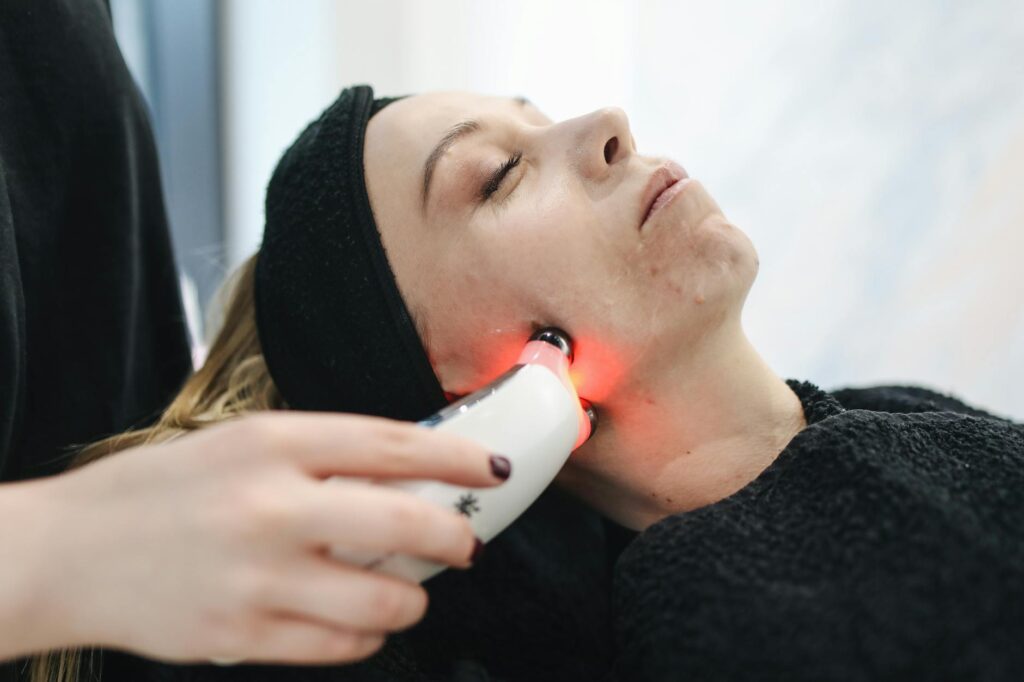
Recent 2025 research has demonstrated that combining oral isotretinoin (Accutane) with early adjunctive procedures—such as chemical peels, lasers, and radiofrequency treatments—significantly improves acne scar appearance, patient satisfaction, and quality of life compared to isotretinoin treatment alone. This combination approach represents a paradigm shift in how dermatologists approach scar treatment: rather than waiting until acne is fully resolved before treating scars, some clinicians now treat both simultaneously with carefully orchestrated procedures. Picosecond lasers represent one particularly promising advance in this combination approach, proving safe and effective when used during low-dose isotretinoin therapy. The combination enhances scar clearance without observed adverse effects, suggesting that the therapeutic benefits of combining approaches outweigh any increased risk concerns.
The mechanism is straightforward: isotretinoin improves acne and skin quality while simultaneously reducing inflammation, and when you layer in energy-based treatments during this window, you’re treating scars while your skin is in its most receptive state. However, combination therapy isn’t appropriate for all patients and requires careful medical oversight. If you’re considering this approach, you’ll need to work with a dermatologist experienced in simultaneous acne and scar treatment, as the coordination of medications, procedures, and healing timelines is more complex than treating either condition alone. For some patients with severe acne and significant scarring, this aggressive early approach delivers results worth the additional complexity; for others, treating sequentially (controlling acne first, then addressing scars) remains the safer, more straightforward path.
Clinical Evidence: Real Results from Acne Scar Treatment Studies and What They Mean for Your Outcomes
The strongest evidence for early treatment superiority comes from clinical research demonstrating concrete improvement percentages. In a notable split-face study, combining benzoyl peroxide and adapalene showed approximately 30 percent improvement in scars at the six-month mark—a significant improvement rate achieved through dual-mechanism topical treatment that also prevented new scar formation and even erased some pre-existing scars. This study demonstrates that even relatively conservative treatment approaches, started early and maintained consistently, deliver measurable scar reduction. More dramatically, seven clinical studies—including five randomized controlled trials—compared isotretinoin alone versus isotretinoin combined with energy-based lasers (including IPL, PDL, Nd:YAG, Er:glass, and CO2 lasers).
The results were unambiguous: combination therapy yielded significantly better outcomes than isotretinoin monotherapy, with patients reporting substantially higher satisfaction rates. This evidence suggests that whenever clinically appropriate, layering treatment modalities produces results superior to single-modality approaches, further reinforcing why early, comprehensive treatment planning produces the best outcomes. What these studies mean practically: if you start treatment in your first year after acne resolves, you have multiple evidence-supported pathways to meaningful improvement, whether through topical combinations, professional procedures, or combination approaches. You’re not gambling on unproven methods; you’re pursuing treatment approaches with clinical backing. This evidence base strengthens the case for early action rather than waiting, because the sooner you begin, the more time these proven approaches have to work within your critical improvement window.
Strategic Timing: Why Fall and Winter Months Are Ideal for Starting Your Treatment Plan
Beyond the six-month plateau and the importance of early action, there’s another timing consideration worth planning around: seasonal context. Most effective acne scar treatments increase sun sensitivity of the skin—whether you’re using lasers, chemical peels, radiofrequency, or certain topical medications—making fall and winter months the optimal choice for treatment initiation. Starting treatment in September through February means your skin heals through the lower-UV months, reducing the risk of complications and allowing you to approach spring and summer with treated, healing skin that requires extra sun protection but doesn’t risk photosensitivity reactions.
If you live in a climate with strong year-round sun exposure, starting treatment in fall or winter becomes even more strategically important. You’ll move through the critical healing phases (weeks 2-4 for initial texture smoothing, months 2-3 for visible reduction) during months when UV exposure is naturally lower, then transition to your high-sun months with healing well underway. This doesn’t mean summer treatment is impossible—it’s simply less ideal and requires more rigorous sun protection measures. The practical advantage of planning seasonally is that you can often work backwards from ideal scheduling: if you know you want to begin treatment, aim for September or October so that by the time summer arrives, you’re well into the improvement timeline and your skin has better adapted to whatever sun protection requirements your treatment requires.
Conclusion
Early scar treatment after acne heals produces dramatically better results because your skin operates within a critical window—the first six months after healing represent your most receptive period for improvement, and after that point, scars plateau without professional intervention. Starting treatment soon after active acne subsides, using evidence-supported approaches (whether topical combinations, professional procedures, or combination therapy), and planning strategically around seasons all contribute to optimized outcomes. The clinical evidence is clear: newer scars respond faster and more dramatically than older scars, fewer treatment sessions are typically required, and patient satisfaction is substantially higher when treatment begins within the first year.
If you’re considering acne scar treatment, the strongest recommendation is not to delay. Consult with a dermatologist about your specific scar type and severity, discuss whether early combination approaches might be appropriate for your situation, and plan your treatment initiation—ideally during fall or winter months if possible. The sooner you begin, the sooner you’ll move through your critical improvement window, achieve meaningful results, and emerge with significantly improved skin texture and appearance.