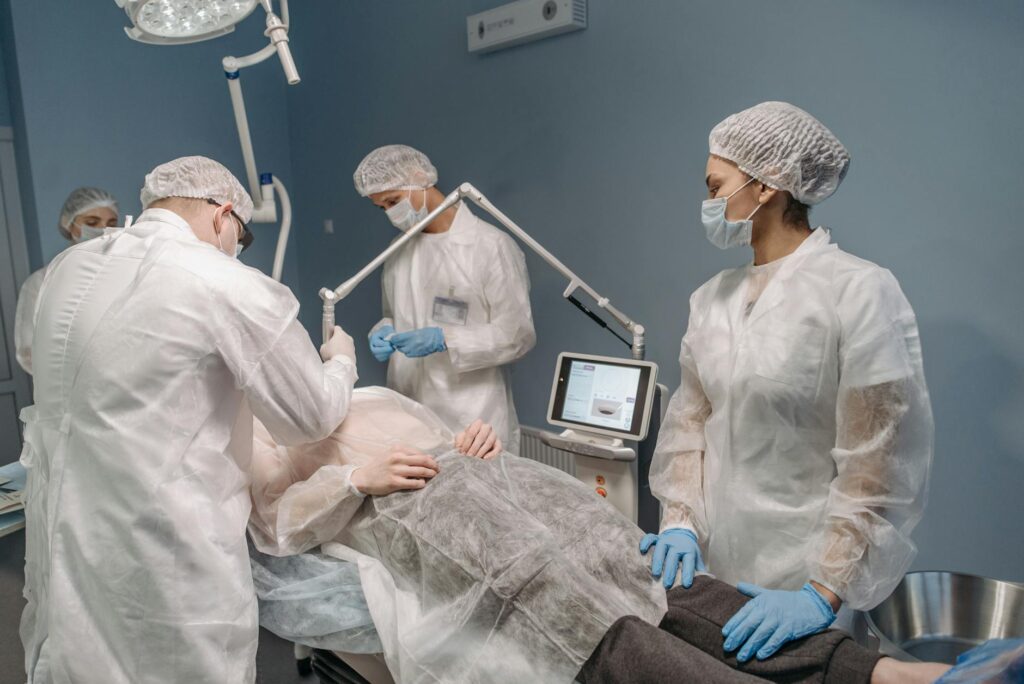
Revlite laser works for dark skin acne pigmentation because its Q-switched nanosecond pulse technology can safely target and break down excess melanin without damaging surrounding skin tissue—regardless of your skin tone. The laser emits a specific wavelength that penetrates deeper skin layers, with energy absorbed selectively by melanin particles rather than the skin itself, making it one of the few laser systems specifically engineered for darker skin types. For someone with medium to deep skin tone dealing with acne scars that left behind dark marks or uneven pigmentation, Revlite offers a way to reduce that discoloration by addressing the underlying melanin buildup without the elevated risk of complications that comes with other laser treatments. This article covers how Revlite’s technology works at a cellular level, why dermatologists trust it specifically for darker skin tones, how it addresses post-inflammatory hyperpigmentation (the darkening that often follows acne in people of color), what a typical treatment course looks like, and the aftercare protocols that make the difference between excellent results and potential setbacks.
Table of Contents
- How Does Q-Switched Laser Technology Target Acne-Related Pigmentation?
- Why is Revlite Considered Safe for Darker Skin When Other Lasers Carry Higher Risks?
- How Does Revlite Address Post-Inflammatory Hyperpigmentation Specifically?
- What’s the Recommended Revlite Treatment Protocol for Acne Pigmentation?
- Why is Aftercare Non-Negotiable for Dark Skin Patients After Revlite?
- How Does Revlite Compare to Other Laser Systems for Acne Scars and Pigmentation?
- Is Revlite the Right Treatment for Your Acne Pigmentation?
- Conclusion
How Does Q-Switched Laser Technology Target Acne-Related Pigmentation?
Revlite uses Q-switched Nd:YAG laser technology that delivers ultra-short energy pulses lasting approximately 5 nanoseconds—far shorter than conventional lasers. These brief, high-energy bursts generate heat that is absorbed by melanin molecules in the skin, causing them to fracture into smaller micro particles. Your body’s lymphatic system then naturally flushes out these broken-down particles over the following weeks, which is why results aren’t immediate but become progressively more noticeable. The mechanism works specifically well for acne-related pigmentation because it targets the melanin that accumulated during your skin’s inflammatory response to breakouts.
When acne inflames the skin, melanin production increases as a protective response—this is post-inflammatory hyperpigmentation (PIH), and it’s particularly stubborn in darker skin types because those skin tones produce melanin more readily. Revlite’s ability to selectively destroy these melanin deposits without heating the surrounding dermis makes it fundamentally different from ablative lasers that would remove layers of skin indiscriminately. Unlike topical treatments that can only affect superficial melanin, Revlite’s specific wavelength penetrates deeper skin layers where discoloration from acne often resides. This is why someone with acne scars accompanied by dark patches might see improvement in both the texture and the pigmentation—the laser addresses a root cause rather than just treating the appearance.
Why is Revlite Considered Safe for Darker Skin When Other Lasers Carry Higher Risks?
The critical difference lies in Revlite’s PhotoAcoustic energy technology, which enables selective targeting of melanin at different depths without proportionally increasing heat damage to surrounding tissue. Conventional lasers work by converting light energy into heat across a broad area—this approach is problematic for darker skin because melanin is naturally present throughout the dermis, so the laser heats melanin everywhere it travels, not just the problematic deposits. This creates a higher risk of post-treatment complications like burns, textural changes, or ironically, more hyperpigmentation. Revlite’s nanosecond pulse approach works differently: the ultra-short pulse creates acoustic pressure waves that mechanically disrupt melanin particles rather than relying solely on heat buildup.
This is why Revlite is specifically designed to treat all skin phototypes safely, and multiple dermatological sources confirm it’s appropriate for darker skin tones when proper treatment parameters are used. However, there’s an important caveat: darker skin remains more prone to developing post-inflammatory hyperpigmentation after any laser treatment, including Revlite. This means the quality of aftercare and the skill of the clinician administering the treatment become even more critical than they are for lighter skin types. The distinction matters practically: a clinician using Revlite on a dark skin patient needs to calibrate intensity and spacing carefully, avoiding the aggressive settings that might be used for lighter skin. When done correctly, Revlite provides results without the elevated complication risk of older laser technologies.
How Does Revlite Address Post-Inflammatory Hyperpigmentation Specifically?
Post-inflammatory hyperpigmentation (PIH) occurs when acne inflammation triggers the skin to produce excess melanin as part of healing, leaving dark patches or marks that can persist for months or years. Research published in medical literature confirms that Q-switched Nd:YAG lasers like Revlite are effective adjunctive treatments for PIH when appropriate parameters are used in darker skin patients—meaning the laser works well for this specific problem when it’s in the right hands. The mechanism is direct: acne scars with associated dark pigmentation benefit because Revlite breaks down the accumulated melanin without requiring ablation of the surrounding healthy skin.
Someone with a history of severe acne on darker skin might have both textural scarring and persistent dark marks; while Revlite addresses primarily the pigmentation rather than deep scar tissue, that distinction matters because it avoids the risk associated with more aggressive resurfacing in darker skin types. The trade-off is that PIH requires patience—results emerge gradually over weeks and months as your body clears the fragmented melanin. A real limitation to note: patients with darker skin tones are inherently more prone to developing PIH after laser treatment itself, creating a paradox where the treatment solving your original PIH could theoretically trigger new PIH if parameters aren’t carefully managed. This is why the treatment protocol and post-care become non-negotiable for dark skin patients.

What’s the Recommended Revlite Treatment Protocol for Acne Pigmentation?
The standard treatment course involves 5-10 sessions spaced 2-4 weeks apart, with some clinicians recommending an alternative protocol of 4-6 sessions depending on the severity of pigmentation and individual skin response. The spacing matters because your body needs time between sessions to clear the fragmented melanin—sessions too close together don’t allow adequate healing time, while sessions spaced too far apart lose the cumulative benefit. Most patients see progressive improvement over this series rather than dramatic change after a single treatment. One significant advantage is minimal downtime.
Most patients can resume daily activities immediately after Revlite treatment, though the skin may appear slightly red or textured for a few hours afterward. This makes it more convenient than ablative procedures that might require a week of healing, though the trade-off is that results develop more gradually. The cumulative approach also means you’re making a commitment to multiple appointments over several months—someone with occasional severe acne flares wouldn’t necessarily need the full 5-10 session course, while someone with extensive post-acne pigmentation would likely benefit from closer to the upper range. Clinicians will typically assess your results after the initial few sessions to determine whether to continue toward 10 sessions or whether your skin is responding well enough to stop at 6 or 7. Individual variation in melanin density, skin thickness, and healing response means the optimal number of sessions is somewhat personalized.
Why is Aftercare Non-Negotiable for Dark Skin Patients After Revlite?
Sunscreen use after Revlite laser treatment is critical to prevent adverse effects in darker skin types—this isn’t optional guidance, it’s a fundamental component of why the treatment works safely for your skin tone. The reason is that your skin is in a heightened state of post-inflammatory sensitivity after the laser breaks down melanin. UV exposure during this window can trigger excess melanin production as a protective response, potentially creating new post-inflammatory hyperpigmentation rather than resolving the existing discoloration. For dark skin patients, this risk is measurably higher than for light skin types. The evidence is clear in dermatological literature: inadequate sun protection after laser treatment in darker skin is associated with adverse effects and suboptimal results.
Practically, this means using a broad-spectrum SPF 30 minimum daily for at least two weeks after each session, preferably SPF 50+, and reapplying if you’ll be outdoors. Many clinicians recommend daily sunscreen use for the entire treatment series. You’ll also want to avoid other sources of inflammation—aggressive skincare products, manual exfoliation, or sun exposure should be minimal during the treatment period. Beyond sun protection, avoid heat sources like hot baths, saunas, or intense exercise for the first 24-48 hours after treatment, as these can increase inflammation. If you notice excessive redness, swelling, or unexpected darkening of your skin tone after a session, contact your clinician before the next appointment—these could be signs that parameters need adjustment for your specific skin response.
How Does Revlite Compare to Other Laser Systems for Acne Scars and Pigmentation?
Revlite’s Q-switched Nd:YAG technology outperforms other laser systems specifically for deep pigmentation problems and acne scars with associated discoloration. Other common approaches include fractional CO2 lasers (which remove layers of skin and work more aggressively on scarring but carry higher complication risk for dark skin), pulsed dye lasers (which target blood vessels more than melanin), and newer fractional non-ablative devices (which are gentler but less effective for stubborn pigmentation). For someone with primarily dark marks from acne rather than severe textural scars, Revlite typically delivers superior results to these alternatives with a better safety profile for darker skin.
The trade-off is that Revlite is better for pigmentation than for deep scarring—if you have ice-pick or rolling acne scars that are primarily structural issues rather than discoloration, you might benefit more from a fractional approach or microneedling combined with Revlite. Some dermatologists use Revlite as part of a multi-modality approach, using it for pigmentation while addressing scarring with another technique. In that scenario, the laser treatment happens first, followed by scar-specific treatments in subsequent months.
Is Revlite the Right Treatment for Your Acne Pigmentation?
Revlite is particularly well-suited if your primary concern is post-acne dark marks or persistent hyperpigmentation on darker skin, especially if that discoloration has been present for months and isn’t responding to topical treatments. You’re a good candidate if you can commit to the treatment series and maintain strict sun protection, and if your acne is currently controlled (active breakouts should be resolved or well-managed before starting Revlite, because new inflammation during treatment interferes with results). The realistic expectation is significant improvement in pigmentation darkness and evenness of skin tone over the course of the series, though complete erasure of all marks isn’t guaranteed.
If your primary concern is textural scarring or very deep acne scars rather than discoloration, Revlite alone might not fully address your needs, and a consultation with a dermatologist can determine whether a combination approach or different technology would serve you better. The investment is real—a full course of 5-10 Revlite sessions costs significantly more than topical treatments, and results require patience. For someone whose acne pigmentation has impacted their confidence for years and topical approaches have failed, that investment is often worth it.
Conclusion
Revlite laser represents one of the most effective options available for treating post-acne pigmentation in darker skin types because its Q-switched technology selectively targets melanin without the elevated complication risk associated with other laser systems. The nanosecond pulse duration, PhotoAcoustic energy mechanism, and FDA approval of this technology provide both efficacy and safety when proper treatment parameters are applied. Clinical research confirms that Q-switched Nd:YAG lasers effectively treat post-inflammatory hyperpigmentation in skin of color, making this a genuinely evidence-based approach rather than an off-label use.
Success with Revlite for acne pigmentation requires three components: appropriate treatment protocol (typically 5-10 sessions at proper intervals), strict sun protection and aftercare, and work with a clinician experienced in treating darker skin tones. If you’ve struggled with acne marks and persistent dark pigmentation on darker skin, a consultation with a dermatologist familiar with Revlite can help determine whether this treatment aligns with your specific concerns and skin condition. The timeline is measured in months rather than weeks, but the progressive improvement in pigmentation evenness often justifies the commitment for people whose acne pigmentation hasn’t responded to other approaches.