
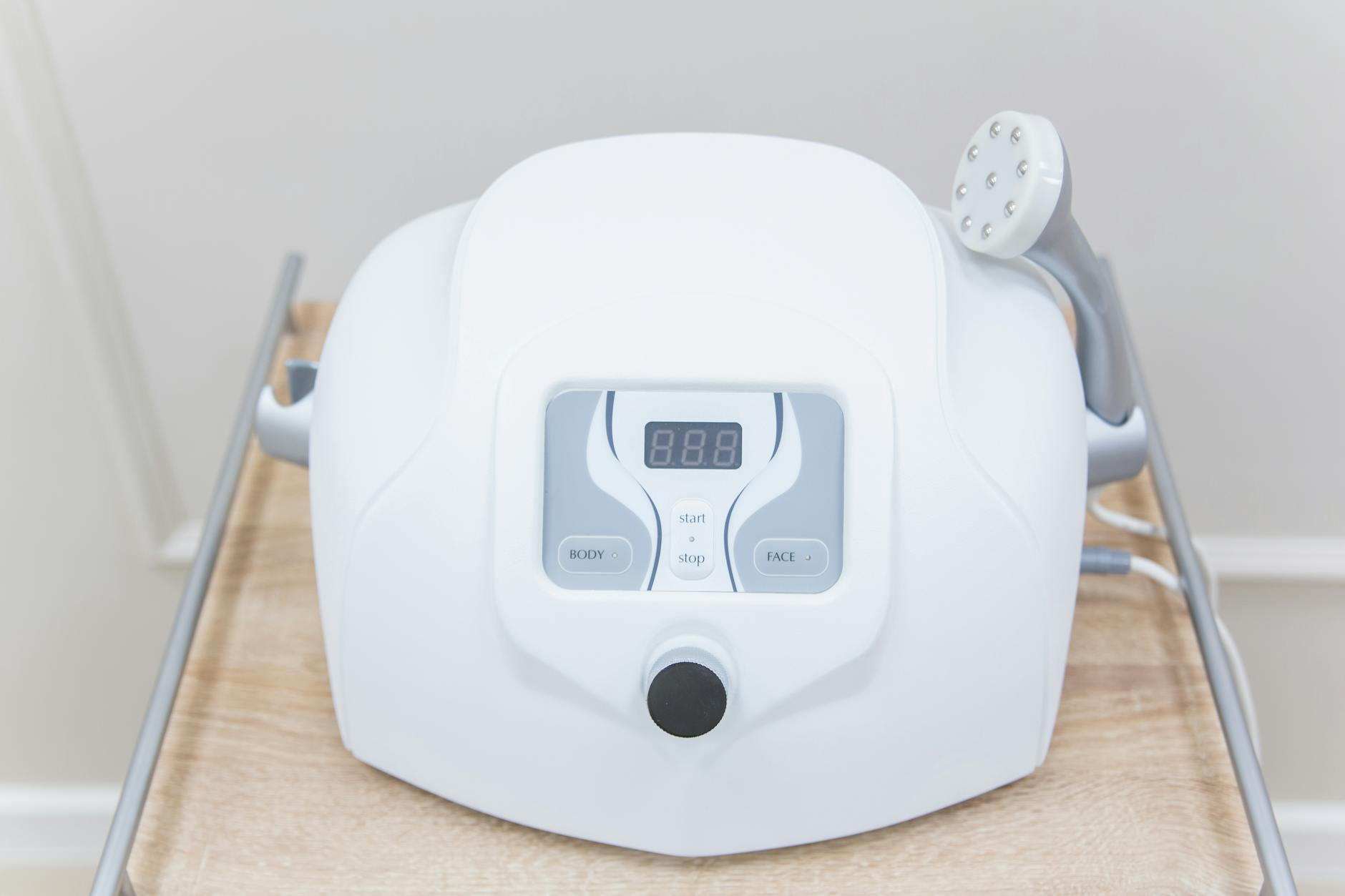
LightStim for Acne uses a combination of blue and red LED light wavelengths to target acne at its source: blue light (410-420nm) kills the acne-causing bacteria *Cutibacterium acnes* (formerly *Propionibacterium acnes*), while red light (630-700nm) reduces inflammation and promotes healing of damaged skin. When used together in a single device, these two wavelengths create a more comprehensive treatment approach than either alone—blue light addresses the infection, and red light addresses the inflammation that makes acne painful and visible. For example, someone with inflamed breakouts might see the red light reduce redness within days while the blue light simultaneously works to prevent new lesions from forming.
This article covers how each wavelength works, why they’re combined, what treatment protocols are most effective, how LightStim compares to other LED devices, and what realistic results you can expect over time. The key difference between LightStim and many other at-home acne devices is its dual-wavelength approach and the specific power density it delivers. Rather than forcing you to choose between antibacterial OR anti-inflammatory treatment, the device applies both wavelengths simultaneously to address the multiple factors driving acne breakouts.
Table of Contents
- How Blue and Red LED Light Wavelengths Target Acne-Causing Bacteria and Inflammation
- The Difference Between Blue LED (Antibacterial) and Red LED (Anti-Inflammatory)
- How LightStim Device Combines Both Wavelengths for Enhanced Results
- Using LightStim for Acne: Treatment Protocols and Frequency Recommendations
- Limitations and Potential Side Effects of LED Acne Treatment
- LightStim vs. Other LED Acne Devices on the Market
- Results Timeline and Long-Term Effectiveness of Blue-Red LED Therapy
- Conclusion
How Blue and Red LED Light Wavelengths Target Acne-Causing Bacteria and Inflammation
Blue light operates at a shorter wavelength (typically 405-420nm) that penetrates just deep enough into the epidermis to reach the bacteria living in sebaceous glands and hair follicles. The bacteria produce a compound called porphyrin, which absorbs blue light energy and generates reactive oxygen species—essentially, the bacteria’s own metabolism becomes toxic to itself. This is why blue light is so effective: it’s leveraging a vulnerability unique to *C. acnes*, making it selective and relatively safe for surrounding healthy skin. In clinical studies, blue light therapy alone has been shown to reduce inflammatory acne lesions by 50-80% over 12 weeks of consistent use. Red light, by contrast, uses a longer wavelength (typically 630-700nm) that penetrates deeper into the dermis, where it stimulates mitochondria to produce more ATP (cellular energy).
This energy boost triggers increased collagen production, improved blood flow, and reduced inflammatory cytokines—the chemical messengers that make your skin red and swollen. Red light is beneficial not just for acne itself, but for the scars and post-inflammatory hyperpigmentation that often follow breakouts. For instance, if you’ve noticed your acne flares leave dark spots or textured scars, red light addresses both the acute inflammation and the healing phase that determines whether permanent damage occurs. The critical limitation is that blue light alone can be irritating with overuse—it’s essentially an antibacterial agent, and bacteria can develop resistance over time. Red light, on the other hand, acts through systemic cellular processes that don’t encourage resistance. This is why combining both wavelengths is considered superior to either in isolation: the red light provides anti-inflammatory protection that makes blue light gentler and more tolerable, while the blue light prevents the resistance buildup that can occur with red light monotherapy.

The Difference Between Blue LED (Antibacterial) and Red LED (Anti-Inflammatory)
Blue led is functionally an antibiotic without the systemic side effects or antibiotic resistance concerns (at least in theory). However, if you overuse blue light—say, using it twice daily for extended sessions—you may experience irritation, dryness, or a temporary worsening of acne as the treatment inflames follicles and brings subsurface bacteria to a head faster than your skin can shed them. A common mistake is assuming “more is better,” when in reality, blue light therapy requires measured doses. Most manufacturers recommend 10-20 minute sessions, 2-4 times per week, specifically to avoid this overstimulation. If you have extremely sensitive or compromised skin (active eczema, rosacea, or barrier damage), you might need even lower frequency until your skin stabilizes. Red light is gentler and harder to “overdo” in the same way, but it works more slowly than blue light when it comes to killing bacteria.
Think of red light as a long-game player—it works best when applied consistently over weeks, whereas blue light can show visible bacteria-killing effects within days. This is why the combination is so effective: you get the quick antibacterial hit from blue light and the sustained, gentle inflammation reduction from red light. A practical warning: if you have a condition like photosensitivity, epilepsy triggered by flickering light, or are taking photosensitizing medications, you should consult a dermatologist before using any LED device, including LightStim. Another critical difference is penetration depth. Blue light barely penetrates the dermis, so it’s ideal for surface and comedonal acne but less effective for deep cystic lesions that form well below the epidermis. Red light penetrates deeper and can theoretically help with cystic acne, though deep lesions may still require oral medication or professional treatments like corticosteroid injections. If you’re treating only comedones and whiteheads, blue light alone might suffice; if you’re dealing with tender, inflamed nodules, the red light becomes more essential.
How LightStim Device Combines Both Wavelengths for Enhanced Results
LightStim’s key design choice is delivering both blue and red LEDs in a single panel, rather than requiring you to switch between devices or use them on alternate days. This simultaneous delivery means that when you position the device over a breakout, the two wavelengths are working synergistically—the bacteria are being killed while inflammation is being quelled in real time. The device typically emits both wavelengths at specific power densities (measured in milliwatts per square centimeter, or mW/cm²), which determines how effective the treatment actually is. For example, imagine you have a cluster of angry, inflamed breakouts on your chin. When you position LightStim over that area for 10 minutes, the blue light is penetrating to the follicular level and suppressing the acne bacteria, while simultaneously the red light is reducing swelling, increasing blood flow to support healing, and triggering collagen remodeling.
A person using only blue light would see the bacteria count drop but might experience lingering inflammation and post-acne redness for weeks. A person using only red light might not see the bacteria clear as quickly. By using both together, LightStim users typically report that inflamed lesions become visibly less red within 2-3 days and stop being tender much faster. The device’s design also matters: LightStim uses LED (light-emitting diodes) rather than lasers, which means the light is diffuse and covers a broader treatment area—typically 18-20 square centimeters per treatment. This is better for treating entire zones (your T-zone, or both cheeks) rather than spot-treating individual pimples. If your acne is sparse and localized to one small area, you might find the broad treatment area unnecessary; if your acne is scattered across your face or body (some people get acne on shoulders or back), the coverage area is a major advantage.
Using LightStim for Acne: Treatment Protocols and Frequency Recommendations
The most commonly recommended protocol for LightStim is 10-20 minutes per session, 2-4 times per week, for 12 weeks minimum to assess full effectiveness. Some users start with 2x weekly and increase to 3-4x weekly after the first month if they have no irritation. The device should be held at a distance of 2-4 inches from the skin, perpendicular to the surface, to ensure the LEDs deliver their full intensity. Consistency is more important than intensity: using it 3 times weekly for 12 weeks will yield better results than using it daily for 3 weeks then abandoning it. The tradeoff to understand is that LED therapy is cumulative—you’re not going to see dramatic results in two treatments.
If you have an important event in 5 days and you just developed breakouts, an LED device is not your solution; you’d need a dermatologist visit for a cortisone injection, a potent spot treatment like benzoyl peroxide, or isotretinoin if the case is severe. However, if you’re building a preventive routine and can commit to consistent treatment over months, LED therapy is genuinely effective and has minimal side effects compared to oral medications or frequent chemical peels. Many dermatologists now recommend LED therapy as a first-line treatment for mild-to-moderate acne before prescribing antibiotics or retinoids. A practical note: LED acne devices work best when your skin is clean and dry, without makeup, sunscreen, or thick moisturizers that could scatter the light. Some users apply the device after cleansing but before their evening skincare routine. If you’re using other acne medications (like benzoyl peroxide, salicylic acid, or tretinoin), you can combine them, but start LED therapy first and observe for irritation before layering in other actives—LED + tretinoin + benzoyl peroxide, all at once, can be overstimulating even for resilient skin.
Limitations and Potential Side Effects of LED Acne Treatment
While LED acne therapy is well-tolerated overall, it’s not risk-free or universal. Some users experience temporary worsening of acne in the first 2-3 weeks—a phenomenon sometimes called “purging”—where the treatment brings dormant bacteria and inflammation to the surface faster than usual. This usually resolves within a week or two, but if it persists or if you develop significant irritation, you should reduce frequency or consult a dermatologist. Additionally, LED devices do not address the hormonal drivers of acne; if your breakouts are primarily hormonal (linked to your menstrual cycle or PCOS, for example), an LED device alone may reduce inflammation but won’t prevent new lesions from forming. You’d likely need hormonal treatment (like birth control or spironolactone) in conjunction with LED therapy for meaningful control.
Another important limitation: LED acne therapy shows varying effectiveness depending on acne type. It works well for inflammatory acne (red, swollen lesions) and moderate bacterial acne, but it’s less effective for severe nodular/cystic acne, which often requires isotretinoin (Accutane), and it’s moderately effective for comedonal acne (blackheads and whiteheads). If your acne is primarily comedonal, a retinoid or salicylic acid might give you faster results than LED therapy. Conversely, if you have rosacea or sensitive skin conditions that prohibit strong acids or retinoids, LED therapy is one of the few options available—this is where LightStim shines as a gentle, non-pharmaceutical approach. Potential side effects include temporary redness or warmth during treatment (normal), irritation or dryness if overused, and in rare cases, phototoxic reactions in people taking photosensitizing medications (like doxycycline or certain essential oils applied topically). There’s also a theoretical concern about eye safety with any light-based device, though LightStim’s LEDs emit much lower intensity than lasers; still, the manufacturers recommend avoiding direct eye exposure and using eye protection if you’re treating facial areas close to the eyes.

LightStim vs. Other LED Acne Devices on the Market
LightStim competes with devices like Neutrogena Light Therapy Acne Mask, Philips Sonicare, Theralight, and various off-brand LED panels available on Amazon. The key differences come down to wavelength precision, power density, coverage area, and clinicalvalidation. LightStim tends to be more expensive ($300-500) but includes both blue and red wavelengths in a single device and has been tested in published clinical studies. Neutrogena’s mask (around $200-250) is also dual-wavelength and specifically designed for the face, but clinical data on Neutrogena’s specific device is less robust.
The tradeoff with cheaper devices ($50-150 off-brand panels) is uncertain wavelength and power output—you might be buying a device that claims to have blue and red LEDs but doesn’t deliver enough intensity (mW/cm²) to actually treat acne. LightStim publishes its specifications, which is reassuring. However, if you’re on a budget and your acne is mild, starting with a cheaper device might be reasonable; you can always upgrade if results are disappointing. One user comparison: someone treating moderate acne might see 50-70% improvement with LightStim over 12 weeks, versus 30-40% improvement with a budget device over the same period. The premium device wins, but the budget device isn’t worthless.
Results Timeline and Long-Term Effectiveness of Blue-Red LED Therapy
Most users begin to notice visible improvement in acne inflammation within 1-2 weeks of consistent use, with maximum improvement typically achieved by week 8-12. However, “improvement” is often first a reduction in redness and swelling—you might still see the lesion, but it’s less angry. Actual lesion clearance and prevention of new breakouts may take 8-12 weeks. This is why dermatologists recommend committing to at least 12 weeks of consistent LED therapy before deciding it “didn’t work” for you.
Regarding long-term effectiveness, the research suggests that LED therapy is most effective as an ongoing maintenance tool rather than a one-time cure. Some users stop LED treatment after 12 weeks of clear skin and find that acne returns within 1-3 months, necessitating a return to regular use. Others find that after 3-6 months of consistent LED therapy, they can reduce frequency to once or twice weekly for maintenance without relapse. This pattern suggests that LED therapy is beneficial for disrupting acne’s rebound cycle, similar to how antibiotics work but without the systemic side effects. The emerging research into LED therapy’s long-term effects indicates it’s sustainable, well-tolerated, and potentially superior to repeated oral antibiotic courses for chronic acne management.
Conclusion
LightStim for Acne leverages blue and red LED light wavelengths to address acne from two angles simultaneously: blue light eliminates the acne-causing bacteria directly, while red light reduces inflammation and supports healing. When combined in a single device, this dual approach is more effective than either wavelength alone, and clinical evidence supports meaningful improvement in most users after 8-12 weeks of consistent treatment. The device is safe, non-invasive, has minimal side effects compared to pharmaceutical options, and works well for inflammatory and bacterial acne, making it a credible first-line treatment for mild-to-moderate cases.
If you decide to try LightStim or a similar LED device, commit to consistent use (2-4 times weekly, 10-20 minutes per session) for at least 12 weeks before evaluating results. Be realistic about its limitations—it won’t address hormonal acne drivers alone, it works slowly compared to cortisone shots or potent topicals, and it’s most effective as an ongoing maintenance tool rather than a cure. For best outcomes, combine LED therapy with a good basic skincare routine (gentle cleansing, sunscreen) and consult a dermatologist if your acne is severe, rapidly worsening, or showing signs of cystic or scarring progression.